Blog

  • The ROI of Social Media Marketing: Why Every Business Owner Should Invest in It

    The ROI of Social Media Marketing: Why Every Business Owner Should Invest in It

    Why social media marketing? I’m sure you’ve heard a thousand times that your business needs to be on social media. But as a business owner, it is quite natural to ask: What’s in it for me? How does spending time, money, and resources on social media marketing actually translate into revenue?

    Let’s dive deep into how social media marketing can offer a solid return on investment (ROI) and why it’s worth your attention.

    What is ROI in Social Media Marketing?

    When business owners hear “ROI,” the first thing that comes to mind is, “Will this generate profit?” And that’s a great question. In simple terms, ROI in social media marketing is the measurable return you get from your social media efforts compared to what you put in.

    That is where social media marketing stands out-it’s not a direct sales activity. ROI can be measured in several ways depending on your business goals. Yes, it can mean profit, but it can also refer to increased brand awareness, lead generation, or enhanced customer loyalty, which indirectly drives sales over time.

    How to Calculate ROI for Social Media Marketing
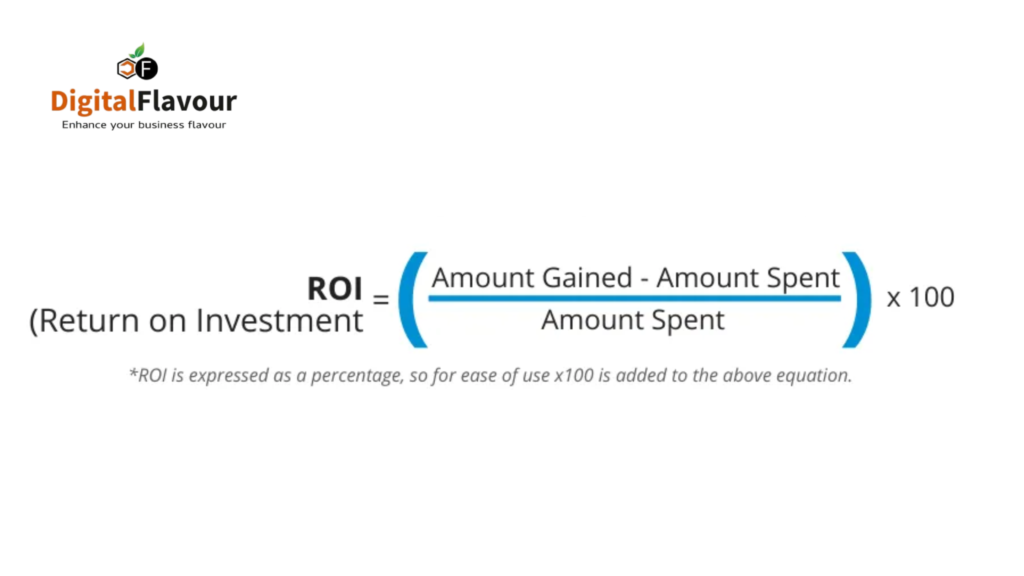
    Here’s a quick formula for calculating social media ROI:

    ROI= (Revenue from social media − Investment in socialmedia) Investmentinsocialmedia×100 ROI = frac{(Revenue from social media – Investment in social media)}{Investment in social media} times 100ROI=Investment in social media (Revenue from socialmedia−Investment in social media)​×100

    But what about businesses not looking for direct sales? You can measure ROI in terms of other outcomes like:

    • Engagement (likes, comments, shares): Engagement can lead to brand loyalty.
    • Lead generation: More leads today mean more customers tomorrow.
    • Website traffic: Every click is a potential sale.

    For example, if you spend $1,000 on a social media marketing services and generate $4,000 in revenue, your ROI is 300%. But even without direct sales, social media can help build long-term customer relationships that result in future sales.

    Why Social Media Marketing is a Worthy Investment for Your Business

    Let’s address the elephant in the room: Is social media really worth investing in, or is it just a trendy buzzword?

    Here’s why every smart business owner should embrace it:

    Reach & Visibility

    There are billions of users on social media. Facebook, Instagram, LinkedIn, and TikTok-all spend hours on these platforms trying to find product recommendations, browse services, or simply have fun. By investing in social media, you’re essentially fishing where the fish are.

    Let’s assume we have a local bakery and post mouth-watering pictures of our sweet tooth delights on Instagram. A single viral post can bring dozens of new customers through the doors who would otherwise not have come to your bakery.

    Cost-Effective Marketing

    Unlike other types of advertisement such as television, prints, and billboards, social media is that channel that even businesses with limited budgets can easily match some of the world’s top industries. You do not need millions to make them hear about your brand. With a well-crafted strategy, a small business which spends just $500 to reach out to target customers better than one who makes a TV advertisement budget at 10 times this much.

    And organic reach—where people share your posts, comment, and interact with your content without you spending a dime—only adds to your ROI.

    Measurable Results

    One of the biggest attractions of social media marketing is that it is measurable. Whether you’re measuring likes, shares, website visits, or conversions, social media gives you the data to make adjustments and optimize your strategy.

    For instance, using Google Analytics or built-in social media insights, you’ll know which posts drive the most traffic to your website, where those visitors are from, and even how long they stay.

    The Key ROI Metrics You Should Focus On

    Not all metrics measure the success of your social media marketing efforts equally. Most business owners get trapped in “vanity metrics,” which are metrics that look impressive but don’t necessarily drive revenue. Align your metrics with your business goals.

    Engagement Rate

    This term refers to the way people are reacting towards your content by either liking, commenting on, sharing it, or even clicking. When most of your contents have the ability to appeal, you are likely to experience high engagement rates to construct the right kind of loyalty for your brand towards greater chances of sales.

    • Why you should care: Engagement gets the community rolling on a brand. Also, people are going to purchase from brands that feel them connected.

    Customer Acquisition Cost (CAC)

    CAC is the cost of getting a new customer from your social media activities. This helps you keep track of how effective your social media marketing campaigns are in turning followers into paying customers through the tracking of CAC.

    • Why it matters: The lower your CAC, the more profitable you will be. Social media marketing, when executed properly, can significantly bring down this cost compared to other types of advertising.

    Customer Lifetime Value (CLV)

    CLV is the total value a customer brings to your business over time. If social media helps nurture long-term customer relationships, then your CLV goes up.

    • Why it matters: Getting new customers is awesome, but keeping them is better. Social media engagement with customers can increase lifetime value.

    Conversion Rates

    Well, conversions can be just a sale or sign-up. So, if you ran a social media campaign to sell a product, your conversion rate would be how many people clicked your ad and purchased.

    • Why it matters: Conversion rates show you the immediate direct sales influence of your social media marketing.

    Addressing Business Owners’ Common Concerns

    “How Long Will It Take to See ROI?”

    Social media is no overnight millionaire scheme. It takes months of nurturing an audience in order for there to be engagement and actual return on investment. For instance, it might take months of routine posting, engagement, and optimization before a sales boost.

    Paid social media ads, however will hasten the process. It would take weeks for the appropriate targeting and message to see and feel. The crucial element is long-term thinking, though. Most social media ROI is due to persistent brand-building efforts.

    “Isn’t Social Media Just for B2C?”

    Wrong! As B2C companies continue to dominate the social media spaces like Instagram and Facebook, B2B companies have LinkedIn, Twitter, and even YouTube for use in reaching the professional mind and decision-makers.

    A B2B software company can publish articles on LinkedIn that are about thought leadership and case studies. In this way, potential leads are attracted to them and relationships are formed with the decision-makers of their industry.

    “I Don’t Have Time for Social Media”

    You are running a business, and time is money. But here’s the best part: You don’t have to worry about managing your social presence. Many businesses outsource to the best digital marketing agency or will use scheduling tools like Buffer or Hootsuite so that you can post through them.

    Remember, Social media is an investment that requires some upfront effort and time to reap long-term rewards.

    Strategies to Maximize Social Media ROI

    Content is King

    The amount of engagement your audience has with your brand will depend on the quality of the content. Focus on bringing high-quality, relevant, and engaging content in front of your target audience.

    • Visual content: Give your audience attention-grabbing videos and infographics.
    • User-generated content: Encourage customers to share their experiences with your product or service. Their testimonials are often more powerful than any ad.

    Leverage Paid Social Media Ads

    Organic reach is fantastic, but there are times when the organic reach is nowhere near what you will be able to achieve with paid ads because platforms like Facebook, Instagram, and LinkedIn allow for targeting specific demographics, behaviors, and interests, in this way making it possible to increase visibility at the least cost.

    Engage and Build a Community

    Social media is a one-way street in that simple posting of content is only half the trick. In fact, you should engage yourself with your target audience so that you would reply with comments, spark conversations on various topics, and thus show that you care. 

    An online community built by your brand around you instills trust into your hearts, which becomes a tool for sales. The audience feels connected, and your customers are most likely repeat customers.

    Looking for Best Digital Marketing Agency in Indore? Consult Digital Flavour Now!

    Final Thoughts: Social Media as an Investment, Not an Expense

    Social media marketing should not be another expense within your business; rather it is an investment with much potential in returns when appropriate. What matters here are understanding what you are in business to achieve, measure the correct metrics, and keep fine-tuning this strategy.

    Being one of those small business owners or the owner of big enterprises, investing in the social media marketing channel is a pay-off strategy these days through brand recognition and customer loyalty, increased down the revenue line.

    Ready to see how social media marketing can benefit your business? Contact us today at Digital Flavour, Best Digital Marketing Agency In Indore for a custom social media strategy that drives real results.
  • What is Social Media Marketing? A Complete Guide for Business Owners

    What is Social Media Marketing? A Complete Guide for Business Owners

    Imagine this: You are a business owner with a great product or service. You are proud of what you offer, but there’s just one problem-getting it in front of the right people. You’ve tried traditional advertising, and the cost is too prohibitive, plus you have no idea if your message is reaching the right audience. What if you had the opportunity to get in touch with your customers directly, build enduring relationships, and promote your brand to a higher magnitude without necessarily overspending? That can be made possible by social media marketing. But exactly what is social media marketing is?

    You’ve heard the term around, perhaps even dipped your toes in the world of Facebook posts or Instagram ads. However, social media marketing is much more than posting pretty pictures or catchy captions. It is a powerful tool that can transform your business-if used correctly. For creation and execution of a result oriented social media marketing strategies, you can choose social media marketing services by Digital Flavour.

    We will break down what social media marketing is and why it’s crucial for your business. Then we’ll find ways for you to leverage that into growing your brand, engaging your audience, and increasing sales. By the end of this guide, you will have a better idea how to integrate social media marketing into your overall business strategy.

    What is Social Media Marketing?

    Time to start at the beginning: What’s social media marketing, anyway?

    Simply put, social media marketing, or SMM, is the use of Facebook, Instagram, LinkedIn, Twitter, TikTok and any other social media platform to share information to induce sales of a company’s products or services. Sure, it does involve posting ads and selling directly to your followers, but at its core, SMM actually involves building relationships with your audience, creating value for them, and fostering brand loyalty.

    Imagine social media to be a link between your business and your customers. It enables you to:

    – Communicate with them in real-time,

    – Answer their questions and solve their problems,

    – Even hear their feedback.

    For a business owner, social media isn’t just a sales tool but a way to personalize the brand and create long-term connections.

    Why Should Business Owners Care About Social Media Marketing?

    You probably ask yourself the question, “Why should I even bother with social media? Won’t people just see enough of my corporate message on the TV commercials or on billboards?”

    Truth: your customers are likely already on social media, and if you’re not there, you’re missing out. Check out these stats:

    – 58.4% of people globally use social media

    – People spend an average of 2 hours and 27 minutes per day on social platforms.

    54% of customers research purchases on social media.

    The question is not what you ought to do anymore but rather how well you use it to grow your business.

    If you are looking social media marketing services, Consult Digital Flavour, Best Digital Marketing Agency based in Indore, India.

    Common Business Owner Queries & Solutions:

    1. “Is social media marketing worth the time and investment?”

    • Solution: Absolutely, because it’s so cost-effective. Compared to traditional advertising, you can set a budget that works for you. Organic posts are free, and paid ads do allow micro-targeted reach at what will be a fraction of the cost of that very pricey TV or print ad. Returns can be phenomenal if done right in terms of engagement or lead generation.

    2. “How does it align with my business goals?”

    • Solution: Social media marketing can fulfill many business objectives. Whether it is brand awareness, website traffic, or lead generation, there is a strategy for each. If the objective is brand awareness, then Instagram and TikTok could be good platforms because the content is more visual there. If the goal is lead generation, then Facebook and LinkedIn ads with certain specific calls to actions can take users directly to lead capture form.

    Why Social Media Delivers Real ROI:

    Many businesses shy away from social media because it doesn’t seem to give an instant ROI. Well, let’s be real with one another; social media marketing is a long-term process. You’re creating a group of people who trust your brand, so they are more likely to convert over time. According to a report by HubSpot, companies tend to have a better conversion rate if they have a stronger presence on social media because social proof (likes, comments, shares) is the most important thing at times in making a decision.

    Key Components of an Effective Social Media Marketing Strategy

    1. Content Creation

    Content is where the social media of your presence begins and ends. But not any content—it has to be valuable, engaging, and consistent.

    Think about your audience. What do they want to see? If you’re a local bakery, your followers want mouthwatering images of fresh pastries, behind-the-scenes videos or even tutorials on how to bake their favorite treat. User-generated content (UGC) is also highly effective. For example, encourage your customers to share photos of them enjoying your products and repost those images, with permission, to build that community vibe.

    • Tip: Use a mix of content types—videos, stories, live sessions, and posts to keep things fresh.

    2. Audience Engagement

    One thing that businesses forget is that social media is a two-way street; you cannot just post and walk away-you have to engage.

    • Why it’s important: Engagement builds relationships. It’s also a signal to the social platforms that content is relevant, thus boosting its visibility.
    • Solution: Whatever it is-Facebook, Instagram, or otherwise-be sure to answer your comments, reply to your direct messages, ask questions in your posts, and use Instagram polls in your stories. Social media is a conversation, not a broadcast.

    3. Paid Social Advertising

    Organic reach only takes you so far, at least on those platforms like Facebook, where the way things work is to limit views on unpaid posts. Paid social ads are where it’s at.

    Facebook Ads, Instagram Ads, and LinkedIn Ads can target audiences with very specific demographic, interest-based, or behavior-based targeting. Thus, if you have a B2B business and are interested in attracting high-level decision-makers, using LinkedIn Ads, you could limit your reach to certain job titles and industries.

    How Social Media Marketing Helps Business Owners Grow Their Business

    1. Building Brand Awareness

    Ever wonder why some businesses become household names and others just stay obscure? A lot of it comes down to how well they have maximized social media to build up the brand.

    • Solution: To do this, consistency is key; share your brand’s story, highlight your values, and make sure that the branding is uniform across all platforms-this establishes recognition.

    2. Generating Leads

    Social media is not only likes and comments; it is also a lead generation machine. Especially LinkedIn and Facebook are great for lead generation because you can, for instance, run ads or offer lead magnets like a free guide or webinar in exchange for an e-mail address.

    • Tip: Make irresistible CTAs. Phrases such as “Sign up for a free demo” or “Download our free guide” work wonders.

    3. Driving Website Traffic

    Using social media marketing as your doorway to your website, where a customer can research your business, view products, and even make a purchase, can be a vital aspect of gaining targeted traffic.

    • Solution: Link post, bio, and story links to site, landing page, or blog posts.

    Common Mistakes Business Owners Make in Social Media Marketing

    Even with the best intentions, many business owners fall into common traps:

    1. Lack of Strategy

    • Problem: Posting randomly without a clear objective leads to inconsistent results.
    • Solution: Create a content calendar. Plan your posts around your business goals—whether that’s promoting a new product or increasing brand awareness.

    2. Inconsistent Posting

    • Problem: If you’re only posting once in a blue moon, your audience will forget about you.
    • Solution: Use tools like Buffer or Hootsuite to schedule posts in advance.

    3. Ignoring Analytics

    • Problem: If you’re not tracking what works and what doesn’t, you’re missing out on valuable insights.
    • Solution: Regularly check your analytics (e.g., Instagram Insights or Facebook Analytics) to see which posts perform best and refine your strategy accordingly.

    How to Get Started with Social Media Marketing for Your Business

    Step-by-Step Guide:

    1. Choose the Right Platform:

    Example: If you’re a visual brand, focus on Instagram or TikTok. For B2B, LinkedIn is your go-to platform.

    2. Set Clear Goals:

    Ask yourself: Do I want to increase brand awareness? Drive more traffic to my website? Generate leads? Once you know your goal, tailor your content to meet it.

    3. Create a Content Calendar:

    Consistency is key. Plan out your posts for the month, mixing promotional posts with valuable content.

    4. Engage Regularly:

    Don’t just post—respond to comments, ask for feedback, and create opportunities for conversation.

    5. Run Targeted Ads:

    If organic reach isn’t enough, use ads to target a specific audience. Start small, test different ad types, and see what resonates.

    Conclusion: Social Media Marketing—The Game-Changer Your Business Needs

    Since social media marketing is unavoidable in today’s digital world, business owners must do it. It provides them with a direct line to their audience, which allows relationship building and leads generation and following growth, respectively.

    Ready to take your business to the next level? Consult Digital Flavour, Top Digital Marketing Agency based in Indore. Get ready to put some of these social media marketing strategies into play to see how that transforms online presence and, most importantly, your bottom line!

  • Digital Marketing Agency: What Does It Do?

    Digital Marketing Agency: What Does It Do?

    The need of the hour in today’s digital age is no longer the need for a strong online presence but has become a prerequisite for businesses of all sizes. With billions of people being online, the reach can be huge for your brand. However, the world of digital marketing can be overwhelming in itself. This is where a Digital Marketing Agency comes into play.

    It will spell out the role of a digital marketing agency and what to expect with regards to services available and the benefits of partnering with one. Whether you’re a small business owner or seasoned marketer, knowing how a digital marketing agency can benefit your business is extremely important to success.

    What is a Digital Marketing Agency?

    A digital marketing agency is a team of individuals with expertise in digital brand and business promotion. They apply different modes of digital marketing to achieve their aims, be it raising awareness of the brand, generating leads, or driving sales. These agencies provide all services in a bundle, starting from developing engaging content to search engine optimization, so their clients may thrive in the digital environment.

    Understanding Digital Marketing

    What is Digital Marketing?

    Any marketing activity conducted using electronic devices or the internet can be defined as digital marketing. This, in simple terms, implies that businesses use digital channels such as search engines, social media, email, and websites to reach their current and potential customers. Digital marketing differs from traditional means of print, TV, and radio marketing in being more target-oriented, measurable, and interactive.

    Why is Digital Marketing Crucial for Businesses?

    Digital marketing has never been more important in an era where consumers are the most connected they have ever been. From product reviews to searching services or just browsing through social media, the internet is what modern-day consumers seem to spend a great deal of time on. A robust digital marketing strategy will, therefore, let your business be visible, relevant, and engaging to your target audience.

    Key Digital Marketing Channels

    • Search Engine Optimization, SEO—increases the visibility of a website on search engines. 
    • Pay-Per-Click Advertising, PPC—provides traffic by paid advertisement.
    • Social Media Marketing, SMM—building brand awareness through social platforms. 
    • Email Marketing—engagement with customers by sending targeted emails.
    • Content Marketing—creation of useful content for attracting and retaining customers.

    Core Services Offered by Digital Marketing Agencies

    A digital marketing agency, on the other hand, offers a range of services geared toward creating an overall online presence.  The following represent the core services most offer:

    Search Engine Optimization (SEO)

    Search engine optimization lies at the very root of digital marketing. That is to say, ensuring that your website is properly optimized for higher rankings on search engine results pages (SERPs) so that it becomes all the more visible to prospective customers.

    • Keyword Research: Understanding what keywords your audience uses to find what you offer. 
    • On-Page Optimization: Optimizing an individual web page, including title tags, meta descriptions, and internal links. 
    • Technical SEO: Site speed, mobile-friendliness, crawlability, and more constitute this umbrella term, fostering enhancements in the backend structure of a web.
    • Link Building: Acquiring backlinks from other legitimate sites to acquire more authority from their site to yours. 
    • Content Creation: The creation of high-quality, well-written, SEO-optimized content that will truly speak to an audience.

    SEO is a long-term investment that drives organic traffic. This will potentially lead to higher conversation and better brands.

    Pay-Per-Click Advertising (PPC)

    It allows businesses to bid on keywords in order to place ads both on search engines and across social media. You pay only a time a person clicks on the ad, allowing you to drive only interested individuals at a cheap cost.

    • Ads Creation: The creation of great ads that people can click on.
    • Targeting: Identifying and targeting specific demographics, locations, and behaviors.
    • Bidding Strategies: Implementing strategies to wring out maximum out of your set budget.
    • A/B Testing: Running different versions to know which one performs best.
    • Analytics and Reporting: Monitor your advertisement performance to engage in data-driven decision-making for increased yield.

    PPC works best for the companies that desire very fast results, as the need for traffic appears after a very short span of time from when the campaign is initiated.

    Social Media Marketing (SMM)

    Social media platforms are an effective tool for brand awareness and engaging with your audience. One can take help from an agency in harnessing the power of social media in a more disciplined way by way of strategic planning and execution.

    • Content Creation: Relevant, engaging content, differentiated by platform.
    • Community Management: Engaging with followers, answering comments, building a community of brand lovers.
    • Paid Social Campaigns: Running targeted ads on Facebook, Instagram, LinkedIn, and Twitter.
    • Influencer Marketing: Partner with influencers to increase your reach.
    • Social Media Analytics: Track and measure the key performance indicators in order to optimize the strategies further.

    Brands leverage social media marketing to build a community around their products or services and engage at a personal level with their audience.

    Content Marketing

    Content marketing is a marketing technique that involves developing and distributing valuable, relevant, and consistent content. This includes blogs, videos, infographics, podcasts, and more.

    • Blog Writing: Write informative, SEO-friendly blog posts.
    • Video Production: High-quality video content telling your brand story.
    • Infographics: Designing visually-appealing content to simplify complex information.
    • Case Studies: Building trust and authority by sharing successful projects.
    • Whitepapers and E-books: These are lengthy detailed content pieces that will provide value to your audience.

    Content marketing does this not only to help attract visitors but also to nurture them further down the buyer’s journey to eventually turn them into customers.

    Email Marketing

    Make your email marketing effective, making this an effective email marketing strategy through sending targeted emails to the audience you are doing your business with, to nurture leads, promote your product, or make important announcements.

    • Campaign: Design email campaigns with proper goals.
    • Segmentation: Divide the audience into segments according to behavior, preferences, or demographics.
    • Automation: Set up automatic email sequences that send the right message at the right time.
    • Personalization: Create personalized content to increase engagement.
    • Analytics: Monitoring open rates, click-through rates, and rates of conversion give you insights into how efficient the campaign was.

    Email marketing allows businesses to keep in constant direct communication with their audience so that they will always be on top of their minds.

    Conversion Rate Optimization (CRO)

    CRO aims to maximize the percentage of your website visitors that take the desired action, be it making a purchase or filling out a contact form.

    • A/B Testing: Various pages are tested against each other to determine which one performs better.
    • User Experience Analysis: This is meant to offer insights into how visitors use your website and what you can do to improve their experience.
    • Funnel Optimization: Refers to the streamlining of paths that people take while visiting a website to conversions.
    • Heatmaps and Analytics: Tools That Visualize User Behavior for Data-driven Decisions

    CRO is at the core of maximizing the effect of efforts on digital marketing and ensuring this traffic, driven towards the website, results in a conversion.

    Web Development and Design

    A good website design forms an integral part of any digital marketing strategy. This may be the first impression that the customer gets of the business, so it needs to be appealing and functional.

    • Web Design: Developing an attractive and user-friendly website.
    • Mobile Optimization: Ensuring a website performs well on mobile devices
    • UX/UI Design: Designing perfect user experiences that guide users through the process to conversion
    • Performance Optimization: Site speed, security, and functionality betterment.
    • Content Management: Integration of a content management system to update information easily.

    A digital marketing agency will have your website beautiful and performing well, therefore laying a very great foundation for all your digital marketing efforts. If you are looking for website design and development services, consult Digital Flavour now.

    The Strategic Role of a Digital Marketing Agency

    A digital marketing agency doesn’t just implement the marketing activity for your business; instead, it plays a strategic role in making your business successful.

    Tailored Marketing Strategies

    No two businesses are alike, just like their marketing needs. A digital marketing agency customizes the strategies based on your business goals, target audience, and industry.

    • Understanding your business: The Digital marketing agency takes the time to understand your business in terms of its strengths, weaknesses, opportunities, and threats.
    • Target Audience Analysis: Who is your ideal customer? Understand their behavior, needs, and pain points.
    • Setting Goals: Be very clear about what the objectives are and that they can be measured to meet business goals.
    • Strategy Development: Work out a marketing plan that chalks out what tactics through what channels and by what timelines.

    One might, for example, focus on a content-driven SEO strategy in the case of a small business, while a multi-channel approach that incorporates PPC, social media, and email marketing would be more fitting for an enterprise.

    Data-Driven Decision Making

    Crucial advantages associated with digital marketing include traceability and measurability. A digital marketing agency drives decisions with data, ensuring every action is insight-driven.

    • Analytics Tools: It is through tools such as Google Analytics, SEMrush, and HubSpot that all data concerning website traffic, user behavior information, and campaign performance are sourced.
    • Performance Monitoring: Stay on top of all your KPIs at all times, such as conversion rates, click-through rates, or return on investment.
    • Reporting: Get regular reports detailing how your campaigns are performing and the progress realized toward your goals.
    • Optimization: Develop a strategy that is time-attuned to gain insights from data analysis. 

    It helps you run efficient and effective campaigns, really getting the most value out of every dollar you spend on marketing.

    Continuous Optimization and Monitoring

    Digital marketing is not a set-and-forget type deal. It involves constant monitoring and optimization to stay ahead of the competition and adapt to changing market conditions.

    • Regular audits: It means regularly auditing your website, SEO, and overall marketing strategy for improvement in your website.
    • KPI tracking: Keenly keeping an eye on the metrics that really matter in your business.
    • Adaptive strategies: Strategies are adjusted per performance data and emerging trends.
    • Competitor analysis: Keeping an eye on competitors for spotting opportunities and threats.

    Optimization puts you at the helm so that your digital marketing efforts are always aligned in accordance with business goals and market dynamics.

    Benefits of Hiring a Digital Marketing Agency

    Partnering with a digital marketing agency offers several benefits, particularly for businesses that want to focus on their core operations while still achieving significant online growth.

    Expertise and Experience

    A digital marketing agency bundles a team of experts with various skills, from SEO specialists to content creators, PPC experts, social media managers, and web developers. This bundled expertise ensures that every single part of your digital marketing strategy is appropriately and effectively managed.

    Cost-Effective

    It can prove costlier to maintain in-house digital marketing as compared to hiring a digital marketing agency. You do not pay salaries or benefits, and you avoid overhead expenses, while in reality accessing the best talent and tools.

    Scalability

    The growth of your business comes with increasing marketing needs. A digital marketing agency will scale its services up or down with respect to your requirements to ensure you always have the right kind of support.

    Focus on Core Business

    Outsource your digital marketing to give time to the main thing: running the business. The agency takes care of the marketing, and you focus on delivering great products or services.

    Advanced Tools and Technologies at Your Disposal

    Genuine digital marketing agencies would always make use of the newest tools and software in this regard so as to help enhance your marketing efforts. From cutting-edge analytical platforms and automation tools to design software, these are the types of resources that help set you apart.

    How to Choose the Right Digital Marketing Agency

    Choosing the right digital marketing agency is crucial to achieving your business goals. Here are some factors to consider:

    Define your goals and budget

    Before looking for an agency, you should define what you want to achieve and what your investment will be. This can be raising brand awareness, generating leads, or sales—meaning that certain goals will help you find the right agency that can deliver as per your needs.

    Check the experience and portfolio of the agency.

    First, find an agency with experience in your industry and a fine record of success. Check their portfolio and case studies, which show that they have delivered results for businesses like yours.

    Get an understanding of their approach and values.

    The need is to work with an agency whose style and values are in synch with yours. You have to schedule a consultation wherein their strategies have to be discussed and understood whether or not they truly get your business and its peculiar needs.

    Ask about reporting and communication.

    Transparency is an important part of any partnership. Ask the agency about their reporting on campaign performance and the frequency at which those updates can be expected. This will help keep communications clear so your marketing stays on track.

    Seek Out Industry Experience

    If possible, choose an agency with experience within your specific industry. They will instinctively know your target audience, the competition, and the unique problems you face.

    Conclusion

    In the current competitive business environment, digital marketing is not an option; it’s a compulsion. A digital marketing agency will help you take care of all the complexities of online marketing and ensure your business not only survives but also thrives in this digital age. Knowing what a digital marketing agency does can help you in making informed decisions on how to choose the right partner for your business.

    Ready to bring your business to the next level? Contact Digital Flavour today, a Best Digital Marketing Agency in UK, for consultation to find out how our services can bring digital marketing to benefit your business.