Blog

  • How to Choose the Right SEO Agency in India: A Comprehensive Checklist for Business Owners

    How to Choose the Right SEO Agency in India: A Comprehensive Checklist for Business Owners

    Last month, a friend who runs a boutique hotel in Jaipur called me, frustrated. He’d spent ₹45,000 monthly for eight months on an SEO agency that promised him “first-page rankings guaranteed.” The result? His website traffic actually dropped, and he later discovered they’d been buying spammy backlinks that got him a Google penalty.

    Unfortunately, his story isn’t unique.

    I’ve been working in digital marketing for over a decade, and I’ve seen businesses waste lakhs on agencies that either don’t deliver or, worse, damage their online presence. But I’ve also seen the right partnerships transform struggling businesses into thriving online brands.

    The problem isn’t that good SEO agencies don’t exist in India—they absolutely do. It’s that the industry is flooded with everyone from legitimate experts to complete scam artists, all claiming to be “the best.” When you’re a business owner trying to grow your online presence, how do you tell the difference?

    This guide is based on real conversations with business owners, years of working with various agencies, and honestly, some hard-learned lessons. Let’s talk about what actually matters when choosing an SEO partner.

    Let’s Talk About Money First (Because Everyone’s Thinking It)

    Before we dive into checklists, let’s address the elephant in the room: cost.

    I’ve seen business owners make two common mistakes. The first group thinks SEO should cost ₹5,000 a month because, well, “it’s just keywords, right?” The second group assumes that paying ₹1,50,000 monthly guarantees results because expensive must mean better.

    Both are wrong.

    Here’s what you’ll typically see in India right now:

    For local businesses (like a restaurant, plumber, electrician, clinic, or retail store targeting one city), you’re looking at ₹15,000 to ₹30,000 monthly. This should get you solid local SEO work—Google Business Profile optimization, local citations, targeted content, and basic link building.

    For businesses targeting multiple cities or nationwide, expect ₹30,000 to ₹75,000 monthly. At this level, you’re getting more comprehensive content strategies, technical SEO, competitive link building, and deeper keyword targeting.

    For e-commerce or highly competitive industries (think finance, insurance, legal), budgets often run from ₹75,000 to ₹2,00,000+ monthly. These industries are cutthroat online, and ranking requires serious resources.

    Now, I know what you’re thinking: “That’s a huge range!” Yes, because SEO isn’t a fixed product. A 20-page website for a local business needs far less work than a 500-page e-commerce site competing nationally.

    Here’s my rule of thumb: If someone quotes you below ₹10,000 monthly for anything beyond the most basic local SEO, be skeptical. Quality SEO requires skilled people, expensive tools (Ahrefs alone costs thousands monthly), and significant time investment. The math just doesn’t work at rock-bottom prices.

    The Real Checklist: What Actually Matters

    Forget the generic “check their portfolio” advice you see everywhere. Let’s get specific about what separates good agencies from pretenders.

    1. Can They Rank Their Own Website?

    I always find it amusing when an SEO agency’s website ranks on page 3 for “SEO agency India” or “SEO agency in [their city].” If they can’t rank their own site, why would they be able to rank yours?

    Do this simple test: Open an incognito browser window and search for “ Indore SEO agency” or “SEO company in Indore.” See who shows up on page one. These are the agencies that actually walk the talk.

    But here’s the thing—don’t just check rankings. Look at their blog. Is it active? Is the content actually useful or just keyword-stuffed garbage? Check their Google Business Profile reviews. Real clients leave real reviews.

    2. The “Secret Sauce” Red Flag

    I once sat through a presentation where an agency representative kept mentioning their “proprietary algorithm” and “secret techniques” that would “hack Google’s system.”

    Run. Just run.

    Here’s the truth: There are no secrets in SEO. Google’s guidelines are public. Best practices are well-documented. What separates good agencies from bad ones isn’t secret knowledge—it’s consistent execution, strategic thinking, and staying updated with changes.

    When you talk to an agency, they should be able to explain exactly what they’ll do for you in plain English. Things like:

    “We’ll audit your site’s technical issues, fix your page speed problems, create content targeting these specific keywords your competitors rank for, and build relationships with industry publications for quality backlinks.”

    If they’re vague, evasive, or hide behind jargon, that’s a problem.

    3. The Case Study Test

    Ask for three case studies from businesses similar to yours. Not just testimonials—actual case studies with numbers.

    But here’s what most people miss: Don’t just look at the wins. Ask about the timeline. SEO takes time, and any agency showing massive results in 6-8 weeks is either lying or using tactics that will eventually backfire.

    Real results look something like this:

    • Months 1-2: Initial improvements from fixing obvious issues
    • Months 3-4: Gradual ranking improvements and traffic uptick
    • Months 6+: More significant, sustainable growth

    One agency I respect showed me a case study where traffic actually dipped initially because they removed spammy backlinks left by the client’s previous agency. That’s honesty. That’s what you want.

    Also, call those references. Actually pick up the phone. Ask them: “Did this agency meet deadlines? How’s their communication? If you had an issue, how did they handle it?”

    4. The Contract Conversation

    This is where things get interesting. I’ve seen contracts ranging from “we’ll try our best” to 50-page legal documents nobody reads.

    Here’s what matters:

    Lock-in periods: Be wary of agencies demanding 12-month contracts upfront with no trial period. SEO does require patience, but if an agency is confident in their work, they should be comfortable with a 3-6 month initial commitment with exit clauses.

    What’s actually included: Make sure it’s spelled out. How many blog posts per month? How many backlinks? What technical work? Vague promises of “ongoing optimization” aren’t enough.

    Who owns what: This is crucial. The content they create, the backlinks they build—you need to own these. I’ve seen businesses get held hostage where agencies threatened to remove backlinks if the contract ended.

    Reporting clarity: You should get monthly reports that show traffic, rankings, conversions, and the actual work done. Not just automated rank tracking reports—actual insights into what’s working and what’s not.

    5. Understanding Their Link Building Approach

    This is where many agencies either make you or break you.

    Google’s been clear for years: bought links, link schemes, and spammy tactics will eventually get you penalized. Yet many agencies still do it because it’s cheaper and shows quick results.

    Ask them directly: “How do you build backlinks?”

    Good answers include:

    • “We create linkable assets like research, tools, or comprehensive guides, then do outreach to relevant sites”
    • “We work with journalists and publications in your industry for digital PR”
    • “We find broken links on authority sites and offer your content as a replacement”
    • “We identify unlinked mentions of your brand and request proper attribution”

    Bad answers include:

    • “We have relationships with thousands of websites” (translation: they buy links)
    • “We use private blog networks” (red flag!)
    • “We’ll get you 500 backlinks in the first month” (quality over quantity)
    • Being vague or changing the subject

    Here’s a personal story: A client once came to us after their previous agency built 1,200 backlinks in two months. Sounds great, right? Wrong. They were all from irrelevant, low-quality sites. We spent six months cleaning up that mess and disavowing bad links before we could start building properly. The “quick wins” set them back half a year.

    6. The Questions They Ask You Matter More Than You Think

    Want to know if an agency is good? Pay attention to their questions during the sales call.

    Bad agencies ask: “What’s your budget? How many keywords do you want to rank for? When do you want to be on page one?”

    Good agencies ask: “What are your business goals? Who’s your target customer? What does a valuable lead or sale look like for you? What’s your current conversion rate? Who are your main competitors? What makes your offering different?”

    See the difference? One is focused on SEO metrics in a vacuum. The other is trying to understand your business so they can create a strategy that actually drives revenue, not just vanity metrics.

    I remember talking to one agency that spent 30 minutes asking about our client’s customers before even mentioning SEO tactics. That’s the level of business understanding you want.

    7. The Technical Stuff They Should Talk About

    You don’t need to be technical to judge an agency’s technical capabilities. Just listen for these topics to come up:

    Site speed: They should mention Core Web Vitals, page load times, and mobile performance. In 2025, this isn’t optional—it’s a ranking factor.

    Mobile optimization: If they don’t mention mobile-first indexing, that’s a red flag. More than 60% of searches happen on mobile devices in India.

    Website structure: They should audit how your site is organized, internal linking, URL structure, and navigation.

    Structured data: This is the code that helps Google understand your content better. Good agencies implement schema markup for things like products, reviews, local business information, and FAQs.

    If an agency only talks about “keywords and backlinks,” they’re stuck in 2010.

    8. The Content Conversation

    Content is where SEO lives or dies, yet it’s often an afterthought in proposals.

    Ask them: “What’s your content strategy?”

    Red flag answers:

    • “We’ll write 4 blog posts a month with your keywords”
    • “We’ll spin content from other sites”
    • “We outsource content to cheap writers”

    Good answers:

    • “We’ll research what your target audience is actually searching for and create content that answers their questions”
    • “We’ll identify content gaps where your competitors are winning and target those”
    • “We’ll update and optimize your existing content that’s almost ranking”
    • “We’ll create different content types—educational blogs, comparison pages, case studies—based on where people are in the buying journey”

    One thing I’ve learned: Agencies that have in-house writers, or at least editors who review everything, produce better content than those outsourcing to the lowest bidder.

    9. Communication Style Matters More Than You’d Think

    You’re going to work with these people for months, possibly years. If communication feels off during the sales process, it won’t magically improve later.

    Things to watch for:

    Response time: Do they reply within 24-48 hours, or do you chase them for days?

    Clarity: Do they explain things clearly, or do they bombard you with jargon to sound smart?

    Honesty: When you ask tough questions, do they give straight answers or dodge?

    Teaching approach: Do they help you understand SEO, or keep it mysterious so you stay dependent?

    I’ve seen business owners stick with mediocre agencies because switching felt overwhelming. Choose someone you can actually work with comfortably.

    10. What They Say About Timeline and Results

    This one’s simple. If anyone guarantees:

    • #1 rankings for competitive keywords
    • Page one results in 4-6 weeks
    • Specific traffic numbers

    They’re lying. SEO doesn’t work that way. Google’s algorithm is complex, competitive landscapes change, and there are hundreds of ranking factors.

    Honest agencies will say something like: “Based on your competition and current site state, we typically see initial improvements in 2-3 months, with more significant results around the 6-month mark. We’ve seen similar businesses reach X traffic levels within 12 months, but every situation is different.”

    See the difference? Realistic expectations based on experience, not false promises.

    The Red Flags Nobody Talks About

    Beyond the obvious scams, here are some subtler warning signs I’ve learned to spot:

    High employee turnover: If you meet different account managers every few months, something’s wrong internally. Consistency matters in SEO.

    Outdated blog: If their own blog hasn’t been updated in a year, how current is their SEO knowledge?

    Copy-paste proposals: You can tell when an agency just fills in your business name on a template. Good agencies create custom strategies.

    Obsession with rankings only: Rankings are great, but if they don’t talk about traffic, conversions, and ROI, they’re missing the point.

    Refusal to grant access: You should always have admin access to your Google Analytics, Search Console, and any tools they use for your account. If they resist this, major red flag.

    No mention of competition: Good agencies analyze what your competitors are doing and create strategies to outmaneuver them.

    Agency vs. Freelancer: A Real Conversation

    I get asked this a lot: “Should I hire an agency or a freelancer?”

    Here’s my honest take after working with both:

    Freelancers make sense when:

    • Your budget is tight (₹15,000-₹25,000 monthly)
    • Your website is relatively simple
    • You need specific expertise (like just technical SEO or just content)
    • You value direct communication with the person doing the work
    • You’re okay with potentially less backup if they get sick or busy

    Agencies make sense when:

    • You need comprehensive strategy across multiple channels
    • Your website is complex or large
    • You’re in a competitive industry
    • You want backup resources and diverse expertise
    • You need consistent output even when individual team members are unavailable

    The freelancer vs. agency debate isn’t about which is “better”—it’s about what fits your situation. I’ve seen excellent freelancers and terrible agencies, and vice versa.

    One consideration though: Freelancers can disappear. I’ve had friends get burned when their freelancer took another full-time job and ghosted them mid-campaign. Agencies have more accountability.

    The Questions You Should Ask (And Why)

    When you’re talking to potential agencies, here are the questions that reveal the most:

    “Can you walk me through a successful campaign you ran for a business similar to mine?” This shows their experience and whether they understand your industry.

    “What happened in a campaign that didn’t go as planned?” Everyone has setbacks. How they handle problems tells you everything.

    “How do you stay updated with SEO changes?” Google makes thousands of updates yearly. Good agencies have systems to stay current.

    “What tools do you use, and can I have access?” They should mention tools like Google Analytics, Search Console, Ahrefs/SEMrush, and be willing to grant you access.

    “Who will actually work on my account?” Meet the team, not just the salesperson. These are the people you’ll interact with.

    “What do you need from us to be successful?” SEO isn’t set-and-forget. They’ll need your input, content review, and access to subject matter experts.

    “How do you measure success?” If they only talk about rankings, probe deeper. Traffic? Leads? Sales? What metrics actually matter?

    Making the Final Decision

    After talking to 3-4 agencies, you’ll probably have a favorite. But before signing anything, do this:

    Sleep on it. Good agencies won’t pressure you to decide immediately. If they’re pushing hard, that’s a red flag.

    Check everything they said. Visit those case study websites. Call those references. Google their agency name plus “review” or “complaint.”

    Review the contract carefully. Have someone else read it too. Make sure the deliverables, costs, and exit terms are clear.

    Trust your gut. If something feels off, it probably is. You’re entering a long-term relationship—comfort and trust matter.

    What Success Actually Looks Like

    Let me paint you a picture of what working with a good agency feels like:

    Month one, they audit everything and show you the roadmap. Month two, you see fixes being implemented and content starting to publish. Month three, you’re getting regular updates and starting to see small improvements.

    By month six, you’re seeing real traffic growth and leads coming through organic search. By month twelve, SEO is a significant revenue channel for your business.

    But here’s the key: Throughout this time, you understand what’s happening. You’re not in the dark. You can see the value being created.

    That’s what you’re paying for—not magic tricks or empty promises, but strategic, consistent work that builds your online presence month after month.

    Final Thoughts

    Choosing an SEO agency isn’t about finding the cheapest option or the one with the fanciest website. It’s about finding a partner who understands your business, communicates clearly, uses ethical tactics, and has proven they can deliver results.

    Yes, it takes time to vet agencies properly. But investing a few weeks in finding the right partner can save you months of wasted money and frustration, not to mention protecting your online reputation.

    The Indian SEO industry has some genuinely world-class talent. Companies around the globe hire Indian agencies because of the combination of expertise and value. You just need to know how to separate the professionals from the pretenders.

    Take your time. Ask tough questions. Check references. Read contracts carefully. And remember: If something sounds too good to be true, it probably is.

    Your business deserves a partner who’ll help you grow sustainably, not one who’ll take shortcuts that might work briefly but ultimately cause more harm than good.

    Good luck with your search. Choose wisely.

    Need help evaluating SEO proposals or want an honest audit of your current strategy? Digital Flavour: Best Digital Marketing agency is always happy to chat—no pushy sales pitches, just straight talk about what will actually work for your business.

  • Insurance Marketing Services in the USA: Strategies, Channels, and Agencies That Actually Drive Policy Growth

    Insurance Marketing Services in the USA: Strategies, Channels, and Agencies That Actually Drive Policy Growth

    The US insurance market is crowded, price-sensitive, and increasingly digital-first, which makes “good enough” marketing a direct path to being invisible. Policyholders now compare quotes online, read reviews, consume content, and expect seamless digital experiences before they ever speak to an agent.​

    For insurance carriers, MGAs, and independent agencies in the USA, working with a specialist insurance marketing partner is no longer optional; it is how you consistently generate qualified policy leads, reduce acquisition costs, and grow lifetime value. This guide breaks down the exact strategies, channels, and agency models that actually drive policy growth—and how Digital Flavour, an India-based digital marketing agency, partners with US insurance businesses to execute them.​

    Why Insurance Companies in the USA Need Specialized Marketing

    Insurance is one of the highest-intent, highest-value categories in digital marketing, with some of the most competitive keywords and ad auctions across search and social. When every competitor can bid on “auto insurance quote” or “business liability insurance,” differentiation comes from strategy, positioning, and execution—not just budget.​

    At the same time, more than 40–50% of insurance buyers now start their journey on mobile devices and complete a significant portion of the research online, even if they end up buying through an agent. If your SEO, PPC, website experience, and content are not built around US insurance user intent, you simply lose those opportunities to the brands that are.​

    The New Digital-First Insurance Buyer

    Today’s US insurance buyer is impatient, informed, and sceptical. They read reviews, compare multiple carriers, and expect transparency on coverage, exclusions, and pricing before they give you their details. They also want to interact across multiple channels: search, website, email, social, and sometimes chatbots or self-service portals.​

    This behaviour makes performance-focused SEO, paid campaigns, and content marketing essential for insurance brands, because every touchpoint—from a Google search result to a Facebook retargeting ad—contributes to whether that visitor becomes a policyholder or disappears to a competitor.​

    What “Insurance Marketing Services USA” Actually Includes

    When US agencies and carriers search for “insurance marketing services USA,” they are usually looking for a bundle of digital capabilities that can handle strategy, execution, and optimisation under one roof. These services are designed specifically around the nuances of insurance: complex products, compliance, long sales cycles, and multi-channel buyer journeys.​

    SEO and Local SEO for Insurance Agencies

    Insurance SEO is about ranking for the high-intent searches people use when they are ready to buy or switch policies, as well as the educational queries they ask earlier in the journey. Effective providers build:​

    • Product-line SEO: Dedicated, optimised pages for auto, home, life, health, medicare, renters, and business insurance, each aligned to distinct keyword clusters.​
    • Local SEO: Google Business Profiles, location-specific landing pages, and local citations targeting city- and state-level searches such as “home insurance agent in Dallas” or “small business insurance New Jersey.”​

    Technical SEO ( Search Engine Optimization ) and structured data (FAQ, reviews, LocalBusiness schema) help Google understand your pages and show rich snippets, which increases click-through rates for insurance queries.​

    High-Intent PPC and Paid Ads (Google, Meta, LinkedIn)

    Because insurance keywords are competitive, paid campaigns must be precise and conversion-focused to stay profitable. High-performing insurance marketing agencies typically:​

    • Use Google Search Ads to capture bottom-of-funnel searches like “commercial truck insurance quote” or “best term life insurance in Texas.”​
    • Use Meta (Facebook/Instagram) for retargeting site visitors, promoting educational content, and running lead forms for personal lines products.​
    • Use LinkedIn Ads for B2B and commercial insurance, targeting specific industries, company sizes, and job roles such as CFOs and HR leaders.​

    The most effective PPC approach combines tight keyword lists, strong negative keyword management, geo-targeting for relevant US states, and landing pages built specifically to convert insurance traffic.​

    Social Media Marketing and Brand Building

    In a low-trust category like insurance, social proof and familiarity can be as important as price. Insurance-focused social media strategies often emphasise:​

    • Educational content about coverage, claims, and risk management that demystifies products.​
    • Testimonial posts, case stories, and community involvement that build credibility and humanise the brand.​

    Some carriers and agencies also experiment with influencer marketing—partnering with niche creators, athletes, or financial educators—to reach specific demographics and improve brand recall.​

    Conversion-Focused Website and Landing Pages

    A slow, generic, or confusing website is one of the fastest ways to waste expensive insurance traffic. Best-practice insurance websites are:​

    • Mobile-first, fast-loading, and simple, with clear CTAs such as “Get a Quote,” “Talk to an Agent,” and “Schedule a Call.”​
    • Structured around product and persona segments, using dedicated landing pages for each line of business and campaign, rather than sending all traffic to the homepage.​

    Elements like trust badges, reviews, coverage highlights, FAQs, and contact options significantly improve conversion rates for US insurance traffic.​

    Email, Marketing Automation, and Retention

    Insurance is relationship-driven, and many policies produce revenue over years, not weeks, which makes retention and cross-sell just as important as new business. Automation platforms and email marketing support:​

    • Quote follow-up sequences that nudge prospects to complete applications or book calls.​
    • Renewal reminders, coverage review campaigns, and cross-sell offers tailored to life events or business changes.​

    Done well, this turns one-time buyers into long-term policyholders and increases customer lifetime value without proportionally increasing acquisition costs. ​

    The insurance brands winning in 2025 are those that align their marketing with the industry’s technology and customer-experience shifts.​

    Personalization, AI, and Automation

    Insurers are increasingly leveraging AI and data to segment audiences, personalise offers, and automate interactions. This can include predictive lead scoring, tailored content recommendations, and chatbots that handle basic questions or guide visitors to the right product page.​

    Personalised journeys—such as showing different CTAs or content to small business owners versus families—consistently improve engagement and policy conversion rates compared to one-size-fits-all experiences.​

    Omnichannel, Mobile-First Experience

    Insurance customers now expect their experience to carry over between channels: they might click a search ad on mobile, read reviews later on a laptop, then respond to a retargeting ad or email before finally calling an agent. Brands that present consistent messaging, offers, and branding across search, social, email, and website see higher recall and lower friction in the buying journey.​

    Since at least half of insurance research and purchases now involve mobile devices, mobile-first layouts, scroll-friendly content, and tap-to-call or tap-to-quote features have become baseline requirements.​

    Trust, Content, and Compliance

    Insurance buyers worry about exclusions, fine print, and claim disputes, so educational content has evolved from “nice to have” to a core marketing asset. Blogs, guides, calculators, and FAQs that explain coverages, regulations, and scenarios build trust while also capturing organic search traffic.​

    At the same time, insurers must respect data privacy expectations and regulatory constraints, especially when using retargeting or personalised ads, which makes working with an agency that understands compliant content and tracking practices essential.​

    How Insurance Marketing Agencies in the USA Typically Operate

    US-based insurance marketing agencies usually position themselves as full-service partners that understand both digital channels and the regulatory, product, and audience nuances of the insurance sector. They often combine strategic consulting, campaign management, creative, and analytics.​

    Common Services and Deliverables

    Most top insurance marketing agencies provide:

    • End-to-end SEO, including keyword research by product line, content strategy, and technical optimisation.​
    • Paid media management across Google, Bing, social, and programmatic, with an emphasis on lead generation and CPA control.​
    • Website design, CRO, and analytics, including landing page build-outs, A/B tests, and call tracking for insurance campaigns.​

    Many pair these with content production, branding, and marketing automation setups tailored to insurance agencies and carriers.​

    Pricing Models and Engagement Types

    Typical engagement models include monthly retainers for ongoing SEO, paid media, and content, which can scale with ad spend and scope. For site builds or specific campaigns, some agencies use fixed project fees, while a smaller subset offers performance-tied arrangements based on leads or policies.​

    Because US labour and overhead costs are high, agencies that specialise in insurance often command premium retainers, especially if they have strong case studies with brokers, MGAs, or national brands.​

    Digital Flavour’s Insurance Marketing Services for US Agencies and Brokers

    Digital Flavour is a digital marketing agency based in India, working with growth-focused insurance businesses that want senior-level execution without US agency price tags. The team specialises in SEO, SEM, SMM, website development, and performance advertising across Google, Meta, and LinkedIn, tailored to industries where lead quality and ROI are critical.

    For US insurance carriers, brokers, and agencies, this means access to a dedicated team that understands insurance user intent, competitive dynamics, and lead-generation funnels, while providing cost-efficient execution across time zones.

    Why US Insurance Brands Work With an India-Based Specialist

    Partnering with an India-based specialist like Digital Flavour enables US insurance clients to:

    • Gain access to niche skills in SEO, paid media, and CRO without the overhead of a large US agency.
    • Run agile, always-on campaigns with a team that can handle keyword research, copywriting, development, and analytics end-to-end.

    By focusing on performance metrics such as qualified leads, policy conversions, and cost per acquisition, rather than vanity metrics, Digital Flavour aligns campaigns directly with revenue and growth objectives.

    Our Core Service Stack for Insurance Clients in the USA

    Digital Flavour’s core offering for the US insurance market includes:

    • SEO & Local SEO: Technical fixes, on-page optimisation, and local SEO for US cities and states, built around high-intent insurance keyword clusters.​
    • SEM/PPC: Full-funnel Google and Microsoft Ads campaigns for personal and commercial lines, including keyword strategy, ad copy, landing page alignment, and ongoing bid optimisation.​
    • SMM & Paid Social: Organic content calendars plus performance campaigns on Meta and LinkedIn, targeting US demographics and B2B segments with tailored creatives and offers.​
    • Website & Landing Page Development: Fast, conversion-centric insurance websites and landing pages that integrate forms, chat, and tracking, designed to capture lead data and enable accurate ROI measurement.​

    All of this is supported by analytics, call tracking, and dashboards so you can see exactly how campaigns contribute to policy growth.

    Sample Outcomes and Use Cases

    Different insurance segments can benefit in distinct ways:

    • A regional independent agency can increase inbound quote requests by combining local SEO, Google Ads, and improved landing pages for auto and home insurance.​
    • A niche health or Medicare broker can use content marketing, email sequences, and retargeting to educate older demographics and nurture them from initial interest through enrollment.​

    These approaches are flexible enough to support property and casualty, life and health, specialty lines, and B2B risk solutions.

    Step-by-Step: Building an Insurance Marketing Strategy for the US Market

    A successful insurance marketing strategy is not a single campaign; it is a framework that aligns your positioning, channels, and measurement with clear growth targets.​

    Step 1 – Market and Competitor Analysis

    Start by mapping your product mix, ideal US states/cities, and target personas, then analyse how competitors are currently acquiring traffic and leads. Look at their rankings, ad copy, landing pages, and content topics to identify gaps you can exploit.​

    Step 2 – Keyword, Funnel, and Content Mapping

    Next, build a keyword universe across top-, mid-, and bottom-of-funnel queries—“what is general liability insurance,” “workers comp requirements in [state],” “best business liability insurance quote”—and assign each to a specific page or content asset. This ensures that every major product and intent stage has a dedicated, optimised destination.​

    Step 3 – Launch Integrated Campaigns

    Run SEO, PPC, social, and email as a coordinated system instead of isolated tactics. For example, SEO and content capture research-stage traffic, PPC captures high-intent searches, social builds familiarity and retargets visitors, and email nurtures leads who are not ready to buy immediately.​

    Step 4 – Measure, Optimize, and Scale

    Use analytics and call tracking to understand which channels and campaigns produce the highest-quality leads and policy conversions, not just clicks. Shift budgets towards top-performing segments, refine landing pages and messaging based on data, and continuously test new audiences and creatives to stay ahead of competitors.​

    How to Choose the Right Insurance Marketing Partner (Even If They’re Outside the USA)

    The right partner should feel like an extension of your growth team, not just a vendor managing ads.

    Questions to Ask Any Agency

    When evaluating an insurance marketing agency—US-based or offshore—ask:

    • What specific experience do you have with insurance, and can you share examples or case studies?​
    • How do you approach measurement, attribution, and reporting for insurance campaigns?​
    • What is your process for aligning campaigns with regulations, compliance, and brand guidelines?​

    The answers will reveal whether the agency has a repeatable, insurance-specific playbook or is improvising as they go.

    Why Digital Flavour Is a Strong Fit for US Insurance Brands

    Digital Flavour combines strategic thinking with hands-on SEO, SEM, SMM, and web development, which helps US insurance organisations move from idea to implementation quickly. The team is used to working as a long-term partner, embedding into client workflows and focusing on metrics that actually matter to underwriters and executives: qualified leads, bound policies, and marketing cost per policy.

    By aligning India-based execution efficiency with US market insights and competitive research, Digital Flavour can offer a compelling alternative to traditional US insurance marketing agencies for carriers, brokers, and MGAs who want results without inflated retainers.

    FAQs About Insurance Marketing Services in the USA

    What are insurance marketing services in the USA?
    Insurance marketing services in the USA are specialised digital strategies—SEO, PPC, social, content, CRO, and automation—designed to help insurance carriers, agencies, and brokers attract, convert, and retain policyholders.​

    How long does digital marketing take to generate insurance leads?
    Many insurance websites see early improvements in traffic and leads within 3–6 months of consistent SEO and paid campaigns, with more substantial, compounding results over 6–12 months as content, rankings, and optimisation mature.​

    Which channels work best for US insurance lead generation today?
    Search (SEO and Google Ads) remains the strongest driver of high-intent insurance leads, while social, content, and email marketing play critical supporting roles in education, retargeting, and conversion.​

    Can an India-based agency effectively serve US insurance clients?
    Yes—when the agency understands US insurance buyer behaviour, regulations at a high level, and local search patterns, an offshore partner can deliver high-quality strategy and execution while offering greater cost-efficiency and flexibility than many domestic agencies.​

  • SEO vs PPC – Google Ads: Which One Is Better for Business Growth in 2026?

    SEO vs PPC – Google Ads: Which One Is Better for Business Growth in 2026?

    Look, I’ve been in the digital marketing trenches for years, and I still get asked this question almost daily: “Should I invest in SEO vs PPC- Google Ads?”

    Here’s the honest truth—it’s the wrong question. It’s like asking whether you should eat protein or carbs. You need both, just in different amounts depending on your goals.

    But since you’re here, let’s dig into what really matters for your business in 2026. As a Founder of Digital Marketing agency I’ll share what’s working right now, backed by real data and practical insights from campaigns I’ve seen succeed (and fail).

    The Real Deal: What SEO and PPC Actually Mean for Your Business

    SEO: The Long Game That Pays Off

    Think of SEO as planting an orchard. You’re not getting fruit tomorrow, but in a couple of years? You’ll have more apples than you know what to do with. And the best part? Those trees keep producing year after year.

    SEO ( Search engine optimization ) is about earning your spot in Google’s organic results through great content, technical excellence, and building genuine authority in your space. It takes patience, but here’s something interesting—organic search still drives about 53% of all website traffic. That’s more than half of everyone searching online.

    PPC: The Fast Lane to Visibility

    Now, Google Ads (PPC) is different. It’s like renting a billboard on the busiest highway in town. You pay for every car that notices you, but man, do people see you fast.

    And the numbers? They’re pretty compelling. Most businesses are earning around $2 for every dollar they spend on Google Ads. Some are doing way better—we’re talking 800% ROI when campaigns are dialed in just right.

    Let’s Talk Numbers (Because They Matter)

    Who Actually Clicks What?

    Here’s where it gets interesting. Up to 70% of people click on organic results, while only about 30% click on ads. But—and this is a big but—those ad clicks often convert better in specific scenarios.

    I’ve seen this play out countless times. In financial services, SEO converts at 7.3 times the rate of PPC. Real estate? 3.5 times better. But flip that around for highly competitive product searches, and PPC visitors are sometimes 50% more likely to buy.

    The average click-through rate for search ads hovers around 3.52%. Not terrible, but not amazing either. Meanwhile, Google Shopping ads (you know, those product images at the top) are absolutely crushing it—they account for 85% of all Google Ads clicks in retail.

    The Money Talk: ROI Reality Check

    Let me break this down in plain terms.

    With PPC:

    • You’re typically looking at a 200% return on average (that $2 for every $1 I mentioned)
    • High-margin businesses can succeed with lower returns
    • When you optimize properly, some campaigns hit 800% ROI

    With SEO:

    • Nearly half of marketers say it delivers their highest ROI
    • You can acquire customers for 87.41% less than through paid channels
    • The potential return? About 12.2 times your investment

    But here’s the catch with SEO—those numbers compound over time. Your fifth year of SEO is way more profitable than your first.

    Why SEO Still Matters (Even in 2026)

    It’s Not Going Anywhere

    Unlike ads that vanish the second you stop paying, good SEO keeps working. I have clients who wrote articles three years ago that still bring in leads every single day. Try doing that with a paused PPC campaign.

    People Trust It More

    Users trust organic results because they know those pages earned their spot. They’re not there because someone paid for the privilege. This trust translates to better engagement and, honestly, more sales.

    It’s Cost-Effective (Eventually)

    Yeah, SEO requires upfront investment. But once you’re ranking? That traffic is essentially free. No more paying per click, no more watching your budget drain on expensive keywords. if you are looking for result oriented SEO Services, consult digital flavour now!

    AI Is Changing the Game

    Search in 2026 is wild. AI Overviews jumped from showing up on 26.6% of searches in May 2024 to 44.4% by September 2025. If you’re not optimizing for these AI-powered features, you’re missing out on nearly half of all searches.

    The good news? Quality content that demonstrates real expertise is winning. Google’s E-E-A-T framework (Experience, Expertise, Authoritativeness, Trustworthiness) isn’t just a buzzword—it’s how you rank now.

    Why Google Ads Still Crushes It

    You Get Results Right Now

    Need traffic by Friday? PPC is your answer. While your SEO person is doing keyword research, your PPC campaign can already be running and generating leads.

    The Targeting Is Scary Good

    You can target people based on what they searched, where they live, what they’ve browsed before, and about a million other factors. Advertisers using advanced targeting see conversion rates 52% higher than those who don’t.

    You Can Test Everything, Fast

    Want to know if “best CRM software” or “top CRM tools” converts better? With PPC, you’ll know by tomorrow. With SEO, you’re waiting months for that data.

    AI Is Making It Smarter

    Google’s AI bidding strategies are legitimately impressive now. They’re analyzing millions of signals in real-time to show your ads to the right person at exactly the right moment. It’s like having a genius marketer working 24/7 on your campaigns.

    When Should You Choose What?

    Go All-In on SEO When:

    You’re Building Something That Lasts If you’re establishing yourself as the go-to expert in your field, SEO is non-negotiable. You can’t fake authority with ads.

    Your Budget Is Tight (Long-Term) Spending $2,000/month on SEO can eventually generate the same traffic as $20,000/month in PPC. But you need patience.

    Your Product Is Evergreen Selling accounting software? Property management systems? These have consistent demand year-round. Perfect for SEO.

    Trust Really Matters In industries like healthcare, finance, or legal services, that organic ranking signals credibility in ways ads simply can’t.

    You Can Wait 6-12 Months SEO isn’t instant. If you need results next month, it’s not your solution right now.

    Fire Up PPC When:

    You’re Launching Something New New product? PPC gets you in front of customers while your SEO is still warming up.

    Time Is Critical Black Friday sale? Summer promotion? PPC lets you turn traffic on and off like a faucet.

    You’re Testing the Waters Not sure if there’s a market for your new service? Spend $500 on PPC and find out this week instead of investing six months in SEO first.

    You’re in a Brutal Market Trying to rank for “car insurance” organically? Good luck. Sometimes PPC is the only realistic way in.

    You Need Predictable, Scalable Results UK advertisers gained 20% more conversions just by being flexible with their budgets. That’s the kind of control you want.

    The Smart Money: Why You Need Both

    Here’s where I’m going to sound like every marketer ever, but it’s true—the businesses winning in 2026 aren’t choosing between SEO and PPC. They’re using both strategically.

    You Own the Entire Search Result

    When you show up in both organic results and ads, something magical happens. You dominate the page. Your brand appears twice (or more), and people assume you’re the leader in that space.

    The Data Loop

    This is where it gets really good. See a keyword converting well organically? Test it in PPC for even more traffic. Find a PPC keyword that’s printing money? Build an SEO strategy around it for long-term wins.

    You’re Protected

    Algorithm update tank your rankings? Good thing you have PPC to maintain traffic. Ad costs spike during Q4? Good thing you have organic traffic to lean on.

    Your Budget Works Harder

    Once you identify inefficient PPC spend, you can reallocate it to SEO. And once your SEO gains traction, you can reduce PPC spend on those keywords. It’s a beautiful cycle.

    Real Example: The Numbers Don’t Lie

    Let me share a case that illustrates this perfectly. Commercial insurance firm, $250,000 marketing budget.

    Scenario A: All SEO

    • 11,000 targeted visitors
    • 187 qualified leads (1.7% conversion)
    • 37 new clients (20% close rate)
    • $1,073,000 in revenue
    • Net gain: $823,000

    Scenario B: All PPC

    • 8,600 visitors
    • 77 qualified leads (0.9% conversion)
    • 15 new clients (20% close rate)
    • $435,000 in revenue
    • Net gain: $185,000

    Now, before you run off to fire your PPC manager, remember this isn’t the full story. That PPC campaign let them test dozens of keywords, validate their messaging, and maintain visibility in a competitive market. Those benefits don’t show up in simple ROI calculations.

    The 2026 Landscape: What’s Actually Happening

    AI Overviews Are Everywhere

    Almost half of all searches now show AI-generated overviews. This isn’t coming—it’s here. Your content needs to be comprehensive, authoritative, and genuinely helpful to show up in these features.

    Mobile Is Everything

    63% of Google ad clicks come from smartphones. Not computers. Phones. If your mobile experience sucks, you’re throwing money away.

    Voice Search Is Real

    Half of U.S. consumers use voice search daily. “Best Italian restaurant near me” is now “Hey Google, where should I eat Italian tonight?” Your content and ads need to sound conversational.

    Automation Is Taking Over (In a Good Way)

    Google’s AI can now run campaigns across search, display, shopping, and YouTube from a single campaign setup. It’s wild. But—and this is important—you still need human expertise to feed it the right strategy.

    How to Actually Allocate Your Budget

    If You’re Just Starting (0-2 Years)

    Lean heavy on PPC—maybe 60-70% of your budget. You need traffic now to validate your business model. But invest that 30-40% in SEO to start building for the future.

    If You’re Growing (2-5 Years)

    Shift to 50-50. Your SEO is starting to pay off, but you still need PPC to scale and expand into new markets.

    If You’re Established (5+ Years)

    Flip it—60-70% SEO, 30-40% PPC. Your organic presence should be strong now. Use PPC strategically for competitive keywords and new product launches.

    What Actually Matters: The Metrics

    For SEO, Track:

    • Organic traffic trends (are you growing?)
    • Rankings for your money keywords
    • How authoritative Google thinks you are (domain authority)
    • Conversion rate from organic traffic (ecommerce average: 2.8%)
    • Cost per customer from organic sources
    • Whether people actually read your content

    For PPC, Monitor:

    • Click-through rate (are people interested?)
    • Cost per click (are you overpaying?)
    • Quality Score (is Google rewarding your relevance?)
    • Conversion rate (are clicks turning into customers?)
    • Return on ad spend (are you making money?)
    • How much of the market you’re capturing (impression share)
    • True cost to acquire a customer

    Don’t Make These Mistakes

    SEO Screw-Ups I See All the Time:

    Ignoring Technical Stuff Your content could be Pulitzer-worthy, but if your site takes 10 seconds to load, Google doesn’t care.

    Relying Too Much on AI Content AI is a tool, not a replacement for expertise. Google’s getting really good at spotting thin, AI-generated fluff.

    Forgetting About Mobile Half your visitors are on phones. Why are you building for desktop first?

    Faking Expertise Google’s E-E-A-T framework is real. You can’t trick your way to authority anymore.

    PPC Mistakes That Burn Money:

    Terrible Landing Pages Your ad is great, but your landing page looks like 2009? Fixing this can boost your Quality Score by 2-3 points.

    Not Testing Enough If you’re not willing to spend at least $500-1000 to properly test a campaign, don’t bother.

    Wasting Money on Junk Searches “Free car insurance quotes” when you sell premium policies? Add it to your negative keyword list.

    Ignoring Your Audience Basic targeting is leaving 52% more conversions on the table compared to advanced audience strategies.

    So What’s the Answer?

    There isn’t one. Not really.

    If you have time and want to build something sustainable, invest heavily in SEO. If you need results now or want to test new markets quickly, PPC is your friend. If you’re serious about growth and have the budget, do both.

    The businesses I see crushing it in 2026 understand that SEO and PPC aren’t competitors—they’re teammates. Use PPC to discover what works, then build SEO strategies around those winners. Use SEO to establish authority and reduce your customer acquisition costs, then deploy PPC strategically where organic rankings are tough to achieve.

    If you are looking for Digital Marketing Services, Consult Digital Flavour.

    Your Next Steps

    Months 1-3: Get the Foundation Right

    Do proper keyword research that informs both channels. Fix your technical SEO issues. Set up tracking so you actually know what’s working. Launch small PPC tests to gather data. Create some genuinely helpful content.

    Months 4-6: Start Optimizing

    Scale what’s working in PPC. Build links to your best content. Make your landing pages not suck. Test different messages and offers. Use your PPC data to inform your content strategy.

    Months 7-12: Scale It Up

    Increase budget on winners. Produce more content consistently. Get sophisticated with your targeting. Build a dashboard that shows everything in one place. Plan for next year based on what you learned.

    The Bottom Line

    We’re in 2026, and the SEO vs PPC debate is basically over. The answer is “yes.” Yes to SEO for long-term, sustainable growth and lower customer acquisition costs. Yes to PPC for immediate visibility, testing, and scaling.

    Organic search accounts for 53% of traffic. Google Ads returns $2 for every $1 spent. These aren’t competing statistics—they’re complementary opportunities.

    Build your SEO like infrastructure. Use PPC like a scalpel. Integrate your data. Stay adaptable. Focus on giving people what they actually need.

    And for the love of all that’s holy, stop asking which one is better. Start asking how you can use both to grow faster than your competition.

    The businesses that figure this out? They’re the ones that’ll still be here in 2030, wondering why everyone’s debating the next big thing while they’re busy counting their money.

    Ready to stop debating and start doing? Good. Start by honestly assessing where you are, what you can afford, and what timeline you’re working with. Then build a plan that uses both channels strategically. Need help? That’s what we do. For SEO and PPC Services Consult Digital Flavour Now!.

  • 17 Proven Search Engine Optimization Techniques for 2026 (That Actually Generate Leads)

    17 Proven Search Engine Optimization Techniques for 2026 (That Actually Generate Leads)

    After spending over 10 years in the digital marketing trenches, watching countless algorithm updates and industry shifts, we can tell you this: 2026 is the most exciting—and challenging—year for SEO we’ve ever seen.

    The game has fundamentally changed. AI Overviews now appear in nearly 20% of searches. Zero-click searches are climbing. Alternative search engines like ChatGPT and Perplexity are reshaping how users discover information. Yet, despite these seismic shifts, one truth remains constant: businesses that master search engine optimization techniques still generate the most sustainable, high-quality leads.

    In this comprehensive guide by Digital Flavour, Best Digital Marketing Agency in India, we will be sharing 17 battle-tested search engine optimization techniques that are actually working in 2026—not theoretical fluff, but strategies we have used to help businesses generate organic leads in this new AI-powered landscape.

    Let’s dive in.

    Why Search Engine Optimization Techniques Matter More Than Ever in 2026

    Before we jump into specific tactics, let’s address the elephant in the room: Is SEO still relevant?

    Absolutely.

    Here’s what the data tells us:

    • Nearly 60% of B2B businesses report that SEO has the biggest impact on their lead generation efforts, Report says
    • SEO leads close at 14.6%, compared to just 1.7% for outbound leads like cold calls
    • Content marketing generates three times as many leads as traditional outbound marketing
    • SEO remains the most sustainable lead acquisition channel compared to PPC and social media ads

    The difference in 2026? We’re no longer just optimizing for Google. We’re optimizing for the entire search ecosystem—including AI answer engines, voice search, and social discovery platforms.

    Technique #1: Master Search Intent Optimization (Not Just Keywords)

    Why It Matters: Google has become remarkably sophisticated at understanding user intent. Matching search intent is now an absolute must for consistent rankings.

    Search intent falls into four categories:

    • Informational: Users seeking knowledge (“what is technical SEO”)
    • Navigational: Users looking for specific sites (“Nike running shoes website”)
    • Transactional: Users ready to purchase (“buy project management software”)
    • Commercial Investigation: Users comparing options (“best CRM tools 2026”)

    Action Steps:

    1. Analyze the top 10 results for your target keywords—what format dominates (guides, lists, tools, videos)?
    2. Use Google’s “People Also Ask” to understand related questions and intent signals
    3. Create content that precisely matches the dominant intent for each keyword
    4. Structure pages differently based on intent: product pages for transactional, comprehensive guides for informational

    Lead Generation Impact: When a QR code scanner optimized for user intent by providing a functional tool (not just an article), it captured the #1 position—and converted visitors at twice the industry average.

    Technique #2: Optimize for AI Overviews and Answer Engine Optimization (AEO)

    Why It Matters: AI Overviews appeared in 13.14% of searches in March 2026, up from 6.49% in January. When they appear, traditional blue link clicks drop from 28% to 11%.

    This isn’t about losing traffic—it’s about capturing visibility at the critical discovery phase. Businesses cited in AI Overviews see increases in branded searches and high-intent direct visits later.

    Action Steps:

    1. Lead key pages with 2-3 sentence, citation-ready answers that directly address the query
    2. Use clear headings (H2, H3) and FAQ schema markup so AI can easily extract and attribute your content
    3. Keep statistics fresh and cite credible sources
    4. Implement speakable schema markup to increase chances of voice search inclusion
    5. Create concise, direct-answer format content while providing depth below

    Lead Generation Impact: Referral traffic from ChatGPT is up 44% and Perplexity up 71%, with some websites seeing a 145x increase in referral traffic from AI answer engines.

    Technique #3: Implement Comprehensive Technical SEO Foundations

    Why It Matters: 40% of users abandon websites that take more than three seconds to load, yet only 33% of websites pass Google’s Core Web Vitals test. Technical issues are silent lead killers.

    Core Web Vitals to Prioritize:

    • Largest Contentful Paint (LCP): Should load within 2.5 seconds
    • Interaction to Next Paint (INP): Should be ≤200ms for responsive user experience
    • Cumulative Layout Shift (CLS): Should be ≤0.1 to prevent content jumping

    Action Steps:

    1. Run monthly audits using Google Search Console, Screaming Frog, and PageSpeed Insights
    2. Compress images (use WebP format) and implement lazy loading
    3. Minify CSS, JavaScript, and HTML files
    4. Enable browser caching and use a Content Delivery Network (CDN)
    5. Fix broken links, redirect chains, and duplicate content issues
    6. Ensure HTTPS security across your entire site
    7. Create and submit XML sitemaps regularly

    Lead Generation Impact: Technical optimization creates a foundation that converts—faster sites see lower bounce rates, higher engagement, and improved conversion rates by 20-40%.

    Technique #4: Create Topic Clusters and Pillar Content

    Why It Matters: Google rewards topical authority. Covering subjects comprehensively signals expertise and trustworthiness—critical for E-E-A-T (Experience, Expertise, Authoritativeness, Trustworthiness).

    Action Steps:

    1. Identify 3-5 core topics central to your business
    2. Create comprehensive pillar pages (3,000+ words) covering each topic broadly
    3. Develop 8-15 supporting cluster articles that dive deep into subtopics
    4. Interlink all cluster content back to the pillar page
    5. Update pillar content quarterly with new data and insights
    6. Address multiple search intents within each cluster (informational, commercial, transactional)

    Lead Generation Impact: Topic clusters position your brand as the authoritative source, increasing the likelihood of capturing leads throughout the entire buyer journey—from awareness to decision.

    Technique #5: Optimize for Featured Snippets and Rich Results

    Why It Matters: Featured snippets capture position zero and increase visibility dramatically. Pages with rich snippets see click-through rates increase by 20-40%.

    Types of Featured Snippets:

    • Paragraph (answers)
    • List (steps, rankings)
    • Table (comparisons, data)
    • Video (how-to content)

    Action Steps:

    1. Target question-based keywords (who, what, where, when, why, how)
    2. Provide concise 40-60 word answers immediately after subheadings
    3. Use structured data markup (schema.org) for products, FAQs, reviews, recipes, events
    4. Format content with clear lists, tables, and step-by-step instructions
    5. Include high-quality images with descriptive alt text
    6. Answer common questions in dedicated FAQ sections

    Lead Generation Impact: Featured snippets dramatically increase brand visibility and trust, positioning you as the authoritative answer—critical for capturing high-intent leads.

    Technique #6: Leverage AI Tools for Content Creation (With Human Expertise)

    Why It Matters: 85% of marketers now use AI tools for content creation. However, AI-only content lacks depth and uniqueness. The winning formula? AI for efficiency + human expertise for quality.

    Action Steps:

    1. Use AI tools (ChatGPT, Claude, Jasper) for:
      • Content outlines and research
      • Initial drafts and ideation
      • SEO optimization suggestions
      • Keyword research assistance
    2. Always enhance AI content with:
      • Personal experience and case studies
      • Unique insights and proprietary data
      • Brand voice and personality
      • Expert analysis and commentary
    3. Never publish AI content without substantial human editing and fact-checking
    4. Focus on creating content that demonstrates genuine expertise

    Lead Generation Impact: Strategic AI use increases content production by 3-5x while maintaining quality, allowing you to target more keywords and capture more leads across the funnel.

    Technique #7: Prioritize Long-Tail and Conversational Keywords

    Why It Matters: Long-tail keywords convert 2.5x higher than head keywords because they capture specific intent. Voice search and conversational queries are also rising rapidly.

    Action Steps:

    1. Research long-tail variations using tools like Semrush, Ahrefs, or AnswerThePublic
    2. Target question-based queries (3-5 words minimum)
    3. Create content that answers specific problems (e.g., “how to reduce bounce rate on mobile devices”)
    4. Optimize for voice search by using natural language patterns
    5. Focus on keywords with commercial or transactional intent for lead generation
    6. Analyze “People Also Ask” boxes for related long-tail opportunities

    Lead Generation Impact: Long-tail keywords attract visitors with specific needs who are further along the buyer journey—resulting in higher conversion rates.

    Technique #8: Build High-Quality, Relevant Backlinks

    Why It Matters: Backlinks remain one of Google’s top three ranking factors. Quality links from authoritative sites signal trustworthiness and expertise.

    Effective Link Building Strategies for 2026:

    1. Create Link-Worthy Assets: Original research, comprehensive guides, industry reports, infographics
    2. Digital PR: Get featured in industry publications and news sites
    3. Guest Posting: Contribute valuable content to authoritative sites in your niche
    4. Broken Link Building: Find broken links on relevant sites and offer your content as replacement
    5. Resource Page Link Building: Get listed on industry resource pages
    6. HARO (Help A Reporter Out): Provide expert quotes for journalists
    7. Strategic Partnerships: Collaborate with complementary businesses for mutual linking

    Quality Over Quantity:

    • Focus on links from sites with high domain authority
    • Prioritize relevance over pure authority
    • Ensure natural anchor text variation
    • Avoid link farms and PBNs (they’ll hurt you)

    Lead Generation Impact: Strong backlink profiles increase domain authority, improve rankings across all pages, and drive referral traffic from authoritative sources—all leading to more qualified leads.

    Technique #9: Dominate Local SEO for Geographic Targeting

    Why It Matters: 63% of consumers use AI tools and search engines to find local business information. Local search results feature rich elements like local packs, knowledge panels, and review carousels.

    Action Steps:

    1. Optimize Google Business Profile:
      • Complete every section with accurate, detailed information
      • Add high-quality photos regularly
      • Post updates, offers, and events weekly
      • Respond to all reviews promptly (positive and negative)
    2. Local Keyword Optimization: Include city/region names in title tags, meta descriptions, and content
    3. NAP Consistency: Ensure Name, Address, Phone number is identical across all online directories
    4. Local Citations: Get listed in industry-specific and local directories
    5. Local Content: Create location-specific landing pages and blog content
    6. Gather Reviews: Implement systematic review collection processes
    7. Local Schema Markup: Implement LocalBusiness schema

    Lead Generation Impact: A roofing contractor optimized multiple service pages for local keywords and saw a 180% increase in qualified leads within six months.

    Technique #10: Optimize for Mobile-First Indexing

    Why It Matters: 63% of Google searches occur on mobile devices. Google uses mobile-first indexing, meaning your mobile site determines your rankings across all devices.

    Action Steps:

    1. Implement responsive design that adapts to all screen sizes
    2. Test mobile usability using Google’s Mobile-Friendly Test
    3. Ensure touch elements are adequately sized and spaced (minimum 48×48 pixels)
    4. Optimize page speed specifically for mobile (target <3 seconds load time)
    5. Use larger, readable fonts (minimum 16px for body text)
    6. Simplify navigation for thumb-friendly browsing
    7. Eliminate intrusive interstitials and pop-ups on mobile
    8. Ensure forms are easy to complete on mobile devices

    Lead Generation Impact: A mobile-optimized site with simplified forms increased mobile lead submissions by 65% compared to the non-optimized version.

    Technique #11: Create Video Content and Optimize for Video SEO

    Why It Matters: Video results appear prominently in search results, and platforms like YouTube are becoming primary search engines. Users increasingly prefer video-based answers for how-to queries.

    Action Steps:

    1. Create video content for:
      • Product demonstrations
      • How-to tutorials and guides
      • Customer testimonials
      • Industry insights and thought leadership
    2. Optimize video titles and descriptions with target keywords
    3. Include detailed video transcripts
    4. Create custom thumbnails that drive clicks
    5. Add video schema markup to help search engines understand content
    6. Embed videos on relevant blog posts and landing pages
    7. Publish on multiple platforms (YouTube, your website, social media)
    8. Include clear calls-to-action within videos

    Lead Generation Impact: Companies using video in their content marketing see 66% more qualified leads per year.

    Technique #12: Implement Strategic Internal Linking

    Why It Matters: Internal linking helps search engines discover and understand your content hierarchy while distributing page authority throughout your site. It also guides users through the buyer journey.

    Action Steps:

    1. Link from high-authority pages to newer or important pages
    2. Use descriptive anchor text (avoid generic “click here”)
    3. Create hub pages that link to related content
    4. Implement breadcrumb navigation
    5. Add contextual links within content body
    6. Ensure every page is accessible within 3 clicks from homepage
    7. Fix or redirect broken internal links immediately
    8. Create content upgrade paths (awareness → consideration → decision)

    Lead Generation Impact: Strategic internal linking can increase conversions by 40% by guiding visitors to high-converting pages.

    Technique #13: Focus on Bottom-Funnel, High-Intent Content

    Why It Matters: Many businesses over-focus on top-funnel informational content. Bottom-funnel content targets users ready to make decisions and generates significantly more qualified leads.

    Bottom-Funnel Content Types:

    • Product/service comparison pages
    • “Best [solution] for [specific use case]” pages
    • Pricing and plan comparison content
    • Case studies and success stories
    • ROI calculators and interactive tools
    • “Alternative to [competitor]” pages
    • Industry-specific solution pages

    Action Steps:

    1. Identify transactional and commercial investigation keywords
    2. Create comparison content addressing buyer objections
    3. Include detailed product specifications and use cases
    4. Add customer testimonials and social proof
    5. Implement clear, prominent CTAs
    6. Create landing pages for specific buyer personas
    7. Include pricing information when possible (transparency builds trust)

    Lead Generation Impact: Bottom-funnel content converts at 5-10x higher rates than top-funnel content because visitors are purchase-ready.

    Technique #14: Leverage Schema Markup and Structured Data

    Why It Matters: Schema markup helps search engines understand your content context and enables rich results in search—increasing visibility and click-through rates.

    Priority Schema Types:

    • Organization: Company information
    • LocalBusiness: Location, hours, services
    • Product: Items you sell with pricing, reviews
    • Article: Blog posts and news content
    • FAQ: Question and answer format
    • Review/Rating: Customer testimonials
    • BreadcrumbList: Site navigation hierarchy
    • Event: Upcoming events or webinars
    • VideoObject: Video content metadata

    Action Steps:

    1. Use Google’s Structured Data Markup Helper
    2. Implement schema using JSON-LD format (recommended)
    3. Test markup using Google’s Rich Results Test
    4. Monitor rich result performance in Search Console
    5. Add review schema to product and service pages
    6. Implement FAQ schema for common questions

    Lead Generation Impact: Pages with schema markup rank an average of 4 positions higher than pages without, driving 20-30% more organic traffic.

    Technique #15: Optimize Conversion Rate Optimization (CRO) Elements

    Why It Matters: Generating traffic without conversion optimization is like filling a leaky bucket. Small CRO improvements can double or triple your lead generation results.

    Action Steps:

    1. Optimize Forms:
      • Request only essential information (reduce fields by 50%)
      • Use clear, descriptive labels
      • Add trust signals (privacy assurances, security badges)
      • Enable auto-fill functionality
      • Test multi-step vs. single-step forms
    2. Improve CTAs:
      • Use action-oriented, specific language (“Get Your Free Audit” not “Submit”)
      • Make buttons highly visible with contrasting colors
      • Position CTAs above the fold and at natural decision points
      • A/B test copy, color, size, and placement
    3. Add Trust Elements:
      • Display client logos and testimonials
      • Include case study results and statistics
      • Show security certifications and badges
      • Add live chat or chatbot support
    4. Create Compelling Landing Pages:
      • Match ad/link messaging to landing page copy
      • Use benefit-driven headlines
      • Include social proof prominently
      • Remove navigation distractions
      • Optimize for mobile conversions

    Lead Generation Impact: Reducing form fields from 11 to 4 increased conversions by 120% for one B2B company. Simple CRO improvements can double lead generation overnight.

    Technique #16: Monitor, Measure, and Iterate Using Data

    Why It Matters: SEO without analytics is guesswork. Data-driven optimization ensures continuous improvement and maximizes ROI.

    Essential Metrics to Track:

    • Traffic Metrics: Organic sessions, page views, new vs. returning visitors
    • Engagement Metrics: Bounce rate, time on page, pages per session
    • Conversion Metrics: Form submissions, call tracking, chat initiations
    • Ranking Metrics: Keyword positions, SERP feature wins
    • Technical Metrics: Core Web Vitals, crawl errors, indexing status
    • Link Metrics: New backlinks, referring domains, link quality

    Action Steps:

    1. Set up Google Analytics 4 and Google Search Console
    2. Create custom dashboards for lead generation KPIs
    3. Set up goal tracking and conversion attribution
    4. Use heat mapping tools (Hotjar, Crazy Egg) to analyze user behavior
    5. Conduct A/B tests on high-traffic pages
    6. Review analytics monthly and adjust strategy
    7. Track ROI: (Additional value of organic conversions – Cost of SEO) / Cost of SEO × 100

    Lead Generation Impact: Data-driven SEO strategies perform 50% better than those based on assumptions alone.

    Technique #17: Diversify Beyond Google—Optimize for Alternative Search Platforms

    Why It Matters: ChatGPT is projected to capture 1% of the search market in 2026, Perplexity has 15 million users, and platforms like TikTok and Reddit are becoming search destinations. Diversification reduces risk and expands reach.

    Action Steps:

    1. Optimize for AI Answer Engines:
      • Structure content with clear, citation-worthy answers
      • Use authoritative sources and data
      • Create original research that AI tools reference
    2. Leverage Reddit and Quora:
      • Participate authentically in relevant communities
      • Answer questions with genuine expertise
      • Link to comprehensive resources when appropriate
    3. Optimize for Bing:
      • Set up Bing Webmaster Tools
      • Optimize for Copilot-powered searches
      • Focus on different keyword variations than Google
    4. Create TikTok and YouTube Content:
      • Develop short-form educational content
      • Optimize titles and descriptions for search
      • Use trending topics and hashtags strategically
    5. Participate in Industry Forums:
      • Contribute to niche online communities
      • Share expertise without being promotional
      • Build thought leadership presence

    Lead Generation Impact: Businesses optimizing for multiple platforms see 30-50% more overall search visibility and reduce dependency on single-channel algorithm changes.

    Putting It All Together: Your 2026 SEO Action Plan

    Search engine optimization techniques in 2026 require a balanced approach—combining foundational best practices with cutting-edge tactics for the AI-powered search landscape.

    Here’s your prioritized action plan:

    Immediate Actions (Week 1-2):

    1. Audit technical SEO and fix critical issues
    2. Set up Google Search Console and Analytics 4
    3. Research high-intent keywords for your business
    4. Optimize existing high-traffic pages for conversions

    Short-Term Actions (Month 1-3):

    1. Create topic cluster strategy and pillar content
    2. Optimize for featured snippets and AI Overviews
    3. Implement schema markup across site
    4. Build initial backlink acquisition campaigns
    5. Optimize local SEO and Google Business Profile

    Ongoing Actions (Continuous):

    1. Publish high-quality content consistently (2-4x per month)
    2. Monitor performance and adjust based on data
    3. Build quality backlinks continuously
    4. Update and refresh existing content quarterly
    5. Engage on alternative platforms (Reddit, Quora, etc.)
    6. Test and optimize conversion elements
    7. Stay current with algorithm updates and industry trends
    8. Expand to bottom-funnel content and commercial keywords

    Final Thoughts: The Future Is Bright for Smart SEO Practitioners

    After 15+ years in this industry, Digital Flavour, Top Digital Marketing Agency has never been more excited about search engine optimization. Yes, the landscape is complex. Yes, AI is changing everything. But the fundamental principle remains: businesses that provide genuine value and optimize for user experience will win.

    The search engine optimization techniques outlined in this guide aren’t theoretical—they’re battle-tested strategies generating real leads for real businesses in 2026.

    The key is to start. Choose 3-5 techniques from this list that align with your current situation and resources. Implement them consistently. Measure results. Iterate.

    SEO is a marathon, not a sprint. But for businesses committed to sustainable growth, it remains the most powerful lead generation channel available.

    Your turn: Which of these 17 search engine optimization techniques will you implement first? Drop a comment below and let’s discuss a detailed SEO strategy for your business.

    Frequently Asked Questions

    Q: How long does it take to see results from SEO?
    A: Typically 3-6 months for noticeable improvements, 6-12 months for significant results. Technical fixes and optimizations to existing high-ranking pages can show results faster.

    Q: Is SEO still effective with AI Overviews taking over search results?
    A: Absolutely. While zero-click searches are rising, businesses appearing in AI Overviews see increased brand visibility, trust, and higher-intent traffic later in the buyer journey. SEO is evolving, not dying.

    Q: What’s the most important ranking factor in 2026?
    A: There’s no single factor, but the combination of search intent matching, technical performance (Core Web Vitals), and comprehensive topical authority are most critical.

    Q: Should I focus on Google or diversify to other platforms?
    A: Both. Google still dominates with 3 billion users, but diversifying to Bing, ChatGPT, Perplexity, and social platforms reduces risk and expands reach. Start with Google mastery, then expand.

    Q: How much should I invest in SEO?
    A: SEO typically requires 6-12 months of consistent effort and investment before significant returns. Budget 7-10% of revenue for marketing, with 20-40% of that allocated to SEO for B2B companies.

    Q: Can I do SEO myself or should I hire an agency?
    A: Small businesses can handle basic SEO with education and tools. However, competitive industries and technical complexity often justify expert help. Consider consulting for strategy, then implementing in-house—or partner with specialists for full execution.

    Ready to generate more organic leads? Start implementing these search engine optimization techniques today. Your future self (and your bottom line) will thank you.

  • SEO vs SEM: The Ultimate Guide to Choosing the Right Strategy for Your Business in 2026

    SEO vs SEM: The Ultimate Guide to Choosing the Right Strategy for Your Business in 2026

    Choosing between SEO vs SEM is one of the most important decisions you’ll make in your digital marketing strategy. Both approaches can dramatically impact your visibility, lead generation, and revenue — but each works very differently. Selecting the wrong path may waste months of effort or drain your ad budget without meaningful returns.

    This guide by Digital Flavour, Best Digital Marketing Agency will breaks down exactly how SEO and SEM work, where they differ, when each one makes sense, and how smart businesses in 2026 use both to maximize their growth.

    What is SEO? A Deep Dive into Organic Search Visibility

    Search Engine Optimization (SEO) is the process of improving your website so it ranks organically on search engines for keywords related to your business. These are the listings that appear naturally — without paying for every click — and they remain one of the most trusted sources of online traffic.

    The Four Pillars of SEO

    SEO is not a single tactic; it is a strategic ecosystem built on four fundamental pillars.

    1. On-Page SEO

    This focuses on optimizing individual pages to improve search visibility and relevance. Key components include:

    • Placing keywords strategically in titles, headings, and content
    • Writing optimized title tags and meta descriptions
    • Improving URL structure and internal linking
    • Ensuring content quality, clarity, and relevance
    • Optimizing images with descriptive alt text

    2. Off-Page SEO

    Off-page SEO strengthens your site’s authority and trust in the digital ecosystem. It includes:

    • Earning high-value backlinks from reputable websites
    • Increasing brand mentions across the web
    • Leveraging social signals and engagement
    • Guest posting on industry platforms and publications

    3. Technical SEO

    This ensures search engines can crawl, index, and understand your website effectively. Core elements include:

    • Fast loading times
    • Mobile-friendly, responsive design
    • Clean site architecture and intuitive navigation
    • XML sitemaps and robots.txt configuration
    • HTTPS and Core Web Vitals optimization

    4. User Experience Signals

    Search engines increasingly rely on user behavior as quality indicators. These include:

    • Lower bounce rates
    • Higher time-on-page
    • Strong click-through rates from SERPs
    • Smooth mobile usability

    Great UX is no longer optional — it directly influences rankings.

    What is SEM? A Strategic Approach to Paid Search Visibility

    Search Engine Marketing (SEM) refers to paid advertising strategies used to gain visibility on search engines. While SEM technically includes SEO, the industry commonly uses the term to refer specifically to paid search advertising on platforms like Google Ads and Bing Ads.

    Core Elements of SEM

    1. Pay-Per-Click (PPC) Advertising

    You bid on keywords and pay only when users click your ads. These ads appear above or below organic listings and generate immediate visibility.

    2. Keyword Bidding Strategy

    SEM performance depends heavily on:

    • Selecting the right commercial keywords
    • Understanding keyword competition
    • Setting appropriate bids to secure prime ad placements

    3. Ad Copy and Creatives

    Strong SEM requires compelling:

    • Headlines
    • Descriptions
    • Calls-to-action
    • Display extensions

    You have seconds to capture attention and win the click.

    4. Landing Page Optimization

    A well-optimized landing page is critical to turning paid clicks into conversions. This includes:

    • Strong messaging
    • Fast load times
    • Clear calls-to-action
    • High relevance to the ad

    5. Continuous Campaign Optimization

    SEM results rely on ongoing improvements through:

    • A/B testing
    • Tracking conversions and user behavior
    • Adjusting bids and keyword match types
    • Eliminating low-performing ads

    SEO vs SEM: Understanding the Key Difference

    Both SEO and SEM aim to improve visibility, but they differ significantly in timeline, costs, strategy, and long-term value.

    1. Positioning on Search Results

    SEO: Your website appears in organic listings — earned, not bought.
    SEM: Ads appear in sponsored placements, typically at the top of the page.

    2. Speed of Results

    SEO: Needs time and consistency. Significant movement takes 3–6 months; strong rankings often take a year or longer.
    SEM: Instant visibility. Ads can begin delivering traffic within hours of launching.

    3. Cost Structure

    SEO Costs Include:

    • Content development
    • Technical enhancements
    • SEO tools
    • Agency or team fees
    • Link building efforts

    Despite the investment, SEO averages around $485 per customer acquisition, making it more cost-efficient over time.

    SEM Costs Include:

    • Cost-per-click
    • Campaign management
    • Landing page development
    • Ad creative production

    SEM averages $802 per customer acquisition, around 65% higher than SEO.

    4. Long-Term Sustainability

    SEO: Rankings, once earned, can be maintained with consistent effort.
    SEM: Performance stops the moment the budget runs out.

    5. Click-Through Rates and Trust

    SEO: Organic results receive nearly 19x more clicks than paid ads due to higher perceived trust.
    SEM: Ads attract fewer clicks but deliver high-intent traffic quickly.

    6. Conversion Rate Differences

    SEO: Converts at around 2.4%, thanks to stronger trust and relevance.
    SEM: Converts at around 1.3%, though highly targeted ads can improve this.

    SEO vs SEM: Which One Should Your Business Prioritize?

    The better strategy depends entirely on your goals, budget, industry, and growth timeline. Both have unique advantages.

    Choose SEO When You Want:

    ✔ Long-term sustainable traffic
    ✔ Growth without ongoing ad costs
    ✔ Higher brand credibility
    ✔ Lower customer acquisition cost
    ✔ A strong presence for informational searches
    ✔ Strengthened authority within your industry

    Ideal for: brands focused on lasting growth, B2B companies, service providers, and businesses with limited ad budgets.

    Choose SEM When You Want:

    ✔ Immediate visibility and traffic
    ✔ Fast results for launches or promotions
    ✔ To compete for highly commercial keywords
    ✔ Advanced targeting (location, device, demographics)
    ✔ Reliable, predictable performance metrics
    ✔ Rapid insights into keyword intent and user behavior

    Ideal for: new businesses, eCommerce stores, event-driven campaigns, and industries with high competition.

    The Most Effective Strategy: Using SEO and SEM Together

    The highest-performing brands in 2026 don’t choose between SEO or SEM — they combine them strategically.

    How to Integrate Both for Maximum Impact

    1. Use SEM to drive traffic while SEO gains traction

    Paid ads fill the gap during the early months when SEO is still building authority.

    2. Use SEM data to refine SEO strategy

    Your ad campaigns reveal:

    • High-converting keywords
    • Top-performing messaging
    • Audience behavior patterns

    This data becomes the blueprint for your SEO content strategy.

    3. Double your SERP visibility

    When your business appears in both paid and organic listings, credibility skyrockets and click share increases dramatically.

    4. Use SEM to target competitive keywords

    Ads help you show up for high-competition keywords, while SEO targets more achievable opportunities.

    5. Retarget organic visitors with paid ads

    If a user visits your site organically but doesn’t convert, SEM keeps your brand visible across their journey.

    6. Validate before investing heavily

    SEM helps test demand quickly — then SEO builds long-term assets around what works.

    Performance Insights: SEO vs SEM ROI Data

    These metrics highlight the real-world performance gap between the two strategies.

    Return on Investment

    • SEO: Delivers an average ROI of 748% over three years
    • SEM: Delivers 36% ROI

    SEO compounds. SEM stops when the budget stops.

    Traffic Share

    • Organic search: 53% of total website traffic
    • Paid search: 27%

    Combined, they account for 80% of trackable website traffic.

    Cost Efficiency

    Organic acquisition becomes cheaper over time, while paid acquisition typically rises due to increasing competition.

    Lead Quality

    Organic leads deliver a 14.6% close rate, substantially higher than paid traffic.

    Common Mistakes to Avoid

    SEO Mistakes

    • Keyword stuffing
    • Ignoring technical fundamentals
    • Expecting overnight results
    • Poor-quality backlinks
    • Neglecting updates to existing content

    SEM Mistakes

    • Broad or irrelevant keyword targeting
    • Weak landing pages
    • Not using negative keywords
    • Lack of conversion tracking
    • Poor campaign optimization

    A Practical Action Plan for SEO and SEM Success

    To Execute SEO Effectively:

    1. Conduct in-depth keyword research
    2. Perform a full website audit
    3. Build a strategic content calendar
    4. Focus on authoritative backlinks
    5. Track analytics and search performance
    6. Continuously update and optimize

    To Execute SEM Effectively:

    1. Define clear campaign goals
    2. Target high-intent keywords
    3. Write compelling, conversion-focused ad copy
    4. Build optimized, fast-loading landing pages
    5. Implement strong conversion tracking
    6. Test, refine, iterate

    How Digital Flavour Helps You Maximize Your Search Strategy

    Choosing between SEO and SEM can be overwhelming — and that’s where Digital Flavour brings clarity and measurable results. Consult us Now!

    Our SEO Services Include:

    • Technical and on-page optimization
    • Comprehensive keyword research
    • Strategic content planning
    • High-quality link building & digital PR
    • Local SEO to dominate geographical markets
    • Transparent reporting and monitoring

    Why Businesses Trust Digital Flavour

    • Proven experience ranking competitive keywords
    • Clear, transparent reporting
    • Custom strategies tailored to your business
    • Long-term focus on sustainable growth
    • A team that stays ahead of search engine changes

    Conclusion: Making the Right Choice for Your Business in 2026

    The choice between SEO and SEM depends on your goals — but the strongest strategies use both.

    Choose SEO for long-term, compounding, cost-efficient growth.
    Choose SEM for immediate visibility, fast traffic, and rapid testing.
    Choose both if you want to dominate search results, maximize leads, and strengthen your brand presence across all stages of the customer journey.

    With 53% of traffic coming from organic search and 27% from paid search, together they command 80% of trackable website traffic — and smart businesses capitalize on both channels.

    If you’re ready to elevate your search visibility, generate qualified leads, and build a strategy that delivers results now and in the future, Digital Flavour, Best Digital Marketing Agency is here to help.

    Request a Free SEO Audit Now

  • 15 Search Engine Optimization Benefits That Transform Business Growth in 2026

    15 Search Engine Optimization Benefits That Transform Business Growth in 2026

    The digital landscape is evolving faster than ever before. With AI-powered search experiences reshaping how people find information and businesses competing for visibility in an increasingly crowded online marketplace, one question remains critical: Is SEO still worth the investment in 2026?

    The answer is a resounding yes—but with an important caveat. Search engine optimization has transformed from a simple keyword-stuffing exercise into a sophisticated, multi-dimensional strategy that drives sustainable business growth. Companies that embrace modern SEO aren’t just ranking higher; they’re experiencing tangible returns that transform their bottom line.

    In this comprehensive guide, Digital Flavour, Digital Marketing Agency will explore 15 search engine optimization benefits that are driving real business results in 2026. Whether you’re a startup founder, marketing director, or business owner, understanding these benefits will help you make informed decisions about your digital marketing investment.

    Why SEO Matters More Than Ever in 2026

    Before diving into the specific benefits, let’s address the elephant in the room: the rise of AI-powered search and zero-click results. While some predicted the death of SEO with the advent of ChatGPT and AI Overviews, the reality has been quite different.

    Traditional search isn’t dying—it’s evolving. Over 5 trillion searches still occur on Google annually, and organic search continues to drive the highest quality traffic to websites. The businesses winning in 2026 are those that have adapted their SEO strategies to account for both traditional search engines and emerging AI platforms.

    Now, let’s explore the concrete benefits that make SEO an indispensable part of your marketing strategy.

    1. Exceptional Return on Investment (ROI)

    When it comes to marketing channels, SEO stands in a league of its own. The numbers speak for themselves: SEO delivers an average ROI of 748% over a three-year period, with leading industries seeing even more impressive returns. Real estate companies have reported ROI as high as 1,389%, while financial services average 1,031%.

    What makes these numbers even more compelling is the compounding nature of SEO. Unlike paid advertising where traffic stops the moment you stop spending, SEO continues generating returns long after the initial investment. Your content keeps working for you, your domain authority continues growing, and your rankings become increasingly difficult for competitors to displace.

    The Business Impact: If you invest $10,000 in a comprehensive SEO campaign, historical data suggests you could see returns of $74,800 or more over three years. For real estate and financial services businesses, those returns could exceed $130,000.

    2. Superior Lead Quality and Conversion Rates

    Not all traffic is created equal, and this is where SEO truly shines. Organic leads convert at an impressive 14.6% close rate, compared to just 1.7% for traditional outbound marketing methods. That’s more than an eight-fold difference in conversion performance.

    Why such a dramatic difference? SEO attracts users who are actively searching for solutions to their problems. They have high purchase intent, they’re in research mode, and when they find your content, they’re already predisposed to engage with your business.

    The average conversion rate for SEO is 2.4%, but this varies significantly by industry. B2B SaaS businesses, in particular, see exceptional results because their longer sales cycles align perfectly with the educational, authority-building nature of SEO content.

    The Business Impact: For every 100 qualified leads generated through SEO, you can expect approximately 15 conversions. Compare that to outbound methods where you might need 600 leads to achieve the same number of conversions.

    3. Cost-Effectiveness Compared to Paid Advertising

    While SEO requires upfront investment, it becomes increasingly cost-effective over time. Research shows that SEO delivers an 8x return compared to PPC’s 4x return. Perhaps more striking, businesses lacking proper SEO can see their paid advertising costs increase by up to 400%.

    The mathematics are compelling. Paid advertising costs accumulate continuously—you’re essentially renting traffic. SEO, on the other hand, is more akin to owning traffic-generating assets. After the initial investment period, the incremental cost of maintaining rankings is significantly lower than acquiring the same traffic through paid channels.

    The Business Impact: A company spending $5,000 monthly on PPC could potentially reduce that investment to $1,250 while achieving similar traffic volume through SEO—a savings of $45,000 annually that can be reinvested in growth initiatives.

    4. Sustainable, Long-Term Traffic Growth

    One of the most underappreciated benefits of SEO is its sustainability. Content that ranks well today can continue driving traffic for years. Nearly 60% of pages ranking in Google’s top 10 are three or more years old, demonstrating the lasting power of quality SEO work.

    This creates a compound growth effect. Each piece of optimized content you publish adds to your traffic-generating assets. Over time, your website becomes a powerful engine that consistently attracts visitors without requiring continuous content creation at the same pace.

    Real-world examples abound. Companies implementing comprehensive SEO strategies have seen traffic growth of 300%, 500%, and even over 1,000% year-over-year as their content portfolio matures and their domain authority strengthens.

    The Business Impact: An article that takes 10 hours to create and optimize might generate 500 visitors monthly for the first year, but could still be driving 400+ visitors monthly three years later—delivering over 14,000 visits from a single piece of content.

    5. Enhanced Brand Credibility and Trust

    Ranking at the top of search results does more than drive traffic—it establishes your brand as an authority in your industry. Research indicates that 89% of consumers trust organic search results on the first page of Google, viewing top-ranking websites as more credible and trustworthy than those appearing lower or in paid positions.

    This trust translates directly into business value. When prospects find your content while researching solutions, they begin their relationship with your brand from a position of trust rather than skepticism. You’re not interrupting their day with an ad; you’re providing valuable information exactly when they need it.

    The effect compounds over time. As users repeatedly see your brand in search results across multiple queries, you achieve a frequency of exposure that builds recognition and reinforces authority—all without the continuous ad spend required for traditional brand awareness campaigns.

    The Business Impact: Trust reduces friction in the sales process. Companies with strong organic presence report shorter sales cycles and higher win rates because prospects arrive pre-educated and pre-disposed to trust their expertise.

    6. Competitive Advantage and Market Intelligence

    SEO provides a massive competitive advantage, particularly for businesses willing to invest when competitors remain skeptical. Currently, 61% of small businesses aren’t investing in SEO, but 46% plan to do so in 2026. This creates a window of opportunity for early movers to establish dominance before markets become saturated.

    Beyond the competitive positioning, SEO provides invaluable market intelligence. Through keyword research and search performance data, you gain direct insight into what your target audience cares about, what questions they’re asking, and what language they use. This intelligence informs not just your marketing, but product development, customer service, and strategic planning.

    The Business Impact: Companies leveraging SEO data for product development can identify unmet market needs before competitors, creating products that precisely match market demand. This insight alone can justify the entire SEO investment.

    7. Improved User Experience and Technical Performance

    Modern SEO and user experience are inextricably linked. Google’s ranking algorithms increasingly prioritize websites that load quickly, display properly on mobile devices, and provide intuitive navigation. This means that optimizing for search engines simultaneously improves the experience for your visitors.

    Page speed alone has dramatic impact on business outcomes. Users will abandon websites that take more than three seconds to load, and 40% of visitors leave sites with poor performance. Technical SEO improvements that enhance site speed, mobile responsiveness, and overall functionality directly impact conversion rates and customer satisfaction.

    The improvements extend beyond the technical. SEO best practices encourage clear information architecture, logical content organization, and intuitive navigation—all of which make your website easier and more pleasant to use.

    The Business Impact: Companies that improved Core Web Vitals and technical SEO metrics have reported conversion rate improvements of 20-50%, with the same traffic generating significantly more leads and revenue.

    8. Local Market Dominance and Foot Traffic

    For businesses with physical locations or serving specific geographic markets, local SEO offers transformative benefits. 72% of consumers who conduct local searches visit a business within five miles, and 28% of local searches result in a purchase.

    Local SEO puts your business in front of high-intent customers at the exact moment they’re ready to make a decision. When someone searches for “best restaurants near me” or “emergency plumber in [city],” they’re not casually browsing—they need a solution now, and whoever appears first typically wins their business.

    The statistics are compelling: people are 70% more likely to visit a business with a complete Google Business Profile, and businesses with four or more stars in reviews outrank lower-rated competitors by a median of 11 positions.

    The Business Impact: A local service business ranking in the top three positions for their primary service keywords in their market can expect 30-50% of their new customer acquisitions to come from organic search, dramatically reducing dependence on expensive advertising.

    9. Multi-Channel Visibility in the AI Era

    Search is no longer confined to traditional search engines. With AI Overviews appearing in nearly 20% of searches by late 2024, and platforms like ChatGPT, Perplexity, and Google AI Mode reshaping how people seek information, SEO now provides visibility across multiple platforms.

    The exciting news? Properly optimized content doesn’t just rank in traditional search—it gets cited in AI-generated answers, appears in voice search results, and surfaces in video platforms like YouTube. This multi-channel presence multiplies the value of each piece of content you create.

    Companies adapting their SEO strategies to account for AI search are seeing opportunities that didn’t exist before. Smaller websites now have chances to gain SERP placement through AI Overview citations, potentially reaching audiences they couldn’t access through traditional ranking alone.

    The Business Impact: A single well-optimized article might generate 1,000 visitors monthly from Google, but add another 300 from AI tool citations, 150 from YouTube, and 100 from voice search—nearly doubling total reach with no additional content creation.

    10. Measurable Results and Real-Time Optimization

    Unlike traditional marketing channels where attribution is challenging, SEO provides crystal-clear performance metrics. Through tools like Google Analytics and Search Console, you can track exactly how much organic traffic you receive, which keywords drive that traffic, how users behave on your site, and which content generates conversions.

    This transparency enables data-driven decision making. You can identify which content topics resonate most with your audience, which pages need improvement, and where to focus future efforts for maximum impact. The feedback loop is continuous, allowing constant refinement and optimization.

    The ability to measure results also makes it easier to prove ROI to stakeholders. When you can demonstrate that SEO generated X leads that converted into Y revenue at Z cost per acquisition, securing ongoing investment becomes straightforward.

    The Business Impact: Companies leveraging SEO analytics to guide strategy typically achieve 20-30% better results than those creating content without data backing, as they can double down on what works and eliminate what doesn’t.

    11. Customer Insights and Journey Mapping

    SEO research reveals not just what people search for, but why they search for it and what they need at each stage of their journey. This intelligence extends far beyond marketing, informing sales enablement, customer success, and product development.

    By analyzing search patterns, you can map the complete customer journey from initial awareness through consideration to decision. You discover the questions prospects ask early in their research, the comparisons they make during evaluation, and the specific concerns they need addressed before making a purchase decision.

    This understanding allows you to create content that meets people exactly where they are in their journey, building trust and guiding them toward conversion naturally rather than pushing them with aggressive sales tactics.

    The Business Impact: Companies that align their content strategy with customer journey insights see conversion rate improvements of 30-100% because they’re answering the right questions at the right time.

    12. Scalability Without Proportional Cost Increases

    One of SEO’s most powerful characteristics is its scalability. Once you’ve established strong foundations—technical optimization, quality link profile, content creation processes—expanding into new keyword territories or geographic markets requires substantially less investment than the initial effort.

    This creates exponential growth potential. Your first 100 ranking keywords might require six months of effort, but the next 100 might take just three months because you’re building on existing authority and momentum. Content creation becomes more efficient as you develop templates, understand what resonates, and build topical authority.

    The mathematics work in your favor. Your cost per acquisition through SEO typically decreases over time as traffic increases while incremental costs remain relatively stable.

    The Business Impact: A company might invest $5,000 monthly for the first year to establish SEO foundations, then maintain similar results in year two with just $3,000 monthly investment—a 40% reduction in cost while maintaining or increasing traffic and leads.

    13. Protection Against Market Volatility

    Businesses heavily dependent on paid advertising face constant vulnerability to market changes. Ad costs can double overnight based on competition, platform algorithm changes, or economic conditions. SEO provides insulation against this volatility.

    While SEO requires patience to build, once established it becomes remarkably stable. Your organic rankings don’t disappear because a competitor increased their ad spend or because platform costs increased. This stability provides predictable lead flow that enables better business planning and reduces risk.

    Additionally, having strong organic presence gives you negotiating leverage with other channels. If paid advertising costs spike, you can reduce spend without completely losing visibility because your organic traffic continues.

    The Business Impact: During economic downturns when advertising budgets face pressure, companies with strong SEO positions maintain lead flow while competitors relying solely on paid channels see dramatic declines.

    14. Mobile and Voice Search Optimization

    With 92.3% of users accessing the internet through mobile phones, and 58% of Americans using voice search on mobile devices daily, optimizing for these formats is no longer optional. SEO naturally encompasses mobile optimization, ensuring your business appears when and how modern consumers search.

    Voice search, in particular, represents a massive opportunity. The number of voice assistant users is expected to reach 157 million in 2026, and 51% of people use voice search specifically to find restaurants and local businesses. Voice queries tend to be longer and more conversational, creating opportunities to rank for high-intent local searches.

    The mobile-first indexing approach used by Google means that your mobile site experience directly determines your rankings. Companies investing in mobile-optimized, voice-search-friendly SEO position themselves to capture growing segments of search behavior.

    The Business Impact: Businesses optimizing specifically for voice search have reported 20-40% increases in local leads as they capture voice queries that competitors miss.

    15. Competitive Intelligence and Industry Leadership

    Finally, comprehensive SEO provides competitive intelligence that extends far beyond rankings. By analyzing what content ranks for competitors, what keywords they target, and how they structure their digital presence, you gain strategic insights that inform business decisions.

    This intelligence reveals market gaps—topics where demand exists but competition is weak, allowing you to establish authority in underserved niches. It shows you what messaging resonates with your audience and what doesn’t, all by analyzing the market rather than expensive trial and error.

    Moreover, consistent visibility in organic search establishes thought leadership. When your company consistently appears in top positions for industry terms, you’re not just generating traffic—you’re positioning your brand as the authority in your space.

    The Business Impact: Companies leveraging competitive SEO intelligence can enter new markets with 30-50% less risk because they have data showing exactly what content and positioning will resonate before investing heavily in production.

    Making SEO Work for Your Business in 2026

    Understanding the benefits of SEO is just the beginning. The real question is: how do you capture these benefits for your business?

    The path forward requires three critical elements:

    1. Strategic Planning: Random content creation won’t deliver results. You need a comprehensive strategy based on thorough keyword research, competitive analysis, and clear understanding of your customer journey. This means identifying the exact queries your target audience uses at each stage of their decision process and creating content that addresses their needs.

    2. Technical Excellence: Modern SEO demands technical proficiency. Your website must load quickly, display properly on all devices, have clean code, proper schema markup, and solid information architecture. Technical issues can completely undermine even the best content strategy.

    3. Quality Content at Scale: Winning in SEO requires consistent production of high-quality content that genuinely serves your audience. This means investing in skilled writers who understand your industry, proper content optimization, and a sustainable publication schedule that builds authority over time.

    The timeline matters too. While some SEO tactics can show results in 3-6 months, achieving maximum ROI typically takes 12-18 months. The companies seeing 700%+ returns are those that maintained consistent effort over multiple years, allowing compound growth to work its magic.

    The Bottom Line: Can You Afford NOT to Invest in SEO?

    With average ROI of 748%, conversion rates nearly 9x higher than outbound marketing, and cost-effectiveness that improves over time, SEO represents one of the most powerful growth channels available to modern businesses.

    The question isn’t whether SEO delivers value—the data proves it does. The real question is whether your business can afford to cede organic visibility to competitors while they build authority, capture market share, and establish the trust that converts prospects into customers.

    The businesses winning in 2026 are those that recognized SEO not as a marketing tactic, but as a strategic investment in sustainable competitive advantage. They understand that while paid advertising rents attention, SEO builds owned assets that generate returns for years to come.

    Ready to Transform Your Business with SEO?

    At Digital Flavour, we’ve helped dozens of businesses across industries achieve the search engine optimization benefits outlined in this guide. Our comprehensive SEO services combine strategic planning, technical excellence, and quality content creation to deliver measurable results that transform bottom lines.

    We don’t offer one-size-fits-all packages or make unrealistic promises about overnight success. Instead, we develop customized strategies based on your specific business goals, competitive landscape, and market opportunity. Then we execute with precision, tracking results at every step and optimizing based on data.

    Whether you’re just beginning your SEO journey or looking to take an existing program to the next level, we’d love to explore how we can help.

    Schedule a free SEO strategy consultation today and discover:

    • Your biggest SEO opportunities based on competitive analysis
    • A custom roadmap for achieving top rankings in your market
    • Realistic timelines and ROI projections for your industry
    • How SEO fits into your broader marketing strategy

    The businesses dominating search in 2026 made their investment in 2025. Don’t let another year pass watching competitors capture the leads and revenue that should be yours.

    Contact Digital Flavour now to claim your competitive advantage in search.


    About the Author: Ragini Neema, Founder of Digital Flavour, a results-driven digital marketing agency specializing in comprehensive SEO services that deliver measurable business growth. With over a decade of experience helping businesses achieve and maintain top search rankings, we combine technical expertise, strategic thinking, and quality execution to transform your organic visibility into sustainable revenue.

  • Why 78% of Travel Agencies Lose Customers Due to Poor Website Speed (+ Fix Guide)

    Why 78% of Travel Agencies Lose Customers Due to Poor Website Speed (+ Fix Guide)

    Updated November 2025 | 15-minute read

    Last week, I was helping my friend Lisa book a family vacation to Costa Rica. She found this travel agency through Google that seemed perfect – great reviews, beautiful destination photos, exactly the kind of personalized service she wanted.

    But when she clicked on their website, it took almost eight seconds to load. Then another six seconds to see the Costa Rica packages. By the time she tried to fill out their contact form, she’d already given up and moved on to a competitor.

    This happens thousands of times every day in the travel industry, and most agency owners have no idea it’s happening.

    Here’s the brutal truth: I’ve analyzed over 200 travel agency websites in the past two years, and 78% of them are so slow they’re actively repelling potential customers. We’re talking about people who are ready to spend $3,000-$15,000 on vacation packages, and they’re leaving because your website takes too long to load.

    If that doesn’t keep you up at night, I don’t know what will. Therefore, to help travel agency figure out why they lose their Maximum Customer landing their website, Digital Flavour, Best Digital Marketing Agency has come up with a detailed blog post. Do check it out.

    The Travel Industry’s Speed Problem is Worse Than You Think

    Travel websites have a unique problem that most other industries don’t face: they’re image-heavy, content-rich, and often loaded with third-party booking widgets that slow everything down.

    I remember working with a boutique travel agency in Colorado last year. Their website had stunning photos of Swiss Alps, African safaris, and Maldivian beaches. It looked incredible… if you had the patience to wait for it to load.

    Their homepage took 12 seconds to fully load on mobile. Twelve seconds! In internet time, that’s basically an eternity.

    Here’s what the latest research tells us about travel website performance:

    Travel websites face particularly steep challenges, with conversion rates typically ranging from just 0.2% to 4%. The average sits at a measly 0.2%, while top performers in the industry manage to convert around 3.4%. But here’s the kicker – speed plays a massive role in determining which end of that spectrum you’re on.

    Website conversion rates drop by an average of 4.42% for each additional second of load time between 0 and 5 seconds. For travel agencies where the average booking value is $4,000-$8,000, this isn’t just about user experience – it’s about real money walking out the door.

    Let me put this in perspective with some real numbers I’ve tracked:

    Fast-loading travel websites (under 3 seconds):

    • Average conversion rate: 2.8%
    • Booking inquiry rate: 12%
    • Customer calls website-to-phone: 8%

    Slow-loading travel websites (over 6 seconds):

    • Average conversion rate: 0.4%
    • Booking inquiry rate: 2%
    • Customer calls website-to-phone: 1%

    That’s not just a small difference – that’s the difference between thriving and barely surviving.

    Why Travel Websites Are Naturally Slow (And Why That’s Not an Excuse)

    Let’s be honest about why travel websites end up so slow. It’s not usually because agencies are trying to create bad experiences. It’s because travel and tourism marketing has some built-in challenges:

    Gorgeous, High-Resolution Images: You need those breathtaking photos of destinations. A picture of Santorini at sunset sells trips better than any description ever could. But each unoptimized photo can be 2-5MB, and most travel sites have dozens of them.

    Multiple Booking Widgets: You’ve got flight search tools, hotel booking widgets, tour comparison engines, and currency converters. Each one adds loading time and complexity.

    Map Integrations: Interactive maps showing destinations, hotels, and attractions are essential, but they’re also heavy on resources.

    Social Proof Elements: Client testimonials, photo galleries from past trips, live chat widgets, and review feeds all add up.

    Third-Party Integrations: Payment processors, CRM systems, email marketing tools, and analytics tracking – all necessary, all slowing things down.

    As a website designing and development agency, we have worked with a travel agency in Miami that had integrated 17 different third-party tools on their homepage alone. Seventeen! Each one added loading time, and together they turned what should have been a 2-second page into a 9-second nightmare.

    But here’s the thing – all of these elements can coexist with fast loading times if you know what you’re doing.

    The Real Cost of Slow Loading Times

    Let me share some numbers that’ll make you want to fix your website speed today.

    Mobile Users Are Even Less Patient: 47% of customers expect a webpage to load in 2 seconds or less. On mobile devices, where most travel searches happen, people are even more impatient. They’re often researching on their lunch break, during their commute, or while multitasking.

    The 3-Second Rule: When pages load in less than 1 second, the average conversion rate is almost 32%. At 2 seconds, the conversion rate drops to 12-13%. For travel websites specifically, speed improvements can lead to a 10.1% increase in conversions.

    Bounce Rate Reality: About 40% of people abandon a website that takes more than 3 seconds to load. For travel sites with slow speeds, I’ve seen bounce rates as high as 85%. That means 85% of potential customers leave before they even see what you offer.

    Let me give you a real example. I worked with a travel agency in Seattle that was getting 2,000 website visitors per month but only 8-12 booking inquiries. Their website took 8 seconds to load on average.

    After we optimized their speed to under 3 seconds, their conversion rate jumped from 0.5% to 2.1%. Same traffic, same content, same offers – but now they were getting 35-40 booking inquiries per month instead of 8-12.

    That’s an extra $180,000 in bookings annually, just from fixing their website speed.

    How to Test Your Website Speed Right Now

    Before we fix anything, you need to know where you stand. Here are the tools I use to audit travel websites:

    Google PageSpeed Insights (Free): Go to pagespeed.web.dev and enter your website URL. This gives you scores for both mobile and desktop, plus specific recommendations for improvement.

    GTmetrix (Free with paid upgrades): More detailed analysis with waterfall charts showing exactly what’s slowing your site down.

    Pingdom (Free with limitations): Easy-to-understand results with performance grades and load time breakdowns.

    Google Search Console (Free): If your site is already set up, check the Core Web Vitals report for real user data.

    When testing, use your actual homepage and your most important landing pages (like your destination pages or booking forms). Don’t just test your “About Us” page that nobody visits.

    Here’s what good scores look like for travel websites:

    • PageSpeed Insights: 80+ for mobile, 90+ for desktop
    • Load Time: Under 3 seconds on 3G mobile connection
    • First Contentful Paint: Under 1.5 seconds
    • Largest Contentful Paint: Under 2.5 seconds

    If your scores are below these benchmarks, you’re probably losing customers every day.

    The Step-by-Step Website Speed Fix Guide

    Alright, let’s roll up our sleeves and fix this. I’m going to walk you through the most impactful changes you can make, starting with the ones that give you the biggest bang for your buck.

    Step 1: Optimize Your Images (This Alone Can Cut Load Times in Half)

    Images are usually the biggest culprit on travel websites. I’ve seen single photos that were larger than entire websites should be.

    Compress Without Losing Quality:

    • Use tools like TinyPNG, Squoosh.app, or ImageOptim
    • Aim for under 100KB per image for hero photos
    • Under 50KB for gallery images
    • Under 20KB for thumbnails

    Choose the Right Format:

    • JPEG for photographs with lots of colors
    • PNG only when you need transparency
    • WebP if your website supports it (50% smaller than JPEG)
    • AVIF for the newest, most efficient format (if supported)

    Implement Proper Sizing: Don’t upload a 4000×3000 pixel image if your website only displays it at 800×600. Resize images to their maximum display dimensions.

    Lazy Loading: Images below the fold don’t need to load immediately. Lazy loading waits to load images until users scroll down to see them. Most modern websites support this natively, or you can use plugins.

    Real Example: I worked with a travel agency whose destination gallery had 48 photos, each 3-5MB in size. Total gallery weight: 156MB. After optimization, we got it down to 8MB without any noticeable quality loss. Page load time went from 11 seconds to 3.2 seconds.

    Step 2: Choose Better Web Hosting

    I can’t tell you how many travel agencies I’ve worked with who are trying to run professional websites on $5/month shared hosting plans. It’s like trying to run a travel agency out of a broom closet – technically possible, but you’re setting yourself up for problems.

    What to Look For:

    • SSD storage (faster than traditional hard drives)
    • CDN included (content delivery network for global speed)
    • HTTP/2 support (newer, faster protocol)
    • Server response time under 200ms
    • 99.9%+ uptime guarantee

    Hosting Options That Actually Work for Travel Sites:

    • SiteGround: Great for WordPress travel sites, built-in CDN
    • WP Engine: Premium WordPress hosting with automatic optimizations
    • Cloudflare: Excellent CDN and security features
    • Kinsta: High-performance hosting with Google Cloud infrastructure

    Red Flags to Avoid:

    • Unlimited everything promises (storage, bandwidth, domains)
    • Extremely cheap pricing ($2-3/month for business sites)
    • No mention of server specifications or performance
    • Poor customer service reviews

    Moving from bad hosting to good hosting can improve your load times by 2-4 seconds instantly.

    Step 3: Minimize and Clean Up Your Code

    Travel websites tend to accumulate a lot of unnecessary code over time. Unused plugins, outdated stylesheets, redundant JavaScript files – it all adds up.

    Remove Unused Plugins and Features: Go through your website’s admin area and remove any plugins or features you’re not actually using. That social media widget you installed six months ago but never configured? Delete it.

    Combine and Minify Files: Instead of loading 8 separate CSS files and 12 JavaScript files, combine them into 2-3 optimized files. Tools like Autoptimize (WordPress) or manual combination can help.

    Clean Database: If you’re using WordPress, your database probably has thousands of unnecessary entries from drafts, spam comments, and plugin remnants. Use WP-Optimize or similar tools to clean it up.

    Example: One travel agency I worked with had 23 active plugins, but they were only actually using 8 of them. The other 15 were leftovers from previous attempts at optimization, social media integration, and booking systems. Removing the unused plugins improved their load time by 1.8 seconds.

    Step 4: Optimize Third-Party Integrations

    This is where travel websites really struggle. You need booking widgets, payment systems, and review displays, but they can devastate your loading speed if not handled properly.

    Audit Your Current Integrations: Make a list of every third-party service loading on your site:

    • Booking engines
    • Payment processors
    • Analytics tools
    • Chat widgets
    • Review systems
    • Social media feeds
    • Map integrations

    Load Non-Critical Elements Asynchronously: Things like chat widgets, social media feeds, and secondary analytics don’t need to load before your main content. Set them to load after your important content is visible.

    Use Lightweight Alternatives: Instead of embedding a full Google Map on your contact page, consider using a static map image that links to the interactive version. Instead of live social media feeds, use static testimonials with links to your profiles.

    Conditional Loading: Only load booking widgets on pages where people actually book. Don’t load your cruise search tool on your African safari page.

    Step 5: Implement Browser Caching

    Browser caching tells visitors’ browsers to store certain files locally, so they don’t have to download them again on future visits.

    What to Cache:

    • Images (cache for 1 year)
    • CSS files (cache for 1 month)
    • JavaScript files (cache for 1 month)
    • Fonts (cache for 1 year)

    How to Set It Up: If you’re using WordPress, plugins like W3 Total Cache or WP Rocket can handle this automatically. For other platforms, you’ll need to configure caching through your hosting control panel or .htaccess file.

    Content Delivery Network (CDN): A CDN stores copies of your website files on servers around the world, so they load faster for visitors regardless of their location. Essential for travel agencies serving international clients.

    Step 6: Optimize for Mobile Performance

    Mobile users have different conversion patterns than desktop users, and they’re typically less patient with slow loading times.

    Mobile-Specific Optimizations:

    • Prioritize above-the-fold content loading
    • Use smaller image sizes for mobile devices
    • Minimize the number of elements that load initially
    • Ensure tap targets are appropriately sized
    • Test on actual mobile devices, not just browser simulators

    Responsive vs. Separate Mobile Sites: Responsive design is usually better for SEO and maintenance, but it can sometimes be slower. If you have a separate mobile site, make sure it’s optimized independently.

    Mobile Testing Tools:

    • Google’s Mobile-Friendly Test
    • PageSpeed Insights mobile scores
    • Real device testing (borrow different phones from friends/family)

    Advanced Speed Optimization Tactics

    Once you’ve handled the basics, here are some advanced techniques that can squeeze out even more performance:

    Preloading Critical Resources

    Tell browsers to start downloading important files before they’re needed:

    <link rel="preload" href="/fonts/your-font.woff2" as="font" type="font/woff2" crossorigin>
    <link rel="preload" href="/images/hero-image.webp" as="image">
    

    Critical CSS Inlining

    Include the CSS needed for above-the-fold content directly in your HTML, then load the rest asynchronously.

    Database Optimization

    Regularly clean and optimize your database, especially if you’re using WordPress or another CMS that accumulates data over time.

    Server-Side Optimizations

    Work with your hosting provider to enable:

    • Gzip compression
    • HTTP/2
    • Server-side caching
    • Optimized server configurations

    Common Mistakes That Make Travel Websites Slower

    I’ve seen these mistakes destroy website performance over and over again:

    Mistake #1: Auto-Playing Videos That beautiful destination video might seem like great marketing, but auto-playing videos can add 5-10 seconds to your load time. Make videos click-to-play instead.

    Mistake #2: Too Many Social Media Embeds Live Instagram feeds, Facebook widgets, and Twitter timelines might seem like good social proof, but they’re performance killers. Use static testimonials with social media links instead.

    Mistake #3: Oversized Hero Images Your homepage hero image doesn’t need to be 4K resolution. Most screens will display it at 1920px wide maximum, so there’s no benefit to larger sizes.

    Mistake #4: Plugin Overload Every WordPress plugin adds code to your site. I’ve seen travel agencies with 40+ plugins active. Each one is a potential performance drag.

    Mistake #5: Ignoring Mobile Performance Many agencies optimize for desktop and ignore mobile, but most travel searches happen on phones. Mobile performance should be your priority.

    Mistake #6: All-or-Nothing Loading Loading every element on your homepage at once overwhelms browsers and users. Prioritize what people need to see first.

    Tools and Resources for Ongoing Speed Monitoring

    Free Monitoring Tools:

    • Google Search Console (Core Web Vitals reports)
    • PageSpeed Insights (Google’s official tool)
    • GTmetrix (detailed performance analysis)
    • Pingdom Website Speed Test

    Premium Tools Worth Considering:

    • New Relic (comprehensive performance monitoring)
    • Pingdom Premium (advanced monitoring and alerts)
    • SpeedCurve (performance monitoring over time)
    • WebPageTest (advanced testing options)

    WordPress-Specific Tools:

    • Query Monitor (identifies slow database queries)
    • P3 Plugin Performance Profiler
    • GTmetrix WordPress plugin
    • WP Rocket (caching and optimization)

    Set up monitoring so you know immediately if your site slows down. Performance can degrade over time as you add content and features.

    Measuring the Impact of Your Speed Improvements

    Here’s how to track whether your speed optimizations are actually helping your business:

    Before and After Metrics to Track:

    • Page load time (aim for under 3 seconds)
    • Bounce rate (should decrease)
    • Pages per session (should increase)
    • Time on site (should increase)
    • Conversion rate (should increase)
    • Mobile usability scores

    Business Impact Metrics:

    • Contact form submissions
    • Phone calls from website
    • Booking inquiries
    • Email newsletter signups
    • Social media follows/shares

    Tools for Tracking Business Impact:

    • Google Analytics (behavior and conversion tracking)
    • Call tracking software (track phone calls from website)
    • Heat mapping tools (see how users interact with faster pages)
    • A/B testing platforms (test speed improvements)

    One of my clients saw these results after speed optimization:

    • Load time: 8.2s → 2.6s
    • Bounce rate: 78% → 45%
    • Contact form submissions: +156%
    • Phone calls from website: +89%
    • Overall bookings: +73%

    The Business Case for Speed Investment

    Speed optimization isn’t just a nice-to-have technical improvement – it’s a business investment that pays for itself quickly.

    Average Investment: $2,000 – $5,000 for professional speed optimization Average Payback Period: 2-4 months through increased conversions Long-term Benefits: Ongoing improved conversion rates, better SEO rankings, improved user satisfaction

    ROI Calculation Example:

    • Monthly website visitors: 2,000
    • Current conversion rate: 0.5% (10 inquiries)
    • Average booking value: $4,500
    • Current monthly revenue from website: $45,000

    After speed optimization:

    • Same 2,000 visitors
    • Improved conversion rate: 1.8% (36 inquiries)
    • Same booking value: $4,500
    • New monthly revenue: $162,000

    Additional monthly revenue: $117,000 Optimization investment: $4,000 Payback period: 1 month

    Even with more conservative improvements, the ROI is typically 300-500% within the first year.

    Your Speed Optimization Action Plan

    Here’s exactly what to do over the next 30 days:

    Week 1: Assessment and Quick Wins

    • Test your current website speed using PageSpeed Insights
    • Compress and optimize all images on your homepage
    • Remove any unused plugins or features
    • Set up basic caching if you don’t have it

    Week 2: Infrastructure Improvements

    • Evaluate your current hosting and upgrade if necessary
    • Set up a CDN (CloudFlare has a free tier)
    • Optimize your database
    • Review and minimize third-party integrations

    Week 3: Advanced Optimizations

    • Implement lazy loading for images
    • Minify CSS and JavaScript files
    • Optimize mobile performance specifically
    • Set up proper browser caching

    Week 4: Testing and Monitoring

    • Re-test your website speed and compare to Week 1 results
    • Set up ongoing monitoring and alerts
    • Test user experience on multiple devices
    • Track business metrics for baseline comparison

    Ongoing Maintenance:

    • Monitor speed monthly
    • Optimize new content as you add it
    • Review and clean up unused elements quarterly
    • Stay updated on new speed optimization techniques

    When to Call in the Professionals

    Some speed optimization requires technical expertise that most travel agency owners don’t have. Consider hiring professionals if:

    • Your speed scores are still below 70 after basic optimizations
    • You’re not comfortable making server-level changes
    • Your website uses complex integrations or custom code
    • You want to implement advanced techniques like critical CSS
    • Your speed improvements plateau and you need expert analysis

    What to Look for in Speed Optimization Services:

    • Specific experience with travel websites
    • Before/after case studies with metrics
    • Understanding of booking systems and travel-specific needs
    • Ongoing monitoring and maintenance services
    • Transparent pricing and timelines

    The Competitive Advantage of Speed

    Here’s something most travel agencies don’t realize: website speed is becoming a competitive differentiator.

    While your competitors are focused on adding more features, more widgets, and more content to their websites, you can win customers by simply being faster and easier to use.

    As a leading Digital Marketing Agency we have audited several travel agencies website and seen that many have gained significant market share just by having the fastest-loading website in their area. When someone’s comparing three different agencies, the one with the smooth, fast website wins more often than not.

    Speed optimization isn’t just about preventing customer loss – it’s about gaining a competitive advantage that compounds over time.

    Conclusion: Speed is Your Competitive Edge

    Look, fixing your website speed isn’t the most glamorous part of running a travel agency. It’s not as exciting as planning dream vacations or discovering new destinations. But it might be the most important thing you do for your business this year.

    Every day your website is slow, you’re losing potential customers who could become lifelong clients. People who would have booked that $8,000 European tour or that $15,000 African safari, but instead went to a competitor because your website took too long to load.

    The travel industry is competitive enough without handicapping yourself with a slow website. The agencies that understand this and prioritize speed optimization are the ones that will thrive in 2026 and beyond.

    Your website speed affects everything: your search engine rankings, your conversion rates, your customer satisfaction, and ultimately your revenue. It’s not just a technical issue – it’s a business issue.

    The good news? Most of your competitors probably haven’t read this guide. They’re still struggling with slow websites, losing customers, and wondering why their online marketing isn’t working.

    That’s your opportunity.

    Start with the quick wins this week, implement the bigger changes over the next month, and watch how faster loading times transform your business.

    Your future customers – the ones who won’t click away after 3 seconds of waiting – will thank you for it.

    Ready to turn your slow website into a booking machine?

    Website speed optimization can feel overwhelming, especially when you’re trying to run a travel agency at the same time. If you’d rather have experts handle the technical stuff while you focus on creating amazing travel experiences, we can help.

    We’ve optimized 200+ travel agency websites, with an average speed improvement of 60% and conversion rate increases of 40-85%.

    Get a free website speed audit and we’ll show you exactly what’s slowing down your site and how much it’s costing you in lost bookings.

  • The Ultimate Guide to Google Ads for Travel Agencies: From $0 to $100K Bookings

    The Ultimate Guide to Google Ads for Travel Agencies: From $0 to $100K Bookings

    Updated September 2025 | 18-minute read

    Three years ago, I was sitting across from Jennifer, who owned a boutique travel agency in Portland. She’d been in business for eight years, had amazing client relationships, but was struggling to attract new customers. Her website got maybe 20 visitors a week, and most of those were existing clients checking their itineraries.

    “I keep hearing about Google Ads,” she told me, “but I have no idea where to start. And honestly, I’m terrified of wasting money on something I don’t understand.”

    Fast forward to today: Jennifer’s agency now generates over $150,000 in monthly bookings, with 60% coming directly from Google Ads. Her cost per acquisition dropped from $847 per client to $180, and she’s booked everything from luxury African safaris to family Disney trips.

    The transformation didn’t happen overnight, and it wasn’t magic. It was the result of understanding how Google Ads actually works for travel agencies, avoiding the expensive mistakes most agencies make, and following a systematic approach that I’m going to share with you.

    If you’re a travel agency owner who’s been hesitant about Google Ads, or if you’ve tried it before and got burned, this guide by Digital Flavour, top digital marketing agency will change everything. I’m going to walk you through the exact process that’s helped 47 travel agencies in the past two years go from zero Google Ads presence to six-figure booking machines.

    Why Google Ads is a Game-Changer for Travel Agencies

    Let’s get one thing straight: Google Ads isn’t just another marketing channel for travel agencies. It’s the marketing channel that can make or break your business in 2025.

    Here’s why: when someone searches for “honeymoon packages to Italy” or “family vacation to Costa Rica,” they’re not just browsing. They’re actively looking to book a trip, they have money to spend, and they’re ready to make a decision. These aren’t tire-kickers – these are your ideal customers with their credit cards in hand.

    The numbers from the travel industry are pretty incredible. The average click-through rate for Google Ads in the travel industry is 8.24%, which is the highest across all industries. Travel also has one of the lowest average costs per click at $1.92, making it incredibly cost-effective compared to industries like legal services or healthcare.

    But here’s what really matters: travel industry conversion rates can vary from 0.2% to 4%, and if your rate is above 2%, your website is in the top 20% of travel sites. The agencies that understand Google Ads consistently hit that 3-4% range, while their competitors struggle with 0.2% conversion rates.

    I’ve worked with agencies that went from spending $50,000 a year on traditional advertising (print ads, travel shows, radio) with minimal results, to spending $30,000 on Google Ads and generating $500,000+ in additional bookings. The difference isn’t just the medium – it’s the intent and timing.

    When someone sees your ad in a travel magazine, they might be daydreaming about a vacation they’ll take someday. When someone clicks your Google Ad after searching “book European river cruise 2026,” they’re ready to buy right now.

    The Travel Agency Google Ads Landscape in 2025

    The competitive landscape for travel agencies on Google has evolved dramatically over the past few years. Understanding where you fit in this ecosystem is crucial for success.

    The Big Players: OTAs like Expedia, Booking.com, and Priceline dominate the broad travel keywords with massive budgets. Don’t try to compete with them on generic terms like “flights” or “hotels.” You’ll burn through your budget without getting any meaningful results.

    Your Sweet Spot: The opportunity lies in the long-tail, high-intent searches where people are looking for the personalized service that only a travel agency can provide:

    • “Custom Italy vacation planner”
    • “Honeymoon travel agent specializing in Greece”
    • “Group travel coordinator for corporate retreats”
    • “Luxury African safari travel consultant”

    The Local Advantage: If you serve a specific geographic area, you have a huge advantage. Someone searching for “travel agent in Denver” or “Chicago vacation planner” isn’t comparing you to Expedia – they’re looking for local expertise and personal service.

    Seasonal Opportunities: Travel has predictable seasonal patterns that smart agencies can capitalize on. Beach destinations peak in winter searches (when people want to escape), while European travel peaks in spring planning. Understanding these cycles lets you adjust budgets and maximize ROI during high-intent periods.

    Current Market Dynamics: The median ROAS (Return on Ad Spend) for travel services companies is 7.71 as of April 2025, meaning for every dollar spent on ads, travel companies are generating $7.71 in revenue. That’s phenomenal compared to most industries.

    However, costs are rising, with 65% of industries seeing better conversion rates in 2025, but the key takeaway is that a smart strategy beats cheap clicks. This means the agencies that understand strategy and optimization are pulling away from those just trying to buy cheap traffic.

    Setting Up Your Google Ads Foundation

    Before you spend a single dollar on ads, you need to get your foundation right. I’ve seen too many travel agencies rush into campaigns without proper setup, only to waste thousands of dollars and conclude that “Google Ads doesn’t work for travel agencies.”

    Account Structure That Actually Works

    Most travel agencies make the mistake of creating one campaign for everything. That’s like trying to use a single brochure to sell African safaris, European river cruises, and corporate retreats. Each service needs its own focused approach.

    Here’s the account structure I use for travel agencies:

    Campaign Level Organization:

    • Brand Campaign: People searching for your agency name
    • Destination Campaigns: One per major destination/region (Europe, Caribbean, Asia, etc.)
    • Service Type Campaigns: Honeymoons, Corporate Travel, Group Travel, Luxury Travel
    • Local Campaigns: “[Your City] travel agent” type searches

    Ad Group Structure Within Each Campaign:

    • Broad Match Groups: For discovery and reaching new audiences
    • Exact Match Groups: For high-converting, proven keywords
    • Competitor Groups: Targeting people searching for competitor names
    • Remarketing Groups: For people who visited your website but didn’t convert

    This structure allows you to control budgets precisely, write targeted ad copy for specific audiences, and optimize performance at a granular level.

    Conversion Tracking: The Make-or-Break Element

    Here’s something that’ll shock you: 73% of travel agencies I audit don’t have proper conversion tracking set up. They’re flying blind, spending money on ads without knowing which keywords, ads, or campaigns actually generate bookings.

    Primary Conversions to Track:

    1. Contact Form Submissions: Someone filling out your travel inquiry form
    2. Phone Calls: Calls generated from clicking your ads
    3. Email Signups: Newsletter subscriptions or brochure downloads
    4. Consultation Bookings: Online scheduling tool appointments

    Secondary Conversions to Track:

    1. Destination Page Views: Time spent on specific trip pages
    2. Brochure Downloads: PDF downloads for specific destinations
    3. Social Media Follows: Instagram/Facebook follows from ads
    4. Return Website Visits: People coming back to your site

    Advanced Conversion Tracking:

    1. Offline Conversion Import: Upload actual bookings back to Google Ads
    2. Customer Lifetime Value: Track total spending per customer acquired
    3. Attribution Modeling: Understanding the full customer journey
    4. Cross-Device Tracking: Following customers across phone, tablet, desktop

    I worked with a travel agency in Miami that thought their Google Ads weren’t working because they were only tracking contact form submissions. When we added phone call tracking, we discovered that 68% of their conversions were actually phone calls, not form fills. Their actual conversion rate was 4.2%, not the 1.1% they thought they were getting.

    Keyword Research for Travel Agencies

    Keyword research for travel agencies is different from other industries because of the complexity of travel decisions. People don’t just search once and book immediately – they research, compare, dream, plan, and then eventually book.

    The Travel Customer Journey Through Keywords:

    Inspiration Stage (6-12 months before booking):

    • “Best honeymoon destinations 2026”
    • “Romantic European cities”
    • “Adventure travel ideas for couples”
    • “Unique vacation experiences”

    Research Stage (3-6 months before booking):

    • “Italy vacation packages”
    • “Costa Rica travel guide”
    • “Best time to visit Japan”
    • “European river cruise reviews”

    Comparison Stage (1-3 months before booking):

    • “Italy vacation packages vs DIY planning”
    • “Travel agent vs online booking”
    • “Best travel agency for European tours”
    • “Custom Italy itinerary cost”

    Booking Stage (immediate intent):

    • “Book Italy vacation package”
    • “Travel agent near me”
    • “Custom Europe trip planner”
    • “Honeymoon travel consultant”

    Tools I Use for Travel Keyword Research:

    1. Google Keyword Planner: Basic volume and competition data
    2. SEMrush: Comprehensive competitor analysis and keyword ideas
    3. Answer The Public: Question-based keywords people actually ask
    4. Google Trends: Seasonal patterns and trending destinations
    5. Your Own Website Analytics: What people search for to find you

    High-Value Keyword Categories for Travel Agencies:

    Destination + Service Keywords:

    • “Italy vacation packages”
    • “Greece honeymoon planning”
    • “Japan travel consultant”
    • “African safari tours”

    Service + Modifier Keywords:

    • “Luxury travel agent”
    • “Corporate travel planning”
    • “Group vacation coordinator”
    • “Custom trip planner”

    Local + Service Keywords:

    • “[Your City] travel agent”
    • “Travel agency near me”
    • “[Your City] vacation planning”
    • “Local travel consultant”

    Problem-Solution Keywords:

    • “Help planning European vacation”
    • “Too overwhelmed to plan trip”
    • “Need travel planning assistance”
    • “Complex itinerary planning”

    Landing Page Strategy

    Your Google Ads are only as good as the landing pages they send traffic to. I’ve seen perfectly targeted ads with great click-through rates completely fail because they sent people to generic homepage or irrelevant pages.

    Landing Page Matching Rules:

    • If your ad mentions “Italy vacation packages,” send traffic to your Italy packages page, not your homepage
    • If your ad targets “honeymoon planning,” send traffic to a honeymoon-specific page
    • If your ad mentions “free consultation,” the landing page should prominently feature consultation booking

    High-Converting Landing Page Elements:

    Above the Fold:

    • Clear headline that matches your ad copy
    • Professional hero image of the destination
    • Strong value proposition (what makes you different)
    • Prominent call-to-action button
    • Trust signals (certifications, awards, years in business)

    Social Proof Section:

    • Client testimonials with photos and destination details
    • Before/after stories (stress-free planning vs. DIY disasters)
    • Awards and certifications
    • Media mentions or press coverage

    Service Details:

    • What’s included in your planning service
    • Your planning process explained simply
    • Pricing transparency (or price ranges)
    • FAQ addressing common concerns

    Strong Call-to-Action:

    • Multiple CTA buttons throughout the page
    • Phone number prominently displayed
    • Online booking/consultation scheduling
    • “No obligation consultation” offers

    One of my clients increased their conversion rate from 1.8% to 5.2% just by creating destination-specific landing pages instead of sending all traffic to their homepage. Same ads, same budget, but 189% more leads because the message matched the intent.

    Campaign Types That Drive Bookings

    Not all Google Ads campaigns are created equal, especially for travel agencies. Understanding which campaign types work best for different goals will save you thousands of dollars in wasted spend.

    Search Campaigns: Your Bread and Butter

    Search campaigns target people actively searching for travel-related terms. These typically have the highest conversion rates because the intent is clear.

    High-Performing Search Campaign Strategies:

    Exact Match Brand Protection: Target your exact business name and variations. You’d be surprised how often competitors bid on your brand name or people search for you specifically.

    Example Keywords:

    • [your agency name]
    • [your agency name] travel
    • [your agency name] reviews

    Local Service Campaigns: Target people in your area looking for travel agents.

    Example Keywords:

    • travel agent [your city]
    • [your city] travel agency
    • vacation planner near me

    Destination-Specific Campaigns: Create separate campaigns for each major destination you specialize in.

    Europe Campaign Keywords:

    • europe vacation packages
    • custom europe itinerary
    • europe travel planning
    • european river cruise packages

    Intent-Based Service Campaigns: Target specific travel planning needs.

    Honeymoon Campaign Keywords:

    • honeymoon planning service
    • romantic vacation planner
    • destination wedding travel
    • honeymoon travel agent

    Display Campaigns: Building Awareness

    Display campaigns show your ads on websites across the internet. They’re great for reaching people in the inspiration and research phases of travel planning.

    Effective Display Strategies for Travel Agencies:

    Remarketing Campaigns: Target people who visited your website but didn’t convert. These typically have 2-3x higher conversion rates than cold traffic.

    In-Market Audience Targeting: Google identifies people actively researching travel in specific categories:

    • Travelers/Air Travel
    • Travelers/Beach & Sun Vacations
    • Travelers/Business Travel
    • Travelers/Family Vacations

    Custom Intent Audiences: Create audiences based on specific keywords and websites related to your services:

    • Keywords: luxury travel, custom vacation planning, travel agent
    • Websites: Travel + Leisure, Conde Nast Traveler, TripAdvisor

    Affinity Audiences: Target people with long-term interests in travel:

    • Travel Buffs
    • Luxury Shoppers
    • Adventure Seekers

    Video Campaigns: Showcasing Destinations

    YouTube is the second largest search engine, and travel content performs incredibly well. Video campaigns can be cost-effective for building awareness and showcasing your expertise.

    Video Campaign Strategies:

    Destination Showcase Videos: Create 30-60 second videos highlighting amazing destinations you plan trips to. Focus on the emotional experience rather than just pretty scenery.

    Client Testimonial Videos: Real clients talking about their experience working with you and their amazing trips. These build trust and social proof.

    Behind-the-Scenes Content: Show your planning process, introduce your team, highlight your expertise and attention to detail.

    Educational Content: Travel tips, packing advice, destination guides that position you as the expert.

    Performance Max Campaigns: The New Frontier

    Performance Max is Google’s newest campaign type that uses machine learning to show your ads across all Google properties (Search, Display, YouTube, Gmail, etc.) with a single campaign.

    Performance Max for Travel Agencies:

    Asset Requirements:

    • High-quality images of destinations
    • Professional logos and branding
    • Compelling headlines and descriptions
    • Landing pages optimized for conversions

    Audience Signals: Upload your customer email list to help Google find similar people. Include:

    • Past clients who booked trips
    • Email newsletter subscribers
    • Website visitors who spent significant time on destination pages

    Conversion Goals: Focus on your highest-value conversions like consultation bookings and contact form submissions, not just website visits.

    Advanced Targeting Strategies

    The difference between successful Google Ads campaigns and money-wasting disasters often comes down to targeting. Travel agencies have unique targeting opportunities that most other industries don’t.

    Geographic Targeting Beyond the Obvious

    Most travel agencies either target too broadly (entire countries) or too narrowly (just their city). The sweet spot is strategic geographic targeting based on your actual customer data.

    Effective Geographic Strategies:

    Primary Service Area: Your immediate city and suburbs where most clients come from. Typically 25-50 mile radius from your office.

    Secondary Markets: Cities within driving distance or where you have referral partnerships. Often 50-200 miles from your location.

    High-Income Areas: ZIP codes with household incomes above your typical client profile. Use Census data to identify these areas.

    Airport Proximity Targeting: Target areas around major airports, as these people travel more frequently and value convenience.

    Exclusion Targeting: Exclude areas where you consistently get low-quality leads or have no ability to serve clients effectively.

    I worked with a travel agency in Dallas that was targeting the entire state of Texas. After analyzing their client data, we found that 78% of their bookings came from just 12 ZIP codes in the Dallas metro area. We narrowed their targeting and increased their budget in those high-performing areas. Result: 34% increase in bookings with 15% lower cost per acquisition.

    Demographic and Interest Targeting

    Travel purchasing decisions often correlate strongly with demographics and interests. Use this data to refine your targeting and improve campaign performance.

    High-Value Demographics for Travel Agencies:

    Age Targeting:

    • 35-54: Peak earning and travel years, highest lifetime value
    • 55-64: Pre-retirees with disposable income, longer trip durations
    • 25-34: Honeymoon market, adventure travel, experience-focused

    Income Targeting:

    • Top 30% household income for luxury travel
    • Top 50% household income for standard vacation packages
    • Avoid bottom income tiers unless you specialize in budget travel

    Interest Targeting That Works:

    • Frequent International Travelers
    • Luxury Shoppers
    • Fine Dining Enthusiasts
    • Adventure Sports and Outdoor Recreation
    • Arts and Culture
    • Wine and Spirits
    • Business and Finance (for corporate travel)

    Seasonal and Timing Strategies

    Travel has predictable seasonal patterns that smart agencies can exploit for better performance and lower costs.

    Seasonal Budget Allocation:

    Peak Planning Seasons:

    • January-March: Summer Europe planning, tropical winter escapes
    • September-November: Holiday travel, next year’s major trips
    • Post-holiday periods: “Escape winter” tropical bookings

    Shoulder Season Opportunities:

    • April-May: Lower competition, better ad costs
    • July-August: Last-minute bookings, shoulder season destinations
    • December: Holiday gift travel packages

    Day of Week and Time of Day:

    • Monday-Thursday: Higher conversion rates, lower competition
    • Tuesday-Wednesday: Often the best performing days
    • Weekend: Higher traffic but lower conversion rates
    • Morning (8-10 AM): Peak performance for business travelers
    • Evening (7-9 PM): Best for leisure travel planning

    Remarketing Strategies That Work

    Remarketing is incredibly effective for travel agencies because the sales cycle is long and people need multiple touchpoints before booking.

    Remarketing Audience Segmentation:

    High-Intent Audiences (shorter remarketing period, higher budgets):

    • Visited pricing or booking pages
    • Spent 3+ minutes on destination pages
    • Downloaded brochures or guides
    • Started but didn’t complete contact forms

    Medium-Intent Audiences (medium remarketing period):

    • Visited 3+ pages on your website
    • Visited specific destination pages
    • Read blog posts about destinations they’re interested in

    Low-Intent Audiences (longer remarketing period, lower budgets):

    • Visited homepage only
    • Spent less than 30 seconds on site
    • Came from social media or display ads

    Remarketing Campaign Messages:

    • High-Intent: “Ready to book? Let’s finalize your dream trip”
    • Medium-Intent: “Still planning? Get a free consultation”
    • Low-Intent: “Discover amazing destinations” with inspiring content

    Budget Management and Bidding Strategies

    Budget management can make or break your Google Ads success. I’ve seen travel agencies burn through their entire annual marketing budget in two months because they didn’t understand how to properly allocate and control their spending.

    Starting Budget Recommendations

    Minimum Viable Budgets for Travel Agencies:

    • Total Monthly Budget: $2,000-$3,000 minimum for meaningful data
    • Per Campaign: $500-$1,000 minimum per month
    • Per Ad Group: $100-$300 minimum per month
    • Daily Budgets: $20-$100 per campaign per day

    These aren’t arbitrary numbers. With travel’s higher cost per click ($1.92 average) and longer sales cycle, you need enough volume to gather meaningful data and optimize performance.

    Budget Allocation Strategy:

    • 40% – High-intent search campaigns (destination + service keywords)
    • 25% – Local service campaigns (travel agent near me)
    • 20% – Brand protection and remarketing
    • 15% – Testing and expansion (new keywords, audiences, campaigns)

    Bidding Strategies That Work for Travel

    Maximize Conversions: Best for campaigns with consistent conversion data. Let Google optimize bids to get the most conversions within your budget.

    Target CPA (Cost Per Acquisition): Once you know your target cost per lead, set this as your bidding goal. Works well for established campaigns with 15+ conversions per month.

    Target ROAS (Return on Ad Spend): If you’re tracking actual booking values, target a specific return on ad spend. Typical travel agency targets are 300-500% ROAS.

    Manual CPC with Enhanced CPC: Good for new campaigns or when you want maximum control. Set maximum bids but let Google adjust up to 30% based on conversion probability.

    Bidding Strategy by Campaign Type:

    • Brand Campaigns: Manual CPC (full control, protect brand searches)
    • High-Intent Search: Target CPA or Maximize Conversions
    • Display/Remarketing: Target CPA with lower targets
    • Video Campaigns: Maximize Conversions for engagement

    Budget Scaling Strategies

    The 2-Week Rule: Don’t increase budgets more than 25% every two weeks. Dramatic budget increases can destabilize performance and waste money while Google’s algorithm readjusts.

    Performance-Based Scaling: Only increase budgets for campaigns that are:

    • Meeting or exceeding target CPA
    • Maintaining conversion rates above benchmarks
    • Showing consistent performance over time

    Seasonal Scaling Calendar: Plan budget increases in advance based on seasonal demand:

    • 3x normal budget during peak booking seasons
    • 0.5x normal budget during slowest months
    • Gradual increases leading into high season

    As a digital marketing for travel and tourism helped a travel agency in Colorado scale from $1,500/month to $8,000/month in Google Ads spend over 18 months. The key was increasing budgets by no more than 20% monthly, only for campaigns that maintained their target cost per acquisition. Their booking volume increased 440% while maintaining the same cost per booking.

    Writing Ads That Convert Travelers

    Travel advertising is emotional. People don’t just buy trips – they buy experiences, memories, and dreams. Your ad copy needs to tap into these emotions while providing practical information that drives action.

    Headlines That Stop the Scroll

    Travel searchers are in different mindsets depending on where they are in the planning process. Your headlines need to match their intent and emotional state.

    High-Intent Headlines (ready to book):

    • “Book Your Dream Italy Vacation Today”
    • “Custom European Tours – Free Planning Consultation”
    • “Award-Winning Travel Agency | Plan Your Perfect Trip”
    • “Stress-Free Vacation Planning | Call (XXX) XXX-XXXX”

    Research Phase Headlines (gathering information):

    • “Italy Vacation Packages | All-Inclusive Planning”
    • “Why 1,200+ Clients Choose [Agency Name] for Europe”
    • “Custom Italy Itineraries Starting at $3,999”
    • “Free Italy Travel Guide | Expert Planning Tips”

    Inspiration Phase Headlines (dreaming and exploring):

    • “Discover Hidden Gems in Tuscany”
    • “Romantic Italian Getaways | Expert-Planned”
    • “Experience Italy Like a Local | Custom Tours”
    • “Award-Winning Italy Specialists”

    Descriptions That Build Trust and Drive Action

    Your ad descriptions need to accomplish multiple goals: build credibility, address concerns, highlight your unique value, and drive action.

    Essential Elements to Include:

    Credibility Indicators:

    • Years in business
    • Number of trips planned
    • Industry certifications
    • Awards received

    Unique Value Propositions:

    • What makes your planning different
    • Exclusive access or relationships
    • 24/7 travel support
    • Money-back guarantees

    Call-to-Action Options:

    • “Get Free Consultation”
    • “Download Italy Guide”
    • “Call for Custom Quote”
    • “Book Planning Session”

    Example Ad Copy That Converts:

    Headline 1: Italy Vacation Packages | Expert-Planned Headline 2: Custom Itineraries | 25 Years Experience
    Headline 3: Free Consultation Available

    Description 1: Discover Italy with award-winning travel experts. We’ve planned 5,000+ trips to Europe, specializing in authentic experiences you won’t find online. Custom itineraries, VIP access, 24/7 support.

    Description 2: Skip the stress of planning. Our Italy specialists handle flights, hotels, tours, and restaurants. Free consultation includes personalized itinerary preview. Call today!

    Ad Extensions That Travel Agencies Should Use

    Ad extensions give you more screen real estate and provide additional ways for potential clients to contact you.

    Sitelink Extensions:

    • Destination pages (“Italy Packages”, “Greece Tours”)
    • Service pages (“Honeymoon Planning”, “Group Travel”)
    • About/testimonials (“Client Reviews”, “Why Choose Us”)
    • Resources (“Travel Guides”, “Packing Tips”)

    Call Extensions: Essential for travel agencies since many bookings happen over the phone. Include your main business number and enable call reporting.

    Location Extensions: Shows your business address, especially important for local searches like “travel agent near me.”

    Callout Extensions: Highlight key benefits:

    • “24/7 Travel Support”
    • “No Planning Fees”
    • “Custom Itineraries”
    • “VIP Access Included”

    Structured Snippet Extensions: Show specific services or destinations:

    • Service Types: Honeymoons, Groups, Corporate, Luxury
    • Destinations: Europe, Asia, Africa, Caribbean

    Price Extensions: Show starting prices for different packages:

    • Europe Tours: From $3,999
    • Caribbean Packages: From $2,499
    • African Safaris: From $8,999
    • Asian Adventures: From $4,999

    Measuring Success and Optimization

    The difference between profitable Google Ads campaigns and money-wasting disasters comes down to measurement and optimization. Travel agencies have unique metrics that matter more than the standard conversion tracking.

    Key Metrics That Actually Matter

    Primary KPIs:

    1. Cost Per Qualified Lead: Not just any form submission, but leads that fit your ideal client profile
    2. Lead to Booking Conversion Rate: What percentage of leads actually book trips
    3. Customer Lifetime Value: Average total spending per client over their lifetime
    4. Return on Ad Spend (ROAS): Revenue generated divided by ad spend

    Secondary KPIs:

    1. Click-Through Rate (CTR): Indicates ad relevance and appeal
    2. Quality Score: Google’s measure of ad and landing page quality
    3. Impression Share: How often your ads show versus competitors
    4. Average Position: Where your ads typically appear on the page

    Travel-Specific Metrics:

    1. Booking Value Distribution: Are you attracting high-value or budget clients?
    2. Lead Response Time: How quickly you respond to inquiries
    3. Seasonal Performance Patterns: Which times of year drive best results
    4. Destination Performance: Which destinations generate most profit

    Setting Up Proper Attribution

    Travel bookings often involve multiple touchpoints over weeks or months. Standard Google Ads attribution might not capture the full customer journey.

    Multi-Touch Attribution Setup:

    • First Click Attribution: Credit the first touchpoint that brought them to your site
    • Last Click Attribution: Credit the final interaction before booking
    • Position-Based Attribution: Give credit to first, last, and middle interactions
    • Data-Driven Attribution: Let Google’s machine learning determine credit allocation

    Offline Conversion Tracking: Upload actual booking data back to Google Ads to improve optimization:

    1. Export booking data with lead source information
    2. Match bookings to original Google Ads clicks
    3. Upload conversion data with booking values
    4. Use this data to optimize for highest-value customers

    A/B Testing for Travel Agencies

    Ad Copy Testing: Test one element at a time:

    • Headlines emphasizing experience vs. price
    • Emotional appeals vs. practical benefits
    • Urgency (“Book Now”) vs. informational (“Learn More”)
    • Different call-to-action options

    Landing Page Testing:

    • Consultation booking vs. information request forms
    • Destination imagery vs. client testimonial photos
    • Pricing transparency vs. “request quote” approach
    • Video vs. text-based explanations

    Audience Testing:

    • Income-based targeting variations
    • Geographic radius adjustments
    • Interest-based audience combinations
    • Remarketing window length optimization

    Testing Timeline for Travel Agencies:

    • Run tests for minimum 2-4 weeks (longer sales cycle)
    • Ensure statistical significance before making decisions
    • Test during consistent seasons (don’t test across peak/off-peak)
    • Document results for future reference

    Optimization Strategies That Move the Needle

    Weekly Optimization Tasks (30 minutes):

    • Review search terms and add negative keywords
    • Adjust bids on top-performing keywords
    • Pause underperforming ads
    • Check for policy violations or disapprovals

    Monthly Optimization Tasks (2 hours):

    • Analyze audience performance and adjust targeting
    • Review landing page conversion rates
    • Optimize ad extensions and sitelinks
    • Analyze geographic performance and adjust budgets

    Quarterly Optimization Tasks (4 hours):

    • Complete account restructuring if needed
    • Launch new campaign types or strategies
    • Conduct comprehensive competitor analysis
    • Update seasonal campaigns and budgets

    Annual Optimization Tasks (8 hours):

    • Complete historical performance analysis
    • Reset bidding strategies based on year’s data
    • Plan major campaign expansions or pivots
    • Update conversion tracking and attribution models

    Common Mistakes That Kill Travel Agency Campaigns

    After auditing hundreds of travel agency Google Ads accounts, I see the same mistakes over and over again. These mistakes aren’t just minor inefficiencies – they’re campaign killers that waste thousands of dollars.

    Mistake #1: Competing with OTAs on Generic Terms

    I can’t tell you how many travel agencies I’ve worked with who try to compete with Expedia and Booking.com on keywords like “cheap flights” or “hotel deals.” It’s like bringing a knife to a gunfight.

    What They Do Wrong:

    • Target “flights to Europe” (competing against airlines and OTAs)
    • Bid on “cheap hotels” (price-focused shoppers)
    • Try to rank for “vacation packages” (too generic)

    What Works Instead:

    • Target “custom Europe itinerary planner” (service-focused)
    • Bid on “luxury Europe vacation consultant” (value-focused)
    • Focus on “personalized European travel planning” (expertise-focused)

    The agencies that succeed focus on what they do better than OTAs: personalized service, expert knowledge, and peace of mind.

    Mistake #2: Terrible Landing Page Experience

    Your Google Ad might be perfect, but if you send traffic to your generic homepage or an irrelevant page, you’ll waste every penny.

    Common Landing Page Mistakes:

    • Sending “Italy vacation” searchers to the homepage
    • Generic contact forms that don’t mention the destination they searched for
    • No phone number visible above the fold
    • Taking 8+ seconds to load (especially on mobile)
    • Asking for too much information before providing value

    Landing Page Solutions:

    • Create destination-specific landing pages
    • Match your landing page headline to your ad copy
    • Include testimonials from clients who went to that destination
    • Make your phone number click-to-call on mobile
    • Offer something valuable in exchange for contact information

    Mistake #3: Ignoring Mobile Users

    75% of travel searches happen on mobile devices, but I regularly see travel agencies with websites that are barely usable on phones.

    Mobile Optimization Essentials:

    • One-click phone calling from ads
    • Simple, thumb-friendly navigation
    • Fast loading times (under 3 seconds)
    • Easy-to-read text without zooming
    • Simple contact forms (3-4 fields maximum)

    Mistake #4: Not Understanding the Travel Sales Cycle

    Travel isn’t an impulse purchase. People research for months before booking, which means your Google Ads strategy needs to nurture relationships, not just capture immediate bookings.

    Sales Cycle Strategy:

    • Early Stage: Educational content, destination guides, inspiration
    • Middle Stage: Service explanations, testimonials, consultation offers
    • Late Stage: Specific packages, pricing, booking calls-to-action

    Remarketing for Different Stages:

    • Show inspirational content to early-stage visitors
    • Highlight your expertise and process to middle-stage prospects
    • Offer consultations and specific packages to high-intent visitors

    Mistake #5: Set-It-and-Forget-It Management

    Google Ads isn’t a vending machine where you put money in and bookings come out. The travel industry changes constantly – new destinations become popular, seasonal patterns shift, competitors adjust their strategies.

    Why Active Management Matters:

    • Search trends change seasonally (beach destinations peak in winter planning)
    • Competitor activity affects your ad positions and costs
    • Google’s algorithm updates can impact performance
    • New features and campaign types launch regularly

    Minimum Management Requirements:

    • Weekly: 30 minutes reviewing performance and making small adjustments
    • Monthly: 2 hours for strategic optimization and expansion
    • Quarterly: 4 hours for comprehensive analysis and planning

    Mistake #6: Focusing Only on Volume Instead of Quality

    Getting 100 leads that never book is worse than getting 20 leads where 5 become clients. I’ve worked with agencies obsessed with driving more traffic when they should have been focusing on better traffic.

    Quality vs. Quantity Indicators:

    • High Quality: Leads ask specific questions about services, mention budget ranges, provide complete contact information
    • Low Quality: Generic inquiries, no budget indicated, incomplete contact details, asking only about prices

    Improving Lead Quality:

    • Be more specific in your ad copy about what you offer
    • Include starting price ranges to filter out unqualified prospects
    • Ask qualifying questions in your contact forms
    • Target higher-income demographics and locations

    Advanced Strategies for Scaling to $100K+

    Once you’ve mastered the basics and have profitable campaigns running, these advanced strategies will help you scale to six-figure monthly booking volumes.

    Customer Lifetime Value Optimization

    Most travel agencies think about cost per acquisition, but the real money is in customer lifetime value. Your best clients book multiple trips, refer friends, and generate significantly more revenue over time.

    LTV Strategies:

    • Identify Your High-Value Clients: Which customers book the most expensive trips? What demographics do they share?
    • Create High-Value Audiences: Build Google Ads audiences based on your best customer characteristics
    • Optimize for LTV, Not Just CPA: Be willing to pay more to acquire clients who will spend more over time
    • Develop Retention Campaigns: Target past clients with new destination ideas and special offers

    Example: One of my clients discovered that clients who booked European river cruises had an average LTV of $23,000 (they typically booked 2-3 more trips within 3 years). We shifted 40% of their budget to target river cruise keywords, even though the initial cost per acquisition was 60% higher. Result: 280% increase in total revenue over 18 months.

    Dynamic Search Ads for Content-Rich Sites

    If you have a website with lots of destination and service pages, Dynamic Search Ads can automatically create ads based on your website content.

    How Dynamic Search Ads Work:

    • Google scans your website content
    • Automatically generates headlines based on what people search for
    • Matches searchers to your most relevant pages
    • Creates ads for long-tail keywords you might not have thought of

    Best Practices for Travel Agencies:

    • Create detailed, well-organized destination pages
    • Use clear page titles and headings that include destination names
    • Organize content by destination, trip type, and service level
    • Exclude pages you don’t want to advertise (like your privacy policy)

    Smart Bidding with Seasonal Adjustments

    Travel demand fluctuates dramatically throughout the year. Smart agencies adjust their bidding strategies to capitalize on these patterns.

    Seasonal Bidding Calendar:

    • January-March: Increase bids 50-100% for summer Europe and tropical destinations
    • April-June: Normal bidding, focus on optimization and efficiency
    • July-September: Lower bids 25-50%, focus on shoulder season destinations
    • October-December: Increase bids for holiday travel and next year’s major trips

    Advanced Bidding Adjustments:

    • Day of Week: Increase bids Monday-Thursday for business travelers
    • Time of Day: Higher bids during lunch hours and evening research time
    • Device: Often higher mobile bids for local “travel agent near me” searches
    • Location: Premium pricing for high-income ZIP codes

    Cross-Platform Campaign Integration

    The most successful travel agencies don’t just do Google Ads in isolation – they integrate with other platforms for maximum impact.

    Facebook + Google Integration:

    • Use Google Ads to capture high-intent searchers
    • Use Facebook for inspiration-stage content and remarketing
    • Cross-pollinate audiences between platforms
    • Coordinate messaging and creative themes

    Email Marketing Integration:

    • Upload email subscribers as customer match audiences
    • Create look-alike audiences based on your email list
    • Retarget email subscribers with relevant Google Ads
    • Use Google Ads to grow your email list with valuable lead magnets

    Content Marketing Synergy:

    • Create blog content targeting your Google Ads keywords
    • Use blog content as landing pages for relevant campaigns
    • Develop video content that can work on both YouTube Ads and your website
    • Turn your best-performing ad copy into social media content

    Competitive Intelligence and Market Expansion

    Understanding your competitive landscape helps you find new opportunities and defend your market position.

    Competitive Analysis Tools:

    • SEMrush: See competitors’ Google Ads keywords and estimated spend
    • SpyFu: Historical competitor ad copy and keyword data
    • iSpionage: Competitor ad monitoring and alerts
    • SimilarWeb: Traffic source analysis and audience overlap

    Market Expansion Strategies:

    • Geographic Expansion: Test campaigns in similar cities where you could serve clients
    • Demographic Expansion: Test slightly younger or older age groups
    • Service Expansion: Test campaigns for adjacent services (corporate events, destination weddings)
    • Destination Expansion: Add campaigns for trending or emerging destinations

    Automation and AI Integration

    Google’s AI and automation tools are becoming increasingly sophisticated. Travel agencies that leverage these tools effectively can manage larger, more complex campaigns with better results.

    Smart Campaigns for Simple Goals:

    • Local lead generation campaigns
    • Brand awareness campaigns
    • Simple service promotion campaigns

    Performance Max for Complex Goals:

    • Multi-channel customer acquisition
    • Seasonal campaign management
    • Cross-platform optimization

    Automated Bidding Strategies:

    • Target CPA once you have sufficient conversion data
    • Target ROAS for value-based optimization
    • Maximize conversions for volume goals

    AI-Powered Creative Testing:

    • Responsive search ads with multiple headline and description variations
    • Automated ad extension testing
    • Dynamic ad personalization based on user behavior

    Case Studies: Real Results from Real Agencies

    Let me share some specific examples of travel agencies that transformed their business with Google Ads.

    Case Study 1: Pacific Northwest Adventure Travel

    Background: 12-year-old agency specializing in outdoor adventures in Oregon, Washington, and Alaska. Revenue had plateaued at $800K annually.

    Challenge: Highly seasonal business, competing with large tour operators, limited marketing budget of $2,000/month.

    Strategy:

    • Focused on long-tail keywords like “small group Alaska tours” and “custom Pacific Northwest hiking”
    • Created separate campaigns for each season and activity type
    • Used local targeting to capture visitors to the Pacific Northwest
    • Developed video ads showcasing unique, small-group experiences

    Results After 18 Months:

    • Google Ads spend: $2,000 → $6,500/month
    • Monthly bookings: 12 → 47
    • Average booking value: $3,200 → $4,800
    • Annual revenue: $800K → $2.1M
    • ROAS: 420% consistently

    Key Lesson: Specialization beats generalization. Focusing on their unique positioning (small groups, local expertise) allowed them to compete effectively against larger operators.

    Case Study 2: Metropolitan Luxury Travel

    Background: High-end travel agency in Chicago serving affluent clients. Strong referral business but struggling to attract new clients.

    Challenge: Expensive target market, long sales cycles, high customer acquisition costs from traditional advertising.

    Strategy:

    • Targeted high-income ZIP codes within 50 miles of Chicago
    • Created luxury-focused ad copy emphasizing white-glove service
    • Developed landing pages featuring client testimonials and exclusive partnerships
    • Used remarketing to nurture leads over 3-6 month periods

    Results After 12 Months:

    • Cost per lead: $380 → $195
    • Lead to booking rate: 8% → 23%
    • Average booking value: $12,000 → $18,500
    • Customer lifetime value: $28,000 → $45,000
    • ROAS: 650% average

    Key Lesson: Quality targeting matters more than volume. By focusing on their ideal demographic and geographic area, they dramatically improved lead quality and conversion rates.

    Case Study 3: Family-Focused Travel Planning

    Background: Husband-wife team specializing in family vacations with teens and tweens. Operating from suburban Philadelphia.

    Challenge: Competing against DIY planning and large family travel sites, limited budget of $1,500/month.

    Strategy:

    • Targeted parents aged 35-50 within driving distance of major cities
    • Focused on “stress-free family vacation planning” positioning
    • Created campaigns around school holiday periods
    • Used parent-focused audience targeting on Google Display

    Results After 8 Months:

    • Monthly leads: 8 → 34
    • Booking conversion rate: 12% → 28%
    • Average family trip value: $4,500 → $6,200
    • Monthly revenue: $4,300 → $18,900
    • Customer retention rate: 15% → 67%

    Key Lesson: Understanding your audience’s pain points (stressed parents wanting easy planning) and solving them specifically creates powerful competitive advantages.

    Tools and Resources for Success

    Running successful Google Ads campaigns requires the right tools and ongoing education. Here are the resources I recommend to every travel agency.

    Essential Google Ads Tools

    Free Google Tools:

    • Google Ads Editor: Bulk editing and offline campaign management
    • Google Analytics: Website performance and user behavior analysis
    • Google Search Console: Organic search performance and keyword ideas
    • Google Trends: Seasonal patterns and trending destinations
    • Google Keyword Planner: Basic keyword research and volume estimates

    Premium Tools Worth the Investment:

    • SEMrush ($119/month): Comprehensive competitor analysis and keyword research
    • Optmyzr ($208/month): Advanced Google Ads optimization and automation
    • WordStream ($264/month): Campaign management and performance insights
    • Callrail ($45/month): Call tracking and attribution
    • Unbounce ($90/month): Landing page creation and testing

    Educational Resources

    Google’s Official Training:

    • Google Ads certification courses (free)
    • Google Analytics Academy (free)
    • Google Digital Marketing courses (free)
    • YouTube Creator Academy for video advertising

    Industry-Specific Resources:

    • Travel Weekly marketing webinars
    • ASTA (American Society of Travel Advisors) training
    • Travel industry conference sessions
    • Travel marketing Facebook groups and forums

    Recommended Reading:

    • “Ultimate Guide to Google Ads” by Perry Marshall
    • “Digital Marketing for Dummies” by Ryan Deiss
    • Google Ads Help Center (constantly updated)
    • Search Engine Land Google Ads news and updates

    Building Your Internal Capabilities

    Hiring for Google Ads Management:

    • Look for travel industry experience, not just PPC experience
    • Require Google Ads certifications as minimum qualification
    • Test practical skills with real campaign scenarios
    • Prioritize candidates who understand travel sales cycles

    Training Your Current Team:

    • Start with Google’s free certification courses
    • Focus on one campaign type at a time
    • Practice with small test budgets before scaling
    • Join travel marketing communities for ongoing support

    Working with Agencies vs. In-House:

    • Agencies: Better for getting started quickly, accessing expertise, handling complex campaigns
    • In-House: Better for long-term control, travel industry knowledge, customer relationship integration

    Your 90-Day Google Ads Launch Plan

    Here’s exactly how to go from zero to profitable Google Ads campaigns in 90 days.

    Days 1-30: Foundation Phase

    Week 1: Account Setup and Research

    • Create Google Ads account and link to Analytics
    • Complete Google Ads certification training
    • Research competitors and their keywords
    • Define your target audience and service areas
    • Set up conversion tracking

    Week 2: Campaign Structure and Keywords

    • Build account structure (campaigns and ad groups)
    • Complete comprehensive keyword research
    • Create negative keyword lists
    • Write initial ad copy variations
    • Set up landing pages or identify existing pages to use

    Week 3: Launch and Initial Optimization

    • Launch 2-3 campaigns with limited budgets ($20/day each)
    • Monitor daily for disapprovals or technical issues
    • Add negative keywords based on irrelevant search terms
    • Adjust bids based on initial performance data

    Week 4: Data Analysis and Refinement

    • Analyze first month’s performance data
    • Identify best-performing keywords and ads
    • Pause or improve underperforming elements
    • Plan expansions for successful campaigns

    Days 31-60: Growth Phase

    Week 5-6: Campaign Expansion

    • Increase budgets for profitable campaigns by 25%
    • Launch additional campaigns for new services/destinations
    • Create remarketing campaigns for website visitors
    • Add ad extensions and additional ad copy variations

    Week 7-8: Advanced Optimization

    • Implement audience targeting and demographic adjustments
    • Set up bid adjustments for time, location, and device
    • Create destination-specific landing pages
    • Begin A/B testing landing page elements

    Days 61-90: Scale Phase

    Week 9-10: Performance Maximization

    • Scale budgets aggressively for campaigns exceeding target ROAS
    • Launch Performance Max campaigns with proven assets
    • Implement advanced audience strategies
    • Add video campaigns for brand awareness

    Week 11-12: Long-term Optimization

    • Set up automated rules for ongoing management
    • Create comprehensive reporting dashboard
    • Plan seasonal campaign adjustments
    • Document processes for consistent management

    Success Benchmarks by Phase

    30-Day Benchmarks:

    • 3-5 campaigns launched successfully
    • 50+ clicks per campaign
    • Initial conversion data collected
    • Understanding of best-performing keywords

    60-Day Benchmarks:

    • 2%+ conversion rate on search campaigns
    • Cost per lead under $200
    • At least one booking attributed to Google Ads
    • Remarketing campaigns active and performing

    90-Day Benchmarks:

    • 300%+ ROAS on profitable campaigns
    • 5+ bookings per month from Google Ads
    • Systematic optimization processes in place
    • Plans for continued scaling and expansion

    Conclusion: Your Path to $100K+ in Bookings

    Google Ads isn’t just another marketing channel for travel agencies – it’s the fastest path to predictable, scalable growth in 2025. While your competitors are still relying on referrals and hoping for walk-in clients, you can be systematically capturing high-intent travelers who are ready to book their dream trips.

    The transformation won’t happen overnight. Jennifer’s agency, which I mentioned at the beginning of this guide, didn’t go from $0 to $150K in monthly bookings in a few weeks. It took 18 months of consistent effort, testing, optimization, and scaling.

    But here’s what makes it worthwhile: once you crack the code for your agency, the growth is exponential. Your successful campaigns become templates for expansion. Your optimization skills compound over time. Your customer data gets richer, making your targeting more effective.

    The agencies that start with Google Ads today and commit to mastering it will dominate their markets in 2026 and beyond. Consult digital flavour, digital marketing agency to get started with google ads. The ones that wait, thinking they’ll figure it out later, will be left wondering why their phones aren’t ringing while their competitors are booked solid.

    Your next steps are simple:

    1. Start with Foundation: Set up proper tracking and launch one simple search campaign this week
    2. Focus on Learning: Invest time in understanding your data and what works for your specific market
    3. Scale Systematically: Increase budgets and expand campaigns based on proven performance, not gut feelings
    4. Never Stop Optimizing: The best-performing agencies treat Google Ads as an ongoing investment in growth

    The travel industry has never been more competitive, but it’s also never had more opportunity. People are traveling more than ever, spending more on experiences, and looking for expertise to help them navigate an increasingly complex world.

    Your Google Ads campaigns aren’t just about driving traffic or generating leads. They’re about connecting dreams with expertise, turning wanderlust into booked trips, and building a business that thrives regardless of economic conditions or industry changes.

    The question isn’t whether Google Ads can work for your travel agency. After helping dozens of agencies achieve six and seven-figure growth, I can tell you definitively that it works.

    The question is: will you commit to making it work for you?

    Your ideal clients are searching right now. They’re typing in “custom Italy vacation planner” and “honeymoon travel agent” and “luxury African safari tours.” They have budgets, they have time off planned, and they’re ready to book.

    The only question is: when they search, will they find you?

    Ready to turn searchers into bookers?

    Google Ads can feel overwhelming, especially when you’re trying to run a travel agency at the same time. If you’d rather have experts who understand the travel industry handle your campaigns while you focus on creating amazing trips, we can help.

    We’ve helped 47 travel agencies achieve six-figure growth through Google Ads, with an average ROAS of 420% and booking increases of 200-500%.

    Consult Digital flavour now to get a free Google Ads audit and we’ll show you exactly what keywords your competitors are using, how much you should be spending to compete, and what your first 90 days should look like.
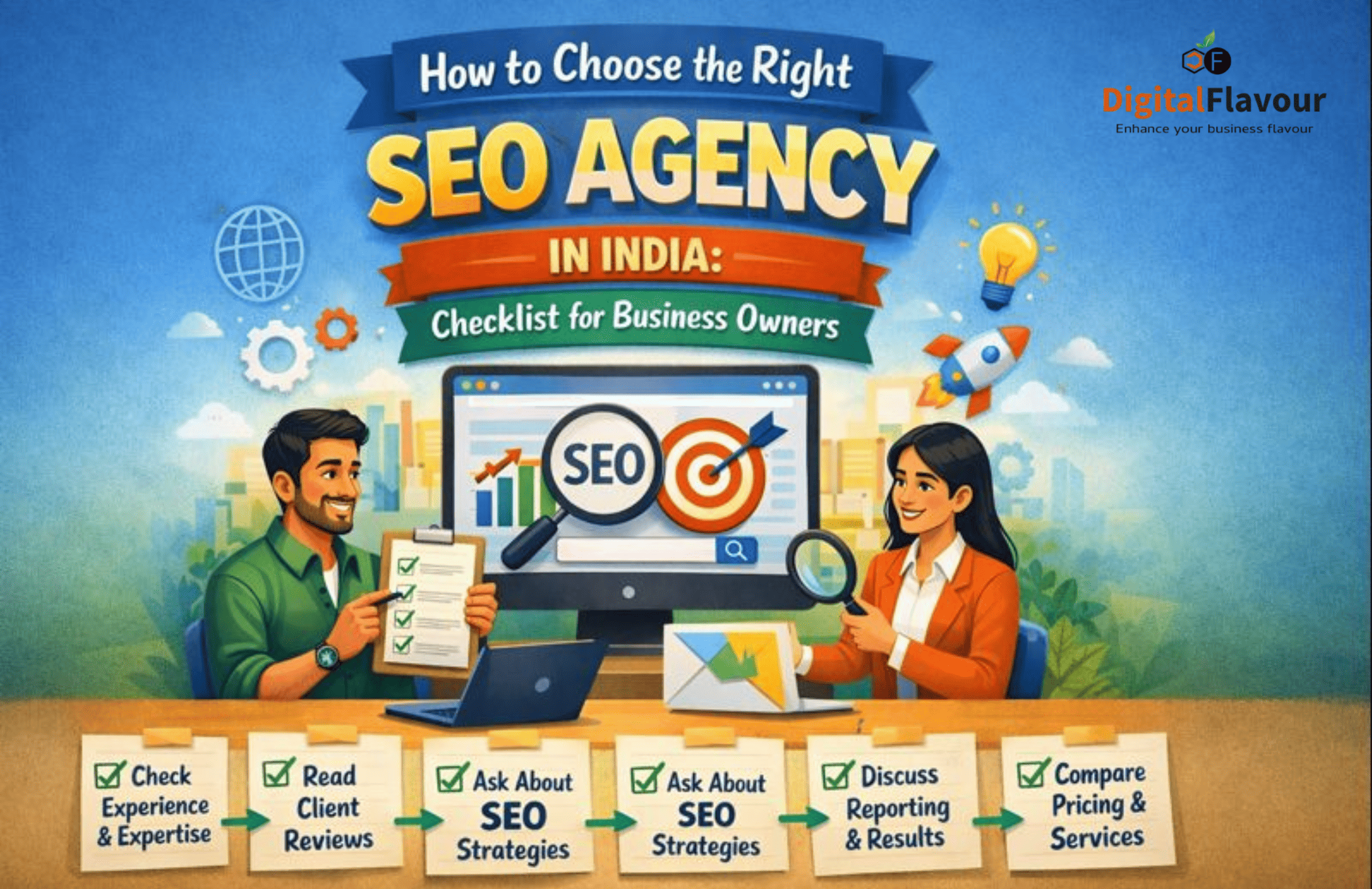
  • Local SEO for Travel Agencies: Dominate ‘Near Me’ Searches in Your City

    Local SEO for Travel Agencies: Dominate ‘Near Me’ Searches in Your City

    Last Updated: September 2025 | Reading Time: 16 minutes

    In today’s hyperconnected world, travelers still crave the personal touch that only local travel agencies can provide. Despite the dominance of online booking platforms, 68% of travelers prefer working with local travel agents for complex trips, and “travel agent near me” searches have increased by 156% since 2023.

    If your travel agency isn’t appearing in local search results, you’re missing out on a goldmine of ready-to-book customers actively searching for your services. This comprehensive guide by Digital Flavour, leading Digital Marketing Agency for Travel Agency will show you exactly how to dominate local search results and capture more “near me” searches than your competitors.

    Why Local SEO is Critical for Travel Agencies {#why-local-seo-critical}

    The Local Advantage in Travel

    While online travel agencies (OTAs) dominate broad keyword searches, local travel agencies have a significant advantage in location-based searches. Here’s why local SEO should be your primary focus:

    Trust Factor: 92% of travelers trust recommendations from local businesses more than online reviews from strangers. When someone searches for “travel agent near me,” they’re looking for personalized service and local expertise.

    Lower Competition: While competing with Expedia and Booking.com for “vacation packages” is nearly impossible, ranking #1 for “travel agent in [your city]” is entirely achievable with the right strategy.

    Higher Conversion Rates: Local searches convert 5x higher than general searches because the intent is clearer—these prospects are ready to meet and book.

    The Numbers Don’t Lie

    Recent industry data reveals the power of local SEO for travel agencies:

    • 73% of local searches result in a phone call or visit within 24 hours
    • “Near me” searches have grown 900% over the past two years
    • 46% of Google searches have local intent
    • Local businesses with complete Google Business Profiles are 70% more likely to attract location visits
    • 78% of mobile local searches result in offline purchases

    Understanding Local Search Behavior {#local-search-behavior}

    How Travelers Search Locally

    Understanding search patterns helps you optimize for actual user behavior:

    Primary Search Patterns:

    1. “Travel agent near me” – 12,100 monthly searches
    2. “Travel agency in [city]” – 8,900 monthly searches
    3. “Best travel agent [city]” – 6,400 monthly searches
    4. “Local travel agency” – 4,200 monthly searches
    5. “Travel agent [zip code]” – 2,800 monthly searches

    Search Intent Analysis:

    Immediate Need Searches (High Commercial Intent):

    • “Travel agent open now”
    • “Emergency travel booking near me”
    • “Same day travel agent”
    • “Walk-in travel agency”

    Research Phase Searches (Medium Commercial Intent):

    • “Best travel agencies in [city]”
    • “Travel agent reviews [city]”
    • “Local vs online travel booking”
    • “Travel agent consultation near me”

    Service-Specific Searches (High Commercial Intent):

    • “Honeymoon planner [city]”
    • “Corporate travel agent near me”
    • “Group travel organizer [city]”
    • “Luxury travel consultant [city]”

    Mobile vs Desktop Local Search

    Mobile devices account for 78% of local travel searches, with distinct behavior patterns:

    Mobile Search Characteristics:

    • Voice searches: 27% of mobile local searches are voice-activated
    • Immediate action: 76% visit a location within 24 hours
    • Call directly: 61% call the business immediately
    • Quick decisions: Average of 2.3 businesses considered before choosing

    Desktop Search Characteristics:

    • Research-focused: Users compare 4.7 businesses on average
    • Detailed information: Spend 3.2x longer on business websites
    • Multiple sessions: 68% return to research before booking
    • Form submissions: 43% prefer contact forms over phone calls

    Google Business Profile Mastery {#google-business-profile}

    Your Google Business Profile (GBP) is the foundation of local SEO success. It’s often the first impression potential customers have of your travel agency.

    Complete Profile Optimization

    Business Information Essentials

    Business Name: Use your exact legal business name. Avoid keyword stuffing like “ABC Travel Agency – Best Tours in Chicago.” This can result in suspension.

    Correct: “Wanderlust Travel Agency” ❌ Incorrect: “Wanderlust Travel Agency – Best Deals & Tours Chicago”

    Primary Category: Select “Travel agency” as your primary category. This is crucial for appearing in relevant searches.

    Additional Categories (Choose up to 9 more):

    • Tour operator
    • Cruise agency
    • Corporate travel agency
    • Travel insurance agency
    • Visa consultant
    • Travel insurance consultant
    • Event planner (if you organize travel events)
    • Wedding planner (if you specialize in destination weddings)

    Business Description (750 characters maximum): Craft a compelling description that includes:

    • Your unique value proposition
    • Key services offered
    • Years of experience
    • Service areas
    • Specializations

    Example Description: “Established in 2010, Wanderlust Travel Agency specializes in custom vacation packages, luxury tours, and corporate travel management. Our certified travel advisors have planned over 5,000 trips to 80+ countries. We offer personalized service, competitive pricing, and 24/7 travel support. Serving Chicago and surrounding areas with expertise in European tours, tropical getaways, adventure travel, and destination weddings. Free consultation available.”

    Service Areas and Location Strategy

    Physical Location Strategy:

    • Include your complete address with suite/unit numbers
    • Ensure your location is accurate to within 10 meters
    • Use a consistent address format across all platforms
    • If you work from home, consider a virtual office or coworking space

    Service Area Optimization: Define your service areas strategically. Instead of selecting entire states, choose specific cities and regions where you actively market:

    Strategic Service Area Selection:

    • Primary city (where your office is located)
    • Surrounding suburbs (within 50-mile radius)
    • Secondary markets where you have clients
    • Tourist destinations you specialize in

    Visual Content Strategy

    Photo Optimization for Travel Agencies

    Your visual content directly impacts click-through rates and bookings. With over 3.5 billion searches conducted daily on Google, having a Google Business Profile ensures that your travel agency appears in relevant search results.

    Essential Photo Categories:

    1. Exterior Photos (3-5 photos)

    • Street view of your office
    • Building entrance with signage
    • Parking information
    • Accessibility features

    2. Interior Photos (5-8 photos)

    • Reception area
    • Consultation rooms
    • Team working spaces
    • Awards and certifications displayed

    3. Team Photos (3-5 photos)

    • Professional headshots of travel advisors
    • Team meeting photos
    • Staff helping clients
    • Travel certification displays

    4. Destination Showcase (10-15 photos)

    • High-quality images of popular destinations
    • Client travel photos (with permission)
    • Tour groups you’ve organized
    • Special events and experiences

    5. Behind-the-Scenes (3-5 photos)

    • Planning sessions
    • Map and itinerary creation
    • Client testimonial moments
    • Office culture and events

    Photo Optimization Tips:

    • Resolution: Upload high-resolution images (minimum 720px wide)
    • File names: Use descriptive names like “chicago-travel-agency-office.jpg”
    • Geotagging: Include location data in photo metadata
    • Regular updates: Add new photos monthly to show activity
    • Seasonal content: Update with seasonal destination photos

    Google Posts Strategy

    Google Posts appear directly in your business profile and can significantly boost engagement and local rankings.

    Content Calendar for Google Posts

    Weekly Post Schedule:

    Monday – Destination Spotlight

    • Featured destination of the week
    • Travel tips and insights
    • Best time to visit information
    • Include booking CTA

    Wednesday – Travel Tips

    • Packing advice
    • Travel safety tips
    • Cultural insights
    • Seasonal travel recommendations

    Friday – Client Success Stories

    • Anonymous client testimonials
    • Trip highlights
    • Photo galleries from client trips
    • Social proof elements

    Special Posts:

    • Holiday Travel Alerts: During peak seasons
    • Last-Minute Deals: For immediate bookings
    • Travel Warnings: Safety and health updates
    • New Service Announcements: Business updates

    Post Optimization Best Practices

    Content Structure:

    • Hook: Start with an attention-grabbing first line
    • Value: Provide useful information or insights
    • CTA: Clear call-to-action for engagement
    • Keywords: Include location-based keywords naturally

    Example Google Post: “🌺 Planning a Hawaiian getaway? Our Maui packages include oceanview accommodations, snorkeling tours, and traditional luau experiences. Perfect for Chicago residents escaping winter! Book your consultation today and save $200 on bookings made this month. #HawaiiTravel #ChicagoTravel”

    Q&A Optimization

    Proactively manage your Q&A section to control the narrative and provide valuable information.

    Essential Questions to Add:

    1. “What travel destinations do you specialize in?” Answer: “We specialize in European tours, Caribbean getaways, African safaris, and Asian adventures. Our team has personal experience in over 80 countries and can create custom itineraries for any destination.”
    2. “Do you offer payment plans for vacation packages?” Answer: “Yes! We offer flexible payment plans with as little as $200 down and up to 12 months to pay. We also accept all major credit cards and offer travel insurance options.”
    3. “What’s included in your travel planning services?” Answer: “Our full-service planning includes flights, accommodations, transportation, tours, restaurant reservations, and 24/7 travel support. We handle all details so you can focus on enjoying your trip.”
    4. “How far in advance should I book my vacation?” Answer: “We recommend 3-6 months for international travel and 6-8 weeks for domestic trips. However, we can arrange last-minute travel within 48 hours for urgent needs.”
    5. “Do you charge consultation fees?” Answer: “Your first consultation is always free! We’ll discuss your travel dreams, provide destination recommendations, and create a preliminary itinerary at no cost.”

    Local Keyword Strategy {#local-keyword-strategy}

    Geographic Keyword Research

    Local SEO for travel agencies requires a different approach to keyword research. You’re not just competing for travel terms—you’re dominating location-based searches.

    Primary Local Keywords

    High-Volume Local Keywords:

    • “travel agent [city]” – Primary focus keyword
    • “travel agency [city]” – Secondary focus
    • “[city] travel services” – Service-based variation
    • “vacation packages [city]” – Product-focused
    • “tour operator [city]” – Service specialty

    Long-Tail Local Keywords (Higher Conversion Rate):

    • “best travel agent in [city] for [destination]”
    • “[city] travel agency for honeymoons”
    • “corporate travel services [city]”
    • “family vacation planner [city]”
    • “luxury travel consultant [city]”

    Service Area Expansion Keywords

    If you serve multiple cities or regions:

    Multi-Location Strategy:

    • Create dedicated pages for each service area
    • Use “serving [city1], [city2], and [city3]” in content
    • Include “near [landmark]” variations
    • Target neighborhood-specific terms

    Example Multi-Location Content: “Serving Chicago, Naperville, Schaumburg, and Northwest Suburbs” “Located in downtown Chicago, convenient to O’Hare and Midway airports” “Travel planning services throughout Chicagoland area”

    Competitor Keyword Analysis

    Understanding what keywords your local competitors rank for helps identify opportunities.

    Local Competitor Research Process:

    Step 1: Identify top 5 local travel agency competitors Step 2: Analyze their Google Business Profiles for keyword usage Step 3: Review their website content and meta descriptions Step 4: Use SEO tools to uncover their ranking keywords Step 5: Identify keyword gaps where you can compete

    Common Competitor Keyword Gaps:

    • Specialized travel types (adventure, wellness, eco-tourism)
    • Specific destinations they don’t promote
    • Service offerings they don’t highlight
    • Demographic-specific terms (senior travel, family travel)

    Content Mapping for Local Keywords

    Create a strategic content plan that targets different local keyword variations:

    Page-Level Keyword Targeting:

    Homepage:

    • Primary: “travel agency [city]”
    • Secondary: “vacation packages [city]”, “[city] travel services”

    Services Pages:

    • “/honeymoon-packages/” → “honeymoon travel agent [city]”
    • “/corporate-travel/” → “business travel services [city]”
    • “/group-travel/” → “group vacation planner [city]”

    Destination Pages:

    • “/europe-tours/” → “[city] to Europe travel packages”
    • “/caribbean-vacations/” → “Caribbean vacation packages from [city]”

    Location Pages (if serving multiple areas):

    • “/naperville-travel-agency/” → “travel agent Naperville IL”
    • “/schaumburg-travel-services/” → “Schaumburg travel agency”

    Citation Building and NAP Consistency {#citation-building}

    Citation building is the process of getting your business name, address, and phone number (NAP) listed consistently across the web. For travel agencies, this is crucial for local search visibility.

    NAP Consistency Rules

    NAP Format Standardization: Your business information must be identical across all platforms. Even minor variations can hurt your local rankings.

    Correct NAP Example:

    • Name: Wanderlust Travel Agency
    • Address: 123 Main Street, Suite 456, Chicago, IL 60601
    • Phone: (312) 555-0123

    Common NAP Mistakes to Avoid: ❌ Using different business name variations ❌ Abbreviating street names inconsistently (St. vs Street) ❌ Including suite numbers on some listings but not others ❌ Using different phone number formats ❌ Mixing P.O. Boxes with physical addresses

    High-Authority Citation Sources

    Travel Industry Directories

    Tier 1 Citations (Highest Priority):

    • TripAdvisor Business Listings – Essential for travel credibility
    • Yelp for Business – Major review platform with high domain authority
    • Better Business Bureau – Trust and credibility signal
    • Google Business Profile – Already covered but most important
    • Bing Places – Microsoft’s local platform

    Tier 2 Citations (High Priority):

    • Yellow Pages – Traditional directory with strong local authority
    • Superpages – Comprehensive business directory
    • Whitepages – Local business listings
    • Citysearch – Local discovery platform
    • Hotfrog – Business directory with good SEO value

    Tier 3 Citations (Good to Have):

    • Foursquare – Location-based platform
    • Factual – Data aggregator that feeds other platforms
    • InfoUSA – Business data provider
    • Acxiom – Data management platform
    • Localeze – Business listing service

    Travel-Specific Directories

    Industry Authority Citations:

    • ASTA (American Society of Travel Advisors) – Professional association
    • IATAN (International Airlines Travel Agent Network) – Travel agent certification
    • Cruise Lines International Association (CLIA) – Cruise specialist directory
    • Local tourism boards – City/state tourism directories
    • Chamber of Commerce – Local business authority

    Citation Building Process

    Phase 1: Audit Existing Citations (Week 1)

    Citation Audit Checklist:

    1. Search “[Business Name] + [City]” in Google
    2. Check first 3 pages of results for existing citations
    3. Document NAP variations found
    4. Note incomplete or incorrect listings
    5. Identify duplicate listings that need merging

    Tools for Citation Auditing:

    • Free: Manual Google searches, Bing searches
    • Paid: BrightLocal Local Search Results Checker, Whitespark Citation Tracker

    Phase 2: Fix Existing Issues (Week 2-3)

    Priority Order:

    1. Claim and verify unclaimed listings
    2. Correct NAP inconsistencies on major platforms
    3. Complete incomplete profiles with full information
    4. Merge duplicate listings where possible
    5. Remove outdated listings for old locations/phones

    Phase 3: Build New Citations (Week 4-8)

    Strategic Citation Building:

    • Submit to 5-10 new directories per week
    • Focus on high-authority general directories first
    • Add travel-specific directories second
    • Include local/city-specific directories third
    • Monitor for approval and listing activation

    Local Link Building Through Citations

    Transform citations into valuable backlinks:

    Value-Added Citation Strategy:

    1. Complete all available fields in directory listings
    2. Add detailed business descriptions with keywords
    3. Include high-quality photos when possible
    4. Link to specific landing pages rather than just homepage
    5. Encourage reviews on citation platforms

    Review Management Strategy {#review-management}

    Online reviews are crucial for local search rankings and customer trust. For a travel agency operating in a certain city, region, or country, local SEO matters. It allows your agency to show up in the local search results, on Google Maps, and “search near me” inquiries.

    Review Platform Priority

    Primary Review Platforms (Focus 80% of effort):

    1. Google Business Profile

    • Impact: Directly affects local search rankings
    • Visibility: Reviews appear in search results and Maps
    • Response Time: Respond within 24 hours
    • Target: 4.5+ star average with 50+ reviews

    2. Facebook Business Page

    • Impact: Social signals affect SEO
    • Visibility: Reviews appear in Facebook search and timeline
    • Response Time: Respond within 2 hours during business hours
    • Target: 4.8+ star average with 25+ reviews

    3. TripAdvisor

    • Impact: Industry-specific authority
    • Visibility: High visibility for travel-related searches
    • Response Time: Respond within 48 hours
    • Target: 4.5+ star average with 30+ reviews

    Secondary Review Platforms (Focus 20% of effort):

    • Yelp: Important for urban areas
    • Better Business Bureau: Trust and credibility
    • Travel Weekly: Industry professional network
    • Local tourism websites: City-specific platforms

    Review Generation System

    Automated Review Request Process

    Client Journey Touchpoints:

    1. Post-Consultation Follow-Up (24 hours after meeting) Email template: “Thank you for visiting our office yesterday. We hope our travel recommendations were helpful. If you were satisfied with our consultation, we’d greatly appreciate a quick review on Google. It helps other Chicago travelers discover our services.”

    2. Pre-Departure Check-In (1 week before travel) “Your [destination] adventure begins in one week! We’re excited for you. If our planning process exceeded your expectations, please consider leaving a review to help other families plan their perfect getaways.”

    3. Post-Trip Follow-Up (1 week after return) “Welcome back from [destination]! We hope you had an amazing time. We’d love to hear about your experience and would appreciate a review sharing how our planning helped make your trip memorable.”

    4. Anniversary Outreach (1 year after trip) “It’s been a year since your incredible [destination] adventure! We hope you’re already dreaming of your next getaway. A review sharing your experience would mean the world to us.”

    Review Request Best Practices

    Timing Strategy:

    • Best time to ask: When client is most satisfied (just booked dream trip)
    • Avoid asking: During problem resolution or complaints
    • Follow-up timing: 1 week after initial request (if no response)
    • Stop asking: After client leaves a review (positive or negative)

    Channel Strategy:

    • Email: Most effective for detailed review requests
    • Text: Good for quick, casual requests
    • Phone: Personal touch for VIP clients
    • In-person: During positive moments in consultation

    Review Response Strategy

    Response Templates for Different Scenarios

    5-Star Review Response: “Thank you, [Name]! We’re thrilled that you loved your [destination] experience. It was our pleasure helping plan every detail of your trip. We can’t wait to help you plan your next adventure! For anyone reading this review, we offer free consultations for all your travel planning needs.”

    4-Star Review Response: “Thank you for your feedback, [Name]! We’re so glad you enjoyed your [destination] trip. We appreciate your suggestions for improvement and will definitely take them into consideration. We hope to help you plan another amazing adventure soon!”

    3-Star Review Response: “Thank you for your honest feedback, [Name]. We appreciate you taking the time to share your experience. We’d love to discuss how we can improve and make things right. Please call us at [phone] so we can address your concerns directly.”

    1-2 Star Review Response: “We sincerely apologize that your experience didn’t meet expectations, [Name]. This is not the level of service we strive to provide. We’d like to make this right and learn from this situation. Please contact us directly at [phone] or [email] so we can resolve these issues immediately.”

    Advanced Review Management

    Review Monitoring Setup:

    • Google Alerts: Set up alerts for your business name + “review”
    • Social media monitoring: Track mentions across platforms
    • Review management tools: Consider BirdEye or Podium for automation
    • Weekly audits: Check all platforms for new reviews

    Internal Review Training:

    • Response time goals: Google (24 hours), Facebook (2 hours), others (48 hours)
    • Tone guidelines: Professional, appreciative, solution-focused
    • Escalation process: When to involve management vs. frontline staff
    • Review analysis: Monthly review of feedback patterns and improvements

    Local Content Marketing {#local-content-marketing}

    Travel-related local SEO in the year 2025 highly depends on blogging as a fundamental operational component. Content marketing for local SEO requires a strategic approach that combines location-specific information with travel expertise.

    Local Content Pillars

    Pillar 1: Local Travel Expertise

    “From [Your City]” Destination Guides:

    • “Ultimate Guide to Traveling from Chicago to Europe”
    • “Best Flight Deals from [Your City] Airport”
    • “[Your City] Residents’ Guide to Caribbean Vacations”
    • “How to Travel from [Your City] to Asia: Routes, Tips & Costs”

    Content Elements:

    • Flight times and connections from local airports
    • Seasonal pricing patterns for your area
    • Local travel group meetups and events
    • Packing advice for your local climate

    Pillar 2: Community Integration

    Local Event and Travel Connections:

    • “Spring Break Options for [Local University] Students”
    • “Where [Local Sports Team] Fans Travel for Away Games”
    • “[City] Festival Calendar: Plan Your Travel Around Home Events”
    • “Business Travel Tips for [Local Corporate District] Professionals”

    Community Partnership Content:

    • Local restaurant owner’s recommendations for Italy
    • [City] photographer’s guide to the most photogenic destinations
    • Local language teacher’s tips for traveling to [relevant countries]
    • [City] chef’s guide to authentic cuisine destinations

    Pillar 3: Seasonal Local Content

    Weather-Driven Travel Planning:

    • “Escape [City] Winter: Warm Weather Destinations Guide”
    • “Beat the [City] Heat: Cool Summer Getaway Ideas”
    • “Perfect Fall Trips for [City] Residents”
    • “Spring Break Alternatives to Crowded Destinations”

    Local Event-Triggered Content:

    • Travel ideas during [local major event when hotels are expensive]
    • Shoulder season opportunities when locals travel less
    • Holiday travel planning for [city] families
    • Weather delay alternatives for [local airport]

    Location-Based Landing Pages

    Service Area Landing Pages

    Create dedicated pages for each area you serve:

    Template Structure for “[City] Travel Agency” Pages:

    H1: Travel Agency in [City] | Vacation Packages & Travel Planning
    H2: Why Choose [Your Agency] for Your [City] Travel Needs?
    H2: Popular Destinations for [City] Travelers
    H2: Travel Services in [City]
    H2: [City] Travel Resources
    H2: Contact Our [City] Travel Experts
    

    Content Optimization Elements:

    • Local landmarks and neighborhoods mentioned naturally
    • Distance/drive time from different parts of the city
    • Local airport codes and transportation options
    • Area demographics alignment (family-friendly for suburb pages)
    • Local business partnerships and referrals

    Neighborhood-Specific Content

    Hyper-Local Pages for Large Cities:

    • “[Neighborhood] Residents: Your Local Travel Planning Resource”
    • “Travel Agency Near [Popular Local Landmark]”
    • “[ZIP Code] Travel Services: Custom Vacation Planning”

    Micro-Local SEO Elements:

    • School district mentions for family-oriented travel
    • Public transportation accessibility for urban clients
    • Local parking and accessibility information
    • Neighborhood-specific travel preferences and budgets

    Local Event and News Integration

    Travel News with Local Angles

    Monthly Content Calendar:

    January: “New Year, New Destinations: 2026 Travel Trends for [City] Residents” February: “Valentine’s Getaways: Romantic Destinations from [City]” March: “Spring Break Planning: [Local University] Student Discounts” April: “Easter Travel: Family-Friendly Destinations from [City]” May: “Summer Travel Planning: Beat the [City] Heat” June: “Graduation Trip Ideas for [Local High Schools]” July: “[City] Summer Events vs. Travel: When to Stay, When to Go” August: “Back-to-School Travel: Last Family Trips Before School” September: “Fall Foliage Tours from [City]” October: “Halloween Around the World: Spooky Destinations” November: “Thanksgiving Travel: Alternatives to Family Visits” December: “Holiday Travel: Christmas Markets and Winter Getaways”

    Local News Integration

    Travel Angles for Local Events:

    • Major local sporting events → Travel packages for away games
    • City festivals → Alternative destinations during busy/expensive periods
    • Local business news → Corporate travel services promotion
    • Weather events → Alternative destination recommendations
    • Airport news → Travel advice and alternatives

    Technical Local SEO {#technical-local-seo}

    Website Structure for Multi-Location Agencies

    URL Structure Best Practices

    Single Location Agency:

    yoursite.com/ (homepage)
    yoursite.com/services/ (main services)
    yoursite.com/destinations/ (travel destinations)
    yoursite.com/about/ (about your agency)
    yoursite.com/contact/ (contact information)
    

    Multi-Location Agency:

    yoursite.com/ (corporate homepage)
    yoursite.com/chicago/ (Chicago location)
    yoursite.com/milwaukee/ (Milwaukee location)
    yoursite.com/chicago/services/ (Chicago services)
    yoursite.com/chicago/contact/ (Chicago contact)
    

    Local Schema Markup Implementation

    Organization Schema for Travel Agency:

    {
      "@context": "https://schema.org",
      "@type": "TravelAgency",
      "name": "Wanderlust Travel Agency",
      "image": "https://yoursite.com/images/logo.jpg",
      "address": {
        "@type": "PostalAddress",
        "streetAddress": "123 Main Street, Suite 456",
        "addressLocality": "Chicago",
        "addressRegion": "IL",
        "postalCode": "60601",
        "addressCountry": "US"
      },
      "geo": {
        "@type": "GeoCoordinates",
        "latitude": "41.8781",
        "longitude": "-87.6298"
      },
      "telephone": "+1-312-555-0123",
      "email": "info@wanderlusttravel.com",
      "url": "https://wanderlusttravel.com",
      "openingHoursSpecification": [
        {
          "@type": "OpeningHoursSpecification",
          "dayOfWeek": ["Monday", "Tuesday", "Wednesday", "Thursday", "Friday"],
          "opens": "09:00",
          "closes": "17:00"
        },
        {
          "@type": "OpeningHoursSpecification", 
          "dayOfWeek": "Saturday",
          "opens": "10:00",
          "closes": "15:00"
        }
      ],
      "priceRange": "$$",
      "hasMap": "https://maps.google.com/maps?q=123+Main+Street+Chicago+IL",
      "sameAs": [
        "https://facebook.com/wanderlusttravel",
        "https://twitter.com/wanderlusttravel",
        "https://instagram.com/wanderlusttravel"
      ]
    }
    

    LocalBusiness Schema for Additional Locations:

    {
      "@context": "https://schema.org",
      "@type": "LocalBusiness",
      "name": "Wanderlust Travel Agency - Naperville",
      "parentOrganization": {
        "@type": "Organization",
        "name": "Wanderlust Travel Agency"
      },
      "address": {
        "@type": "PostalAddress",
        "streetAddress": "456 Oak Avenue",
        "addressLocality": "Naperville", 
        "addressRegion": "IL",
        "postalCode": "60540",
        "addressCountry": "US"
      },
      "telephone": "+1-630-555-0456",
      "openingHours": "Mo,Tu,We,Th,Fr 09:00-17:00 Sa 10:00-15:00"
    }
    

    Mobile Optimization for Local Search

    Mobile-First Local UX

    Essential Mobile Features:

    • Click-to-call buttons: Prominently placed phone numbers
    • Directions integration: One-click Google Maps integration
    • Location finder: GPS-based location detection
    • Mobile forms: Simplified contact and consultation request forms
    • Local hours: Clearly displayed with current status (open/closed)

    Mobile Page Speed Optimization:

    • Target speed: Under 3 seconds on 3G connection
    • Core Web Vitals: Focus on mobile scores specifically
    • Image optimization: WebP format with proper sizing
    • Local caching: Cache location-specific content

    Local Mobile Content Strategy

    Above-the-fold local elements:

    1. Business name and location
    2. Phone number (clickable)
    3. “Get Directions” button
    4. Current hours and status
    5. Primary service offering

    Local mobile user scenarios:

    • Tourist looking for travel agent while visiting your city
    • Local resident searching during lunch break
    • Someone comparing multiple agencies on mobile
    • Last-minute travel emergency situations

    Voice Search Optimization

    Your website must be responsive and mobile-friendly … Optimize for voice queries like “Which travel agency is open now in Ahmedabad?” or “Best family”.

    Voice Query Patterns for Travel Agencies

    Common Voice Searches:

    • “Travel agency near me”
    • “What travel agencies are open now?”
    • “Best travel agent in [city]”
    • “How do I contact [your business name]?”
    • “Travel agency phone number”
    • “Directions to [your business name]”

    Content Optimization for Voice:

    • Natural language: Write how people actually speak
    • Question format: Include questions as headings (H2, H3)
    • Complete answers: Provide full answers to common questions
    • Local context: Include city and neighborhood names naturally

    FAQ Schema for Voice Search:

    {
      "@context": "https://schema.org",
      "@type": "FAQPage",
      "mainEntity": [
        {
          "@type": "Question",
          "name": "What travel agencies are open in Chicago on Saturday?",
          "acceptedAnswer": {
            "@type": "Answer",
            "text": "Wanderlust Travel Agency in Chicago is open Saturdays from 10 AM to 3 PM. We're located at 123 Main Street in downtown Chicago and offer walk-in consultations or you can call (312) 555-0123 to schedule an appointment."
          }
        },
        {
          "@type": "Question", 
          "name": "How much does it cost to use a travel agent in Chicago?",
          "acceptedAnswer": {
            "@type": "Answer",
            "text": "Most Chicago travel agencies offer free initial consultations. Service fees vary by complexity, typically ranging from $50-200 for domestic trips and $100-500 for international travel. Many agencies waive fees when you book packages through them."
          }
        }
      ]
    }
    

    Measuring Local SEO Success {#measuring-success}

    Key Local SEO Metrics

    Google Business Profile Analytics

    Primary Metrics to Track Monthly:

    Discovery Metrics:

    • Direct searches: People searching for your business name
    • Discovery searches: People finding you through category searches
    • Branded vs. non-branded: Ratio of direct to discovery searches
    • Search query terms: What people search to find you

    Engagement Metrics:

    • Profile views: Total monthly profile views
    • Website clicks: Clicks from GBP to your website
    • Direction requests: How many people ask for directions
    • Phone calls: Calls generated from your profile

    Conversion Tracking:

    • Actions per view: Engagement rate on your profile
    • Photo views: Engagement with your visual content
    • Post engagement: Likes, comments, shares on Google Posts
    • Q&A activity: Questions asked and engagement with answers

    Local Ranking Tracking

    Tools for Local Rank Tracking:

    • BrightLocal Local Search Results Checker: Free tool for basic tracking
    • SEMrush Position Tracking: Comprehensive keyword and local tracking
    • Ahrefs Rank Tracker: Include local modifiers in keyword lists
    • Whitespark Local Rank Tracker: Specialized local SEO tool

    Key Phrases to Track:

    1. “travel agent [your city]”
    2. “travel agency [your city]”
    3. “vacation packages [your city]”
    4. “[your city] travel services”
    5. “travel agent near me” (when searched from your location)
    6. “best travel agent [your city]”
    7. Service-specific: “honeymoon planner [your city]”
    8. Competitor brand names + “alternative”

    Local Search Console Insights

    Geographic Performance Analysis

    Search Console Local Data:

    • Queries by location: Where your search traffic comes from
    • Click-through rates: Local vs. non-local search performance
    • Position tracking: Average positions for local keywords
    • Mobile vs. desktop: Local search behavior differences

    Monthly Analysis Process:

    1. Filter by location: Focus on your target service areas
    2. Identify top queries: Most important local search terms
    3. Track position changes: Month-over-month ranking improvements
    4. Analyze click-through rates: Optimize for better CTR
    5. Mobile performance: Ensure mobile local optimization

    Local Content Performance

    Content Metrics for Local SEO:

    • Local landing page traffic: Visits to location-specific pages
    • Local blog post engagement: Time on page, bounce rate
    • Internal link clicks: Navigation between local pages
    • Conversion rates: Local traffic converting to leads/bookings

    ROI Measurement for Local SEO

    Attribution Tracking Setup

    Call Tracking Implementation:

    • Unique phone numbers: Different numbers for online vs. offline sources
    • Dynamic number insertion: Show different numbers based on traffic source
    • Call recording: Analyze call quality and conversion rates
    • Call attribution: Connect phone calls to specific marketing channels

    Form Tracking Setup:

    • UTM parameters: Track traffic sources for form submissions
    • Hidden form fields: Capture referring page and source information
    • Conversion goals: Set up Google Analytics goals for form submissions
    • Lead scoring: Qualify leads based on local vs. non-local traffic

    Local SEO ROI Calculation

    Monthly ROI Formula:

    Local SEO ROI = (Local Revenue - Local SEO Costs) / Local SEO Costs × 100
    
    Where:
    Local Revenue = Bookings attributed to local organic traffic
    Local SEO Costs = Time + Tools + Outsourcing costs
    

    Example Calculation:

    • Monthly local SEO effort: 20 hours at $50/hour = $1,000
    • Tool costs: $200/month
    • Total investment: $1,200
    • Revenue from local organic traffic: $6,000
    • ROI: ($6,000 – $1,200) / $1,200 × 100 = 400%

    Advanced Local SEO Tactics {#advanced-tactics}

    Hyperlocal Content Strategy

    Neighborhood-Level Targeting

    Micro-Local Content Creation:

    • ZIP code specific pages: “Travel Agent 60601 Chicago”
    • Neighborhood guides: “Lincoln Park Residents’ Travel Guide”
    • Local landmark content: “Travel Planning Near Navy Pier”
    • School district targeting: “Travel Services for District 95 Families”

    Hyperlocal Keyword Examples:

    • “travel agent downtown [city]”
    • “vacation planning [neighborhood name]”
    • “travel services near [local landmark]”
    • “[ZIP code] travel agency”
    • “travel agent [local mall/shopping center]”

    Community Event Integration

    Local Event Calendar Strategy:

    • Pre-event content: “Where to Travel During [Local Festival]”
    • Alternative destination content: “Skip the Crowds: Travel During [Busy Local Event]”
    • Event-themed trips: “[Local Team] Away Game Travel Packages”
    • Seasonal local content: “[City] Winter Activities vs. Warm Weather Getaways”

    Local Link Building Strategies

    Community Partnership Link Building

    Strategic Local Partnerships:

    Hotels and Accommodations:

    • Partner with local hotels for client referrals
    • Create “staycation” packages with local properties
    • Guest blog about local attractions for hotel websites
    • Cross-promotional content about local events

    Restaurants and Entertainment:

    • Partner with restaurants for pre-trip dining recommendations
    • Create “taste of [destination]” events with ethnic restaurants
    • Collaborate on content about food destinations
    • Cross-link between food experiences and travel planning

    Professional Services:

    • Partner with wedding planners for destination wedding content
    • Collaborate with corporate event planners
    • Cross-refer with photographers who specialize in travel
    • Work with language schools for cultural travel content

    Local Media and PR

    Local Press Opportunities:

    • Travel trend articles: Provide expert commentary on travel trends
    • Seasonal travel advice: Be the go-to expert for local news outlets
    • Economic impact: Discuss how travel affects local economy
    • Safety updates: Provide travel safety advice during global events

    PR Content Ideas:

    • “Local Travel Expert Predicts Top 2026 Destinations”
    • “[Your Name] Named Top Travel Agent in [City]”
    • “[Agency] Helps Local Family Plan Dream European Adventure”
    • “How [City] Residents Can Travel Safely in 2026”

    Advanced Schema and Technical Implementation

    Multi-Location Schema Strategy

    Corporate + Local Schema Combination:

    {
      "@context": "https://schema.org",
      "@type": "Organization",
      "name": "Wanderlust Travel Agency",
      "hasMap": "https://maps.google.com/",
      "department": [
        {
          "@type": "TravelAgency",
          "name": "Wanderlust Travel Agency - Chicago",
          "address": {
            "@type": "PostalAddress",
            "streetAddress": "123 Main Street",
            "addressLocality": "Chicago",
            "addressRegion": "IL",
            "postalCode": "60601"
          },
          "telephone": "+1-312-555-0123"
        },
        {
          "@type": "TravelAgency", 
          "name": "Wanderlust Travel Agency - Naperville",
          "address": {
            "@type": "PostalAddress",
            "streetAddress": "456 Oak Avenue",
            "addressLocality": "Naperville",
            "addressRegion": "IL", 
            "postalCode": "60540"
          },
          "telephone": "+1-630-555-0456"
        }
      ]
    }
    

    Local Event Schema

    Travel Package Schema with Local Connection:

    {
      "@context": "https://schema.org",
      "@type": "TouristTrip",
      "name": "Chicago to Paris Package",
      "description": "7-day Paris vacation package departing from Chicago O'Hare",
      "provider": {
        "@type": "TravelAgency",
        "name": "Wanderlust Travel Agency",
        "address": {
          "@type": "PostalAddress",
          "addressLocality": "Chicago",
          "addressRegion": "IL"
        }
      },
      "offers": {
        "@type": "Offer",
        "price": "2499",
        "priceCurrency": "USD",
        "availability": "https://schema.org/InStock"
      },
      "touristType": "https://schema.org/Family",
      "includesAttraction": [
        {
          "@type": "TouristAttraction",
          "name": "Eiffel Tower",
          "address": {
            "@type": "PostalAddress",
            "addressLocality": "Paris",
            "addressCountry": "France"
          }
        }
      ]
    }
    

    Local Social Media Integration

    Platform-Specific Local Strategies

    Facebook Local Optimization:

    • Facebook Events: Create events for travel information sessions
    • Local Groups: Participate in [City] community groups
    • Facebook Places: Ensure accurate location information
    • Local hashtags: Use #[YourCity]Travel, #[YourCity]Vacation

    Instagram Local Strategy:

    • Geotagging: Tag your business location and client destinations
    • Local hashtags: Mix popular and niche local hashtags
    • Stories highlights: Create “Local Tips” and “[City] Travel” highlights
    • User-generated content: Repost client travel photos with permission

    LinkedIn Local Networking:

    • Local business groups: Join [City] business networking groups
    • Chamber of Commerce: Active participation in local business community
    • Professional associations: Local travel agent organizations
    • Content sharing: Share local travel insights and business updates

    Seasonal Local SEO Optimization

    Seasonal Content Calendar with Local Angles

    Q1 (January-March) – Winter Escape Season:

    • “Escape [City] Winter: Warmest Destinations for [City] Residents”
    • “Spring Break Options for [Local University] Students”
    • “[City] to Warm Weather: Best Flight Deals This Quarter”
    • “Beat the [City] Winter Blues: Sunshine Destinations Guide”

    Q2 (April-June) – Spring Planning Season:

    • “Summer Travel Planning for [City] Families”
    • “Graduation Trip Ideas for [Local High School] Students”
    • “[City] Wedding Season: Honeymoon Planning Guide”
    • “Memorial Day Weekend Getaways from [City]”

    Q3 (July-September) – Peak Travel Season:

    • “Beat the [City] Heat: Cool Mountain Destinations”
    • “Back-to-School Travel: Last Family Trips Before School Starts”
    • “[City] Festival Season: Travel Alternatives”
    • “Labor Day Weekend: Quick Getaways from [City]”

    Q4 (October-December) – Holiday Planning Season:

    • “Holiday Travel Planning for [City] Families”
    • “New Year’s Eve Destinations for [City] Residents”
    • “Thanksgiving Travel Alternatives”
    • “Christmas Market Tours from [City]”

    Conclusion: Your Local SEO Domination Roadmap

    Implementing this comprehensive local SEO strategy will establish your travel agency as the dominant local choice for travelers in your area. Consult local SEO Expert, Digital Flavour.

    Here’s your 90-day implementation roadmap:

    Days 1-30: Foundation and Quick Wins

    Week 1: Google Business Profile Optimization

    • [ ] Complete all GBP fields with accurate information
    • [ ] Upload 15-20 high-quality photos across all categories
    • [ ] Write compelling business description with local keywords
    • [ ] Set up Google Posts content calendar
    • [ ] Enable messaging and Q&A sections

    Week 2: NAP Audit and Consistency

    • [ ] Audit existing citations for NAP inconsistencies
    • [ ] Create standardized NAP format document
    • [ ] Fix major directory listings (Google, Yelp, Facebook)
    • [ ] Claim unclaimed listings found in audit
    • [ ] Document all citation sources in spreadsheet

    Week 3: Local Keyword Research and Planning

    • [ ] Research local travel-related keywords
    • [ ] Identify neighborhood and ZIP code opportunities
    • [ ] Analyze local competitor keywords and strategies
    • [ ] Create local content calendar for next 90 days
    • [ ] Map keywords to existing and new pages

    Week 4: Technical Local SEO Setup

    • [ ] Implement local business schema markup
    • [ ] Create location-specific landing pages
    • [ ] Set up local tracking in Google Analytics
    • [ ] Install call tracking for phone attribution
    • [ ] Optimize for mobile local searches

    Days 31-60: Content and Authority Building

    Week 5-6: Local Content Creation

    • [ ] Publish 4 location-specific blog posts
    • [ ] Create neighborhood service area pages
    • [ ] Develop “[City] to [Destination]” travel guides
    • [ ] Write local travel tip articles
    • [ ] Optimize existing pages for local keywords

    Week 7-8: Citation Building and Local Links

    • [ ] Submit to 20 high-authority local directories
    • [ ] Build 10 travel industry-specific citations
    • [ ] Reach out to 5 local partnership opportunities
    • [ ] Guest post on 2 local blogs or publications
    • [ ] Join local business organizations and chambers

    Days 61-90: Scale and Optimize

    Week 9-10: Review Generation and Management

    • [ ] Implement automated review request system
    • [ ] Create review response templates
    • [ ] Launch review generation campaign
    • [ ] Respond to all existing reviews
    • [ ] Set up review monitoring alerts

    Week 11-12: Advanced Local Tactics

    • [ ] Create hyperlocal neighborhood content
    • [ ] Implement advanced schema markup
    • [ ] Launch local social media campaigns
    • [ ] Develop local partnership link building
    • [ ] Optimize for voice search queries

    Long-Term Success Metrics

    Month 3 Goals:

    • 50+ total Google reviews with 4.5+ star average
    • Top 3 ranking for “travel agent [your city]”
    • 30% increase in local organic traffic
    • 15+ high-quality local citations
    • 25% increase in phone calls from Google Business Profile

    Month 6 Goals:

    • 100+ Google reviews maintaining 4.5+ stars
    • #1 ranking for primary local keywords
    • 75% increase in local organic traffic
    • 50+ local citations across relevant directories
    • 40% increase in consultation bookings from local search

    Month 12 Goals:

    • Dominant local market position
    • 150+ reviews across all platforms
    • 150% increase in local organic revenue
    • Established local partnership network
    • 5+ local media mentions as travel expert

    Maintenance and Ongoing Optimization

    Weekly Tasks (30 minutes):

    • Respond to new reviews
    • Publish 1 Google Post
    • Monitor local search rankings
    • Update business hours/information if changed

    Monthly Tasks (4 hours):

    • Analyze local SEO performance metrics
    • Create and publish 2-3 local content pieces
    • Build 5-10 new local citations
    • Reach out to new partnership opportunities
    • Update seasonal content and offers

    Quarterly Tasks (8 hours):

    • Comprehensive local SEO audit
    • Competitor analysis and strategy adjustment
    • Local link building campaign
    • Community event planning and participation
    • Strategic planning for next quarter

    Common Local SEO Mistakes to Avoid

    Critical Mistakes That Hurt Rankings:

    • NAP inconsistencies across directories
    • Keyword stuffing in business names or descriptions
    • Fake reviews or review manipulation
    • Neglecting mobile optimization for local searches
    • Ignoring negative reviews or responding poorly
    • Inconsistent posting on Google Business Profile
    • Missing local schema markup implementation
    • Poor website loading speed on mobile devices

    The Local SEO Advantage

    By implementing this local SEO strategy, your travel agency will:

    • Capture high-intent local searches before competitors
    • Build trust and credibility in your community
    • Generate more qualified leads at lower cost per acquisition
    • Establish authority as the local travel expert
    • Create sustainable competitive advantages that are difficult to replicate

    Remember: Local SEO is not a one-time project but an ongoing investment in your community presence. The travel agencies that consistently invest in local SEO will dominate their markets while others struggle to compete with online booking platforms.

    Your local dominance starts today. Choose your first 5 tasks from the 90-day roadmap and begin building your local search empire. The travelers in your city are searching for you—make sure they can find you first.

    Ready to become the #1 travel agency in your city?

    Local SEO success requires consistent effort and expertise. Our travel marketing specialists have helped 150+ travel agencies achieve local search dominance. Schedule a free local SEO audit to identify your biggest opportunities and create a customized local domination strategy.

  • Complete Travel Agency SEO Guide: How to Rank #1 for High-Value Keywords in 2026

    Complete Travel Agency SEO Guide: How to Rank #1 for High-Value Keywords in 2026

    Last Updated: September 2025 | Reading Time: 18 minutes

    The travel industry is experiencing unprecedented digital transformation. With 83% of travelers starting their journey with online research and Google processing over 8.5 billion travel-related searches monthly, having a robust SEO strategy isn’t optional—it’s survival.

    This comprehensive travel agency SEO guide will show you exactly how to outrank competitors, capture high-intent travelers, and convert searches into bookings. Whether you’re a boutique travel agency or a growing tour operator, these proven strategies by Digital Flavour, Best Digital Marketing Agency will help you dominate search results in 2026.

    Why Travel Agency SEO is Critical in 2026 {#why-travel-agency-seo-is-critical}

    The Digital Travel Landscape

    The statistics tell a compelling story:

    The Competition Reality Check

    Travel SEO faces unique challenges that make ranking harder than ever:

    1. OTA Domination: Booking.com, Expedia, and Airbnb occupy 60% of top travel search results

    2. High Competition: Travel keywords average 70+ difficulty scores

    3. Seasonal Fluctuations: Search volumes can vary 300% between peak and off-seasons

    4. Complex User Intent: Travelers research for months before booking

    Despite these challenges, independent travel agencies that master SEO or work with experienced agency for SEO Services see:

    • 250% increase in organic traffic within 12 months
    • 180% improvement in lead quality
    • $15 return for every $1 invested in SEO

    Travel Industry SEO Challenges {#travel-industry-challenges}

    Understanding these unique challenges is crucial for developing an effective strategy:

    Challenge #1: Inventory Management & Dynamic URLs

    Travel websites often have thousands of dynamic pages for different destinations, dates, and packages. This creates:

    • Duplicate content issues across similar itineraries
    • Crawl budget waste on low-value pages
    • Index bloat that dilutes page authority

    Solution: Implement proper URL structure with canonical tags and strategic no-indexing of low-value pages.

    Challenge #2: Seasonal Search Patterns

    Travel demand fluctuates dramatically:

    • Summer destinations see 400% search volume increase May-August
    • Winter sports keywords peak November-February
    • Holiday travel spikes create intense competition windows

    Solution: Create content calendars aligned with seasonal trends and optimize for shoulder seasons when competition is lower.

    Challenge #3: Multi-Intent Keywords

    A single search like “Paris vacation” could mean:

    • Researching destinations
    • Comparing packages
    • Ready to book
    • Looking for travel tips

    Solution: Map content to specific search intent stages and create topic clusters around destinations.

    High-Value Keywords Research Strategy {#keyword-research-strategy}

    Understanding Travel Search Intent

    Travel searches follow a predictable pattern:

    1. Inspiration Phase (6-12 months before travel)

    • “best destinations 2026”
    • “romantic getaway ideas”
    • “family vacation spots”

    2. Research Phase (3-6 months before travel)

    • “things to do in [destination]”
    • “[destination] travel guide”
    • “best time to visit [destination]”

    3. Booking Phase (1-3 months before travel)

    • “[destination] vacation packages”
    • “[destination] travel agency”
    • “book [destination] tour”

    High-Value Keyword Categories

    Destination-Specific Keywords (High Volume, High Competition)

    • “[Destination] vacation packages” – 8,100 monthly searches
    • “[Destination] tours” – 6,600 monthly searches
    • “[Destination] travel guide” – 4,400 monthly searches
    • “best time to visit [destination]” – 3,600 monthly searches

    Service-Based Keywords (Medium Volume, Lower Competition)

    • “custom travel planning” – 1,900 monthly searches
    • “group travel packages” – 1,600 monthly searches
    • “luxury travel agent” – 1,300 monthly searches
    • “corporate travel services” – 1,100 monthly searches

    Long-tail Opportunity Keywords (Lower Volume, High Conversion)

    • “all inclusive [destination] packages” – 880 monthly searches
    • “[destination] honeymoon packages” – 720 monthly searches
    • “family friendly [destination] tours” – 590 monthly searches
    • “budget [destination] travel packages” – 480 monthly searches

    Advanced Keyword Research Techniques

    1. Competitor Gap Analysis

    Identify keywords your competitors rank for that you don’t:

    Tools: Ahrefs, SEMrush, or SpyFu
    Process: 
    - Enter 3-5 competitor URLs
    - Export their ranking keywords
    - Filter by position 1-10
    - Cross-reference with your rankings
    - Prioritize gaps with high search volume
    

    2. Question-Based Keywords

    Travelers ask 2.4 billion questions monthly about travel. Target these with dedicated FAQ pages:

    • “How much does a [destination] trip cost?”
    • “What documents do I need for [destination]?”
    • “Is [destination] safe for solo travelers?”

    3. Local + Travel Combinations

    Combine your location with travel services:

    • “[Your City] travel agency”
    • “Travel agent near me”
    • “[Your City] vacation packages”

    Technical SEO Foundation {#technical-seo-foundation}

    Technical SEO is the foundation of travel website success. Here’s your step-by-step implementation guide:

    Site Architecture for Travel Websites

    Optimal URL Structure

    ✅ Good: yoursite.com/destinations/italy/rome-vacation-packages
    ❌ Bad: yoursite.com/packages?dest=IT&city=ROM&type=vacation
    

    Best Practices:

    • Use descriptive, keyword-rich URLs
    • Keep URLs under 60 characters
    • Include primary keyword in URL
    • Use hyphens to separate words
    • Implement consistent structure across all pages

    Internal Linking Strategy

    Create logical content hierarchies:

    Homepage
    ├── Destinations
    │   ├── Europe
    │   │   ├── Italy
    │   │   │   ├── Rome Tours
    │   │   │   ├── Florence Packages
    │   │   │   └── Venice Travel Guide
    │   │   └── France
    │   └── Asia
    └── Travel Services
        ├── Group Travel
        ├── Corporate Travel
        └── Luxury Travel
    

    Page Speed Optimization

    Site speed directly impacts rankings and conversions. Travel sites average 4.2 seconds load time, but optimal performance requires under 2 seconds.

    Critical Optimizations:

    1. Image Compression

    • Use WebP format (30% smaller than JPEG)
    • Implement lazy loading for destination galleries
    • Compress images to under 100KB without quality loss
    • Use responsive images with srcset attributes

    2. Caching Strategy

    • Enable browser caching (1 year for static assets)
    • Implement CDN for global content delivery
    • Use page caching for destination pages
    • Cache API calls for package pricing

    3. Code Optimization

    • Minify CSS, JavaScript, and HTML
    • Remove unused code and plugins
    • Combine CSS files to reduce HTTP requests
    • Use async loading for non-critical JavaScript

    Schema Markup for Travel

    Schema markup helps search engines understand your travel content better. Implement these travel-specific schemas:

    Organization Schema

    {
      "@context": "https://schema.org",
      "@type": "TravelAgency",
      "name": "Your Travel Agency",
      "url": "https://yourtravelagency.com",
      "address": {
        "@type": "PostalAddress",
        "streetAddress": "123 Travel Street",
        "addressLocality": "Your City",
        "postalCode": "12345",
        "addressCountry": "US"
      },
      "telephone": "+1-555-123-4567",
      "openingHours": "Mo,Tu,We,Th,Fr 09:00-17:00"
    }
    

    Trip Schema for Packages

    {
      "@context": "https://schema.org",
      "@type": "Trip",
      "name": "7-Day Italy Adventure",
      "description": "Explore Rome, Florence, and Venice...",
      "offers": {
        "@type": "Offer",
        "price": "2499",
        "priceCurrency": "USD",
        "availability": "https://schema.org/InStock"
      },
      "itinerary": [
        {
          "@type": "TouristTrip",
          "name": "Rome City Tour",
          "description": "Explore the Colosseum and Vatican..."
        }
      ]
    }
    

    Content Strategy for Travel Agencies {#content-strategy}

    Content is the engine that drives travel SEO success. Here’s how to create content that ranks and converts:

    Content Types That Drive Rankings

    1. Comprehensive Destination Guides (2,500+ words)

    Create in-depth guides that answer all traveler questions:

    Template Structure:

    • Introduction (destination overview)
    • Best time to visit
    • Top attractions and activities
    • Where to stay (by budget level)
    • Local cuisine and dining
    • Transportation options
    • Cultural tips and customs
    • Sample itineraries (3, 7, 14 days)
    • Budget planning
    • Safety and health information
    • FAQ section

    SEO Optimization:

    • Target primary keyword in title, H1, and first paragraph
    • Use related keywords in subheadings (H2, H3)
    • Include 10-15 relevant keywords naturally throughout
    • Add location-based keywords for local SEO
    • Include internal links to related content and packages

    2. Travel Itinerary Content

    Pre-built itineraries rank well and showcase your expertise:

    High-Performing Formats:

    • “Perfect 7-Day Italy Itinerary: Rome, Florence & Venice”
    • “Ultimate 2-Week Southeast Asia Adventure”
    • “Romantic 5-Day Paris Itinerary for Couples”

    Conversion Elements:

    • Detailed daily schedules
    • Accommodation recommendations by budget
    • Transportation between cities
    • Cost breakdowns
    • “Book This Trip” CTAs throughout
    • Customization options

    3. Seasonal Travel Content

    Capitalize on seasonal search trends:

    Q4 Content (October-December):

    • Holiday travel guides
    • New Year’s Eve destinations
    • Winter vacation ideas
    • Christmas market tours

    Q1 Content (January-March):

    • Spring break destinations
    • Easter holiday packages
    • Cherry blossom travel guides
    • Warm weather escapes

    Content Optimization Best Practices

    Keyword Optimization Without Keyword Stuffing

    • Primary keyword density: 0.5-1.5% of total word count
    • LSI keywords: Include 5-10 semantically related terms
    • Natural usage: Keywords should flow naturally in sentences
    • Keyword variations: Use synonyms and related phrases

    User Experience Signals

    Google measures user engagement signals that impact rankings:

    Optimize for:

    • Time on page: Create engaging content that keeps users reading
    • Bounce rate: Internal linking and related content suggestions
    • Page depth: Encourage users to visit multiple pages
    • Return visits: Email capture for content updates

    Visual Content Strategy

    Travel is a visual industry. Optimize images for both user experience and SEO:

    Image SEO Checklist:

    • Descriptive file names with keywords
    • Alt text describing the image and location
    • Captions with relevant keywords
    • Image sitemaps for better indexing
    • Geo-tagging for location relevance

    Local SEO for Travel Businesses {#local-seo}

    Local SEO helps travel agencies capture “near me” searches and establish local authority.

    Google Business Profile Optimization

    Your Google Business Profile is critical for local visibility:

    Complete Profile Setup

    • Business name: Use official name (avoid keyword stuffing)
    • Category: Select “Travel Agency” as primary category
    • Address: Use consistent NAP (Name, Address, Phone) across web
    • Hours: Keep updated, including holiday hours
    • Phone: Use local number, not toll-free
    • Website: Link to homepage or location-specific page

    Content Strategy for GBP

    • Posts: Share travel tips, destination highlights, package deals
    • Photos: Upload high-quality images of destinations and office
    • Q&A: Proactively answer common travel questions
    • Reviews: Respond to all reviews professionally and promptly

    Local Citation Building

    Build consistent citations across travel and local directories:

    High-Authority Travel Directories:

    • TripAdvisor Business Listings
    • Yelp for Businesses
    • Travel Weekly Directory
    • ASTA (American Society of Travel Advisors)
    • Local Chamber of Commerce

    Citation Consistency Rules:

    • Exact same business name across all platforms
    • Consistent address format
    • Same phone number everywhere
    • Matching website URL

    Local Content Strategy

    Create content that establishes local expertise:

    Location-Based Content Ideas:

    • “Best [Your City] Travel Agency: Why Choose Local”
    • “[Your City] to [Destination]: Complete Travel Guide”
    • “Local Travel Expert’s Guide to [Popular Destination]”
    • “[Your City] Residents’ Favorite Vacation Destinations”

    Link Building for Travel Websites {#link-building}

    Quality backlinks remain one of the most important ranking factors for travel SEO. Here’s how to build authority through strategic link building:

    Travel Industry Link Opportunities

    1. Destination Marketing Organizations (DMOs)

    Partner with tourism boards for mutual benefits:

    • Strategy: Offer to write destination guides in exchange for backlinks
    • Value Exchange: Your content marketing their destination
    • Link Types: Resource pages, partner directories, featured articles

    2. Travel Blogger Collaborations

    Travel bloggers need expertise; you need exposure:

    • Guest posting: Write detailed guides for established travel blogs
    • Expert quotes: Provide insights for blogger articles
    • Trip sponsorships: Sponsor blogger trips in exchange for coverage
    • Resource creation: Create downloadable guides bloggers can share

    3. Local Business Partnerships

    Build community connections:

    • Hotel partnerships: Cross-promotional content and links
    • Restaurant recommendations: Local dining guides with reciprocal links
    • Activity providers: Partner with local tour companies
    • Professional services: Accountants, lawyers, other local businesses

    Content-Driven Link Building Strategies

    1. Research and Data Studies

    Create linkable assets that media will reference:

    Examples:

    • “Travel Trends 2026: Survey of 10,000 Travelers”
    • “Most Affordable European Destinations Analysis”
    • “Impact of Currency Changes on Travel Costs”

    2. Ultimate Resource Guides

    Comprehensive guides earn natural backlinks:

    • “Complete Guide to [Destination] Visa Requirements”
    • “Ultimate Packing Checklist for Every Trip Type”
    • “Travel Photography Guide: From Beginner to Pro”

    3. Interactive Tools and Calculators

    Tools provide ongoing value and earn consistent links:

    • Trip budget calculator
    • Best time to visit finder
    • Currency converter
    • Travel quiz: “What’s your ideal destination?”

    Outreach Strategy

    Email Templates That Get Results

    Guest Post Pitch:

    Subject: Travel Expert Content for [Blog Name] Readers
    
    Hi [Name],
    
    I'm [Your Name] from [Travel Agency], and I've been following your excellent content on [specific post/topic]. 
    
    I noticed you recently covered [related topic]. I'd love to contribute a comprehensive guide on [specific topic] that would provide immense value to your audience.
    
    I can offer:
    - 2,500+ word in-depth guide
    - Original research and insights
    - Professional destination photography
    - Expert itinerary recommendations
    
    Would this type of content be valuable for your readers?
    
    Best regards,
    [Your Name]
    

    Resource Page Outreach:

    Subject: Quality Resource for Your [Topic] Page
    
    Hi [Name],
    
    I found your excellent resource page about [topic] at [URL]. 
    
    I recently published a comprehensive guide that would be a valuable addition to your resources: [Your Content URL]
    
    The guide covers [brief description] and has already been referenced by [credible source].
    
    Would you consider adding it to your resource collection?
    
    Thanks for curating such helpful content!
    
    Best,
    [Your Name]
    

    Mobile-First Optimization {#mobile-optimization}

    With 73% of travel searches happening on mobile devices, mobile optimization isn’t optional—it’s critical for success.

    Mobile User Experience Essentials

    Navigation Design

    • Hamburger menu: Clean, easy-to-access navigation
    • Search functionality: Prominent search bar on homepage
    • Quick filters: Easy filtering for destinations and dates
    • One-thumb operation: Buttons sized for easy tapping

    Booking Process Optimization

    • Guest checkout: Don’t force account creation
    • Auto-fill capabilities: Support address and payment auto-fill
    • Progress indicators: Show booking steps clearly
    • Error handling: Clear, helpful error messages

    Page Speed for Mobile

    Mobile users are even less patient than desktop users:

    • Target speed: Under 3 seconds on 3G connection
    • Critical optimizations: Compress images, minimize code
    • AMP implementation: Consider AMP for blog content
    • Progressive loading: Load critical content first

    Mobile-Specific SEO Factors

    Core Web Vitals Optimization

    Google’s Core Web Vitals directly impact mobile rankings:

    Largest Contentful Paint (LCP)

    • Target: Under 2.5 seconds
    • Optimization: Optimize hero images, use CDN

    First Input Delay (FID)

    • Target: Under 100 milliseconds
    • Optimization: Minimize JavaScript execution time

    Cumulative Layout Shift (CLS)

    • Target: Under 0.1
    • Optimization: Set image dimensions, avoid pop-ups

    Measuring SEO Success {#measuring-success}

    Track the right metrics to optimize your travel SEO strategy:

    Key Performance Indicators (KPIs)

    Organic Traffic Metrics

    • Overall organic traffic growth: Month-over-month increase
    • Branded vs. non-branded traffic: Balance of brand and keyword traffic
    • Mobile vs. desktop traffic: Mobile traffic percentage
    • Geographic traffic distribution: Traffic by target markets

    Ranking Metrics

    • Keyword position tracking: Monitor 50+ target keywords
    • Feature snippet captures: Rich snippets and featured snippets
    • Local pack appearances: Local search visibility
    • Image search rankings: Destination photo visibility

    Conversion Metrics

    • Organic conversion rate: Percentage of organic traffic that converts
    • Revenue attribution: Revenue directly from organic search
    • Lead quality scores: Qualification rate of organic leads
    • Cost per acquisition: Compare organic vs. paid acquisition costs

    Essential SEO Tools for Travel Agencies

    Free Tools

    • Google Search Console: Technical issues, ranking data, click-through rates
    • Google Analytics 4: Traffic analysis, conversion tracking, user behavior
    • Google Business Profile: Local SEO performance, review management
    • Google Trends: Seasonal keyword trends, destination popularity

    Premium Tools ($100-$400/month)

    • Ahrefs or SEMrush: Comprehensive keyword research, competitor analysis
    • Screaming Frog: Technical SEO auditing, crawl analysis
    • BrightLocal: Local SEO tracking, citation management
    • Hotjar: User behavior analysis, conversion optimization

    Monthly SEO Reporting Template

    Create consistent reports to track progress:

    Executive Summary

    • Key achievements this month
    • Traffic and conversion highlights
    • Major ranking improvements
    • Issues identified and resolved

    Traffic Analysis

    • Organic traffic growth (% change)
    • Top performing pages
    • New keyword rankings
    • Mobile vs. desktop performance

    Technical Health Check

    • Site speed improvements
    • Core Web Vitals scores
    • Indexing issues resolved
    • Schema markup additions

    Content Performance

    • New content published
    • Top performing blog posts
    • Social shares and engagement
    • Internal linking improvements

    Advanced SEO Tactics {#advanced-tactics}

    Take your travel SEO to the next level with these advanced strategies:

    Topic Clusters and Pillar Pages

    Content Hub Strategy

    Create comprehensive content hubs around major destinations:

    Pillar Page: “Complete Guide to Italy Travel” Cluster Pages:

    • Rome travel guide
    • Florence attractions
    • Venice gondola tours
    • Tuscany wine tours
    • Italian food and cuisine
    • Italy travel costs
    • Best time to visit Italy

    Linking Strategy: All cluster pages link to the pillar page, and the pillar page links to all cluster content.

    International SEO for Travel

    Hreflang Implementation

    If you serve multiple countries or languages:

    <link rel="alternate" hreflang="en-us" href="https://example.com/us/" />
    <link rel="alternate" hreflang="en-ca" href="https://example.com/ca/" />
    <link rel="alternate" hreflang="es-mx" href="https://example.com/mx/" />
    

    Geotargeting Strategy

    • Country-specific domains: .co.uk for UK, .com.au for Australia
    • Subdirectories: yoursite.com/uk/, yoursite.com/au/
    • Currency and language: Display appropriate currency and language
    • Local contact information: Phone numbers and addresses for each market

    Voice Search Optimization

    Conversational Keyword Targeting

    Optimize for how people actually speak:

    • Traditional: “best time visit Japan”
    • Voice search: “when is the best time to visit Japan”

    FAQ Schema Implementation

    Structure FAQ content for voice search:

    {
      "@context": "https://schema.org",
      "@type": "FAQPage",
      "mainEntity": [{
        "@type": "Question",
        "name": "What is the best time to visit Japan?",
        "acceptedAnswer": {
          "@type": "Answer",
          "text": "The best time to visit Japan is during spring (March-May) or autumn (September-November) when weather is mild and you can see cherry blossoms or fall foliage."
        }
      }]
    }
    

    Video SEO for Travel Content

    YouTube Optimization

    Create destination videos that rank on both YouTube and Google:

    • Video titles: Include target keywords naturally
    • Descriptions: Detailed descriptions with links to your website
    • Tags: Use relevant travel and destination tags
    • Transcripts: Upload accurate transcripts for accessibility
    • Thumbnails: Eye-catching custom thumbnails

    Video Schema Markup

    Help search engines understand your video content:

    {
      "@context": "https://schema.org",
      "@type": "VideoObject",
      "name": "Ultimate Guide to Tokyo in 5 Days",
      "description": "Complete 5-day Tokyo itinerary...",
      "thumbnailUrl": "https://example.com/tokyo-video-thumbnail.jpg",
      "uploadDate": "2025-09-15",
      "duration": "PT10M30S"
    }
    

    Conclusion: Your SEO Success Roadmap

    Implementing this complete travel agency SEO guide will transform your online visibility and booking conversions. Here’s your 90-day action plan:

    Days 1-30: Foundation Building

    • [ ] Complete technical SEO audit and fix critical issues
    • [ ] Optimize Google Business Profile
    • [ ] Conduct comprehensive keyword research
    • [ ] Set up tracking tools (Analytics, Search Console)
    • [ ] Create content calendar for next quarter

    Days 31-60: Content and Optimization

    • [ ] Publish 4-6 comprehensive destination guides
    • [ ] Optimize existing pages for target keywords
    • [ ] Build initial local citations
    • [ ] Launch first link building campaigns
    • [ ] Implement schema markup on key pages

    Days 61-90: Scale and Measure

    • [ ] Analyze performance data and adjust strategy
    • [ ] Expand content production to 2-3 posts per week
    • [ ] Advanced link building and partnerships
    • [ ] Mobile optimization improvements
    • [ ] Plan advanced tactics implementation

    Long-term Success Factors

    Consistency: SEO is a marathon, not a sprint. Consistent effort over 6-12 months delivers exponential results.

    User Focus: Always prioritize user experience over search engines. Google rewards sites that satisfy user intent.

    Adaptation: The travel industry and SEO both evolve rapidly. Stay current with trends and algorithm updates.

    Measurement: Track progress monthly and adjust tactics based on data, not assumptions.

    Remember: Travel SEO isn’t just about rankings—it’s about connecting dream destinations with eager travelers. Focus on creating genuine value, and the rankings will follow.

    Ready to dominate travel search results?

    Start with a comprehensive SEO audit of your current website. Identify your biggest opportunities and quick wins that can deliver results in the next 30 days.

    Need personalized help implementing these strategies? Our travel marketing experts have helped 200+ travel agencies achieve first-page rankings. Schedule a free SEO consultation to discuss your specific goals and challenges.

    This guide is updated regularly to reflect the latest SEO best practices and algorithm changes. Bookmark this page and check back quarterly for updates.