Blog

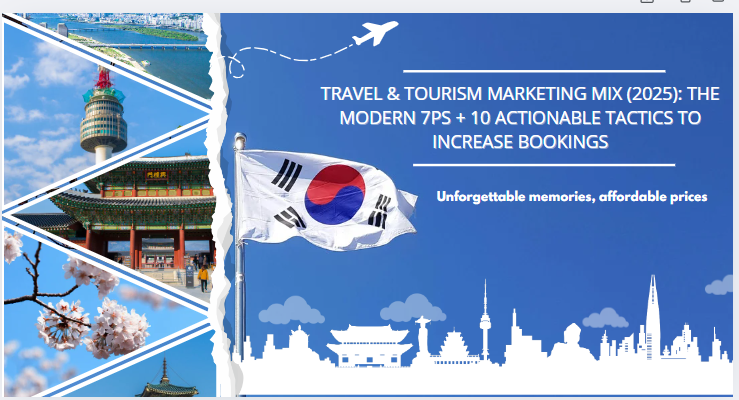
  • Travel & Tourism Marketing Mix (2025): The Modern 7Ps + 10 Actionable Tactics to Increase Bookings

    Travel & Tourism Marketing Mix (2025): The Modern 7Ps + 10 Actionable Tactics to Increase Bookings

    The travel and tourism industry is evolving rapidly. From shifting traveler expectations to the dominance of online booking platforms, businesses must stay agile to attract and retain customers. One proven framework that continues to guide successful marketing strategies is the marketing mix.

    But here’s the catch: the traditional 7Ps need a modern twist to remain effective in today’s digital-first travel landscape. In this guide, Digital Flavour, Best Digital Marketing Agency will break down the travel and tourism marketing mix, explore the 7Ps with practical examples, and share 10 actionable tactics you can implement right away to boost bookings.

    What is the Travel & Tourism Marketing Mix?

    The marketing mix is a strategic framework that helps businesses decide how to present their services, attract customers, and stand out in a competitive market. In the context of travel and tourism, it plays an even more critical role because the “product” being sold is not a physical item — it’s an experience. Whether it’s a weekend getaway, a guided city tour, or a luxury cruise, the success of any travel offering depends on how well it is packaged, priced, promoted, and delivered.

    Traditionally, marketers used the 4Ps of marketingProduct, Price, Place, and Promotion — to structure their strategy. For example, a travel agency might define its product as customized holiday packages, set a price based on seasonality, decide the place (online platforms, travel fairs, or partner agents), and focus on promotion through ads and brochures.

    However, as the travel industry evolved into a service-driven, highly personalized sector, the 4Ps were no longer enough. This led to the introduction of the 7Ps of services marketing, which add three new elements to the mix:

    • People – the staff, guides, and even customer service representatives who directly influence a traveler’s experience.
    • Process – the systems and steps that make booking, communication, and service delivery smooth and reliable.
    • Physical Evidence – the tangible cues that build trust, such as a professional website, reviews, photos, or even the look and feel of a hotel lobby.

    In today’s competitive landscape, travel businesses must understand both the 4Ps and the 7Ps. The first four lay the foundation, while the additional three ensure that the customer journey — from booking to post-trip feedback — is seamless and memorable. This holistic view is what truly defines the travel and tourism marketing mix in 2025.

    Why the 7Ps Still Matter in Travel & Tourism

    The 7Ps framework may have been introduced decades ago, but it remains highly relevant in the travel and tourism industry, where customer expectations and experiences define success. Unlike physical products, travel services are intangible, perishable, and experience-driven. This makes the additional three Ps — People, Process, and Physical Evidence — just as important as the original four.

    Here’s why the 7Ps still matter today:

    1. Travel is a service, not a product
      A beach vacation or a guided trek can’t be “stocked on a shelf.” Once a plane takes off or a hotel room stays empty, that opportunity is gone forever. This makes the marketing mix essential for ensuring every element — from pricing to promotion — aligns with delivering maximum value at the right time.
    2. Customer experience is the product
      A traveler’s journey doesn’t start at the destination; it begins with the booking process and ends with post-trip follow-ups. The People who answer queries, the Process that makes booking simple, and the Physical Evidence (reviews, testimonials, professional branding) all shape perceptions before a traveler even boards a plane.
    3. Competition is intense and global
      Today, a traveler in Sydney can compare a boutique hotel in Bali with dozens of options on Booking.com within minutes. The 7Ps give tourism businesses a structured way to highlight what makes them different — whether that’s unique experiences (Product), personalized pricing (Price), or local partnerships (Place).
    4. Trust drives conversions
      In tourism, trust is everything. High-quality photos, verified reviews, and responsive customer support are part of Physical Evidence and People — and they often make the difference between a booking and a bounce.
    5. Flexibility in a changing market
      Tourism is highly sensitive to factors like seasonality, global events, and consumer trends. A well-balanced marketing mix helps businesses adjust quickly — shifting promotions, repricing packages, or improving customer processes to stay competitive.

    In short, the 7Ps of the travel and tourism marketing mix are not just theoretical. They provide a practical blueprint that helps travel agencies, tour operators, hotels, and destinations deliver consistent, memorable, and profitable customer experiences.

    The Modern 7Ps of the Tourism Marketing Mix (with Examples)

    The 7Ps of the tourism marketing mix are more than just theory — they’re a practical guide for how travel businesses can attract, convert, and retain customers in today’s digital-first world. Let’s break down each element with actionable insights and examples.

    1. Product: Selling Experiences, Not Just Services

    In tourism, the product is the experience. Travelers are buying memories, emotions, and unique moments.

    • Example: A boutique safari operator doesn’t just sell “tours.” They position their product as exclusive wildlife encounters with local guides, luxury camps, and cultural immersion.
    • Action Tip: Define your unique value proposition (UVP) — what makes your travel package, hotel, or destination different? Use storytelling in your website copy and social media to highlight it.

    2. Price: Dynamic and Value-Based Pricing

    Tourism is highly seasonal, and customers are price-sensitive. Modern travel brands use dynamic pricing models that adjust based on demand, season, and competition.

    • Example: Airlines and OTAs (Online Travel Agencies) like Expedia use real-time pricing engines to maximize occupancy and revenue.
    • Action Tip: Bundle services (e.g., hotel + transfer + guided tour) to deliver value while maintaining profitability. Highlight flexible payment options to build trust.

    3. Place: Digital Channels and Distribution

    Today, place is less about physical presence and more about online accessibility. Travelers research, compare, and book online — often through OTAs, search engines, or directly on a business’s website.

    • Example: A small hotel in Bali can reach global customers by optimizing for Google Hotel Ads and leveraging booking platforms like Booking.com and Airbnb.
    • Action Tip: Diversify your distribution: use OTAs, but also invest in SEO ( Search Engine Optimization) and direct bookings through your own website to reduce commission costs.

    4. Promotion: Multi-Channel Storytelling

    Promotion in tourism is about building desire through content, visuals, and customer engagement.

    • Example: VisitScotland runs storytelling campaigns showcasing local culture, food, and landscapes across Instagram, TikTok, and YouTube, inspiring travelers to book.
    • Action Tip: Combine organic channels (SEO, social media, content marketing) with paid ads (Google Ads, Meta Ads) for maximum reach. Encourage user-generated content (UGC) — it builds authenticity and trust.

    5. People: The Human Touch

    Travel services are delivered by people, and every interaction shapes the experience. From customer service agents to tour guides, people represent your brand.

    • Example: Luxury hotels like The Ritz-Carlton empower staff to make personalized decisions to enhance guest experiences, creating memorable stays.
    • Action Tip: Train your team for digital and face-to-face touchpoints. Quick responses on WhatsApp, polite support emails, and friendly in-person service are equally important.

    6. Process: Seamless, Tech-Driven Experiences

    A smooth booking and service process can make or break a travel experience. Friction leads to frustration, and frustration leads to lost customers.

    • Example: Airlines like Emirates simplify processes with mobile boarding passes, real-time flight updates, and multilingual apps.
    • Action Tip: Automate confirmations, use chatbots for FAQs, and integrate easy cancellation/refund processes. Transparency and speed improve satisfaction and loyalty.

    7. Physical Evidence: Building Trust Before the Trip

    Travel is intangible — customers can’t “test” a vacation before purchase. That’s where physical evidence comes in: all the tangible or visible cues that reassure them of quality.

    • Example: High-quality photos, 360° virtual tours, verified TripAdvisor reviews, and professional branding on your website are all forms of physical evidence.
    • Action Tip: Invest in visuals (photo, video, VR). Encourage happy customers to leave reviews and showcase them prominently. A polished website and consistent branding add credibility.

    Key takeaway: The modern 7Ps of the tourism marketing mix provide a roadmap for standing out in a crowded industry. By combining traditional principles with digital strategies — SEO, dynamic pricing, social media, and seamless tech — travel businesses can build trust, attract more bookings, and deliver unforgettable experiences.

    Check Digital Marketing for Travel and Tourism: 7 Proven Strategies That Generated 3x More Bookings in 90 Days

    10 Actionable Tactics to Boost Bookings in 2025

    The 7Ps framework gives travel businesses a solid foundation — but in today’s competitive market, success comes from applying it with modern marketing tactics. Here are ten proven strategies you can use in 2025 to stand out, build trust, and increase bookings.

    1. Harness User-Generated Content (UGC)

    Travelers trust real experiences over polished ads. Encourage customers to share photos, videos, and testimonials.

    • How it fits: Physical Evidence + Promotion
    • Action Tip: Create branded hashtags or run contests where guests can win discounts for sharing their trip moments.

    2. Invest in Short-Form Video Marketing

    Platforms like Instagram Reels, TikTok, and YouTube Shorts are where travelers discover destinations.

    • How it fits: Promotion
    • Action Tip: Showcase behind-the-scenes stories — from a chef preparing local food to drone shots of hidden gems. Keep it authentic and snackable.

    3. Optimize for “Near Me” and Local SEO

    Many travelers search on the go — “best hotels near me” or “tours near me.”

    • How it fits: Place + Promotion
    • Action Tip: Claim and optimize your Google Business Profile with updated hours, photos, and reviews.

    4. Offer Flexible Booking and Cancellation Policies

    Flexibility is now a booking decision factor post-pandemic.

    • How it fits: Price + Process
    • Action Tip: Highlight flexible cancellations and payment options on your website and ads.

    5. Run Seasonal & Dynamic Pricing Campaigns

    Tourism demand fluctuates with holidays, school breaks, and global events.

    • How it fits: Price
    • Action Tip: Use data analytics or simple booking trends to adjust prices. Offer early-bird or last-minute deals to capture demand spikes.

    6. Partner with Influencers and Micro-Creators

    Travel influencers can amplify your reach and build trust with niche audiences.

    • How it fits: Promotion + People
    • Action Tip: Work with micro-influencers (5K–50K followers) who have engaged audiences in your niche (adventure, wellness, family travel).

    7. Improve Mobile Booking Experiences

    Most bookings now happen via mobile devices. A clunky mobile site means lost customers.

    • How it fits: Process
    • Action Tip: Ensure your website loads in under 3 seconds, integrates mobile wallets, and offers one-click booking.

    8. Create Personalized Travel Packages

    Travelers want customization — from dietary needs to offbeat activities.

    • How it fits: Product + People
    • Action Tip: Offer quizzes or booking forms that help design personalized itineraries. Promote these as unique “tailor-made experiences.”

    9. Use Retargeting Ads to Recover Lost Leads

    Not every website visitor books on their first visit. Retargeting helps bring them back.

    • How it fits: Promotion
    • Action Tip: Show dynamic retargeting ads featuring the exact tour or hotel they viewed, paired with a special discount.

    10. Build Loyalty Through Reviews & Referrals

    Reviews not only influence new bookings but also build repeat customers.

    • How it fits: People + Physical Evidence
    • Action Tip: Send automated follow-up emails asking guests to review their experience. Offer referral bonuses for recommending friends.

    Pro Tip: Start small — don’t try all 10 at once. Pick 2–3 tactics that align with your current marketing goals and build momentum. For example, a boutique hotel might start with local SEO, short-form video, and loyalty referrals, while a tour operator might focus on influencer partnerships and UGC.

    Measuring Success: Marketing Mix Modelling (MMM) & Seasonality

    Having the right marketing mix in place is only half the journey — knowing whether it’s working profitably is what truly drives growth. In the travel and tourism industry, measuring results can be challenging because customer journeys are long, involve multiple touchpoints, and are heavily influenced by seasonality. This is where Marketing Mix Modelling (MMM) comes in.

    What is Marketing Mix Modelling (MMM)?

    Marketing Mix Modelling is a data-driven approach that analyzes past performance to understand how different marketing channels — such as SEO, social media, paid ads, or offline promotions — contribute to sales and bookings.

    • Example: An adventure tour company may learn that 40% of its bookings come from organic search during summer months, while paid social ads perform better in the off-season.
    • Why it matters: MMM helps travel businesses allocate budgets smarter, reduce wasted ad spend, and focus on channels that deliver real ROI.

    Why Seasonality Matters in Tourism

    Unlike other industries, travel demand is highly seasonal. Holidays, school breaks, weather, and even global events influence bookings.

    • Example: Ski resorts see demand spike in winter, while beach destinations peak in summer. Airlines adjust pricing months in advance to match these shifts.
    • Action Tip: Incorporate seasonal data into your marketing mix. Promote early-bird packages before peak months and offer attractive discounts in off-peak periods to maintain cash flow.

    Key Metrics Every Travel Business Should Track

    To measure success, focus on metrics that tie directly to your goals:

    • Cost per Booking (CPB): Total spend ÷ number of confirmed bookings.
    • Booking Conversion Rate: Website visitors who complete a booking.
    • Lifetime Value (LTV): Total revenue generated by a customer across repeat bookings.
    • Channel ROI: Return on investment for SEO, ads, social, email, and influencer campaigns.
    • Review & Referral Rate: Percentage of customers who leave reviews or refer friends.

    How to Apply MMM & Seasonality Together

    • Collect at least 12–24 months of marketing and sales data.
    • Break down performance marketing by channel, season, and campaign type.
    • Use simple models (spreadsheets or analytics dashboards) or advanced MMM tools if available.
    • Test adjustments — e.g., reduce low-performing ad spend in off-peak months and double down on organic or referral marketing.

    Pro Tip: You don’t need enterprise-level tools to start with MMM. Even small travel businesses can use free tools like Google Analytics, GA4 attribution reports, or Excel dashboards to understand seasonal patterns and marketing ROI.

    7-Step Checklist for Implementing Your Travel Marketing Mix

    Building a marketing mix is one thing — putting it into action is another. To make it easier, here’s a 7-step checklist you can use to implement your travel and tourism marketing mix effectively in 2025.

    Step 1: Define Your Core Offering (Product)

    • Identify what makes your travel service unique — is it adventure, luxury, culture, or affordability?
    • Package experiences with clear value propositions (e.g., “eco-friendly jungle safaris” or “all-inclusive family beach getaways”).

    Step 2: Set Competitive and Flexible Pricing (Price)

    • Research competitor pricing for similar packages.
    • Offer early-bird discounts, seasonal pricing, and flexible cancellations to attract more bookings.

    Step 3: Choose the Right Distribution Channels (Place)

    • List where customers can find and book you: website, OTAs, social media, or local partners.
    • Prioritize direct bookings to reduce commission costs and build stronger customer relationships.

    Step 4: Build a Multi-Channel Promotion Strategy (Promotion)

    • Combine SEO, paid ads, email marketing, and social media storytelling.
    • Encourage UGC (user-generated content) and influencer partnerships to increase trust.

    Step 5: Train and Empower Your People (People)

    • Ensure frontline staff and digital support teams deliver consistent, friendly service.
    • Train them in both customer service and digital communication (email, WhatsApp, chatbots).

    Step 6: Streamline Booking and Service Delivery (Process)

    • Use automation for confirmations, reminders, and feedback requests.
    • Make the booking journey seamless across desktop and mobile devices.

    Step 7: Strengthen Trust with Tangible Proof (Physical Evidence)

    • Invest in high-quality photos, videos, and virtual tours.
    • Display verified reviews and testimonials prominently on your site and Google Business Profile.

    How to use this checklist: Print it, share it with your team, and review it quarterly. Each step corresponds to one of the 7Ps, ensuring your marketing mix remains balanced, customer-focused, and results-driven.

    Pro Tip: Keep your mix dynamic — revisit these steps as trends, customer needs, and seasonal demand shift. Flexibility is the secret to long-term success in tourism marketing.

    How Digital Flavour Can Help

    At Digital Flavour, Best Digital Marketing Agency, we specialize in helping travel and tourism businesses turn strategy into results. From SEO-optimized content to paid ad campaigns, influencer partnerships, and ROI measurement, we provide end-to-end solutions tailored to your goals.

    Ready to grow your bookings? Book a free 30-minute strategy call today.

    FAQs About Travel & Tourism Marketing Mix

    1. What are the 7Ps of tourism marketing?
    The 7Ps are Product, Price, Place, Promotion, People, Process, and Physical Evidence.

    2. Why is the marketing mix important in tourism?
    It ensures all elements of your business — from packages to promotions — are aligned with customer expectations and industry trends.

    3. How can small travel agencies use the marketing mix?
    Focus on niche travel products, invest in UGC, use affordable digital tools, and measure success with simple KPIs.

    4. How does seasonality affect tourism marketing?
    Travel demand varies across seasons. Adjust pricing, promotions, and budgets accordingly to maximize ROI.

    Final Thoughts

    The travel and tourism marketing mix remains a powerful framework in 2025 — but only if updated with modern tactics. By combining the 7Ps with data-driven strategies, storytelling, and seamless processes, travel businesses can stand out, attract more customers, and grow bookings.

    Ready to build your winning marketing mix? Contact Digital Flavour today for a free audit.
  • Top Digital Marketing Challenges Facing Travel and Tourism Industry in 2025 (And How to Overcome Them)

    Top Digital Marketing Challenges Facing Travel and Tourism Industry in 2025 (And How to Overcome Them)

    The travel and tourism industry is one of the most dynamic sectors, constantly evolving with technology, customer expectations, and global market shifts. In 2025, travelers are more digital-first than ever before planning trips through mobile apps, researching destinations on social media, and relying on online reviews before booking. This shift creates both opportunities and challenges for travel agencies, tour operators, and hospitality brands.

    Competition is at an all-time high, as large Online Travel Agencies (OTAs), aggregator platforms, and big hotel chains dominate search results and advertising space. On the other hand, consumer behavior has changed dramatically. Today’s travelers expect personalized experiences, instant responses, and seamless digital interactions. At the same time, emerging technologies like AI, voice search, and machine learning are reshaping how people search, compare, and book travel services.

    Against this backdrop, digital marketing is no longer optional for travel and tourism businesses—it’s the key driver of growth, visibility, and customer acquisition.

    Why Digital Marketing is Crucial for Travel & Tourism in 2025

    The tourism industry has always been influenced by trends, seasons, and consumer preferences, but the way people make travel decisions has shifted drastically in recent years. Here’s why digital marketing has become a non-negotiable strategy in 2025:

    1. Travelers Are Researching Online First
      Over 80% of travelers now start their journey online—through search engines, social media platforms, and review sites. Without a strong online presence, travel agencies risk being invisible to potential customers.
    2. Rise of Mobile-First Travel Planning
      Smartphones are the go-to tool for researching destinations, booking flights, and checking itineraries. A mobile-optimized digital marketing strategy ensures that agencies capture customers on the go.

    Influence of Reviews and Social Proof
    Platforms like TripAdvisor, Google Reviews, and Instagram play a major role in shaping travel decisions. Digital marketing helps brands manage their reputation, showcase reviews, and build trust.

    Personalization is the New Norm
    Modern travelers expect customized offers and curated experiences. Digital marketing powered by data analytics and AI allows businesses to deliver targeted campaigns that drive engagement and conversions.

    Cost-Effective Visibility Against Big Competitors
    Competing with OTAs and big players is tough. However, SEO, local marketing, and content strategies give smaller agencies the ability to compete effectively and reach niche audiences without massive advertising budgets.

    In short, digital marketing is the bridge between travel businesses and modern travelers. Without it, agencies risk losing relevance, bookings, and brand authority in an increasingly competitive landscape.

    Understanding the Travel and Tourism Digital Landscape in 2025

    The travel and tourism industry has always adapted to global shifts, but 2025 marks a defining era where digital channels dominate every stage of the traveler’s journey—from inspiration to booking to post-trip sharing. To stay competitive, businesses must understand how consumer behavior, technology, and marketing platforms are shaping the landscape.

    Rise of Online Bookings, Reviews, and Mobile-First Travelers

    The days of walk-in travel agents and offline bookings are nearly gone. Today, over 70% of travelers prefer to book trips online, with mobile devices leading the way. From flight reservations to hotel check-ins, the smartphone has become a personal travel assistant.

    Additionally, reviews and social proof play a decisive role. A recent survey revealed that 95% of travelers read reviews before booking a hotel or tour. Websites like Google, TripAdvisor, and Booking.com influence purchase decisions more than traditional advertising. This makes online reputation management and social media presence essential for travel businesses.

    Travelers are also mobile-first in their decision-making. Quick searches like “best resorts near me” or “cheap flights to Bali” are happening on-the-go. This shift means travel brands must invest in mobile-friendly websites, fast-loading pages, and local SEO strategies to capture intent-driven customers.

    The Role of AI, Personalization, and Voice Search

    Artificial Intelligence (AI) is reshaping how travelers interact with brands. From chatbots handling customer inquiries 24/7 to AI-driven recommendations for destinations, technology is enhancing customer experiences while saving operational costs.

    Personalization is now the standard expectation. Travelers no longer want generic packages—they expect curated itineraries, personalized offers, and recommendations based on past behavior. For example, AI-powered marketing tools can suggest family-friendly destinations to parents while targeting solo travelers with adventure trips.

    Voice search is another game-changer. With the rise of smart assistants like Alexa, Google Assistant, and Siri, travelers are increasingly searching hands-free: “Find me beach resorts in Goa under $200.” Travel businesses that optimize for voice-friendly, conversational keywords will have a competitive edge in search visibility.

    Data Showing Digital Dependency in Travel Planning

    Travel is no longer just about destinations—it’s about digital touchpoints. Statistics show:

    • 80%+ of travelers use search engines as their first step in trip planning.
    • 60% of younger travelers (Gen Z & Millennials) rely on Instagram, TikTok, and YouTube for travel inspiration.
    • Over 65% of last-minute bookings are made via mobile devices.
    • Online ads and retargeting campaigns influence a large portion of travel purchases, especially for luxury and experience-based trips.

    This dependency highlights a critical truth: the success of any travel agency or tourism brand now depends on its digital marketing strategy. Without visibility across search engines, social platforms, and review sites, businesses risk being left out of the traveler’s journey altogether.

    The Biggest Digital Marketing Challenges Facing Travel and Tourism Marketing

    The travel and tourism industry is full of opportunities, but it also faces unique hurdles when it comes to digital marketing. Below are the biggest challenges travel agencies and tour operators face in 2025—along with practical solutions to overcome them.

    1. High Competition in Online Travel Market

    The travel industry is one of the most competitive markets online. Large Online Travel Agencies (OTAs) like Expedia, Booking.com, and Trip.com dominate Google’s first page and ad space, leaving small and mid-sized agencies struggling for visibility.

    The challenge: Smaller travel businesses often lack the budget to compete with these giants on paid ads, and without a strong SEO strategy, they risk being invisible to travelers.

    The solution:

    • Invest in SEO and niche targeting-focus on long-tail keywords such as “luxury yoga retreat Bali” instead of broad terms like “Bali trips.”
    • Develop destination-specific landing pages to capture search intent.
    • Use content marketing-blogs, videos, and guides that position your agency as an authority in your niche.

    2. Declining Organic Reach on Social Media

    Platforms like Facebook and Instagram have drastically reduced organic reach. With algorithms favoring paid content, it has become increasingly difficult for travel agencies to gain visibility without advertising.

    The challenge: Travel content is abundant on social media, making it harder to stand out. Agencies that rely solely on organic posts see limited engagement and fewer leads.

    The solution:

    • Combine paid social ads with organic strategies.
    • Use storytelling and reels to showcase authentic travel experiences.
    • Encourage user-generated content (UGC) by running contests, hashtags, or review campaigns—UGC builds trust and boosts engagement.

    3. Negative Reviews & Online Reputation Management

    In the tourism industry, trust is everything. More than 90% of travelers read online reviews before booking. One negative review, if left unaddressed, can significantly harm your reputation and booking rates.

    The challenge: Managing reviews across platforms like Google, TripAdvisor, and social media requires time and consistency—something many small agencies struggle with.

    The solution:

    • Build a proactive reputation management strategy.
    • Respond promptly and professionally to both positive and negative reviews.
    • Use monitoring tools to track mentions of your brand and address issues before they escalate.

    4. Keeping Up with Changing Algorithms & Technology

    Google search updates, social media algorithm changes, and the rise of AI-driven platforms make digital marketing a moving target. For many travel agencies, staying updated is overwhelming.

    The challenge: Lack of expertise or resources to adapt quickly often leads to drops in visibility and traffic.

    The solution:

    • Invest in professional SEO services that monitor updates in real time.
    • Focus on continuous optimization of content, ads, and local SEO.
    • Partner with digital marketing experts who understand travel-specific trends and platforms.

    5. Rising Cost of Paid Advertising

    Google Ads and Meta ads (Facebook & Instagram) have become increasingly expensive, with travel-related CPCs (Cost per Click) among the highest across industries.

    The challenge: Small agencies often burn through ad budgets quickly without seeing consistent ROI.

    The solution:

    • Use smart PPC strategies—target long-tail, less competitive keywords.
    • Run remarketing campaigns to reach warm leads who have already interacted with your brand.
    • Focus on data-driven ad optimization to reduce wasted spend.

    6. Personalization & Customer Experience Challenges

    Today’s travelers expect highly personalized experiences. Generic travel packages no longer work. However, many agencies lack the tools or data insights to create tailored campaigns.

    The challenge: Without personalization, businesses risk losing customers to competitors who deliver customized experiences.

    The solution:

    • Implement CRM systems to collect and analyze customer data.
    • Use email marketing automation to deliver personalized offers.
    • Leverage AI-driven personalization tools to recommend destinations and packages based on customer preferences.

    7. Content Saturation in Tourism Marketing

    With thousands of travel blogs, YouTube vlogs, and Instagram posts published daily, it’s harder than ever for agencies to make their content stand out.

    The challenge: Standard “Top 10” blogs and generic destination posts get lost in the noise, attracting little traffic or engagement.

    The solution:

    • Focus on niche storytelling (e.g., hidden gems, eco-tourism, wellness retreats).
    • Create destination guides, itineraries, and insider tips that provide unique value.
    • Prioritize video-first content—short-form reels, destination walkthroughs, and customer testimonials.

    8. Local SEO & Visibility Issues

    Many travelers search using terms like “best travel agency near me” or “tour packages in [city].” Yet, many operators fail to optimize their Google Business Profile (GBP) or build local citations.

    The challenge: Without strong local SEO, businesses miss out on high-intent customers ready to book.

    The solution:

    • Optimize Google Business Profile with updated photos, services, and reviews.
    • Build location-based landing pages targeting specific cities or regions.
    • Encourage happy customers to leave local reviews that boost visibility in “near me” searches.

    Proven Strategies to Overcome Digital Marketing Challenges in Tourism

    The good news is that while the travel and tourism industry faces several digital marketing hurdles, there are effective strategies that agencies can adopt to overcome them and drive consistent growth.

    1. Data-Driven Marketing (Analytics + Insights)

    Successful campaigns are built on insights, not assumptions. By analyzing customer data,search behavior, booking patterns, and engagement metrics,travel businesses can tailor campaigns that resonate with their audience. Tools like Google Analytics, heatmaps, and CRM dashboards help agencies understand what works and what doesn’t.

    2. SEO + Content Marketing Tailored for Travel Agencies

    SEO remains the backbone of digital visibility. Travel agencies should focus on:

    • Destination-based keywords (“best honeymoon packages in Bali”)
    • Long-tail searches that capture intent-driven travelers
    • Content marketing through blogs, videos, and travel guides that answer real traveler questions

    This not only improves search rankings but also builds authority in a competitive market.

    3. Omnichannel Approach (SEO, Social Media, Email, PPC)

    Modern travelers interact with multiple touchpoints before booking. A single-channel strategy is no longer enough. By combining:

    • SEO for long-term visibility
    • Social media ads for engagement
    • Email marketing for nurturing leads
    • PPC campaigns for instant traffic
      travel businesses can build an integrated funnel that guides prospects from awareness to conversion.

    4. Investing in Automation & AI Tools for Better Customer Targeting

    AI-driven tools make personalization easier. From chatbots that answer queries 24/7 to AI-driven recommendations based on past behavior, automation ensures better engagement at scale. Email automation platforms and CRM integrations can segment travelers and deliver tailored offers at the right time.

    5. Partnering with Expert Digital Marketing Agencies like Digital Flavour

    Not every travel agency has the time or resources to manage complex digital strategies. Partnering with a trusted digital marketing agency like Digital Flavour, Best Digital Marketing Agency ensures access to expert strategies, the latest tools, and scalable campaigns designed specifically for travel and tourism businesses.

    Why Travel Agencies Should Outsource Digital Marketing in 2025

    Outsourcing digital marketing is becoming a necessity for travel agencies that want to stay competitive without stretching resources thin.

    • Saves Time & Cost vs. In-House: Building an in-house team is expensive and time-consuming. Outsourcing gives access to expert talent without overhead costs.
    • Access to Latest Tools, Trends & Strategies: Agencies like Digital Flavour stay ahead of Google updates, AI innovations, and ad trends so travel businesses don’t have to.
    • Scalable Marketing with Measurable ROI: Campaigns can be scaled up or down based on seasonality and budget, with clear performance metrics.
    • Real-World Impact: For example, a boutique travel agency in Sydney saw a 40% increase in bookings within three months of implementing targeted SEO + PPC strategies, proving the ROI of outsourcing.

    Final Thoughts

    The travel and tourism industry in 2025 faces both immense opportunities and pressing challenges in digital marketing. From high competition and rising ad costs to the demand for personalization and reputation management, travel businesses must evolve their strategies to stay relevant.

    The solution lies in data-driven, omnichannel, and personalized marketing approaches that not only improve visibility but also build lasting customer trust.

    If you’re a travel agency struggling with these challenges, you don’t have to do it alone.

    Digital Flavour specializes in helping travel agencies grow online through SEO, social media, paid ads, and automation. Contact us today for a free consultation and discover how we can help you scale your travel business with confidence.

  • Seasonal Travel Marketing: How to Prepare Campaigns for Peak Seasons

    Why Travel Businesses Consider Peak Season Marketing as their Growth Catalyst

    In the travel business, timing is everything. The stunning travel bundle, unbeatable offer, and excellent service will mean nothing if you market them at the wrong season. However, the right offer can double your bookings and ROI if marketed at the right way and the right time.

    There comes the essence of seasonal travel marketing, the strategy that focuses on marketing your business at the time when the travelers are planning, dreaming, and wanting to book for travel.

    As the Best Digital Marketing Agency for the Travel Industry, we are at Digital Flavour. We have supported several agencies to make the most out of their technological seasonal peaks. In this blog, we want to help you have business seasons by sharing how to plan and execute peak season campaigns that will fetch high quality leads, fill your business calendar, and keep your brand ahead of the competition.

    What is Seasonal Travel Marketing?

    Seasonal travel marketing is the strategy of customizing your digital campaigns to scale with your market demand on certain periods of the year whether seasonal weather, holidays, school vacations, or events specific to the venue.

    Seasonal marketing revisions your messaging, visuals, and offers to fit your audience’s current interests instead of advertising the same way throughout the year.

    Examples:

    • Early-bird promotions for summer at beach resorts.
    • Winter holiday sales for ski resorts.
    • Pre-peak wedding season honeymoon packages.

    Why Travel Businesses Benefit from Seasonal Marketing

    Campaigns done during certain periods of the year often work because they balance importance with necessity. For example, travel marketers use both factors because people want to travel and they don’t want to miss their travel dates.

    Here is why it makes sense to use seasonal marketing for travel business digital marketing:

    1. High Buyer Intent – “Summer Europe Tour Packages” is a buy-ready search query for summer.
    2. Higher ROI- Most bookings are concentrated during certain months while the rest of the year is much quieter, allowing for maximum budget efficiency.
    3. Competitive Edge- Early planners beat last-minute advertisers.
    4. Emotionally Timed Messaging – Seasonal marketing excites and stirs emotions the right way.

    Step 1: Determine Your Peak Time Periods

    Your peak time periods will be significantly impacted by your audience, area of travel, and your travel niche.

    How to find them:

    • Analyze Your Booking Patterns – Review sales trends over the past 2 to 3 years.
    • Google Trends – Analyze what your area of travel is being searched.
    • Holiday Calendars – Look out for long weekends, school holidays, and festive periods.
    • Weather & Events – Monsoon period, ski periods, cherry tree blossom periods, etc.

    Example:

    • Domestic travel – Diwali, summer holidays, New Year’s Eve, etc.
    • International travel – Summer in Europe, winter in Southeast Asia.

    Step 2: Develop Seasonal Digital Campaigns

    The Best Digital Marketing Agency does not just run ad campaigns. They are strategized and planned months in advance.

    We recommend developing a 12 month marketing calendar that accounts for:

    • Early bird sale launch
    • Activation of ad campaigns
    • Seasonal blog articles that serve SEO.
    • Social media and SEO for each peak period.

    Doing so will ensure that your marketing is always a step ahead of a traveler’s demand.

    Step 3: Create Season-Specific Deals

    Exclusive, time-sensitive offers are the most appealing to customers. Your offer must include the following:

    Destination
    Duration
    Price/Discount
    Deadline for booking

    Examples:

    • Save ₹20,000 When You Book Your Summer Maldives Trip By April 15
    • Winter Wonderland in Switzerland – Early Bird Offer Ends in 10 Days

    When paired together, urgency and clarity lead to increased conversions.

    Step 4: Choose the Most Effective Marketing Channels

    With travel industry digital marketing, some channels work better than others during peak seasons. It is vital to pair the most accurate message to the most suitable platform.

    Google Ads

    Capture high intent queries such as “Kerala backwater packages for Onam” and “Summer Bali tour from Mumbai.”

    • Employ seasonal keywords.
    • Use countdown timers in the copy.
    • Use ad extensions to showcase offers.

    Social Media Ads

    Utilize videos and images to inspire:

    • Use Instagram Stories for flash deals.
    • Use Facebook carousel ads for multiple packages.
    • Retarget site visitors who did not book.

    SEO

    Rank for seasonal search terms ahead of the season.

    • Write “Best Winter Honeymoon Destinations” in August.
    • Retro-blog seasonal keywords to existing travel blogs.

    Marketing Through Email and WhatsApp

    • Reach out with early-bird specials to loyal patrons.
    • Remind clients as deadlines approach.
    • Advertise “last-minute” specials for everyday jet-setters.

    Step 5: Design Seasonal Pages for Optimal Conversion Booking

    Your business’s homepage should showcase flexible and seasonal landing pages, as a one size fits all approach will not work.

    • Complements adverts.
    • Contains a conspicuous booking feature.
    • Displays seasonal images.
    • Contains holiday brochure with everything, including itinerates and testimonials.
    • Fosters trust by displaying testimonials.

    Step 6: Launch Campaign, Analyze, Optimize, and Repeat

    During peak season travel, daily ad spending analysis and campaign performance tracking is a must:

    • Raise spending for high yield ads.
    • Stop campaigns with low performance rates.
    • Change up visuals and try new bold headlines to refresh text and call to actions.

    Step 7: Analyze Campaign Traffic and Prepare for Next Season

    After the season is finished:

    • Compiling all raw data to paint a picture of revenue generated with the ad spend will give insight of ROI and Cost per lead.
    • Return on advertising spend (ROAS) will showcase which deals and creatives did the best.
    • Outline expectations and goals based on previous analysis history achieved to adjust for new and ongoing campaign structures.

    Guidelines for Seasonal Travel Marketing

    1. Start Early – 3 to 6 months ahead of peak season should kickstart preparations and campaigns advertised amplify business.
    2. Segment Your Audience – Honeymooners, families, or solo travel groups.
    3. Use FOMO Marketing– Employ strategies like “only 5 slots remaining” to entice users and draw agile booking behaviors.
    4. Integrate Offline & Online Efforts – Use digital advertising at local events and fairs.

    Why Choose Digital Flavour for Seasonal Campaigns

    In the intense competition for attention during the peak periods, you need a partner who understands the travel industry’s unique rhythms.

    Digital Flavour, as the Best Digital Marketing Agency for travel businesses, provides:

    • Industry Expertise – Years of experience running successful travel campaigns.
    • Data-Driven Decisions – Every rupee is tracked for ROI and optimally spent.
    • Full Funnel Marketing – From the first click to the booking confirmation, and everything in between.
    • Customized Campaigns – Tailored to the traveler’s profile and the selected destinations.
    • Ongoing Optimization – We don’t “set and forget.” Daily tweaks are done towards achieving better results.

    Plan Today for Tomorrow’s Bookings

    Peak seasons are the lifeblood of the travel industry. Align your marketing with high-demand periods, and with digital marketing for travel businesses strategies, you can dominate leads, bookings, and your niche.

    With Digital Flavour as your partner, you’ll benefit from expertly crafted seasonal campaigns and a growth strategy designed to work year-round.

    📞 Contact Us Today

    📩 marketing@digitalflavour.co 🌐 digitalflavour.co

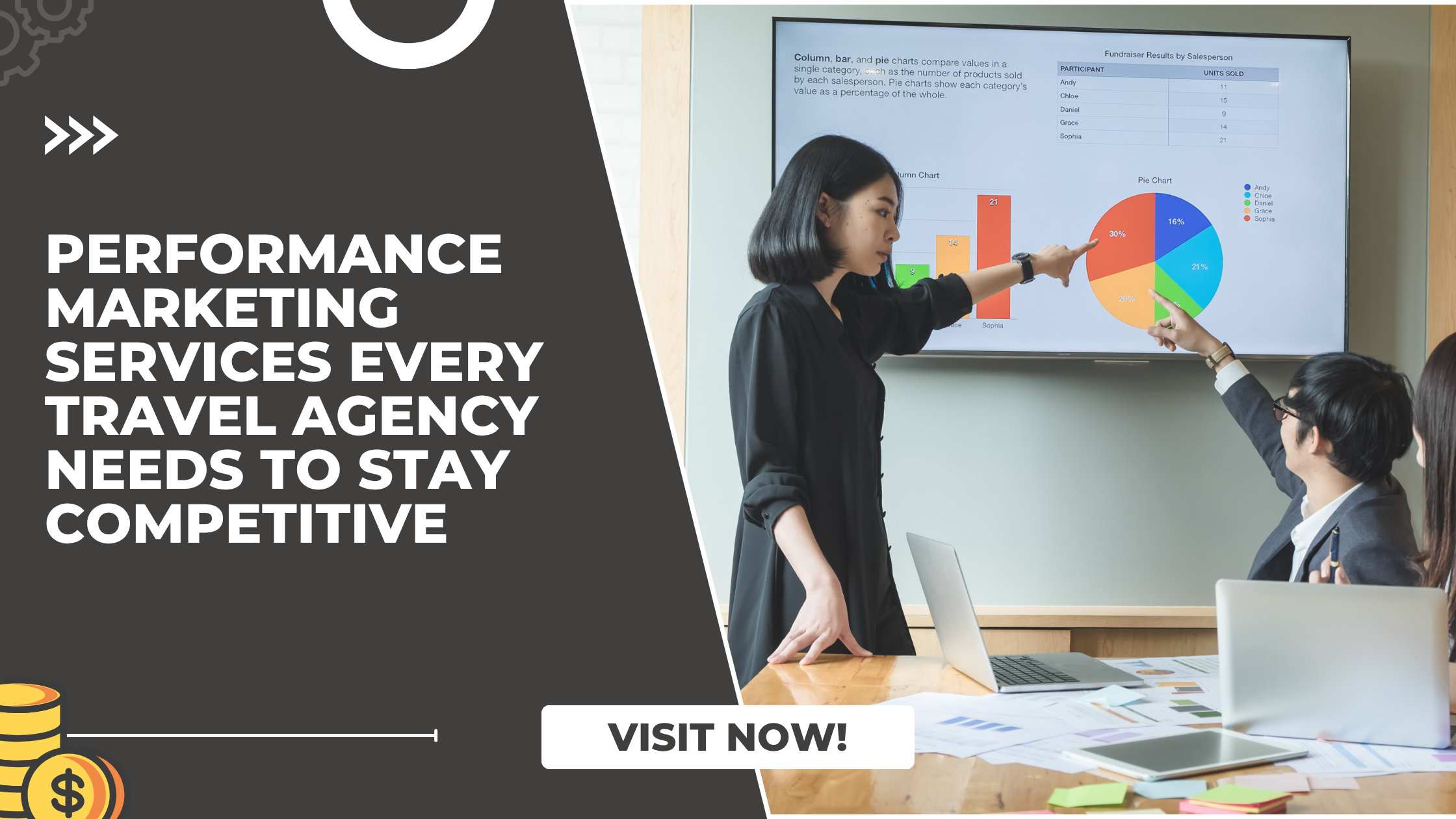
  • Performance Marketing Services Every Travel Agency Needs to Stay Competitive

    Performance Marketing Services Every Travel Agency Needs to Stay Competitive

    In today’s highly competitive travel market, simply being online isn’t enough. Whether you run a boutique travel agency, a tour company, or a luxury travel consultancy, standing out in search engines and attracting ready-to-book travelers requires a smarter, performance-driven approach.

    This is where performance marketing services for travel agencies come into play.

    Unlike traditional marketing that focuses on vague brand awareness, performance marketing is laser-focused on generating measurable results—like leads, bookings, and revenue. For travel business owners, this means no more wasted ad spend and no more guessing. Just proven strategies that deliver ROI.

    In this blog, Digital Flavour, Best Digital Marketing Agency will break down the essential performance marketing services your travel business needs to stay ahead of competitors, drive bookings, and grow profitably in 2025 and beyond.

    What is Performance Marketing in the Travel Industry?

    Performance marketing is a data-driven digital marketing approach where you only pay for specific results—such as clicks, leads, or bookings—instead of broad campaigns with uncertain outcomes. It’s the perfect match for travel agencies that want predictable, scalable, and measurable growth.

    How It Works for Travel Agencies:

    Whether you’re promoting vacation packages, tours, or luxury travel services, performance marketing focuses on action-based outcomes. For example:

    • You run Google Ads for a “7-day Bali honeymoon package.”
    • A user clicks the ad and lands on a customized landing page with detailed itinerary and pricing.
    • They fill out a form or call your agency to book.
    • You track that lead using performance tools—and optimize campaigns based on real-time data.

    In contrast to traditional methods like print ads or organic social media (which may not always bring conversions), performance marketing ensures you only pay when results happen.

    Key Features of Performance Marketing:

    • ROI-Driven: Every dollar is tracked for impact.
    • Real-Time Optimization: Campaigns are tweaked continuously for better results.
    • Highly Targeted: Ads reach users based on location, interest, behavior, or travel intent.
    • Scalable: Whether you serve 10 clients or 1,000, campaigns can scale accordingly.

    For travel businesses, this means turning ad spend into tangible revenue—without the guesswork. It’s no wonder more agencies are turning to a travel agency performance marketing company to handle this for them.

    Why Travel Agencies Must Shift to Performance Marketing in 2025

    The travel industry is evolving faster than ever. From shifting consumer behavior to increasing competition from online booking platforms and aggregators, traditional marketing methods are no longer enough. To stay relevant and competitive, travel agencies must adopt performance marketing as a core part of their growth strategy.

    Travelers Now Start Online

    Before booking a tour or holiday, modern travelers conduct extensive research—usually starting with Google or social media. If your agency isn’t visible with targeted ads or optimized landing pages, you’re losing potential clients to competitors who are investing in performance marketing.

    Decline of Traditional Advertising

    Print brochures, trade shows, and generic social media posts may help with brand presence but rarely lead to measurable bookings. In contrast, performance marketing channels like Google Ads, Facebook Ads, and retargeting allow you to track every click, form submission, and phone call.

    Demand for Measurable ROI

    Today’s travel business owners want to know:
    “If I spend ₹10,000 on ads, how many leads or bookings will I get?”
    Performance marketing answers this clearly. It provides transparent data, tracks every rupee spent, and optimizes based on what actually works.

    Competing with Larger Agencies

    You might not have the budget of a multinational travel brand—but with performance marketing, you can still compete and win. A highly targeted, well-optimized ad campaign can outrank and outperform even the biggest players—if done right.

    By partnering with a trusted travel agency performance marketing company, you get access to expert-level campaign strategy, data analytics, and tools designed to grow your bookings faster and more efficiently.

    Top Performance Marketing Services for Travel Agencies

    To achieve consistent bookings and generate high-quality leads, your travel agency needs more than just a website and a few social media posts. You need a full-stack performance marketing strategy built on proven, ROI-driven services. Below are the most effective performance marketing services for travel agencies that can help you stay ahead of the competition.

    a. Google Ads Campaign Management

    Google Ads is one of the most powerful tools in performance marketing. It lets your travel agency appear at the top of search results when potential clients are actively searching for packages, destinations, or travel deals.

    Key Benefits for Travel Agencies:

    • Target high-intent keywords like “Bali honeymoon packages” or “Europe tour from Delhi”
    • Use geo-targeting to promote region-specific offers
    • Showcase travel deals using Google Travel Ads and dynamic extensions
    • Only pay when someone clicks your ad (Pay-Per-Click)

    Why it works: You reach people exactly when they’re ready to book or inquire—making Google Ads a must-have for any serious travel business.

    b. Facebook & Instagram Ads

    Travel is a visually driven industry, and Meta platforms like Facebook and Instagram offer a perfect place to inspire wanderlust while driving action.

    Performance-driven features:

    • Use carousel or video ads to showcase destinations and experiences
    • Retarget website visitors who didn’t book the first time
    • Build lookalike audiences based on existing clients
    • Run lead generation ads with in-app forms

    Why it works: Facebook and Instagram are great for both brand visibility and direct bookings, especially when combined with strong visual creatives and retargeting.

    c. Landing Page Optimization

    Driving traffic is just one part of the performance puzzle. Where users land after clicking an ad can make or break your campaign.

    High-converting travel landing pages should:

    • Highlight unique offers (like “7N/8D Family Tour to Singapore”)
    • Feature stunning visuals and clear itineraries
    • Include trust signals like testimonials or reviews
    • Have a fast-loading, mobile-friendly design
    • Guide users to one action (e.g., call now, book a consultation)

    Why it works: An optimized landing page significantly improves your conversion rate and lowers your cost per lead.

    d. Email & WhatsApp Marketing Automation

    Once someone shows interest, nurturing that lead is critical. Many travelers don’t book immediately. That’s where automation helps.

    Strategies to implement:

    • Follow-up emails for users who filled out a form but didn’t book
    • Automated WhatsApp reminders for inquiries or limited-time offers
    • Drip sequences for longer travel planning cycles

    Why it works: Email and WhatsApp campaigns keep your brand top-of-mind and improve conversion rates without additional ad spend.

    e. Performance Analytics & ROI Tracking

    Without accurate tracking, you’re just guessing. A performance-driven approach includes in-depth analytics dashboards and regular campaign reports.

    Key metrics to track:

    • Cost per lead (CPL)
    • Booking conversion rate
    • Return on ad spend (ROAS)
    • Top-performing keywords and creatives

    A reliable travel agency performance marketing company will not only run your campaigns but also analyze performance and make real-time optimizations to maximize your ROI.

    How to Choose the Right Performance Marketing Partner

    Choosing the right performance marketing partner can be the difference between stagnant results and scalable growth for your travel business. With so many agencies promising leads and ROI, how do you find one that actually delivers?

    Here’s what to look for when hiring a marketing agency for your travel business—and why Digital Flavour checks every box.

    1. Industry-Specific Experience

    Not all marketing agencies understand the unique challenges of the travel industry. From seasonal demand shifts to customer decision cycles, your agency must be familiar with how travel consumers behave online.

    At Digital Flavour, we’ve worked with travel businesses across various segments—tours, holiday packages, adventure travel, and more. We tailor every campaign to suit your audience and business goals.

    2. Transparent, ROI-Focused Approach

    If your current agency isn’t showing you where your money is going—or what return you’re getting—it’s time to reconsider.

    At Digital Flavour, our campaigns are built on performance metrics. You only pay for results, and you’ll receive detailed reports showing exactly how your ads are performing, what’s working, and what we’re optimizing.

    3. Full-Funnel Strategy

    It’s not just about getting traffic. You need a partner who understands the entire buyer journey—from click to booking. That means running targeted ads, creating conversion-focused landing pages, and setting up lead nurturing systems.

    We build full-funnel performance marketing strategies so that every touchpoint—from first ad impression to final conversion—is optimized for results.

    4. Custom Plans, Not Cookie-Cutter Packages

    Every travel business is unique. You shouldn’t be locked into a rigid, one-size-fits-all campaign structure.

    At Digital Flavour, we build custom performance marketing plans based on your goals, target destinations, budget, and booking cycle. Whether you’re a boutique agency or an established travel brand, we scale strategies to fit your growth stage.

    5. Data, Testing & Ongoing Optimization

    Performance marketing is not “set it and forget it.” Your agency should constantly test, optimize, and improve campaign elements.

    We actively A/B test creatives, experiment with new keywords, refine targeting, and update landing pages to ensure consistent growth and improved ROI.

    Ready to Partner with a Travel Agency Performance Marketing Company?

    If you’re looking to hire a marketing agency for your travel business that understands your industry, delivers measurable results, and works as your growth partner—not just a service provider—Digital Flavour is here to help.

    Book a free performance marketing consultation with our travel marketing experts today and discover how we can help you scale bookings, reduce cost per lead, and grow your brand online.

    Success Story: How Barefoot Increased Travel Bookings with Digital Flavour

    To show how performance marketing works in the real world, let’s look at a recent campaign we ran for Barefoot, a boutique travel agency based in Indore that specializes in personalized tour packages.

    The Challenge:

    Barefoot wanted to scale its bookings without relying on third-party platforms or generic promotional tactics. They were struggling with:

    • High cost per lead from previous ad campaigns
    • Low conversion rates on their website
    • Difficulty tracking which channels were actually performing

    They needed a reliable travel agency performance marketing company to build a scalable strategy from the ground up—and that’s where Digital Flavour stepped in.

    The Strategy:

    We implemented a complete performance marketing system tailored to Barefoot’s needs:

    • Keyword-Optimized Google Ads targeting destination-specific packages (e.g., “Custom Europe Tour from Indore”)
    • Facebook & Instagram campaigns with engaging visuals and retargeting ads to re-capture warm leads
    • A dedicated landing page for each destination, optimized for conversions
    • WhatsApp automation to follow up with leads in real time
    • Weekly reporting dashboards to track ad spend, CPL (cost per lead), and ROI

    The Results (in just 60 days):

    • 143% increase in qualified leads
    • 48% drop in cost per lead
    • 3x more inquiries through the website and social ads
    • Improved conversion rate on landing pages from 1.9% to 5.2%

    “Working with Digital Flavour was a turning point for our agency. We’re getting better leads, and more importantly—bookings. Their performance-driven approach really works.”
    Team Barefoot

    This is just one example of how the right performance marketing strategy can transform a travel business. Whether you’re a new agency or an established brand, the same principles can be applied to scale your bookings and grow faster.

    Final Thoughts: Stay Competitive with Smarter Marketing

    In a fast-evolving and highly competitive travel industry, relying on outdated marketing tactics is no longer enough. If you want your travel agency to attract high-quality leads, boost bookings, and scale revenue predictably, it’s time to embrace a performance-first approach.

    By investing in the right performance marketing services for travel agencies, you’ll not only save money—you’ll gain full control over how your marketing budget is spent, and exactly what it’s delivering in return.

    From Google Ads and social media campaigns to conversion-optimized landing pages and automation systems, performance marketing is the growth engine modern travel businesses need.

    Ready to Grow Your Travel Business with Performance Marketing?

    Whether you’re just starting or already established, Digital Flavour can help you scale faster and smarter. As a trusted travel agency performance marketing company, we don’t just run ads—we build strategies that generate real, measurable results.

    Let’s talk growth.
    Book your free consultation today and discover how our tailored marketing solutions can help your travel business outperform the competition.

    📞 Contact Us | 📩 marketing@digitalflavour.co | 🌐 https://digitalflavour.co/

  • Digital Marketing for Travel and Tourism: 7 Proven Strategies That Generated 3x More Bookings in 90 Days

    Digital Marketing for Travel and Tourism: 7 Proven Strategies That Generated 3x More Bookings in 90 Days

    In the ever-evolving travel industry, digital presence is no longer a luxury—it’s a necessity. With over 72% of all travel bookings made online in 2023 and that number still rising in 2025, it’s clear: if your travel or tourism business isn’t showing up online, you’re missing out on a major share of the market.

    Whether you run a boutique travel agency, organize tours across exotic destinations, or manage a luxury retreat, your potential customers are searching online—often comparing you with competitors within seconds. The question is: Are they finding you?

    At Digital Flavour, Top digital marketing agency, we’ve helped travel businesses like yours not only become visible but also triple their bookings in just 90 days using the exact strategies we’ll share in this guide.

    This blog isn’t just another list of marketing tips. It’s a battle-tested blueprint, backed by data, designed to:

    • Generate more qualified travel leads
    • Build your online authority
    • Increase bookings consistently (even in low seasons)

    Let’s dive into 7 proven digital marketing strategies for travel and tourism that will help you stay ahead of your competitors and scale your bookings sustainably.

    Why Digital Marketing Is No Longer Optional for Travel & Tourism Businesses

    The travel and tourism landscape has transformed dramatically over the past decade. Gone are the days when customers relied solely on travel agents or brochures. Today, digital channels dominate the buyer’s journey — from discovery to booking.

    The Shift from Traditional to Digital Booking Trends

    According to recent studies, over 80% of travelers research trips online before making a purchase decision. This means your target audience spends most of their time on search engines, social media, and review platforms — not in physical stores or phone calls.

    Mobile-First Travelers

    With smartphones becoming ubiquitous, more than 70% of travel bookings now occur on mobile devices. If your website isn’t optimized for mobile users, you risk losing significant traffic and bookings. Mobile-friendly sites also rank better on Google, which prioritizes mobile experience in search results.

    The Rise of Last-Minute & Experience Seekers

    Travelers today prefer flexibility and personalized experiences. They seek quick answers, engaging content, and seamless booking options — all of which digital marketing enables. By using targeted ads, dynamic content, and email campaigns, travel businesses can meet this demand effectively.

    Changing Demographics: Millennials and Gen Z Take the Lead

    Millennials and Gen Z now represent the largest share of travelers worldwide. These groups rely heavily on social media, online reviews, and influencer recommendations before booking. Your marketing must resonate with these digital-savvy customers by being authentic, visual, and interactive.

    Key Statistics That Show Why Digital Marketing Matters

    • 72% of travelers book their trips online (Statista, 2023)
    • 70% of travel bookings happen on mobile devices (Google Travel Insights)
    • Travel brands that blog regularly see 55% more website traffic (HubSpot)
    • Companies using targeted email campaigns for travel achieve an average 25% increase in bookings (Campaign Monitor)

    What This Means for Your Travel Business

    To stay competitive, travel and tourism businesses must embrace digital marketing as a core part of their growth strategy. Without it, you risk losing market share to more digitally savvy competitors who connect better with today’s travelers.

    The good news? The right digital marketing approach can not only boost your bookings but also build long-term customer loyalty and brand authority.

    7 Proven Digital Marketing Strategies for Travel & Tourism Businesses

    If you’re looking to consistently attract new travelers, boost inquiries, and maximize bookings, these 7 strategies are the exact steps we used to help clients triple their conversions in just 90 days.

    Let’s dive into Strategy #1.

    🔹 1. Optimize Your Travel Website for Speed, SEO, and Mobile

    Your website is more than a digital brochure — it’s your most valuable sales agent, available 24/7. But if it’s slow, outdated, or difficult to navigate on a mobile phone, you’re losing business before it even begins.

    ✅ Why It Matters

    • 53% of mobile users abandon sites that take more than 3 seconds to load (Google)
    • 88% of users won’t return to a website after a bad experience
    • Google prioritizes mobile-first indexing, meaning your mobile version affects your SEO rankings directly

    🧩 Key Optimizations for Travel Businesses

    a) Speed Up Your Site

    • Compress images (especially travel photos and videos)
    • Use a CDN (Content Delivery Network)
    • Choose fast, reliable hosting
      Tools: Google PageSpeed Insights, GTmetrix

    b) Make It Mobile-Friendly

    • Use responsive design (adapts across phones, tablets, desktops)
    • Ensure CTAs (like “Book Now” or “Get Quote”) are thumb-friendly
    • Avoid pop-ups that interrupt mobile UX

    c) SEO-Optimize Your Pages

    • Use location-based keywords: “Luxury tour operator in Kerala”
    • Structure headings with H1–H3 for clarity and crawlability
    • Add meta descriptions that include keywords and a call to action

    d) Add Clear Conversion Triggers

    • Booking buttons at multiple points
    • WhatsApp chat integration for instant queries
    • Lead magnets like “Download Free 5-Day Itinerary for Rajasthan”

    🎯 Bonus Tip: Build Trust with Visuals & UX

    High-quality visuals of destinations, client testimonials, and easy navigation all build trust and emotional connection, which is crucial for selling experiences. Use real tour photos or UGC (user-generated content) for more authenticity.

    🔍 Real-World Impact

    One of our clients — a small adventure tour company in Manali — improved their page load speed from 5.4s to 1.7s, optimized for mobile, and added SEO-focused landing pages. Within 45 days:

    • Their bounce rate dropped by 27%
    • Organic traffic increased by 52%
    • Direct bookings went up by 2.3x

    Bottom Line:

    Your website needs to be fast, mobile-first, SEO-friendly, and conversion-optimized to attract and convert today’s digital traveler. It’s not just a marketing asset — it’s your online storefront.

    2. Local SEO for Attracting Nearby Travelers and International Tourists

    When someone searches for “best travel agency in [city]” or “tour packages in [destination]”, your business should be one of the first results they see. That’s the power of local SEO — making your travel business discoverable to potential customers in your region and travelers planning visits there.

    ✅ Why Local SEO is a Game-Changer for Travel Businesses

    • 46% of all Google searches have local intent (Source: Google)
    • 76% of users who search for a local business visit it within 24 hours
    • Google Maps and the local 3-pack (top 3 businesses shown in search results) now generate more calls and bookings than paid ads in some travel segments

    For a travel business, this means that when someone looks up “Jaipur city tour operator” or “best Maldives honeymoon planner,” your presence in Google Maps and local results can drive high-converting, qualified leads.

    🧩 Local SEO Strategies That Work

    a) Optimize Your Google Business Profile (GBP)

    • Use your real business name, travel niche, and location
    • Add categories like “Travel agency,” “Tour operator,” “Tourist attraction planner”
    • Upload high-quality photos, tour videos, and customer reviews
    • Keep your address, phone number, hours, and website updated

    b) Get Listed on Local and Travel Directories

    • List on platforms like TripAdvisor, JustDial, Yelp, and niche sites like TourRadar
    • Ensure NAP consistency (Name, Address, Phone number) across all platforms

    c) Target Local Search Terms on Your Website

    • Create location-specific landing pages like:
      • “Luxury Rajasthan Tour Packages”
      • “Guided Trekking Tours in Himachal Pradesh”
    • Use schema markup (LocalBusiness, TourAgency) to help Google understand your content

    d) Encourage & Manage Reviews

    • Ask happy customers to leave reviews on Google and TripAdvisor
    • Respond to all reviews (positive and negative) to build trust and engagement
    • Use reviews as social proof on your site

    🎯 Pro Tip: Target Tourists Before They Arrive

    Use phrases like:

    • “Things to do in [destination]”
    • “Top places to visit in [month/season]”
    • “Day trips from [city]”
      These keywords are often searched before arrival, and ranking for them can help you capture intent early.

    🔍 Real-World Impact

    We worked with a Dubai-based desert safari operator to optimize their Google Business Profile and local landing pages. Within 60 days:

    • They moved into the Google Local Pack for “Dubai desert safari”
    • Local search traffic increased by 74%
    • Weekly WhatsApp inquiries grew from 15 to almost 50 per week

    Bottom Line:
    Local SEO helps you dominate location-specific searches, appear on maps, and win over travelers who are actively looking for experiences or services in your destination. It’s one of the highest-converting digital channels for the tourism industry.

    3. Create Experience-Led Content That Converts

    In travel and tourism, you’re not selling a product — you’re selling an experience. And in a world where travelers are overwhelmed with choices, the business that paints the clearest and most compelling picture wins the booking.

    This is where experience-led content marketing becomes your secret weapon.

    ✅ Why Content Marketing Is Crucial for Travel Agencies

    • 82% of travelers read blogs, watch videos, or look at social media before booking (Expedia)
    • Travel companies that blog see 67% more monthly leads than those that don’t (HubSpot)
    • People spend 5x more time on websites with interactive or visual travel content

    Content isn’t just about keywords — it’s about creating desire and building trust.

    🧩 Content Types That Drive Travel Bookings

    a) Destination Guides & Itinerary Blogs

    • “5-Day Itinerary for Couples Visiting Bali”
    • “Top 10 Offbeat Hill Stations in India”
      These are highly searchable, useful, and rank well organically. Add downloadable PDFs as lead magnets!

    b) Storytelling with Past Traveler Experiences

    • Turn testimonials into “Traveler Spotlight” stories
    • Use blog posts or Instagram reels showing real trip highlights
    • Include names, photos, emotions, and even behind-the-scenes footage

    c) Use Visuals Strategically

    • Reels, 360° videos, and drone footage perform extremely well on Instagram and your blog
    • Create mood boards or video teasers for packages
    • Use carousel posts to showcase day-by-day itineraries

    d) Interactive Tools & Quizzes

    • “Find Your Perfect Trip in 5 Questions”
    • “What’s Your Travel Style?”
      These keep users engaged, increase time on site, and lead naturally into a call-to-action

    🎯 SEO Tip: Answer Search Intent with Long-Tail Keywords

    Content that answers real questions performs extremely well. Target search terms like:

    • “Best time to visit Meghalaya”
    • “Budget vs. luxury trip to Maldives”
    • “Is Himachal safe for solo female travelers?”
      Structure these with H2/H3 headings to help your content rank in featured snippets.

    🔍 Real-World Impact

    A wildlife safari company we worked with created 12 destination-focused blogs optimized around “Kenya safari tour.” Within 3 months:

    • Organic traffic to their blog increased by 300%
    • Average session time grew to 4.6 minutes
    • They generated 84 new leads just from blog content

    Bottom Line:
    When you tell compelling travel stories, answer real questions, and create emotionally engaging content, you do more than rank in Google — you inspire travelers to choose you. Content is what builds connection before conversion.

    4. Use Paid Ads Strategically: Target by Destination and Intent

    Organic reach is powerful, but if you want fast, scalable visibility, paid advertising is your best friend — especially in the travel and tourism space where intent is clear, and competition is high.

    But here’s the catch: most travel agencies burn money on broad, unoptimized ads. The secret is to target with laser precision — by destination, traveler intent, and stage in the booking journey.

    ✅ Why Paid Ads Work Well in Travel

    • Travelers often compare 4–6 providers before booking — ads keep you top-of-mind
    • Google Ads have a 200% ROI when properly optimized (WordStream)
    • Facebook and Instagram travel ads have 3x higher engagement than other verticals (Meta Internal Data)

    🧩 Best Practices for Travel-Focused Paid Campaigns

    a) Run Google Search Ads Based on Destination + Intent

    • Example keywords:
      • “Ladakh bike tour package June 2025”
      • “Kerala honeymoon package from Delhi”
    • Use ad extensions: reviews, price highlights, quick links to itineraries
    • Send traffic to high-converting landing pages, not your homepage

    b) Use Retargeting Ads (Meta + Google Display)

    • 97% of people won’t book on their first visit. Use retargeting to bring them back.
    • Retarget with:
      • Abandoned cart tours
      • Browsed destinations
      • Watched a video but didn’t inquire

    c) Segment Campaigns by Travel Persona

    • Honeymooners, solo travelers, families, corporate tours — each needs unique messaging
    • Use Facebook/Instagram audience filters to target by age, relationship status, travel behavior

    d) Run YouTube or Instagram Reels Ads for Destination Highlights

    • Short-form video ads (10–30 seconds) showcasing real trip moments work well
    • Include testimonials, drone shots, or “Day in the Life” from past trips
    • End with a strong CTA: “Book your spot – limited seats for August departures!”

    🎯 Pro Tip: Use Seasonal Campaigns

    Plan campaigns around seasonal spikes (e.g., summer holidays, winter treks, New Year getaways). Travelers are actively searching — be there before your competitors are.

    🔍 Real-World Impact

    A Goa-based travel agency used Google Ads with the keyword “Goa monsoon tour package” and added retargeting on Facebook. In just 30 days:

    • Website traffic jumped by 121%
    • Booking inquiries doubled
    • Ad spend ROI: 3.5x (i.e., ₹1 spent → ₹3.50 earned)

    Bottom Line:
    When done right, paid ads are not an expense — they’re an investment. By targeting the right people at the right time with the right message, you accelerate your growth without wasting budget.

    5. Leverage Email Marketing for Repeat Bookings & Referrals

    In the travel industry, acquiring a new customer is 5x more expensive than retaining an existing one. That’s where email marketing becomes your most underrated yet most profitable digital marketing tool.

    Unlike social media or paid ads, email gives you direct access to your audience — no algorithms, no competition. And when done right, it helps nurture leads, build loyalty, and drive repeat bookings and word-of-mouth referrals.

    ✅ Why Email Marketing Works So Well for Travel Businesses

    • The average ROI of email marketing is 42:1 — one of the highest of any channel (DMA)
    • 81% of small businesses say email is their primary customer retention tool
    • Travel emails with personalization and visual storytelling can achieve open rates over 25% (Mailchimp)

    🧩 Effective Email Campaigns for Travel & Tourism

    a) Welcome Series for New Leads

    • Send a series of 3–4 emails when someone downloads an itinerary, requests a quote, or signs up
    • Introduce your brand, share success stories, and link to top travel packages

    b) Seasonal or Destination-Based Promotions

    • Example: “Top 5 Monsoon Destinations in India – Limited Time Offers!”
    • Add urgency using countdown timers and early-bird booking bonuses

    c) Travel Tips & Inspiration

    • Monthly newsletters with travel hacks, packing lists, safety updates, or destination highlights
    • Builds brand value without hard selling

    d) Post-Trip Follow-Ups & Referral Campaigns

    • Thank-you email with a feedback form + referral offer (e.g., “Refer a friend, get ₹1000 off your next trip”)
    • Ask for reviews (on Google or TripAdvisor) while the experience is still fresh

    e) Re-Engagement Emails

    • Target inactive leads with subject lines like “Still Dreaming of Bali?”
    • Include a special offer or “newly launched” package to re-spark interest

    🎯 Pro Tip: Use Email Automation Tools

    Tools like Mailchimp, ConvertKit, or MailerLite allow you to:

    • Set up drip campaigns
    • Segment by traveler type or destination interest
    • Track open/click rates and optimize over time

    🔍 Real-World Impact

    A Himachal-based trekking company implemented a basic 3-email drip campaign after a user downloaded their “Top 5 Himalayan Treks Guide.” Results within 30 days:

    • Email open rate: 41%
    • Lead-to-booking conversion rate: 19%
    • 3 direct referrals generated via post-trip email with shareable discount code

    Bottom Line:
    Email marketing allows you to stay top-of-mind, build lasting relationships, and turn one-time travelers into loyal customers and brand ambassadors. If you’re not collecting emails and nurturing your audience — you’re leaving revenue on the table.

    6. Build a Strong Social Media Presence to Inspire & Engage

    Travel is inherently visual and aspirational — and social media is where inspiration starts. From dreamy destination reels to real-time customer stories, a strategic social presence can spark massive awareness, trust, and bookings.

    But to succeed, you need to go beyond likes and focus on strategy, storytelling, and community.

    ✅ Why Social Media is Essential for Travel Brands

    • 76% of travelers post photos on social media during their trips
    • 60% of millennials choose travel destinations based on Instagram (Expedia)
    • Brands that use UGC (user-generated content) see a 28% higher engagement rate than those who don’t (Stackla)

    If you’re not showing up consistently where your audience scrolls — they’ll book with someone who does.

    🧩 Travel Social Media Strategies That Drive Engagement & Bookings

    a) Focus on Platforms That Drive Visual Impact

    • 📸 Instagram & Facebook: Reels, destination carousels, stories with polls/quizzes
    • 🎥 YouTube Shorts: “Top 3 Things to Do in…” or 1-minute travel guides
    • 📌 Pinterest (especially for honeymoon/family travel): Create destination boards like “Romantic Getaways in India”

    b) Use Storytelling, Not Just Promotion

    • Share behind-the-scenes of your tours
    • Interview your tour guides or local partners
    • Highlight stories of real travelers — from “first-time backpackers” to “75-year-old solo adventurers”

    c) Post with Purpose
    Structure your content across 4 types:

    1. Inspire (beautiful destination visuals)
    2. Educate (travel tips, visa info, packing hacks)
    3. Engage (polls, contests, live Q&As)
    4. Convert (limited offers, last-minute deals, trip countdowns)

    d) Encourage UGC (User-Generated Content)

    • Ask travelers to tag you
    • Repost customer stories and testimonials
    • Run branded hashtag campaigns like #WanderWith[YourBrand]

    e) Use Reels and Short-Form Video for Reach

    • “30 seconds in Bhutan”
    • “What ₹25,000 gets you in Bali”
    • “Top 5 local dishes in Kerala”
      These formats are highly shareable and have strong reach through Instagram and Facebook algorithms

    🎯 Pro Tip: Include Strong CTAs in Captions

    Every post should have a soft call-to-action:
    👉 “Click the link in bio to download our free itinerary”
    📩 “DM us for custom tour pricing”
    📅 “Limited slots left for June departures!”

    🔍 Real-World Impact

    A boutique tour operator in Jaipur focused on storytelling via Instagram Reels and regular UGC sharing. In 60 days:

    • Follower count grew by 34% organically
    • Engagement rate jumped to 6.1% (industry avg: 1–2%)
    • Reels brought in 9 direct trip inquiries per week — with no ad spend

    Bottom Line:
    Social media isn’t just about being seen — it’s about building a brand travelers trust, relate to, and want to book with. And in a visually driven space like travel, the right content can turn followers into paying customers.

     7. Track, Analyze & Improve with the Right Tools

    You’ve launched your campaigns, built landing pages, posted on social media — great! But here’s the truth:

    If you’re not tracking your performance, you’re guessing, not marketing.

    Successful travel agencies use data-driven insights to optimize every part of their digital presence — from ad spend and keyword ranking to email click rates and conversion paths.

    ✅ Why Analytics is Crucial for Growth

    • Businesses that track conversions grow 2x faster than those that don’t (Google)
    • Data lets you identify your most profitable channels, content, and audiences
    • It’s not just about what’s working — it shows you what to fix or cut out completely

    🧩 Metrics & Tools Every Travel Agency Should Track

    a) Website Analytics
    Use [Google Analytics 4 (GA4)] to track:

    • Sessions, bounce rate, avg. time on page
    • Top-performing blog posts or landing pages
    • Conversion goals (form fills, WhatsApp clicks, downloads)

    b) Google Search Console

    • See which keywords are driving traffic
    • Track your organic rankings, impressions & click-through rates
    • Identify indexing issues or slow-loading pages

    c) Ad Campaign Tracking
    For Google Ads & Meta Ads:

    • Track Cost Per Lead (CPL)
    • Monitor ROI per campaign or audience segment
    • Use UTM parameters to track traffic sources in GA4

    d) CRM & Lead Tracking
    Tools like HubSpot, Zoho, or even Google Sheets can help:

    • Track which leads came from which campaig
    • Monitor sales cycle length and conversion rates
    • Tag returning customers for future upsells/referrals

    e) Heatmaps & Behavior Tools
    Use tools like Hotjar or Clarity to:

    • See how users interact with your pages
    • Identify drop-off points in your booking funnel
    • Improve your site’s usability and conversions

    🎯 Pro Tip: Set Up Custom Conversion Events

    In GA4, define events like:

    • “WhatsApp Button Click”
    • “Download Itinerary PDF”
    • “Form Submit: Trip Inquiry”

    This helps you attribute real business value to your campaigns — not just traffic.

    🔍 Real-World Impact

    A trekking tour company in Uttarakhand wasn’t tracking conversions. After setting up GA4 + Meta Pixel:

    • They discovered 80% of their bookings came from just 2 blog posts + Instagram ads
    • Reallocated 50% of their ad budget to the best-performing funnel
    • Increased ROI by 124% in 45 days

    Bottom Line:
    Analytics turns guesswork into strategy. The more accurately you track your performance, the faster and smarter you grow. In a competitive industry like travel, the brands that analyze and adapt — win.

    How Digital Flavour Helped a Travel Brand Triple Their Bookings

    Client Overview:
    A mid-sized tour operator in India offering curated group tours to destinations like Bali, Bhutan, Ladakh, and Kerala. Despite offering unique packages, they were heavily reliant on travel marketplaces and word-of-mouth, with no consistent digital presence.

    ✅ What We Implemented:

    Here’s how we applied the exact strategies outlined above:

    • SEO & Content:
      Created 12 blog posts targeting long-tail keywords like “best time to visit Bhutan” and “Ladakh itinerary for couples”.
      Organic traffic increased by 289% in 3 months
    • Landing Pages:
      Built dedicated landing pages for their top 4 destinations with WhatsApp CTA, downloadable itineraries, and testimonials.
      Conversion rate grew from 1.6% to 4.9%
    • Meta Ads (Retargeting + Lead Gen):
      Ran video retargeting campaigns for people who visited the blog or watched reels
      → Generated 407 quality leads in 60 days at a CPL of ₹82
    • Email Marketing Automation:
      Added lead magnets (e.g., “7-Day Bali Guide”) + a 4-email follow-up sequence
      19.4% of leads converted to inquiry within 10 days
    • Social Media Strategy:
      Focused on UGC, Instagram Reels, and destination storytelling
      → Grew Instagram followers by 36% and inbound DMs by 3x

    📊 Before vs. After (3-Month Snapshot)

    MetricBeforeAfter
    Monthly Leads128394
    Avg. Booking/Month37112
    Website Traffic2,900/mo11,200/mo
    Instagram DMs12/mo41/mo
    Cost Per Lead₹211₹82

    In just 90 days, our bookings tripled and we no longer depend on third-party platforms. We now own our audience.
    — Travel Agency Owner.

    How to Get Started with Digital Marketing for Your Travel Business

    Whether you’re just starting out or scaling, here’s a simple DIY checklist to build momentum before you invest big:

    ✅ Travel Business Digital Marketing Checklist

    🧩 Website & Content
    ✔️ Mobile-friendly website with destination pages
    ✔️ Add blog section with SEO-optimized posts
    ✔️ Create lead magnets (PDF guides, itineraries)

    📍 Local & Paid Advertising
    ✔️ Set up and verify your Google Business Profile
    ✔️ Run basic Google Ads targeting destination + city
    ✔️ Add Facebook Pixel to your site

    📩 Email & Social
    ✔️ Collect emails via popups or itinerary downloads
    ✔️ Set up a welcome email drip (3–4 emails)
    ✔️ Post 3–5x/week on Instagram with reels, stories, and testimonials

    📊 Analytics & Tracking
    ✔️ Install Google Analytics 4 & Search Console
    ✔️ Set up event tracking for WhatsApp clicks, form fills
    ✔️ Review top pages, leads, and drop-offs monthly

    💡 Download Free Lead Magnet:
    “Digital Marketing Starter Kit for Travel Agencies” – includes SEO checklist, ad templates, and lead magnet examples. (Add download CTA in your blog sidebar or pop-up)

    🤝 When to Hire a Digital Marketing Expert

    If you’re experiencing one or more of the following:

    • Stagnant website traffic or leads
    • Relying too much on OTAs or marketplaces
    • Don’t have time or in-house skill for content/ads
    • Need faster and more scalable bookings

    …it may be time to partner with a digital marketing agency like Digital Flavour that specializes in travel and tourism marketing.

    📞 Get a Free Digital Marketing Audit for Your Travel Business

    Want to know where your travel brand stands online?

    Digital Flavour will audit your:

    ✅ SEO & keyword gaps
    ✅ Website conversion readiness
    ✅ Social media presence
    ✅ Paid ads performance
    ✅ Competitor benchmarks

    👉 Claim Your Free Audit Now

    By implementing these 7 strategies, you’re not just generating leads — you’re building a sustainable, scalable digital growth engine for your travel business.

    ❓ Frequently Asked Questions

    Q: What’s the best marketing channel for travel businesses?
    A: It depends on your audience. For domestic tour operators, Google Ads + local SEO works best. For international trips, Instagram + video marketing may offer higher engagement.

    Q: How much should a travel agency invest in marketing?
    A: Start with 10–15% of your monthly revenue. If you’re launching, budget ₹15,000–₹30,000 monthly minimum for effective results.

    Q: Is SEO still relevant in 2025 for travel businesses?
    A: 100%. Organic traffic builds long-term visibility, reduces ad spend, and drives trust. SEO is your most sustainable channel.

  • Google Ads vs Facebook Ads in India: Which Is Better for ROI?

    Google Ads vs Facebook Ads in India: Which Is Better for ROI?

    Introduction: The Digital Advertising Dilemma in India

    With digital marketing becoming the backbone of brand visibility in India, businesses face a common question: Google Ads vs Facebook Ads — which platform yields better ROI? This is a crucial decision for startups, SMEs, and even large enterprises aiming to maximize every rupee spent on digital advertising.

    India, with its mobile-first internet users and rapidly growing eCommerce and local services market, presents a unique landscape for paid ads. In this blog, Digital Flavour, Top Digital Marketing in India will unpack a detailed, side-by-side comparison of both platforms to help Indian marketers and business owners make data-backed decisions.

    What Are Google Ads and Facebook Ads?

    Google Ads:

    Google Ads is a pay-per-click (PPC) advertising platform that shows ads on Google Search, YouTube, Google Display Network, and partner sites. It excels at capturing intent-based audiences—people actively searching for a product or service.

    Facebook Ads:

    Facebook Ads allow you to run visual and targeted ad campaigns on Facebook, Instagram, Messenger, and the Audience Network. It’s known for detailed audience targeting and creating awareness through interest-based promotions.

    Audience Targeting: Intent vs Interest

    Google Ads Targeting:

    • Keywords-based targeting
    • Audience segments like demographics, in-market, custom intent
    • Strong for high purchase intent
    • Remarketing available via Display Network

    Facebook Ads Targeting:

    • Interest and behavior-based targeting
    • Demographics, lifestyle, online behavior
    • Lookalike audiences
    • Advanced retargeting through pixel tracking

    Winner (India): Facebook Ads — for broader audience discovery and brand awareness campaigns; Google Ads — for bottom-of-funnel, high-intent conversions.

    Ad Formats: Search vs Visual Engagement

    FeatureGoogle AdsFacebook Ads
    Search AdsYes (Text-based, high intent)No
    Display AdsYes (Banners across web)Yes (Instagram/Facebook feed, Stories)
    Video AdsYes (YouTube)Yes (In-feed and Story video)
    Shopping AdsYes (for eCommerce)No
    Carousel/CollectionNoYes

    Winner (India): Facebook Ads — better for visual engagement and storytelling; Google Ads — best for direct, high-intent searches.

    Cost and Bidding Strategies

    Average CPC/CPM in India:

    • Google Ads (Search): ₹10 – ₹50+ (high competition)
    • Facebook Ads: ₹0.50 – ₹5 per click or ₹30 – ₹200 CPM

    Bidding Models:

    • Google Ads: Manual CPC, Enhanced CPC, Target CPA, ROAS
    • Facebook Ads: Manual bidding, automatic bidding, cost cap, bid cap

    Winner (India): Facebook Ads for affordable awareness and traffic; Google Ads for high-conversion, transactional keywords.

    Performance Metrics and Reporting

    MetricGoogle AdsFacebook Ads
    Click-through rate (CTR)High on search, lower on displayModerate to high on visuals
    Conversion trackingStrong via Google AnalyticsStrong via Facebook Pixel
    Attribution modelsMultiple, customizableLimited
    Real-time dataYesYes

    Winner (India): Google Ads — for deeper data, especially when paired with Google Analytics; Facebook Ads — strong for top-of-funnel insights.

    ROI by Industry in India

    eCommerce:

    • Google Ads (Shopping + Search): High ROI for bottom-funnel
    • Facebook Ads: Strong for discovery and retargeting

    Local Services:

    • Google Ads: Excellent for lead generation
    • Facebook Ads: Good for branding and awareness

    B2B Services:

    • Google Ads: Preferred due to keyword intent
    • Facebook Ads: Limited reach in decision-maker circles

    Winner (India): Google Ads for high-intent and B2B; Facebook Ads for D2C brands and lifestyle products.

    Mobile and Regional Performance

    • India is mobile-first: 80%+ ad impressions come from smartphones.
    • Google Ads offers regional language ads and mobile-friendly formats
    • Facebook Ads allow geo-targeting, local language creatives, and hyper-local delivery

    Winner (India): Tie — both perform well if optimized for mobile and local audiences.

    Pros and Cons Summary

    Google Ads Pros:

    • High intent traffic
    • Ideal for direct conversions
    • Extensive network (Search, YouTube, Display)
    • Powerful analytics

    Google Ads Cons:

    • High competition = higher costs
    • Visual creatives limited

    Facebook Ads Pros:

    • Cheaper CPMs
    • Strong visual engagement
    • Great for brand awareness and discovery
    • Advanced retargeting via pixel

    Facebook Ads Cons:

    • Lower purchase intent
    • Learning curve with pixel and audience testing

    Key Insights & Statistics (India-Specific)

    • India’s digital ad spend to reach $14B+ by 2026 (Statista)
    • Facebook Ads CPC is 70–90% lower than Google Search Ads in India
    • 93% of Indian users access the internet via mobile (TRAI)
    • 81% of marketers say they use both platforms for different objectives (HubSpot)

    Conclusion: Which Platform is Better for ROI in India?

    So, Google Ads vs Facebook Ads — which is better?

    The answer lies in your objective:

    • Choose Google Ads if you’re looking for high-intent leads, immediate conversions, and measurable ROI.
    • Go with Facebook Ads if you need brand awareness, visual engagement, and top-of-funnel exposure on a tighter budget.

    Ideally, a hybrid approach that leverages both platforms often yields the best results. Use Facebook to warm up audiences and Google to close the deal.

    FAQs: Google Ads vs Facebook Ads in India

    1. Which is cheaper — Google Ads or Facebook Ads?

    Facebook Ads usually have lower CPCs and CPMs, making them budget-friendly for awareness and traffic.

    2. Which platform gives better conversions?

    Google Ads, especially search campaigns, convert better due to high intent.

    3. Is Facebook Ads good for B2B in India?

    It can work, but Google Ads generally performs better for B2B lead generation.

    4. Can I run ads in regional languages?

    Yes. Both platforms support ads in Hindi, Tamil, Bengali, etc.

    5. How do I track ROI from my ads?

    Use Google Analytics for Google Ads and Facebook Pixel for Facebook campaigns.

    6. Which is better for eCommerce brands?

    Use both — Facebook for retargeting and brand discovery, Google for conversions.

    7. Should I hire an Digital marketing agency to manage these ads?

    Yes, especially if you’re unsure about targeting, bidding, and optimization.

    Ready to maximize your ad budget? Reach out to Digital Flavour today for expert ad strategy tailored to your business goals!

  • Benefits of Digital Marketing for Small Businesses

    Benefits of Digital Marketing for Small Businesses

    In today’s fast-adapting digital world, small businesses are discovering an undeniable power for promoting their businesses through digital marketing. There is a time when one could promote his or her business with various advertisements on TV, radio, and print media. Internet-based opportunities for customer engagement are much more cost-effective as well as targeted, and thus this tool becomes important to have in modern businesses, particularly small ones.

    In this blog, Digital Flavour, Top Digital Marketing Agency has covered detailed benefits of digital marketing for small business and why every small business should embrace this powerful tool for growth.

    What is Digital Marketing for Small Businesses?

    If we talk about the definition of Digital marketing, then we can share that it refers to the use of online channels such as search engines ( Google, bing, Yahoo ), social media ( Facebook, Instagram), email, and websites for marketing and promoting your business products or services to your targeted customers. It is not traditional marketing because small businesses can reach out to their targeted customers wherever they are: looking for something on Google or watching a video on YouTube on a smartphone.

    Marketing in such a manner is no passing fad, but an absolute necessity for any business to thrive in an increasingly digital-first economy. Whether you are a small local coffee shop, a boutique, or a startup looking to grow, digital marketing can help your business in ways that you will find real.

    Top 10 Benefits of Digital Marketing for Small Businesses

    1. Cost-Effectiveness

    One of the benefits offered by digital marketing is that it’s inexpensive in comparison to other marketing methods. Generally, small businesses and startups work under limited resources and have a tight budget, and they can easily implement high-targeted digital campaigns without having to pay an enormous amount to reach their customers in contrast to some of the more old-fashioned media out there like TV and radio.

    For example, pay-per-click advertising on Google Ads and Facebook means that one can only be charged for the ad when it is clicked. It is therefore flexible and allows small businesses to maintain full control over how much they might spend on the investment and ensure that they gain a return on their investment. There is also software such as Google Analytics where one can monitor the amount they spend and what the outcome is in the sense of what they get.

    USA-specific tip: Small businesses can utilize free advertising on their own location listings in Google’s own My Business. This is great for companies looking to better occupy the top spot on their local search results.

    2. Targeted Audience Reach

    With traditional marketing, the small businesses would only have their ads broadcasted out to no particular target audience, unlike the case with digital marketing where the reach is precise to the desired audience. With digital marketing, you can tailor your campaigns to basically hit a certain demographic, that is, location-based, age-based, based on interest, gender, and even behaviour-based targeting.

    For example, if you own a small bakery in New York City, you can run an ad campaign for Facebook in order to reach out to the people of your locale who are looking forward to desserts and bakery products. That’s when your budget will be well spent by reaching out to people who have a fair chance of converting into customers.

    The level of precision would mean the world to small businesses to make the most out of every dollar that’s being spent on marketing.

    3. Measurable Results

    It is very hard to measure whether your campaign was a success in traditional marketing. But who knows the number of people who noticed your billboard, or heard your radio ad? With digital marketing, you get the chance to view results in real-time and, on the basis of the data, make decisions.

    Using analytics from websites like Google Analytics, Facebook Insights, or even your email marketing dashboards, you get to see pretty crucial metrics on who’s visiting your website, what kind of bounce rate you have, the click-through rate (CTR), and conversion rates. So, you know what is working and what is not.

    That means that virtually every marketing effort can be optimised better to produce more conversions and higher returns on investment for small businesses.

    4. Improved Customer Engagement

    Engagement is actually one of the most vital objectives of any digital marketing campaign, and small businesses can help cultivate relationships by engaging with their audience, thanks to social media and email marketing. This directly connects small businesses to their customers through answering questions, sending out updates about the products, or maybe sharing a little bit of behind-the-scenes content.

    This will help in building customer trust and loyalty for a small business. For example, posting updates about a new product on Instagram or using Facebook Messenger to address queries from customers promptly can go along with making huge differences.

    Engagement also provides businesses with direct insight on what their customers want so that they can refine their products or services depending on the wants of these customers.

    5. Leveling the Playing Field

    This evened out the playing field between small and larger businesses. Earlier, small businesses stood a sorry figure in comparison to huge businesses because of the amount of finances involved in using traditional marketing methods like print and television commercials. Presently, even the smallest business can be a strong competitor to the titans of industries, if they adopt digital marketing.

    Small businesses can develop niches for themselves and thereby lay a foundation for loyal consumer bases and effectively compete in the market with approaches such as content marketing, SEO, and social media marketing.

    For example, a small coffee shop in Seattle can leverage SEO to ensure that their website appears on top when a person types “best coffee in Seattle.”.

    6. Increased Conversion Rates

    The final end of any marketing campaign is conversion, and digital marketing gives the small business much more latitude to convert leads to customers. With email marketing and remarketing ads and personalized landing pages, businesses can start customized experiences that amount to better conversion.

    Whereas the small business has the ability to track and optimize each step of the sales funnel and thus constantly improve its marketing efforts towards bringing better results.

    Example : An e-commerce website can use remarketing email campaigns targeting those who didn’t complete the purchase process after they placed their items in the shopping cart and hence increase sales and ROI.

    7. Enhanced Brand Awareness

    Branding awareness is of paramount importance for small businesses, and digital marketing works really well in this area. Hence, with channels such as social media, content marketing, and influencer engagements, small businesses will be able to do further expansion in terms of visibility.

    Posting high-quality content constantly on social media sites, such as Instagram, Facebook, and LinkedIn, keeps your brand at the forefront of your target audience’s minds. You can even create a community around your brand by posting valuable content, running contests, or collaborating with influencers.

    8. Mobile Accessibility

    With the spread of mobile phones, small businesses can no longer afford to ignore mobile marketing. People are spending more time on mobile devices than ever, and mobile marketing allows firms to reach customers at any time and in any location.

    A small business can reach its customers on the move through mobile-friendly websites, mobile applications, or short message service marketing.

    Fun fact: More than 90% of American adults own a smartphone. This is just one example of why mobile optimization should be an essential feature of your digital marketing strategies.

    9. Flexibility and Scalability

    Digital marketing campaigns are flexible, by which small businesses can adapt to any changes they feel happen at the speed they do. You could change an advertisement or even content if it isn’t working for you; this certainly helps in the high dynamism of a fast-moving world where trends and consumer behavior change at such a fast pace.

    You can scale up digital marketing with the growth of your business. You can scale up campaigns to reach more people, or you can step into new markets.

    10. Competitive Insights

    Digital marketing has the possibility of keeping track of competitors and getting ahead of the curve for small businesses. With tools like SEMrush, Ahrefs, and SpyFu, you can track your competitor’s strategies, keywords, and even their ads.

    Analyzing competitors’ data will be a learning tool for small businesses as it will help you understand what’s working in their industry, then how to implement similar strategies in their marketing campaigns.

    Challenges Small Businesses Face with Digital Marketing

    Digital marketing is literally a goldmine of phenomenal benefits for small businesses, but the constraints of budget and lack of expertise hold them from further exploring this source of business opportunity. Moreover, the algorithms keep changing, so keeping up with this diversity of effort entails tracking lots of changes. All of it can be overcome by a reputable digital marketing agency or learning and using affordable digital tools tailored for small businesses.

    Conclusion

    In the future, small businesses will not have a choice but to be in digital marketing; it will be an imperative. Small businesses can find better scope for increasing visibility, improving a customer engagement rate, and developing more conversions through methodologies like cheap costs by use of SEO, social media, or email marketing. Small businesses in the competitive US market will have a better scope of survival and competitiveness with larger corporations if they embrace digital marketing.

    We provide customized digital marketing strategy for small business owners with a view to growing their business, gaining maximum returns on investment, and a close relationship with customers.

    FAQs:

    Q1. What is the most cost-effective digital marketing strategy for small businesses?

    • SEO and social media marketing are two of the most cost-effective strategies for small businesses.

    Q2. How can digital marketing help my local business in the USA?

    • Digital marketing helps you reach local customers through targeted ads, SEO, and social media engagement.


    Q3. Is digital marketing worth the investment for a small business?

    • Yes, digital marketing provides measurable results, high ROI, and helps small businesses compete with larger brands.


    Q4. How long does it take to see results from digital marketing?

    • While some strategies like PPC can show immediate results, SEO and content marketing typically take several months to yield noticeable outcomes.
  • Should I Use Google Ads for My Business in India? A Complete Guide for Business Owners

    Should I Use Google Ads for My Business in India? A Complete Guide for Business Owners

    With nearly every customer’s buying journey beginning with a Google search, Indian businesses are often left wondering whether they should be using Google Ads for their business. With over 700 million internet users and growing rapidly, India’s digital landscape is also flourishing, offering immense opportunities for businesses products and services to reach their target audience.

    Here several entrepreneurs might still be thinking that does Google Ads make sense for your business? Is it worth investing? This comprehensive guide will answer these questions and help you determine whether Google Ads is the right tool to drive growth for your business in India.

    What Is Google Ads and How Does It Work?

    Google Ads, previously known as Google AdWords, is a form of pay-per-click online advertising by Google. It is an advertising platform where users pay only through clicks. Businesses compete in terms of the number of bids on specific keywords, with the ads appearing at the top or bottom of Google’s search results once someone types those keywords in.

    Key elements of Google Ads include:

    • Search Ads: These show up on Google’s search results pages.
    • Display Ads: Visual banner ads that appear across Google’s network of partner websites.
    • Shopping Ads: Product images and prices appear directly in search results.
    • Video Ads: Play on YouTube and other video platforms. By targeting specific keywords, demographics, locations, and devices.

    Google Ads ensures your message reaches the right audience at the right time.

    Why Should Indian Businesses Consider Google Ads?

    India’s rapidly evolving digital ecosystem makes Google Ads a powerful tool for businesses. Here are some compelling reasons:

    1. Massive reach: Google AdWords can boast of millions of daily searches happening in India.
    2. Low budget: A business of any scale can advertise, as one could set his own budget and it is as cheap as starting a campaign from a minimum budget of $100.
    3. Targeted Advertising: Google Ads permits precise targeting through location, language, age, and interests. Want to target customers in Mumbai searching for “organic skincare products”? Google Ads can make that happen.
    4. Measurable Results: Unlike traditional advertising, Google Ads provides detailed analytics, helping track ROI and optimizing campaigns in real time.

    Benefits of Using Google Ads for Your Business

    1. Inbound visibility on Google Search Results

    Organic SEO results are only available after months of working. But Google Ads delivers an immediate presence before a potential customer, who will search for certain keywords.

    1. Pay per click-only model

    There is no wasted budget because your ads are displayed to people only if they click the advertisement. Geographical Targeting Targeted campaigns that reach specific parts of India, city-specific or neighborhood-specific.

    1. Fully Customizable Campaigns

    Targeted ads for several audiences by creating campaigns targeting a different product, service, or customer group.

    1. Performance Insights
      Detailed reports on impressions, clicks, and conversions help refine strategy.

    Industries in India Where Google Ads Can Be Most Effective

    While Google Ads is versatile, it works exceptionally well for certain industries in India:

    • E-commerce: Online sellers can display their products directly in search results using Shopping Ads.
    • Local Services: Electricians, salons, and repair services can target local customers.
    • Education: Schools, coaching centers, and online courses can attract students using keyword-targeted ads.
    • Healthcare: Clinics and hospitals can promote their services to local communities.
    • Real Estate: Developers can showcase properties to potential buyers in specific cities.

    Challenges and How to Overcome Them

    While Google Ads offers immense growth potential for business products and services, it’s not without challenges. Here’s how you can tackle them:

    1. High Competition for Keywords: Generic keywords like “digital marketing” or “buy smartphones online” have a very high competition and CPC which can prove to be expensive.
      • Solution: Focus on long-tail keywords related to business products and services, such as “budget smartphones under ₹15,000 in India.”
    2. Budget Management: Without proper oversight, costs can spiral.
      • Solution: Set daily budgets and use Google’s automated bidding strategies to maximize your conversions.
    3. Click Fraud: Competitors or bots clicking on yourads can waste your ad budget.
      • Solution: Use Google’s invalid traffic filters and monitor your campaigns regularly.
    4. Complexity: Managing campaigns, keywords, and analytics can be overwhelming for beginners.
      • Solution: Consider hiring a Google Ads expert or agency i.e Digital Flavour, Best Google ad service provider in India.

    Tips for Creating Effective Google Ad Campaigns in India

    1. Use Localized Keywords: Use phrases your audience in India would use, such as “best home delivery service in Delhi.”
    2. Optimize for Mobile Users: India is a mobile-first market, with most searches coming from smartphones.
    3. Focus on Seasonal Trends: Leverage festivals like Diwali, Holi, or wedding seasons to create compelling offers.
    4. Craft Persuasive Ad Copy: Highlight your unique selling points (USPs) and include a clear call-to-action (CTA), such as “Shop Now” or “Get a Free Quote.”
    5. A/B Test Regularly: Test different ad copies, images, and keywords to see what works best.

    Case Study: A Local Bakery’s Success with Google Ads

    A small bakery in Bangalore, with a monthly budget of 40,000 INR, started using Google Ads to promote their online cake delivery service, targeting keywords such as “birthday cake delivery in Bangalore.” Three months later, their online orders doubled, and their ROI went up by 300%.

    • Targeting local neighborhoods.
    • Running festive season campaigns.
    • Using Google’s remarketing feature to re-engage past visitors.

    How to Decide if Google Ads are Right for Your Business?

    Consider the following factors:

    • Start small and scale as you see results. Google Ads doesn’t require a massive upfront investment.
    • Business Objectives: Do you need short-term sales or long-term brand building?
    • Competition: Find out how competitive your industry is for Google Ads.

    Conclusion

    Use Google Ads for business in India or not? Of course, all depends on goals, budget, and how skillfully one could manage the campaign. Google Ads is one hell of a goldmine where incredible opportunities to connect to your target audience, drive more traffic, and grow your business lie in waiting. So begin small, continuously test, and make improvements based on data. Google Ads can get you ahead of your competition.

    Let’s get started! Get in touch with our team of experts to design a tailored Google Ads strategy for your business!

  • AEO vs SEO: Navigating the Future of Search Optimization in India

    Imagine searching for the best smartphone under ₹20,000 and receiving an immediate, precise answer without scrolling through multiple links. This is the power of Answer Engine Optimization (AEO). As search behavior evolves, particularly in a mobile-first, voice-driven world like India, businesses must adapt. While Search Engine Optimization (SEO) has been the cornerstone of digital marketing, AEO is redefining how users interact with search engines.

    In this blog, Digital Flavour, Top Digital Marketing Agency in Indore will dive into the core differences between AEO and SEO, why Indian businesses should care, and how to leverage both strategies for maximum visibility.

    What is Answer Engine Optimization (AEO)?

    AEO focuses on optimizing content to provide direct, concise answers that meet user intent immediately. It’s designed for voice searches, featured snippets, and answer boxes that appear at the top of search engine results pages (SERPs). With the rise of voice assistants like Alexa and Google Assistant, AEO has become crucial for businesses aiming to dominate search queries.

    For example, when users ask, “What is AEO?” the goal of AEO is to ensure your content provides the exact answer, ideally as a featured snippet.

    SEO: The Traditional Pillar of Digital Visibility

    SEO, on the other hand, is the foundation of online discoverability. It involves optimizing your website’s content, structure, and backlinks to improve rankings across SERPs. Traditional SEO focuses on broad keywords, comprehensive content, and user experience, aiming to drive traffic through high-ranking pages.

    While AEO is tailored for quick answers, SEO ensures your site ranks well for various searches, providing detailed information and value.

    Want to know What does a digital marketing do? Check detailed blog post

    Key Differences Between AEO and SEO

    Let’s break down the major distinctions:

    1. Content Structure:
      • SEO emphasizes long-form, in-depth content that targets multiple keywords.
      • AEO focuses on concise, question-and-answer formats optimized for snippets.
    2. Target Audience:
      • SEO caters to users browsing through search results.
      • AEO prioritizes users seeking instant answers, often via voice search.
    3. Optimization Techniques:
      • SEO relies heavily on keyword density, backlinks, and meta tags.
      • AEO uses structured data (schema markup) to help search engines identify relevant answers.
    4. Success Metrics:
      • SEO tracks page rankings, traffic, and dwell time.
      • AEO success is measured by snippet visibility and voice search accuracy.

    Why Indian Businesses Need to Embrace AEO

    India’s digital landscape is evolving rapidly. With over 50% of searches being voice-based and mobile usage dominating, businesses must optimize for these trends. Featured snippets, the hallmark of AEO, often grab more than 30% of clicks, even outranking #1 organic search results​

    Industries like e-commerce, education, and healthcare benefit immensely as users frequently search for quick answers in these domains.

    Combining AEO and SEO: The Hybrid Strategy

    Rather than choosing one over the other, businesses should integrate AEO and SEO for a holistic strategy. Here’s how:

    1. Keyword Research:
      Combine long-tail keywords for SEO with question-based queries for AEO.
    2. Content Creation:
      Write detailed blogs and pages for SEO, but structure them to include FAQ sections optimized for snippets.
    3. Schema Markup:
      Use structured data to help search engines better understand and categorize your content.
    4. Mobile and Voice Optimization:
      Ensure your website is mobile-friendly and loads quickly to enhance both SEO and AEO performance.

    Future of Search: What’s Next for AEO and SEO in India?

    As AI and machine learning continue to improve, search engines are becoming smarter. Google’s focus on user intent and contextual understanding will make AEO even more critical. For Indian businesses, staying ahead means adopting a dynamic approach that evolves with search technologies.

    By embracing both AEO and SEO, you’re not just optimizing for search engines—you’re preparing your brand for the future of search.

    Looking for a result oriented digital marketing services? consult us now!

    Conclusion

    In the digital race for visibility, both AEO and SEO have their unique strengths. Indian businesses must adapt to this evolving landscape by leveraging a hybrid strategy. Whether your audience is searching via desktop, mobile, or voice assistant, optimizing for both AEO and SEO ensures you stay visible and relevant.

  • Is Digital Marketing Always the Answer? Understanding Its Drawbacks

    Is Digital Marketing Always the Answer? Understanding Its Drawbacks

    As digital marketing has grown, it is rapidly becoming the new approach that virtually all businesses will turn to for quick targeting of potential clientele. The digital space includes a variety of forms, ranging from social media campaigns to email newsletters to the list goes on. But is just about every business case true about digital marketing?

    It does hold certain global benefits for reaching, along with measurability of results, and also cost-effectiveness with its campaigns, it surely has flipside disadvantages. Many businesses like to leap on to digital without having an idea about what are the challenges due to which there is wastage of budgets, missed opportunities, and in some cases even reputational loss.

    In this blog, Digital Flavour, Best Digital Marketing Agency will talk about the downsides of digital marketing and why it is important to see beyond the various hype all around. So, whether you are a business owner looking for the next marketing move or someone just interested in learning about the digital space, this blog would serve as your guide through what really is not talked about normally in online marketing and keep you prepared to make smarter decisions.

    Now, let’s get into the weaker side of it that you need to consider before diving into the pool of digital marketing. 

    Advantages of Digital Marketing

    Before examining the drawbacks of digital marketing, it is essential to recognize its significance as a fundamental component of contemporary business strategies. This prominence is not arbitrary; it stems from concrete advantages that can fundamentally change how businesses engage with their target audiences. Let us take a moment to highlight these benefits of digital marketing.

    1. Global Reach and Accessibility

    Digital marketing enables companies to establish connections with consumers worldwide at the touch of a button. Whether operating as a neighborhood bakery or an international conglomerate, platforms such as Google Ads and social media facilitate access to extensive audiences without geographical constraints. For instance, a small e-commerce enterprise based in India can easily reach customers in the United States thanks to available digital solutions.

    2. Cost-Effectiveness

    In contrast to traditional forms of advertising like television and print ads, digital marketing proves to be considerably more economical. Small enterprises with restricted budgets can conduct specific campaigns for minimal investment while ensuring their messages are conveyed effectively to their desired audience. Tools like pay-per-click (PPC) advertising allow businesses to manage expenditures by paying solely for actual interactions.

    3. Targeted Marketing and Personalization 

    A significant advantage of digital marketing lies in its capacity for precision targeting based on data analysis. Platforms such as Facebook and Google empower brands to narrow down their audience according to criteria like age, location, interests, and behaviors. Additionally, personalization functions permit companies to produce customized messages that make each advertisement or email feel relevant and engaging.

    4. Measurable Results

    Unlike conventional methods that often lack clarity regarding effectiveness, digital marketing provides comprehensive analytics allowing businesses to monitor campaign performance almost instantaneously. Tools like Google Analytics offer valuable insights into website traffic trends, conversion rates, and user activity patterns—enabling organizations to refine their strategies efficiently.

    5. Boosted Customer Engagement

    Thanks to social media, brands now get to go one-on-one with their audience. Be it through comments, polls, or live streams, Instagram and Twitter foster two-way communication that creates trustworthiness and loyalty.

    6. Flexibility Across Channels

    With search engine optimization (SEO), content marketing, video advertising, and email campaigns, digital marketing has a splash of channels to test. A business can use different ways of approach, observe what are their best options, and pivot on-demand—all without being tied to a fixed commitment. 

    While these benefits make digital marketing an essential ingredient for businesses, they also enact the flip-side of it. For instance, the same platform that offers a bearer for worldwide reach also has the potential of ushering in severe competition. In a similar vein, personalized campaigns depend on data as far as concerns of privacy are concerned.

    As we move forward, let’s take a look at the disadvantages of digital marketing and understand why it isn’t always a perfect option. 

    Disadvantages of Digital Marketing

    While digital marketing has merits in growing businesses and customer engagement, it has other downsides that should not be ignored. Here are some of the most relevant disadvantages of digital marketing that a business owner should assess before taking the plunge.

    1. Tremendous Competition

    Digital marketing is accessible to everyone and thus has heightened competition. From start-ups to corporations, every business operates intensely online. Therefore, small-scale ventures find it difficult to make their mark.

    • Expensive Ads in Competitive Niches: In sectors like technology or e-commerce, the cost-per-click (CPC) on Google Ads can skyrocket and give diminishing returns for businesses with low budgets.
    • Continued to push online itself: Millions of brands are posting updates and the organic reach on Facebook and Instagram declines, forcing businesses to spend immensely on paid promotions.

    Pro Tip: Build a strong value proposition and create ultra-focused campaigns catered to a specific niche audience-this will help.

    2. Overdependence on Technology

    Electronic Marketing is predominantly ruled by technology, and therein lies the danger and challenges.

    • Platform Dependence: Companies relying heavily on certain platforms (Facebook, Google) are surely threatened by their algorithms. A sudden wonderful update could mean less visibility and an even lessened traffic number.
    • Technical Issues: Downtime on servers, software glitches, or even slow internet may undercut campaigns, missing opportunities with both cost and agency.
    • The Learning Curve: Having to perpetually be trained on, linked with, and updated on the latest tools, trends, and software implies a constant engagement with development resources. 

    3. Privacy and Data Security Concerns

    Data dependence for targeted marketing has ushered in an era of visible privacy concerns in the digital sphere.

    • Compliance Difficulties: Legislation such as GDPR (General Data Protection Regulation) and CCPA (California Consumer Privacy Act) require strict handling of user data. Non-compliance can incur huge penalties.
    • Trust Erosion: Incidents like data breaches and annoying ads only dent consumer trust. For instance, very aggressive retargeting can be frustrating to users without converting them.

    Pro Tip: Invest in good cybersecurity, stay transparent, and let your consumers know how you collect and use data about them.

    4. High Skill Requirement

    Digital marketing seems easy, yet running successful campaigns needs expertise in different areas, such as:

    • SEO: Always trying to keep pace with algorithm changes.
    • Analytics: Understanding the data and making decisions accordingly.
    • Content Creation: Consistently producing engaging content valuable to the consumer.

    Many businesses are not capable enough to manage all of these aspects internally, which will put them into hiring agencies or professions at extra costs. 

    5. Short Content Lifespan

    In a digital landscape that whirls at a dizzying pace, content can be rendered irrelevant.

    • Social Media Trends: Viral posts are in and out overnight; hence, they require constant creation of new content to keep audience engagement levels steady.
    • Ad Fatigue: Repeated ad exposure may trigger low click-through rates and conversions.

    Pro Tip: Develop an evergreen content strategy that juggles trending topics along with evergreen resources, like guides or tutorials.

    6. Risk of Poor Targeting

    Though the digital marketing industry is quite excellent at targeting distinct audience segments, errors in segmentation or excessive reliance on automation could easily result in ineffective campaigns.

    • Bad Data: Erroneous analytics, bad customer profiling, or customer records that haven’t seen an update in quite a while may throw resources into the arms of the wrong audience.
    • Over-Automation: In too much dependence on AI, campaigns may take on a sterile look that discourages customer interaction.

    Pro Tip: Conduct frequent audits of your audience segments and attempt to marry automation with human supervision for retaining that personal touch. 

    Disadvantages of digital marketing do not call for throwing it altogether. Rather, they must indicate the requirement for a strategic and balanced approach. In the next section, we will delve into common situations where digital marketing could not work and options for ameliorating its weaknesses.

    When Digital Marketing Might Not Work

    Digital marketing has influenced how businesses engage with their audience, but it cannot be a true catch-all. There are specific situations and circumstances making it less effective, and knowing such scenarios can put businesses in a better place to make more intelligent marketing calls. 

    1. Niche or Local Businesses with Limited Digital Presence

    The global reach of digital marketing is astonishing, yet all local businesses that rely on foot traffic or word-of-mouth referrals may not see a proportional return on investment from digital channels.

    • Example: A small-town bakery may find more benefit from community events or ads in the local newspaper than competing in crowded digital environments.
    • Challenge: Digital advertisements may overshoot the allocation for targeting an immediate neighborhood audience with much-reduced returns.

    Alternative: Double down on local SEO and Google My Business but support this with traditional promotional efforts such as flyers or partnering with local businesses.

    2. Businesses Targeting Non-Digital Audiences

    Some audiences are not active online. Older generations or communities in underdeveloped regions for internet access may not respond to digital campaigns.

    • Example: Healthcare services targeting senior citizens may realize greater strides through mail shipments, phone calls, or television ads.
    • Challenge: Focusing a marketing campaign entirely on the digital sphere can lead to missing prominent demographics.

    Alternative: A hybrid way by furthering electronic channels with traditional platforms such as radio, print, or local outreach.

    3. Industries Where Trust Takes Time

    Digital marketing can hardly suffice for these high-ticket industries that need a more sustained trust built up over time, such as real estate or healthcare or laws.

    • Example: An online law firm cannot gain the much-needed credibility if no client testimonies or no local recognition exist.
    • Challenge: Digital ads tend to feel impersonal, thus making it harder to build the kind of trust necessary to make big purchases.

    Alternative: Applies the trusted digital marketing along with networking in person and seminars and community work to build that credibility and trust. 

    4. Limited Budget for Competitive Niches

    In saturated industries like e-commerce or tech, the cost of advertising or branding can be too high for small businesses to work with.

    • Example: A tech gadget startup might have a rough time competing with established giants like Amazon or Apple in paid advertising.
    • Challenge: To outbid or stand out against entrenched competitors requires a huge amount of investment in search ads.

    Alternative: Focus on cultivation, organic marketing, like content, SEO, and influencer partnerships, to build a loyal customer base with no excess dollars.

    5. Inconsistent or Poor Execution

    Digital marketing is as good as the execution. Poorly designed campaigns, mixed messaging, and no strategizing could lead to a waste of resources.

    • Example: A business investing in social media ads without targeting or any attention-grabbing creatives might not see engagement and returns.
    • Challenge: Businesses often opt for digital marketing without a roadmap or individuals skilled enough to manage it.

    Alternative: Hire experienced marketers or agencies, and bring campaigns based on planning and data analytics, leaving ad hoc efforts behind. 

    We have already covered the areas in which digital marketing is inadequate; now it is best to address how businesses can overcome these difficulties. Our next section will include practical tips on how to deal with some challenges of digital marketing and evolve into a more balanced marketing strategy.

    How to Mitigate the Disadvantages of Digital Marketing

    Of course, knowing what challenges digital marketing faces is only the first step; the next step is to take the time to know how to effectively overcome these challenges and help their company succeed directly against their competitors. Some concrete methods for countering the weaknesses of digital marketing are mentioned. 

    1. Develop a Diversified Marketing Strategy

    Do not rely solely on digital marketing. Having a good hybrid strategy helps you in reaching a number of different segments of your audience.

    • Trivia fact: This is a Northern marketing strategy combining digital campaigns and traditional marketing methods such as direct mail, event sponsorships, or in-store promotions.
    • Benefit: Businesses can connect with audiences that may not engage online in this manner.

    2. Focus on Audience Research and Targeting

    The target audience is the backbone of any good marketing plan. Put in the time it takes to learn whom you’re talking to, including their preferences, pain points, and online behaviors.

    • How to Implement:
      • Use Google Analytics, Facebook Audience Insights, and customer surveys.
      • Keep refining your audience segments on an ongoing basis to remain accurate.
    • Benefit: Targeted messaging cuts dow on wasted ad spends and builds engagement rates.

    3. Invest in Quality Content Creation

    To survive the competition and keep audiences engaged, it makes sense to pursue the goal of creating good quality, relevant, and handing out content on a continuous basis.

    • Content Types:
    • Blog posts and how-to guides (evergreen content)
    • Interactive content: quizzes, polls, and webinars.
    • Videos and infographics, for visual appeal.
    • Benefit: Quality content grants authority and keeps your brand on the consumer’s mind even in the dense digital space.

    4. Staying Updated on Trends in Technology

    The basic thing to note in the type of industry we are covering in digital marketing is that it’s changing fast. Any business that seeks to thrive needs to be updated as far as algorithm changes, newest tools, and emerging platforms are concerned.

    • Staying Current:
      • Attend webinars and conferences in your industry.
      • Check trusted marketing blogs such as HubSpot, Neil Patel, and Search Engine Journal.
      • Try new social features: Instagram Reels, YouTube Shorts, etc.
    • Benefits: Being on top of trends keeps the campaigns from becoming idle and never effective. 

    5. Prioritize Data Privacy and Security

    Respecting the privacy of users cultivates trust while reducing the risk of being sued.

    • Best Practices:
      • Clearly specify your privacy policy and follow regulations such as the GDPR and CCPA.
      • Use secure payment gateways and encrypt sensitive information.
      • Limit data collection to what is needed for your campaigns.
    • Advantage: Transparent data practices build consumer trust and loyalty.

    6. Allocate Budget Wisely

    Channel your spending towards channels that promise the highest ROI.

    • Tips:
      • Start A/B ad tests to see what works best.
      • Use automation tools such as HubSpot or ActiveCampaign to minimize hand work and thus costs.
      • Track metrics such as Cost Per Lead (CPL) and Customer Acquisition Cost (CAC).
    • Benefit: Smart budget allocation allows you to accrue the highest return on your investments.

    7. Balance Automation with Personalization

    A degree of automation can save time; however, overdoing it may render campaigns less personable.

    • How to Balance:
      • Email automation is a good example; but personalize both subject lines and content based on what users do.
      • Give interactive replies to followers’ comments and direct messages on social media.
    • Benefit: Upon users personally experiencing personalization, interactions increase and thus conversions rise too. 

    While minimizing the usual drawbacks of digital marketing is crucial, determining when it is not suitable for business goals is equally important. In the next section, we will discuss the instances when businesses should consider alternative marketing strategies and how for such campaigns to fit in seamlessly.

    Looking for Result Oriented Digital Marketing Services? Consult Digital Flavour Now!

    Conclusion: Finding the Right Balance in Digital Marketing

    Digital marketing is here to change the game in whatever business industry. Among its positives-a global reach to highly competitive pricing- is an invaluable tool in the marketer’s arsenal today. Digital marketing, as we have seen, is not without risks. Such challenges as oversaturation, disengagement, lack of reach to certain demographic groups can cause it to be less effective for specific models and goals.

    Understanding the shortcomings of digital marketing will allow businesses to put in place strategies to deal with such risks beforehand. Methods such as adopting a diversified marketing approach, carrying out market research on the intended audience using high-quality content creation and sensible budget allocations are just a few among many things to be done to obtain the maximum from digital marketing. Making a decision as to when digital marketing is unsuitable will elevate the quality of making informed decisions.

    The ultimate success lies in balancing digital marketing with other marketing strategies that would allow for flexibility to make a pivot in the wake of changes in market trends. If used correctly, digital marketing works well with traditional marketing systems, and with this combined, digital marketing, it will see growth in the comity of business situations.