Tag: Search Engine Optimization

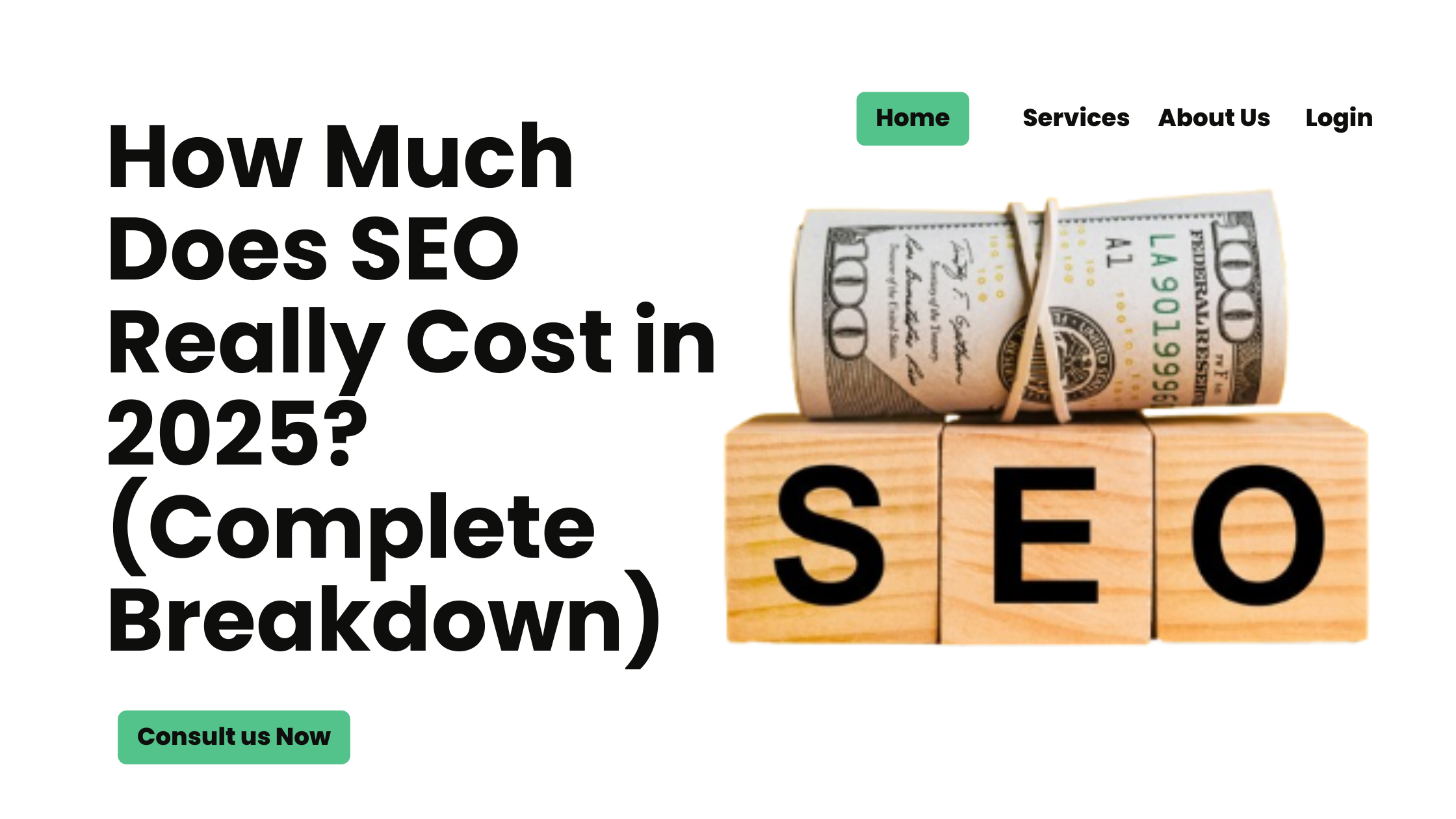
  • How Much Does SEO Really Cost in 2026? (Complete Breakdown)

    How Much Does SEO Really Cost in 2026? (Complete Breakdown)

    If you’re considering investing in SEO for your business, you’re probably wondering about the real SEO costs involved. After working with hundreds of businesses over the past decade at Digital Flavour, I’ve seen firsthand how pricing varies dramatically based on goals, industry, and the expertise level needed. The truth is, the average monthly cost for SEO services ranges from $1,000-$2,500, but with the global SEO services market reaching $74.9 billion in 2026, businesses of all sizes are making significant investments in organic search visibility.

    In this comprehensive guide backed by industry research and data from over 300 SEO professionals, I’ll break down exactly what you can expect to pay for SEO services in 2026 and what return you’ll get on your investment. Having built Digital Flavour’s client success framework around these principles, I’m sharing the insights that have helped our clients make informed SEO investment decisions.

    The State of SEO Investment in 2026

    Before diving into specific costs, let me share why we’re seeing businesses increase their SEO budgets at Digital Flavour and across the industry. SEO returns $22 for every $1 spent, making it one of the highest ROI marketing channels available. More importantly, from what I’ve observed working with diverse clients, organic traffic consistently delivers higher purchase intent and stronger lead quality compared to other channels.

    70% of agencies either increased their pricing recently or plan to in 2026, reflecting both rising demand and the increasing complexity of modern SEO. The rise of AI-powered search, including Google’s AI Overviews and platforms like ChatGPT, has added new layers of optimization that agencies must master.

    Market Growth and Demand

    The SEO services market is projected to reach $127.3 billion by 2030, growing at a 12.3% CAGR. This explosive growth reflects businesses recognizing that organic search remains the cornerstone of digital discovery, with search engines still being where most online experiences begin.

    Understanding SEO Pricing Models

    Throughout my years at Digital Flavour, I’ve worked with every pricing model imaginable. SEO agencies structure their pricing in several ways, each suited to different business needs and project types. Let me walk you through these models so you can evaluate proposals effectively and choose what fits your budget and goals.

    Monthly Retainer (Most Common)

    Monthly retainers represent the industry standard, with 78% of SEO providers using retainer models. This approach provides ongoing optimization, content creation, link building, and technical maintenance—all essential for sustained rankings.

    Industry Data on Monthly Pricing:

    64% of agencies charge below $1,000 per month, with 30% charging less than $500 per month. However, these lower-tier services often provide limited results. Research shows that companies that spend more than $500 per month on SEO are far more likely to be satisfied with the service than those spending less than $500 per month.

    Here’s what the data reveals about monthly retainer pricing:

    • Under $500/month: Entry-level services, often limited scope
    • $500-$1,000/month: The most popular pricing range, suitable for small local businesses
    • $1,000-$2,000/month: Mid-tier services for competitive local markets
    • $2,000-$5,000/month: Professional services for regional businesses
    • $5,000+/month: Only 2% of agencies, typically enterprise-level campaigns

    Monthly retainers average $2,000-$4,000 across the industry, with this range representing where most established agencies position their standard packages.

    Hourly Consulting

    Hourly rates provide flexibility for businesses needing strategic guidance without full-service execution. Hourly rates for SEO consultants usually range from $50 to $100, though experience and location significantly impact pricing.

    Hourly Rate Breakdown by Experience:

    Based on survey data from 300+ SEO professionals:

    • Entry-level ($50 or less/hour): About 40% of professionals with less than 3 years experience charge this much, with rates averaging $30 per hour in India and Latin America, while in the US, UK, and Australia, they average $45 per hour
    • Mid-level ($50-$100/hour): Standard rate for professionals with 4-6 years of experience, representing the most common pricing tier globally, averaging $75/hour in US/UK/Australia and $65/hour in Western Europe
    • Senior-level ($100-$150/hour): Experienced professionals with proven track records
    • Expert consultants ($150-$300+/hour): Industry leaders with specialized expertise

    60% set their hourly rates below $100, but geographical differences matter significantly. 40% of agencies in the US and Canada charge over $125 per hour, while only 6% of European agencies charge the same fee.

    Project-Based Pricing

    For specific deliverables, project-based pricing offers predictable costs. The most popular pricing range is $500-$2,000 per project, with 66% of agencies charging under $2,000 per project.

    Common Project Costs:

    • SEO Audit: $500 to $30,000, depending on scope and depth of analysis
    • Keyword Research: $300 to $2,000, depending on how many topics, competitors, and intent categories need evaluation
    • On-Page Optimization: $100 to $500 per page, covering metadata updates, internal linking, structured headings, and keyword placement
    • Content Creation: $150 to $1,000 per piece, based on length and complexity
    • Link Building: $100 to $500 per link, depending on authority and relevance of target websites
    • Technical SEO: $2,000 to $10,000 depending on site complexity

    Performance-Based Pricing

    While less common, performance-based models are gaining traction. Performance-linked pricing, although only 19% of spend, is expanding at 19.0% CAGR as clients seek accountability. However, be cautious—any agency guaranteeing specific rankings should be viewed skeptically, as no one can guarantee Google’s algorithm outcomes.

    SEO Cost Breakdown by Business Size

    In my experience working with companies from startups to enterprises, your business size, competition level, and market scope dramatically influence what you should invest in SEO. Here’s what research shows about typical investments across business categories, along with insights from our work at Digital Flavour.

    Small Business SEO Cost

    Small businesses focusing on local markets or niche keywords represent a significant portion of SEO spending. Small and Medium Enterprises made up 59% of the SEO market, making this the largest client segment.

    Recommended Investment: At least $1,500 monthly on SEO to see results and improvements, though some entry-level services start at $500-$1,000.

    What You Get:

    • Google Business Profile optimization and local citation building
    • Basic on-page optimization for 10-20 pages
    • Monthly content creation (2-4 blog posts)
    • Local link building initiatives
    • Monthly reporting and analytics review
    • Technical SEO fundamentals

    At this level, you’re typically working with smaller agencies or experienced freelancers. The focus is on foundational work that delivers quick wins in local search visibility. At Digital Flavour, we’ve helped dozens of small businesses in this category achieve first-page rankings within 6 months by focusing on these fundamentals.

    Mid-Sized Business SEO Cost

    Mid-sized businesses competing in regional or national markets need more comprehensive strategies. SEO pricing typically falls between $3,000-$7,500 per month for this segment.

    Recommended Investment: $3,000-$7,500/month

    What You Get:

    • Comprehensive keyword research covering 50-200 target keywords
    • Technical SEO audits and ongoing fixes
    • On-page optimization for 30-100 pages
    • Weekly content production (4-8 pieces monthly)
    • Aggressive link building campaigns
    • Competitor analysis and market research
    • Conversion rate optimization initiatives
    • Detailed analytics with business intelligence insights

    This tier typically involves established agencies with specialized teams. You’ll have dedicated account managers and access to senior strategists who understand your industry’s competitive landscape.

    Enterprise SEO Cost

    Large enterprises with national or international reach require sophisticated, multi-channel strategies. Enterprise campaigns often exceed $20,000 monthly, with some complex implementations reaching well beyond that.

    Recommended Investment: $15,000-$30,000+/month

    What You Get:

    • Advanced technical SEO for large, complex sites (1,000+ pages)
    • Large-scale content operations with editorial teams
    • International SEO and multilingual optimization
    • Extensive link building and digital PR campaigns
    • Custom analytics, reporting, and attribution modeling
    • Dedicated senior team members
    • Strategic consulting from C-level SEO experts
    • Integration across all marketing channels
    • Proprietary tools and competitive intelligence platforms

    81% of B2B companies expect to spend at least $7,500 per month on SEO, reflecting the significant investments required for competitive enterprise visibility.

    Industry-Specific SEO Costs

    One lesson I’ve learned over the years is that your industry dramatically impacts both the cost and ROI of SEO. At Digital Flavour, we’ve seen this play out across dozens of verticals. Highly competitive industries require larger budgets but often deliver stronger returns.

    High-Competition Industries

    Industries with expensive keywords require more aggressive SEO strategies. Consider that lawyers related keywords dominated the list of most expensive keywords on Google.

    High-Cost Verticals:

    • Legal services
    • Financial services and insurance
    • Healthcare and medical
    • Real estate
    • B2B SaaS

    These industries typically need investments at the higher end of each business size category due to intense competition for valuable search terms.

    Mid-Competition Industries

    Many B2B and professional service industries fall into this category:

    • Manufacturing
    • Professional consulting
    • Technology services
    • Home services
    • Education

    These industries can often achieve strong results with mid-tier investment levels.

    Lower-Competition Industries

    Niche markets and local services with less digital competition:

    • Specialized retail
    • Local arts and entertainment
    • Niche manufacturing
    • Regional services

    These businesses can sometimes achieve excellent results with smaller budgets, particularly if they’re early adopters in their markets.

    The Impact of AI on SEO Costs in 2026

    One of the biggest changes I’ve witnessed in SEO pricing for 2026 is the emergence of Generative Engine Optimization (GEO) as a complementary discipline. When ChatGPT reached 100 million users faster than any app in history, I knew we needed to adapt our strategies at Digital Flavour. As of February 2026, it now has more than 400 million weekly users, fundamentally changing how we approach SEO for our clients.

    The GEO Factor

    Google’s AI Overviews now appear on billions of searches every month—at least 13% of all SERPs, fundamentally changing how content gets discovered. This has created new service categories and pricing tiers.

    GEO Service Pricing:

    AI SEO services cost $3,200 on average each month, with specialized GEO services breaking down into three tiers:

    • Basic GEO optimization: $1,000-$3,000/month (included in standard SEO)
    • Advanced GEO strategy: $3,000-$10,000/month
    • Enterprise GEO: $20,000+ monthly in competitive industries or for enterprise clients

    What’s Driving Higher Costs

    AI has turned the SEO pricing world upside down in 2026. Several factors are pushing costs higher:

    1. New Optimization Requirements: Content must now be optimized for both traditional search engines and AI systems like ChatGPT, Perplexity, and Claude
    2. Specialized Expertise: 25% attribute their rate increases to enhanced expertise and value proposition
    3. Tool Costs: Tools that track visibility across ChatGPT, Perplexity, and Google AI Overviews cost $200-$1,000 monthly based on features
    4. Changing Metrics: SEO reports now include “AI search readiness scores” and “AI visibility” metrics

    The good news? 49% of agencies expect their client’s budgets to grow in the next 12 months, suggesting businesses recognize the value of staying visible in this evolving landscape.

    What Results Should You Expect? The ROI Data

    After running countless SEO campaigns at Digital Flavour, I’ve learned that understanding realistic ROI helps you evaluate whether your SEO investment is worthwhile. Let me share the data on SEO returns—it’s compelling.

    Average ROI Across Industries

    The median ROI for SEO is 748% delivering $7.48 return for every $1 spent. However, this varies significantly by industry:

    Top-Performing Industries:

    Real Estate leads with 1,389% ROI achieving payback in just 10 months, Medical Device companies see 1,183% ROI within 13 months, while PCB Design & Manufacturing achieves 1,101% ROI in 11 months. Financial Services delivers 1,031% ROI in 9 months, followed by Higher Education at 994% ROI over 13 months.

    Additional High-Performers:

    • B2B SaaS companies report a 702% average SEO ROI
    • Ecommerce brands generate a 317% SEO ROI

    Conversion Rate Advantages

    SEO delivers superior conversion rates compared to other channels. SEO leads close at 14.6%, compared to 1.7% for outbound, demonstrating the quality of organic traffic.

    The average conversion rate for SEO is 2.4%, though this varies by industry. For example, legal services have the highest conversion rate of 7.5%.

    Time to Positive ROI

    Understanding timeline expectations is crucial for budgeting. It takes approximately 9.6 months to break even on average across most industries.

    More specifically:

    • 6-12 months: Most businesses see positive returns
    • 12-18 months: ROI compounds as content and links accumulate
    • 18-36 months: Peak performance as authority builds
    • Years 2-3: Peak performance occurs in years 2-3

    SEO converts 84.62% more website visitors than PPC, and unlike paid advertising, these results continue generating returns long after the initial investment.

    SEO vs. Other Marketing Channels

    When comparing SEO to alternative marketing investments:

    Market Sentiment:

    • 49% of marketers see organic search as the top ROI-driving digital channel
    • 70% of marketers believe SEO delivers much better results than PPC
    • 70% of brands report SEO generates more sales on average than PPC

    Long-Term Value: 91% of respondents stated that SEO positively impacted website performance and marketing goals in 2024, demonstrating consistent positive outcomes across businesses.

    Critical Cost Factors That Impact Your Investment

    Beyond business size and industry, I’ve identified several specific factors that determine how much you’ll need to invest in SEO. These are the variables I evaluate when developing proposals at Digital Flavour.

    1. Current Website Status

    Your starting point significantly impacts costs, and this is one of the first things I assess with new clients. Sites with technical debt, penalties, or poor existing content require more upfront investment before seeing results. Conversely, technically sound sites can focus budgets on growth activities.

    2. Competitive Landscape

    Your competition’s SEO maturity determines how aggressively you need to invest. Ranking for “personal injury lawyer New York” requires far more resources than “handmade pottery classes Nashville” due to competition intensity.

    3. Geographic Scope

    Local SEO efforts tend to cost less, often between $1,500-$3,000, depending on competition and complexity, while national campaigns require significantly more investment. Regionally, North America held 34.2% share of global SEO service revenue in 2024, while APAC is set to expand fastest, with a projected 13.9% CAGR from 2025 to 2030.

    4. Content Requirements

    On-Page SEO remains the largest slice, contributing 42.3% of 2024 revenue, highlighting content’s central role. High-quality, researched content costs more but delivers better results through improved rankings and natural link acquisition.

    5. Technical Complexity

    The complexity of your platform can affect the cost of SEO. For example, SEO for WordPress is typically less complicated than a campaign for Shopify due to different technical requirements and optimization challenges.

    6. Link Building Needs

    Quality backlink acquisition remains resource-intensive. In competitive industries, earning links from authoritative publications requires sustained outreach, relationship building, and often digital PR campaigns—all adding to monthly costs.

    SEO Tools and Additional Costs

    Whether you hire an agency or build an in-house team, tool costs add to your SEO investment. Here’s what to budget beyond service fees.

    Essential SEO Tool Stack

    Core Tools:

    • All-in-one platforms (Ahrefs, SEMrush, Moz): $99-$400/month
    • Rank tracking: $50-$200/month
    • Technical SEO (Screaming Frog, Sitebulb): $20-$200/month
    • Content optimization (SurferSEO, Clearscope): $50-$200/month
    • Analytics: Google Analytics 4 and Search Console (free)

    2025 Additions: Tools that track visibility across ChatGPT, Perplexity, and Google AI Overviews cost $200-$1,000 monthly, representing new must-have investments for modern SEO.

    Total Tool Budget: $200-$1,000/month for a comprehensive stack, though many agencies include these costs in their retainer fees.

    In-House Team Costs

    Building an internal team involves significant investment. The average salary for an SEO specialist in the U.S. in 2026 is around $70,000 to $90,000 annually, excluding benefits and overhead.

    A complete in-house team typically includes:

    • SEO Manager/Director: $90,000-$150,000
    • Technical SEO Specialist: $70,000-$100,000
    • Content Strategist: $65,000-$90,000
    • Link Building Specialist: $60,000-$85,000
    • SEO Analyst: $55,000-$75,000

    Plus benefits (typically 20-30% of salary), tools, training, and management overhead.

    Red Flags: When SEO Costs Too Little (or Too Much)

    In my decade of experience, I’ve seen countless businesses burned by poor SEO choices. Not all SEO services deliver value proportional to their cost. Here’s how to identify problematic pricing based on what I’ve witnessed in the industry.

    Suspiciously Low Prices

    Be wary of a company offering their services for $150 a month or less, particularly when you consider that the average SEO specialist in 2026 is making upwards of $70,000 annually. The math simply doesn’t work for quality service.

    67% of budget providers use black-hat techniques risking Google penalties, 89% provide no custom strategy. The hidden costs are severe: the median cost to recover from penalty-inducing cheap SEO is $15,000-25,000.

    Warning Signs of Low-Quality SEO:

    • Automated, low-quality link building
    • Thin, plagiarized, or AI-generated content without editing
    • No custom strategy or meaningful reporting
    • Black hat tactics that risk penalties
    • Cookie-cutter approaches across all clients

    Unjustified Premium Pricing

    While premium pricing can indicate quality, it should correlate with:

    • Proven track record with verifiable case studies
    • Team with demonstrable expertise
    • Transparent processes and detailed reporting
    • Strategic insights beyond execution
    • Specialized industry expertise
    • Advanced proprietary tools or methodologies

    Universal Red Flags

    Legitimate SEO professionals never guarantee specific rankings or timelines. Be skeptical of:

    • “First page in 30 days” promises
    • “#1 ranking guarantees”
    • Claims of “special relationships with Google”
    • Vague promises without specific, customized strategies
    • Agencies offering the same flat rate for all clients without considering individual needs and objectives

    DIY SEO: Is It Worth It?

    This is a question I get asked constantly. With SEO costs seeming high, you might wonder about handling it yourself. Here’s what the data reveals, along with my honest assessment.

    The True Cost of DIY

    Your time has tangible value—something I remind every client who considers DIY SEO. While you eliminate agency fees, you’ll invest:

    • Learning time: 100-200+ hours to develop basic competency
    • Tool costs: $200-$800/month for a competitive tool stack
    • Execution time: 20-40 hours weekly for meaningful results
    • Opportunity cost: Hours not spent on core business activities

    From my experience, most business owners underestimate these costs significantly.

    Success Rates and Challenges

    65% of businesses have worked with multiple SEO providers to find a good fit, suggesting even those attempting SEO struggle to get it right initially.

    The biggest challenge? SEO mistakes can be costly. Poor link building triggers penalties, technical errors tank rankings, and recovery takes significant time and investment—often more than simply hiring professionals initially.

    When DIY Makes Sense

    DIY SEO can work for:

    • Very small businesses with extremely tight budgets
    • Business owners with marketing backgrounds
    • Companies in very low-competition niches
    • Situations where you have more time than money
    • Businesses willing to invest 6-12 months learning

    However, most businesses find that 80% of B2B executives say projected ROI from an SEO campaign dictates what they’re willing to pay for SEO, suggesting they focus on returns rather than minimizing costs.

    Building Your SEO Budget for 2026

    After helping hundreds of businesses create SEO budgets at Digital Flavour, I’ve developed a framework that ensures you invest appropriately for your goals while managing expectations about returns.

    Starting Point Recommendations

    Based on industry data and ROI analysis:

    Local Business:

    • Start with $1,500-$3,000/month minimum
    • Local SEO efforts tend to cost less, often between $1,500-$3,000, depending on competition and complexity

    Regional Business:

    • Budget $3,000-$7,500/month for competitive markets
    • SEO pricing typically falls between $3,000-$7,500 per month for mid-sized businesses

    National Business:

    • Plan for $7,500-$20,000/month minimum
    • More for highly competitive industries

    Enterprise:

    • Allocate $20,000-$50,000+/month
    • Some enterprise campaigns exceed $20,000 monthly

    Scaling Your Investment Over Time

    At Digital Flavour, we’ve found that smart SEO investment follows a strategic ramp:

    Months 1-3: Foundation Phase

    • Technical audit and fixes
    • Keyword research and strategy development
    • Initial on-page optimization
    • Content plan development

    Months 4-6: Growth Phase

    • Accelerated content production
    • Initial link building campaigns
    • Local optimization (if applicable)
    • First results and refinements

    Months 7-12: Expansion Phase

    • Scale successful tactics
    • Expand keyword targeting
    • Increase content velocity
    • More aggressive link building

    Year 2+: Optimization Phase

    • Maintain momentum while improving efficiency
    • Explore advanced strategies
    • Peak performance in years 2-3 as compounding effects take hold

    Budget Allocation Guidelines

    Distribute your budget strategically based on priorities:

    Typical Allocation:

    • Content creation and optimization: 35-40%
    • Link building and outreach: 25-30%
    • Technical SEO and maintenance: 15-20%
    • Strategy, reporting, and management: 15-20%

    These percentages shift based on your specific needs, website maturity, and campaign stage.

    The True Cost of Not Investing in SEO

    When I consult with businesses hesitant about SEO investment, I always ask them to consider the opportunity cost of inaction. Here’s what I’ve seen companies lose by waiting.

    Market Share Loss

    Over 68% of all online experiences begin with a search engine, and organic search drives approximately 53% of website traffic globally. Every day without SEO investment, competitors capture this traffic.

    Compounding Disadvantage

    SEO investments compound over time. Content created today drives traffic for years. Links earned now provide ongoing value. Competitors’ early investments create advantages that become harder to overcome with each passing month.

    Rising Competition

    The SEO services market is projected to grow at a 12.3% CAGR, reflecting increasing investment across industries. As more businesses invest in SEO, competition intensifies, making it progressively harder and more expensive to break into competitive markets.

    Cost Comparison

    Studies show that companies investing in SEO see an average of 14.6% conversion rates from organic traffic, compared to just 1.7% from traditional outbound marketing. The ROI differential makes SEO not just cost-effective but essential for sustainable growth.

    2026 SEO Trends Affecting Costs

    Based on what I’m seeing across our client portfolio at Digital Flavour and industry-wide, several emerging trends are influencing both SEO costs and strategies.

    1. AI and Generative Search

    Adobe reported that AI-driven traffic to retail websites jumped 12x between July 2024 and February 2025, demonstrating the rapid shift toward AI-powered discovery.

    By July 2025, this momentum grew to a staggering 4,700% year-over-year increase in AI-driven retail traffic, making GEO optimization increasingly critical.

    2. Voice and Visual Search

    Voice and Visual Search SEO is growing fastest at 20.8% CAGR, representing emerging opportunities for early adopters willing to invest in cutting-edge strategies.

    3. Zero-Click Searches

    SparkToro research shows 58% of Google searches end with zero clicks, as users get answers directly from AI overviews. This is fundamentally changing how SEO value is measured and priced.

    4. Mobile-First Everything

    Mobile accounts for over 62% of global web traffic and 77% of retail visits, making mobile optimization non-negotiable rather than optional.

    Choosing the Right SEO Investment

    After working with hundreds of businesses, I’ve developed a clear framework for making smart SEO investments. It requires research, realistic expectations, and careful provider evaluation.

    Questions to Ask Potential Providers

    Before signing any agreement, ask:

    1. Service Specifics: What exactly is included in your pricing? What’s not included?
    2. Team Composition: Who will actually work on my account? What are their qualifications?
    3. Processes and Methods: What tools and processes do you use? Can I see your typical workflow?
    4. Measurement: How do you measure and report results? What metrics matter most?
    5. Case Studies: Can you provide case studies from similar businesses in my industry?
    6. Algorithm Changes: How do you handle Google algorithm updates?
    7. Communication: What’s your communication cadence and availability?
    8. AI Strategy: How do you optimize for AI Overviews and platforms like ChatGPT?

    Evaluating Proposals

    Compare proposals based on:

    Value Assessment:

    • Clarity of deliverables and expectations
    • Customization to your specific business and market
    • Transparency about methods and limitations
    • Experience relevant to your industry and goals
    • Balance of price and comprehensive services

    Remember: Companies that spend more than $500 per month on SEO are far more likely to be satisfied with the service. Don’t choose solely on price—consider the value delivered.

    Understanding Satisfaction Drivers

    65% of businesses have worked with multiple SEO providers to find a good fit, suggesting finding the right partner takes diligence. Look for providers who:

    • Communicate clearly and regularly
    • Set realistic expectations
    • Provide transparent reporting
    • Demonstrate industry expertise
    • Show proven results in your market segment

    Final Thoughts: Is SEO Worth the Cost?

    After a decade in this industry and building Digital Flavour from the ground up, I can confidently say that based on comprehensive industry data, SEO represents exceptional long-term value for businesses willing to invest appropriately and maintain realistic expectations.

    The Investment Case

    The numbers speak clearly:

    • SEO returns $22 for every $1 spent
    • Median ROI of 748% across industries
    • 14.6% conversion rate vs 1.7% for outbound marketing
    • Long-term compounding value that continues years after initial investment

    Success Requirements

    SEO success demands:

    • Adequate Budget: At least $1,500 monthly to see meaningful results
    • Patience: 9.6 months to break even on average, with peak results in years 2-3
    • Quality Partners: Working with skilled professionals or investing in proper education
    • Consistent Effort: SEO is an ongoing process. It never stops
    • Measurement Focus: Tracking metrics that matter to your business outcomes

    Market Momentum

    The industry momentum is undeniable. The global SEO services market reached $74.9 billion in 2026 and is expected to rise to $127.3 billion by 2030. Businesses across all sectors are investing because the returns justify the costs.

    91% of respondents stated that SEO positively impacted website performance and marketing goals, demonstrating consistent positive outcomes when executed properly.

    The Bottom Line

    Rather than asking if SEO is worth the investment, the more relevant question in my experience is: Can your business afford to ignore it? With organic search driving approximately 53% of website traffic globally and delivering superior conversion rates compared to every other channel, SEO isn’t just a good investment—it’s essential for sustainable digital growth.

    The businesses I’ve worked with that succeed with SEO view it as a long-term growth strategy, not a quick fix. They invest appropriately for their market, measure results carefully, and adjust based on data. When approached with realistic expectations and adequate resources, SEO consistently delivers exceptional ROI that compounds over time.


    Ready to invest in SEO for your business? At Digital Flavour, Best Digital Marketing Agency, I’ve built our approach around data-driven strategies designed to deliver measurable results. Our transparent pricing reflects our commitment to quality work that generates real ROI. I invite you to contact us today to discuss your goals, and I’ll personally ensure you get a customized quote based on your specific needs and market conditions.
  • How SEO Services Increase Website Traffic and Leads for Local Businesses

    How SEO Services Increase Website Traffic and Leads for Local Businesses

    Here’s something that keeps me up at night: I see amazing local businesses struggling every single day, not because they lack talent or passion, but because they’re invisible online. And in 2025, if you’re invisible online, you might as well not exist.

    Let me share something eye-opening with you. 99% of people have used the internet to look up information about a local business in the past year. Think about that for a moment. When was the last time you tried a new restaurant, found a plumber, or searched for a local service without checking online first? Exactly.

    Why Local Search Changed Everything

    Digital Flavour, Result Oriented Digital Marketing Agency been working with local businesses for years now, and I’ve seen a massive shift in how customers find and choose businesses. Here’s what really gets me excited: over 75% of local searches lead to an in-store visit within 24 hours. That’s not just data on a spreadsheet—that’s real people walking through real doors, ready to spend real money.

    When someone pulls out their phone and searches “best coffee shop near me” or “emergency plumber in [your city],” they’re not browsing casually. They need something, and they need it now. The only question is whether they’ll find your business or your competitor’s.

    That’s where local SEO becomes absolutely critical. And no, it’s not the same as regular SEO. Local SEO is about owning your digital neighborhood—making sure that when someone in your area searches for what you offer, your business pops up first.

    Your Google Business Profile: The Secret Weapon Most Businesses Ignore

    I can’t tell you how many business owners I meet who either don’t have a Google Business Profile or have one that’s barely filled out. It drives me crazy because this is literally one of the most powerful free marketing tools available today.

    Here’s what the data tells us: businesses with a complete Google Business Profile are twice as likely to earn customer trust and 70% more likely to attract foot traffic. I’ve seen this play out firsthand with our clients at Digital Flavour. A properly optimized profile can completely transform your visibility overnight.

    When I optimize a client’s Google Business Profile, I make sure we’re covering every base—accurate business information, the right categories, professional photos, regular posts, and most importantly, managing those reviews. The average business profile shows up in over a thousand customer searches each month. That’s a thousand opportunities to win new customers, and most businesses are missing out on them.

    The Holy Grail: Getting Into the Local Pack

    You know those three businesses that show up at the top of Google when you search for a local service? That’s what we call the Local Pack, and it’s prime digital real estate. I’ve watched businesses experience a 126% surge in search traffic just from landing in that top three.

    Getting there isn’t luck—it’s strategy. Your business information needs to be consistent everywhere online, you need strong reviews coming in regularly, your content needs to target the right local keywords, and you need quality local backlinks. It’s a lot of moving pieces, which is exactly why most business owners benefit from professional help.

    The Mobile Revolution Nobody’s Talking About

    Here’s something fascinating: 76% of smartphone users who search for nearby businesses visit a physical location within a day. I see this with my own behavior—I’m standing on a street corner, searching for lunch options, and within minutes I’m walking into whichever restaurant caught my attention online.

    If your website isn’t mobile-friendly, loads slowly, or doesn’t give people the information they need immediately, you’re losing customers by the dozens. I’ve tested this with our clients—even a one-second delay in page load speed can hurt conversions by 7%. In the mobile-first world we live in, that’s money walking out the door.

    It’s Not Just About Traffic—It’s About the Right Traffic

    Anyone can drive random traffic to a website. What I focus on with Digital Flavour clients is bringing in people who are actually ready to become customers. That’s the beauty of local SEO—it attracts qualified leads.

    Think about the difference between someone who sees a random ad versus someone who actively searches “emergency AC repair near me” on a scorching summer afternoon. That second person? They’re ready to buy right now.

    The numbers back this up beautifully. Organic search leads have the highest conversion rate at 16%, outperforming almost every other marketing channel. Why? Because these people are actively looking for solutions. They’re not being interrupted—they’re seeking you out.

    I’ve worked with clients across different industries, and while conversion rates typically sit between 2.6% to 3.3%, we’ve pushed those numbers much higher through smart optimization. The formula isn’t complicated—fast-loading pages, mobile optimization, clear calls-to-action, plenty of trust signals like reviews, and content that speaks directly to your local community.

    The Strategies That Actually Work

    Let me get practical with you. After years of testing and refining our approach, here’s what I know works:

    Laser-Focused Local Keywords

    Forget trying to rank for “plumber”—you’re competing with every plumber in the country. Instead, target “emergency plumber in Chandler” or “licensed plumber near Phoenix Sky Harbor.” These geo-specific terms capture people who are in your service area and ready to hire someone now. Less competition, higher intent, better results.

    Content That Feels Local

    I always tell my clients: write for your neighbors, not for search engines. Create blog posts about local events, guides specific to your city’s unique characteristics, case studies featuring local customers, stories about your community involvement. When people read your content and think “this business really gets our community,” that’s when the magic happens.

    Building Your Local Reputation

    Getting your business listed consistently across local directories, the Better Business Bureau, your chamber of commerce, and industry-specific sites builds trust with both Google and potential customers. Add in quality backlinks from local news sites, community organizations, and business partnerships, and Google starts seeing you as a trusted local authority.

    The Review Game

    I’m not going to sugarcoat it—reviews are make-or-break for local businesses now. They’re a critical ranking factor, and businesses in top positions typically have over 200 Google reviews. But it’s not just about the quantity. High-quality reviews with positive sentiment move the needle on both rankings and conversion rates.

    I’ve helped countless clients develop systems to consistently generate new reviews, respond professionally to every review (yes, even the negative ones), and showcase their best reviews on their website. It works.

    What Results Look Like in the Real World

    I always promise my clients realistic expectations. Professional SEO typically takes 3-6 months to show measurable results. That might sound like a long time in our instant-gratification world, but here’s the thing—it’s worth the wait.

    I worked with a roofing company that saw their organic traffic more than double within a few months after we updated their title tags, built strategic links, and created targeted content. But what really excites me is the compounding effect. Unlike paid ads that stop the second you stop paying, SEO builds momentum. Your rankings improve, your authority grows, and the results keep coming month after month.

    When I review results with clients, we look at concrete metrics: organic search traffic growth, how often they’re appearing in the Local Pack, where they rank for target keywords, their Google Business Profile views and clicks, conversion rates, and ultimately, ROI. Because at the end of the day, it’s not about vanity metrics—it’s about revenue.

    Why DIY SEO Usually Doesn’t Cut It

    Look, I respect the entrepreneurial spirit. I’m a business owner myself, and I understand the temptation to try to do everything yourself. But here’s the reality I’ve observed: SEO is incredibly time-consuming and constantly evolving.

    Between keyword research, content creation, technical website audits, link building, citation management, review generation, and performance tracking, you’re looking at 20+ hours per week minimum. That’s time you could spend serving customers, developing your products, or actually running your business.

    Beyond time, there’s the expertise factor. Search algorithms change constantly. I spend hours every week staying current with the latest updates, best practices, and ranking factors. Professional SEO also requires expensive tools—we’re talking thousands of dollars annually for the software we use for keyword research, competitor analysis, rank tracking, and detailed analytics.

    At Digital Flavour, we bring all of this to the table so our clients can focus on what they do best while we handle their digital presence.

    The Mistakes That Cost Businesses Thousands

    I’ve cleaned up enough SEO disasters to write a book about it. Here are the expensive mistakes I see constantly:

    Business information that’s different on every website, keyword stuffing that actually hurts your rankings, websites that look terrible on mobile devices, ignoring negative reviews until the damage is done, choosing the wrong business categories on Google, and building sketchy low-quality links that trigger search engine penalties.

    Every single one of these mistakes is preventable, and every single one costs businesses real money in lost visibility and customers.

    Your Unfair Advantage

    Here’s the opportunity that excites me: 58% of businesses don’t have local SEO in their strategy. Read that again. More than half your competitors aren’t even playing this game. By investing in professional SEO services, you’re automatically ahead of the majority of your competition.

    And in competitive markets, the difference between page one and page two of Google is massive. The first page captures 95% of web traffic. If you’re on page two, you might as well be invisible.

    Finding the Right SEO Partner

    When business owners ask me what to look for in an SEO provider, I’m always honest. Look for transparent reporting that shows clear progress, ethical white-hat practices that build sustainable results, experience in your specific industry, a comprehensive approach that covers all aspects of local SEO, realistic timelines (run from anyone promising overnight success), and clear, regular communication.

    At Digital Flavour, these are the standards I hold our team to because I know they’re what businesses deserve.

    The Bottom Line

    Local SEO isn’t optional anymore—it’s essential. With consumers overwhelmingly using search engines to find local businesses, your visibility directly impacts your revenue.

    I’ve seen the transformation firsthand: increased visibility leading to targeted traffic, which converts at higher rates, creating a powerful growth engine that compounds over time. Unlike paid advertising where you’re renting attention, SEO builds equity. You’re creating a digital asset that keeps delivering customers year after year.

    Here’s a stat that really drives this home: 28% of local searches lead buyers to make purchases. That’s a direct line from search visibility to revenue. When I invest our time and resources into a client’s SEO, we’re not just buying a marketing service—we’re building a sustainable competitive advantage.

    The question I always ask business owners is this: Can you afford to stay invisible while your competitors show up first in local searches? Because in 2025, that’s not a question about marketing—it’s a question about survival.

    Ready to dominate local search and turn visibility into revenue? I’d love to discuss how Digital Flavour can create a customized SEO strategy for your business. Let’s talk about where you are now and where you want to be.

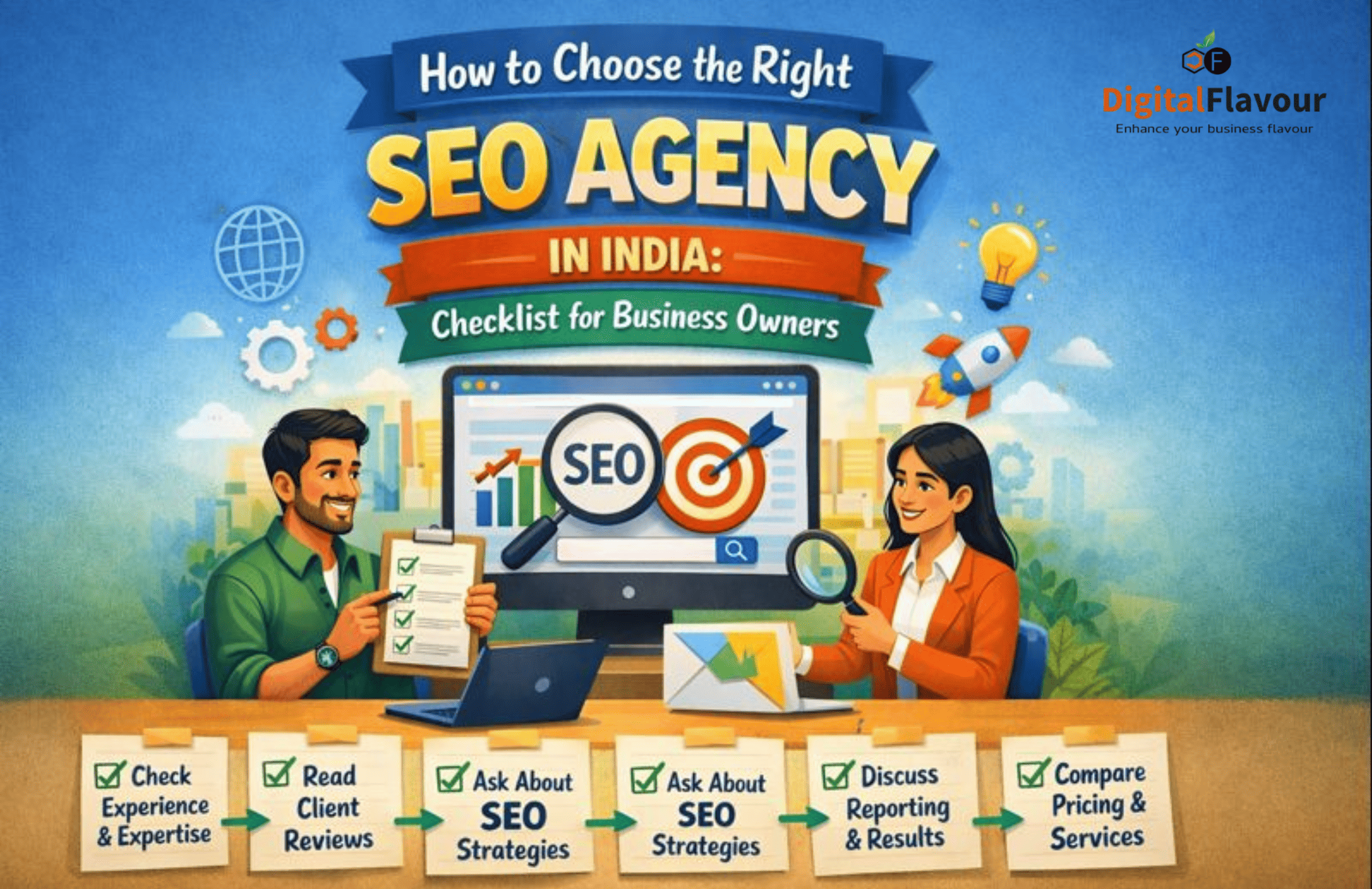
  • How to Choose the Right SEO Agency in India: A Comprehensive Checklist for Business Owners

    How to Choose the Right SEO Agency in India: A Comprehensive Checklist for Business Owners

    Last month, a friend who runs a boutique hotel in Jaipur called me, frustrated. He’d spent ₹45,000 monthly for eight months on an SEO agency that promised him “first-page rankings guaranteed.” The result? His website traffic actually dropped, and he later discovered they’d been buying spammy backlinks that got him a Google penalty.

    Unfortunately, his story isn’t unique.

    I’ve been working in digital marketing for over a decade, and I’ve seen businesses waste lakhs on agencies that either don’t deliver or, worse, damage their online presence. But I’ve also seen the right partnerships transform struggling businesses into thriving online brands.

    The problem isn’t that good SEO agencies don’t exist in India—they absolutely do. It’s that the industry is flooded with everyone from legitimate experts to complete scam artists, all claiming to be “the best.” When you’re a business owner trying to grow your online presence, how do you tell the difference?

    This guide is based on real conversations with business owners, years of working with various agencies, and honestly, some hard-learned lessons. Let’s talk about what actually matters when choosing an SEO partner.

    Let’s Talk About Money First (Because Everyone’s Thinking It)

    Before we dive into checklists, let’s address the elephant in the room: cost.

    I’ve seen business owners make two common mistakes. The first group thinks SEO should cost ₹5,000 a month because, well, “it’s just keywords, right?” The second group assumes that paying ₹1,50,000 monthly guarantees results because expensive must mean better.

    Both are wrong.

    Here’s what you’ll typically see in India right now:

    For local businesses (like a restaurant, plumber, electrician, clinic, or retail store targeting one city), you’re looking at ₹15,000 to ₹30,000 monthly. This should get you solid local SEO work—Google Business Profile optimization, local citations, targeted content, and basic link building.

    For businesses targeting multiple cities or nationwide, expect ₹30,000 to ₹75,000 monthly. At this level, you’re getting more comprehensive content strategies, technical SEO, competitive link building, and deeper keyword targeting.

    For e-commerce or highly competitive industries (think finance, insurance, legal), budgets often run from ₹75,000 to ₹2,00,000+ monthly. These industries are cutthroat online, and ranking requires serious resources.

    Now, I know what you’re thinking: “That’s a huge range!” Yes, because SEO isn’t a fixed product. A 20-page website for a local business needs far less work than a 500-page e-commerce site competing nationally.

    Here’s my rule of thumb: If someone quotes you below ₹10,000 monthly for anything beyond the most basic local SEO, be skeptical. Quality SEO requires skilled people, expensive tools (Ahrefs alone costs thousands monthly), and significant time investment. The math just doesn’t work at rock-bottom prices.

    The Real Checklist: What Actually Matters

    Forget the generic “check their portfolio” advice you see everywhere. Let’s get specific about what separates good agencies from pretenders.

    1. Can They Rank Their Own Website?

    I always find it amusing when an SEO agency’s website ranks on page 3 for “SEO agency India” or “SEO agency in [their city].” If they can’t rank their own site, why would they be able to rank yours?

    Do this simple test: Open an incognito browser window and search for “ Indore SEO agency” or “SEO company in Indore.” See who shows up on page one. These are the agencies that actually walk the talk.

    But here’s the thing—don’t just check rankings. Look at their blog. Is it active? Is the content actually useful or just keyword-stuffed garbage? Check their Google Business Profile reviews. Real clients leave real reviews.

    2. The “Secret Sauce” Red Flag

    I once sat through a presentation where an agency representative kept mentioning their “proprietary algorithm” and “secret techniques” that would “hack Google’s system.”

    Run. Just run.

    Here’s the truth: There are no secrets in SEO. Google’s guidelines are public. Best practices are well-documented. What separates good agencies from bad ones isn’t secret knowledge—it’s consistent execution, strategic thinking, and staying updated with changes.

    When you talk to an agency, they should be able to explain exactly what they’ll do for you in plain English. Things like:

    “We’ll audit your site’s technical issues, fix your page speed problems, create content targeting these specific keywords your competitors rank for, and build relationships with industry publications for quality backlinks.”

    If they’re vague, evasive, or hide behind jargon, that’s a problem.

    3. The Case Study Test

    Ask for three case studies from businesses similar to yours. Not just testimonials—actual case studies with numbers.

    But here’s what most people miss: Don’t just look at the wins. Ask about the timeline. SEO takes time, and any agency showing massive results in 6-8 weeks is either lying or using tactics that will eventually backfire.

    Real results look something like this:

    • Months 1-2: Initial improvements from fixing obvious issues
    • Months 3-4: Gradual ranking improvements and traffic uptick
    • Months 6+: More significant, sustainable growth

    One agency I respect showed me a case study where traffic actually dipped initially because they removed spammy backlinks left by the client’s previous agency. That’s honesty. That’s what you want.

    Also, call those references. Actually pick up the phone. Ask them: “Did this agency meet deadlines? How’s their communication? If you had an issue, how did they handle it?”

    4. The Contract Conversation

    This is where things get interesting. I’ve seen contracts ranging from “we’ll try our best” to 50-page legal documents nobody reads.

    Here’s what matters:

    Lock-in periods: Be wary of agencies demanding 12-month contracts upfront with no trial period. SEO does require patience, but if an agency is confident in their work, they should be comfortable with a 3-6 month initial commitment with exit clauses.

    What’s actually included: Make sure it’s spelled out. How many blog posts per month? How many backlinks? What technical work? Vague promises of “ongoing optimization” aren’t enough.

    Who owns what: This is crucial. The content they create, the backlinks they build—you need to own these. I’ve seen businesses get held hostage where agencies threatened to remove backlinks if the contract ended.

    Reporting clarity: You should get monthly reports that show traffic, rankings, conversions, and the actual work done. Not just automated rank tracking reports—actual insights into what’s working and what’s not.

    5. Understanding Their Link Building Approach

    This is where many agencies either make you or break you.

    Google’s been clear for years: bought links, link schemes, and spammy tactics will eventually get you penalized. Yet many agencies still do it because it’s cheaper and shows quick results.

    Ask them directly: “How do you build backlinks?”

    Good answers include:

    • “We create linkable assets like research, tools, or comprehensive guides, then do outreach to relevant sites”
    • “We work with journalists and publications in your industry for digital PR”
    • “We find broken links on authority sites and offer your content as a replacement”
    • “We identify unlinked mentions of your brand and request proper attribution”

    Bad answers include:

    • “We have relationships with thousands of websites” (translation: they buy links)
    • “We use private blog networks” (red flag!)
    • “We’ll get you 500 backlinks in the first month” (quality over quantity)
    • Being vague or changing the subject

    Here’s a personal story: A client once came to us after their previous agency built 1,200 backlinks in two months. Sounds great, right? Wrong. They were all from irrelevant, low-quality sites. We spent six months cleaning up that mess and disavowing bad links before we could start building properly. The “quick wins” set them back half a year.

    6. The Questions They Ask You Matter More Than You Think

    Want to know if an agency is good? Pay attention to their questions during the sales call.

    Bad agencies ask: “What’s your budget? How many keywords do you want to rank for? When do you want to be on page one?”

    Good agencies ask: “What are your business goals? Who’s your target customer? What does a valuable lead or sale look like for you? What’s your current conversion rate? Who are your main competitors? What makes your offering different?”

    See the difference? One is focused on SEO metrics in a vacuum. The other is trying to understand your business so they can create a strategy that actually drives revenue, not just vanity metrics.

    I remember talking to one agency that spent 30 minutes asking about our client’s customers before even mentioning SEO tactics. That’s the level of business understanding you want.

    7. The Technical Stuff They Should Talk About

    You don’t need to be technical to judge an agency’s technical capabilities. Just listen for these topics to come up:

    Site speed: They should mention Core Web Vitals, page load times, and mobile performance. In 2025, this isn’t optional—it’s a ranking factor.

    Mobile optimization: If they don’t mention mobile-first indexing, that’s a red flag. More than 60% of searches happen on mobile devices in India.

    Website structure: They should audit how your site is organized, internal linking, URL structure, and navigation.

    Structured data: This is the code that helps Google understand your content better. Good agencies implement schema markup for things like products, reviews, local business information, and FAQs.

    If an agency only talks about “keywords and backlinks,” they’re stuck in 2010.

    8. The Content Conversation

    Content is where SEO lives or dies, yet it’s often an afterthought in proposals.

    Ask them: “What’s your content strategy?”

    Red flag answers:

    • “We’ll write 4 blog posts a month with your keywords”
    • “We’ll spin content from other sites”
    • “We outsource content to cheap writers”

    Good answers:

    • “We’ll research what your target audience is actually searching for and create content that answers their questions”
    • “We’ll identify content gaps where your competitors are winning and target those”
    • “We’ll update and optimize your existing content that’s almost ranking”
    • “We’ll create different content types—educational blogs, comparison pages, case studies—based on where people are in the buying journey”

    One thing I’ve learned: Agencies that have in-house writers, or at least editors who review everything, produce better content than those outsourcing to the lowest bidder.

    9. Communication Style Matters More Than You’d Think

    You’re going to work with these people for months, possibly years. If communication feels off during the sales process, it won’t magically improve later.

    Things to watch for:

    Response time: Do they reply within 24-48 hours, or do you chase them for days?

    Clarity: Do they explain things clearly, or do they bombard you with jargon to sound smart?

    Honesty: When you ask tough questions, do they give straight answers or dodge?

    Teaching approach: Do they help you understand SEO, or keep it mysterious so you stay dependent?

    I’ve seen business owners stick with mediocre agencies because switching felt overwhelming. Choose someone you can actually work with comfortably.

    10. What They Say About Timeline and Results

    This one’s simple. If anyone guarantees:

    • #1 rankings for competitive keywords
    • Page one results in 4-6 weeks
    • Specific traffic numbers

    They’re lying. SEO doesn’t work that way. Google’s algorithm is complex, competitive landscapes change, and there are hundreds of ranking factors.

    Honest agencies will say something like: “Based on your competition and current site state, we typically see initial improvements in 2-3 months, with more significant results around the 6-month mark. We’ve seen similar businesses reach X traffic levels within 12 months, but every situation is different.”

    See the difference? Realistic expectations based on experience, not false promises.

    The Red Flags Nobody Talks About

    Beyond the obvious scams, here are some subtler warning signs I’ve learned to spot:

    High employee turnover: If you meet different account managers every few months, something’s wrong internally. Consistency matters in SEO.

    Outdated blog: If their own blog hasn’t been updated in a year, how current is their SEO knowledge?

    Copy-paste proposals: You can tell when an agency just fills in your business name on a template. Good agencies create custom strategies.

    Obsession with rankings only: Rankings are great, but if they don’t talk about traffic, conversions, and ROI, they’re missing the point.

    Refusal to grant access: You should always have admin access to your Google Analytics, Search Console, and any tools they use for your account. If they resist this, major red flag.

    No mention of competition: Good agencies analyze what your competitors are doing and create strategies to outmaneuver them.

    Agency vs. Freelancer: A Real Conversation

    I get asked this a lot: “Should I hire an agency or a freelancer?”

    Here’s my honest take after working with both:

    Freelancers make sense when:

    • Your budget is tight (₹15,000-₹25,000 monthly)
    • Your website is relatively simple
    • You need specific expertise (like just technical SEO or just content)
    • You value direct communication with the person doing the work
    • You’re okay with potentially less backup if they get sick or busy

    Agencies make sense when:

    • You need comprehensive strategy across multiple channels
    • Your website is complex or large
    • You’re in a competitive industry
    • You want backup resources and diverse expertise
    • You need consistent output even when individual team members are unavailable

    The freelancer vs. agency debate isn’t about which is “better”—it’s about what fits your situation. I’ve seen excellent freelancers and terrible agencies, and vice versa.

    One consideration though: Freelancers can disappear. I’ve had friends get burned when their freelancer took another full-time job and ghosted them mid-campaign. Agencies have more accountability.

    The Questions You Should Ask (And Why)

    When you’re talking to potential agencies, here are the questions that reveal the most:

    “Can you walk me through a successful campaign you ran for a business similar to mine?” This shows their experience and whether they understand your industry.

    “What happened in a campaign that didn’t go as planned?” Everyone has setbacks. How they handle problems tells you everything.

    “How do you stay updated with SEO changes?” Google makes thousands of updates yearly. Good agencies have systems to stay current.

    “What tools do you use, and can I have access?” They should mention tools like Google Analytics, Search Console, Ahrefs/SEMrush, and be willing to grant you access.

    “Who will actually work on my account?” Meet the team, not just the salesperson. These are the people you’ll interact with.

    “What do you need from us to be successful?” SEO isn’t set-and-forget. They’ll need your input, content review, and access to subject matter experts.

    “How do you measure success?” If they only talk about rankings, probe deeper. Traffic? Leads? Sales? What metrics actually matter?

    Making the Final Decision

    After talking to 3-4 agencies, you’ll probably have a favorite. But before signing anything, do this:

    Sleep on it. Good agencies won’t pressure you to decide immediately. If they’re pushing hard, that’s a red flag.

    Check everything they said. Visit those case study websites. Call those references. Google their agency name plus “review” or “complaint.”

    Review the contract carefully. Have someone else read it too. Make sure the deliverables, costs, and exit terms are clear.

    Trust your gut. If something feels off, it probably is. You’re entering a long-term relationship—comfort and trust matter.

    What Success Actually Looks Like

    Let me paint you a picture of what working with a good agency feels like:

    Month one, they audit everything and show you the roadmap. Month two, you see fixes being implemented and content starting to publish. Month three, you’re getting regular updates and starting to see small improvements.

    By month six, you’re seeing real traffic growth and leads coming through organic search. By month twelve, SEO is a significant revenue channel for your business.

    But here’s the key: Throughout this time, you understand what’s happening. You’re not in the dark. You can see the value being created.

    That’s what you’re paying for—not magic tricks or empty promises, but strategic, consistent work that builds your online presence month after month.

    Final Thoughts

    Choosing an SEO agency isn’t about finding the cheapest option or the one with the fanciest website. It’s about finding a partner who understands your business, communicates clearly, uses ethical tactics, and has proven they can deliver results.

    Yes, it takes time to vet agencies properly. But investing a few weeks in finding the right partner can save you months of wasted money and frustration, not to mention protecting your online reputation.

    The Indian SEO industry has some genuinely world-class talent. Companies around the globe hire Indian agencies because of the combination of expertise and value. You just need to know how to separate the professionals from the pretenders.

    Take your time. Ask tough questions. Check references. Read contracts carefully. And remember: If something sounds too good to be true, it probably is.

    Your business deserves a partner who’ll help you grow sustainably, not one who’ll take shortcuts that might work briefly but ultimately cause more harm than good.

    Good luck with your search. Choose wisely.

    Need help evaluating SEO proposals or want an honest audit of your current strategy? Digital Flavour: Best Digital Marketing agency is always happy to chat—no pushy sales pitches, just straight talk about what will actually work for your business.

  • 17 Proven Search Engine Optimization Techniques for 2026 (That Actually Generate Leads)

    17 Proven Search Engine Optimization Techniques for 2026 (That Actually Generate Leads)

    After spending over 10 years in the digital marketing trenches, watching countless algorithm updates and industry shifts, we can tell you this: 2026 is the most exciting—and challenging—year for SEO we’ve ever seen.

    The game has fundamentally changed. AI Overviews now appear in nearly 20% of searches. Zero-click searches are climbing. Alternative search engines like ChatGPT and Perplexity are reshaping how users discover information. Yet, despite these seismic shifts, one truth remains constant: businesses that master search engine optimization techniques still generate the most sustainable, high-quality leads.

    In this comprehensive guide by Digital Flavour, Best Digital Marketing Agency in India, we will be sharing 17 battle-tested search engine optimization techniques that are actually working in 2026—not theoretical fluff, but strategies we have used to help businesses generate organic leads in this new AI-powered landscape.

    Let’s dive in.

    Why Search Engine Optimization Techniques Matter More Than Ever in 2026

    Before we jump into specific tactics, let’s address the elephant in the room: Is SEO still relevant?

    Absolutely.

    Here’s what the data tells us:

    • Nearly 60% of B2B businesses report that SEO has the biggest impact on their lead generation efforts, Report says
    • SEO leads close at 14.6%, compared to just 1.7% for outbound leads like cold calls
    • Content marketing generates three times as many leads as traditional outbound marketing
    • SEO remains the most sustainable lead acquisition channel compared to PPC and social media ads

    The difference in 2026? We’re no longer just optimizing for Google. We’re optimizing for the entire search ecosystem—including AI answer engines, voice search, and social discovery platforms.

    Technique #1: Master Search Intent Optimization (Not Just Keywords)

    Why It Matters: Google has become remarkably sophisticated at understanding user intent. Matching search intent is now an absolute must for consistent rankings.

    Search intent falls into four categories:

    • Informational: Users seeking knowledge (“what is technical SEO”)
    • Navigational: Users looking for specific sites (“Nike running shoes website”)
    • Transactional: Users ready to purchase (“buy project management software”)
    • Commercial Investigation: Users comparing options (“best CRM tools 2026”)

    Action Steps:

    1. Analyze the top 10 results for your target keywords—what format dominates (guides, lists, tools, videos)?
    2. Use Google’s “People Also Ask” to understand related questions and intent signals
    3. Create content that precisely matches the dominant intent for each keyword
    4. Structure pages differently based on intent: product pages for transactional, comprehensive guides for informational

    Lead Generation Impact: When a QR code scanner optimized for user intent by providing a functional tool (not just an article), it captured the #1 position—and converted visitors at twice the industry average.

    Technique #2: Optimize for AI Overviews and Answer Engine Optimization (AEO)

    Why It Matters: AI Overviews appeared in 13.14% of searches in March 2026, up from 6.49% in January. When they appear, traditional blue link clicks drop from 28% to 11%.

    This isn’t about losing traffic—it’s about capturing visibility at the critical discovery phase. Businesses cited in AI Overviews see increases in branded searches and high-intent direct visits later.

    Action Steps:

    1. Lead key pages with 2-3 sentence, citation-ready answers that directly address the query
    2. Use clear headings (H2, H3) and FAQ schema markup so AI can easily extract and attribute your content
    3. Keep statistics fresh and cite credible sources
    4. Implement speakable schema markup to increase chances of voice search inclusion
    5. Create concise, direct-answer format content while providing depth below

    Lead Generation Impact: Referral traffic from ChatGPT is up 44% and Perplexity up 71%, with some websites seeing a 145x increase in referral traffic from AI answer engines.

    Technique #3: Implement Comprehensive Technical SEO Foundations

    Why It Matters: 40% of users abandon websites that take more than three seconds to load, yet only 33% of websites pass Google’s Core Web Vitals test. Technical issues are silent lead killers.

    Core Web Vitals to Prioritize:

    • Largest Contentful Paint (LCP): Should load within 2.5 seconds
    • Interaction to Next Paint (INP): Should be ≤200ms for responsive user experience
    • Cumulative Layout Shift (CLS): Should be ≤0.1 to prevent content jumping

    Action Steps:

    1. Run monthly audits using Google Search Console, Screaming Frog, and PageSpeed Insights
    2. Compress images (use WebP format) and implement lazy loading
    3. Minify CSS, JavaScript, and HTML files
    4. Enable browser caching and use a Content Delivery Network (CDN)
    5. Fix broken links, redirect chains, and duplicate content issues
    6. Ensure HTTPS security across your entire site
    7. Create and submit XML sitemaps regularly

    Lead Generation Impact: Technical optimization creates a foundation that converts—faster sites see lower bounce rates, higher engagement, and improved conversion rates by 20-40%.

    Technique #4: Create Topic Clusters and Pillar Content

    Why It Matters: Google rewards topical authority. Covering subjects comprehensively signals expertise and trustworthiness—critical for E-E-A-T (Experience, Expertise, Authoritativeness, Trustworthiness).

    Action Steps:

    1. Identify 3-5 core topics central to your business
    2. Create comprehensive pillar pages (3,000+ words) covering each topic broadly
    3. Develop 8-15 supporting cluster articles that dive deep into subtopics
    4. Interlink all cluster content back to the pillar page
    5. Update pillar content quarterly with new data and insights
    6. Address multiple search intents within each cluster (informational, commercial, transactional)

    Lead Generation Impact: Topic clusters position your brand as the authoritative source, increasing the likelihood of capturing leads throughout the entire buyer journey—from awareness to decision.

    Technique #5: Optimize for Featured Snippets and Rich Results

    Why It Matters: Featured snippets capture position zero and increase visibility dramatically. Pages with rich snippets see click-through rates increase by 20-40%.

    Types of Featured Snippets:

    • Paragraph (answers)
    • List (steps, rankings)
    • Table (comparisons, data)
    • Video (how-to content)

    Action Steps:

    1. Target question-based keywords (who, what, where, when, why, how)
    2. Provide concise 40-60 word answers immediately after subheadings
    3. Use structured data markup (schema.org) for products, FAQs, reviews, recipes, events
    4. Format content with clear lists, tables, and step-by-step instructions
    5. Include high-quality images with descriptive alt text
    6. Answer common questions in dedicated FAQ sections

    Lead Generation Impact: Featured snippets dramatically increase brand visibility and trust, positioning you as the authoritative answer—critical for capturing high-intent leads.

    Technique #6: Leverage AI Tools for Content Creation (With Human Expertise)

    Why It Matters: 85% of marketers now use AI tools for content creation. However, AI-only content lacks depth and uniqueness. The winning formula? AI for efficiency + human expertise for quality.

    Action Steps:

    1. Use AI tools (ChatGPT, Claude, Jasper) for:
      • Content outlines and research
      • Initial drafts and ideation
      • SEO optimization suggestions
      • Keyword research assistance
    2. Always enhance AI content with:
      • Personal experience and case studies
      • Unique insights and proprietary data
      • Brand voice and personality
      • Expert analysis and commentary
    3. Never publish AI content without substantial human editing and fact-checking
    4. Focus on creating content that demonstrates genuine expertise

    Lead Generation Impact: Strategic AI use increases content production by 3-5x while maintaining quality, allowing you to target more keywords and capture more leads across the funnel.

    Technique #7: Prioritize Long-Tail and Conversational Keywords

    Why It Matters: Long-tail keywords convert 2.5x higher than head keywords because they capture specific intent. Voice search and conversational queries are also rising rapidly.

    Action Steps:

    1. Research long-tail variations using tools like Semrush, Ahrefs, or AnswerThePublic
    2. Target question-based queries (3-5 words minimum)
    3. Create content that answers specific problems (e.g., “how to reduce bounce rate on mobile devices”)
    4. Optimize for voice search by using natural language patterns
    5. Focus on keywords with commercial or transactional intent for lead generation
    6. Analyze “People Also Ask” boxes for related long-tail opportunities

    Lead Generation Impact: Long-tail keywords attract visitors with specific needs who are further along the buyer journey—resulting in higher conversion rates.

    Technique #8: Build High-Quality, Relevant Backlinks

    Why It Matters: Backlinks remain one of Google’s top three ranking factors. Quality links from authoritative sites signal trustworthiness and expertise.

    Effective Link Building Strategies for 2026:

    1. Create Link-Worthy Assets: Original research, comprehensive guides, industry reports, infographics
    2. Digital PR: Get featured in industry publications and news sites
    3. Guest Posting: Contribute valuable content to authoritative sites in your niche
    4. Broken Link Building: Find broken links on relevant sites and offer your content as replacement
    5. Resource Page Link Building: Get listed on industry resource pages
    6. HARO (Help A Reporter Out): Provide expert quotes for journalists
    7. Strategic Partnerships: Collaborate with complementary businesses for mutual linking

    Quality Over Quantity:

    • Focus on links from sites with high domain authority
    • Prioritize relevance over pure authority
    • Ensure natural anchor text variation
    • Avoid link farms and PBNs (they’ll hurt you)

    Lead Generation Impact: Strong backlink profiles increase domain authority, improve rankings across all pages, and drive referral traffic from authoritative sources—all leading to more qualified leads.

    Technique #9: Dominate Local SEO for Geographic Targeting

    Why It Matters: 63% of consumers use AI tools and search engines to find local business information. Local search results feature rich elements like local packs, knowledge panels, and review carousels.

    Action Steps:

    1. Optimize Google Business Profile:
      • Complete every section with accurate, detailed information
      • Add high-quality photos regularly
      • Post updates, offers, and events weekly
      • Respond to all reviews promptly (positive and negative)
    2. Local Keyword Optimization: Include city/region names in title tags, meta descriptions, and content
    3. NAP Consistency: Ensure Name, Address, Phone number is identical across all online directories
    4. Local Citations: Get listed in industry-specific and local directories
    5. Local Content: Create location-specific landing pages and blog content
    6. Gather Reviews: Implement systematic review collection processes
    7. Local Schema Markup: Implement LocalBusiness schema

    Lead Generation Impact: A roofing contractor optimized multiple service pages for local keywords and saw a 180% increase in qualified leads within six months.

    Technique #10: Optimize for Mobile-First Indexing

    Why It Matters: 63% of Google searches occur on mobile devices. Google uses mobile-first indexing, meaning your mobile site determines your rankings across all devices.

    Action Steps:

    1. Implement responsive design that adapts to all screen sizes
    2. Test mobile usability using Google’s Mobile-Friendly Test
    3. Ensure touch elements are adequately sized and spaced (minimum 48×48 pixels)
    4. Optimize page speed specifically for mobile (target <3 seconds load time)
    5. Use larger, readable fonts (minimum 16px for body text)
    6. Simplify navigation for thumb-friendly browsing
    7. Eliminate intrusive interstitials and pop-ups on mobile
    8. Ensure forms are easy to complete on mobile devices

    Lead Generation Impact: A mobile-optimized site with simplified forms increased mobile lead submissions by 65% compared to the non-optimized version.

    Technique #11: Create Video Content and Optimize for Video SEO

    Why It Matters: Video results appear prominently in search results, and platforms like YouTube are becoming primary search engines. Users increasingly prefer video-based answers for how-to queries.

    Action Steps:

    1. Create video content for:
      • Product demonstrations
      • How-to tutorials and guides
      • Customer testimonials
      • Industry insights and thought leadership
    2. Optimize video titles and descriptions with target keywords
    3. Include detailed video transcripts
    4. Create custom thumbnails that drive clicks
    5. Add video schema markup to help search engines understand content
    6. Embed videos on relevant blog posts and landing pages
    7. Publish on multiple platforms (YouTube, your website, social media)
    8. Include clear calls-to-action within videos

    Lead Generation Impact: Companies using video in their content marketing see 66% more qualified leads per year.

    Technique #12: Implement Strategic Internal Linking

    Why It Matters: Internal linking helps search engines discover and understand your content hierarchy while distributing page authority throughout your site. It also guides users through the buyer journey.

    Action Steps:

    1. Link from high-authority pages to newer or important pages
    2. Use descriptive anchor text (avoid generic “click here”)
    3. Create hub pages that link to related content
    4. Implement breadcrumb navigation
    5. Add contextual links within content body
    6. Ensure every page is accessible within 3 clicks from homepage
    7. Fix or redirect broken internal links immediately
    8. Create content upgrade paths (awareness → consideration → decision)

    Lead Generation Impact: Strategic internal linking can increase conversions by 40% by guiding visitors to high-converting pages.

    Technique #13: Focus on Bottom-Funnel, High-Intent Content

    Why It Matters: Many businesses over-focus on top-funnel informational content. Bottom-funnel content targets users ready to make decisions and generates significantly more qualified leads.

    Bottom-Funnel Content Types:

    • Product/service comparison pages
    • “Best [solution] for [specific use case]” pages
    • Pricing and plan comparison content
    • Case studies and success stories
    • ROI calculators and interactive tools
    • “Alternative to [competitor]” pages
    • Industry-specific solution pages

    Action Steps:

    1. Identify transactional and commercial investigation keywords
    2. Create comparison content addressing buyer objections
    3. Include detailed product specifications and use cases
    4. Add customer testimonials and social proof
    5. Implement clear, prominent CTAs
    6. Create landing pages for specific buyer personas
    7. Include pricing information when possible (transparency builds trust)

    Lead Generation Impact: Bottom-funnel content converts at 5-10x higher rates than top-funnel content because visitors are purchase-ready.

    Technique #14: Leverage Schema Markup and Structured Data

    Why It Matters: Schema markup helps search engines understand your content context and enables rich results in search—increasing visibility and click-through rates.

    Priority Schema Types:

    • Organization: Company information
    • LocalBusiness: Location, hours, services
    • Product: Items you sell with pricing, reviews
    • Article: Blog posts and news content
    • FAQ: Question and answer format
    • Review/Rating: Customer testimonials
    • BreadcrumbList: Site navigation hierarchy
    • Event: Upcoming events or webinars
    • VideoObject: Video content metadata

    Action Steps:

    1. Use Google’s Structured Data Markup Helper
    2. Implement schema using JSON-LD format (recommended)
    3. Test markup using Google’s Rich Results Test
    4. Monitor rich result performance in Search Console
    5. Add review schema to product and service pages
    6. Implement FAQ schema for common questions

    Lead Generation Impact: Pages with schema markup rank an average of 4 positions higher than pages without, driving 20-30% more organic traffic.

    Technique #15: Optimize Conversion Rate Optimization (CRO) Elements

    Why It Matters: Generating traffic without conversion optimization is like filling a leaky bucket. Small CRO improvements can double or triple your lead generation results.

    Action Steps:

    1. Optimize Forms:
      • Request only essential information (reduce fields by 50%)
      • Use clear, descriptive labels
      • Add trust signals (privacy assurances, security badges)
      • Enable auto-fill functionality
      • Test multi-step vs. single-step forms
    2. Improve CTAs:
      • Use action-oriented, specific language (“Get Your Free Audit” not “Submit”)
      • Make buttons highly visible with contrasting colors
      • Position CTAs above the fold and at natural decision points
      • A/B test copy, color, size, and placement
    3. Add Trust Elements:
      • Display client logos and testimonials
      • Include case study results and statistics
      • Show security certifications and badges
      • Add live chat or chatbot support
    4. Create Compelling Landing Pages:
      • Match ad/link messaging to landing page copy
      • Use benefit-driven headlines
      • Include social proof prominently
      • Remove navigation distractions
      • Optimize for mobile conversions

    Lead Generation Impact: Reducing form fields from 11 to 4 increased conversions by 120% for one B2B company. Simple CRO improvements can double lead generation overnight.

    Technique #16: Monitor, Measure, and Iterate Using Data

    Why It Matters: SEO without analytics is guesswork. Data-driven optimization ensures continuous improvement and maximizes ROI.

    Essential Metrics to Track:

    • Traffic Metrics: Organic sessions, page views, new vs. returning visitors
    • Engagement Metrics: Bounce rate, time on page, pages per session
    • Conversion Metrics: Form submissions, call tracking, chat initiations
    • Ranking Metrics: Keyword positions, SERP feature wins
    • Technical Metrics: Core Web Vitals, crawl errors, indexing status
    • Link Metrics: New backlinks, referring domains, link quality

    Action Steps:

    1. Set up Google Analytics 4 and Google Search Console
    2. Create custom dashboards for lead generation KPIs
    3. Set up goal tracking and conversion attribution
    4. Use heat mapping tools (Hotjar, Crazy Egg) to analyze user behavior
    5. Conduct A/B tests on high-traffic pages
    6. Review analytics monthly and adjust strategy
    7. Track ROI: (Additional value of organic conversions – Cost of SEO) / Cost of SEO × 100

    Lead Generation Impact: Data-driven SEO strategies perform 50% better than those based on assumptions alone.

    Technique #17: Diversify Beyond Google—Optimize for Alternative Search Platforms

    Why It Matters: ChatGPT is projected to capture 1% of the search market in 2026, Perplexity has 15 million users, and platforms like TikTok and Reddit are becoming search destinations. Diversification reduces risk and expands reach.

    Action Steps:

    1. Optimize for AI Answer Engines:
      • Structure content with clear, citation-worthy answers
      • Use authoritative sources and data
      • Create original research that AI tools reference
    2. Leverage Reddit and Quora:
      • Participate authentically in relevant communities
      • Answer questions with genuine expertise
      • Link to comprehensive resources when appropriate
    3. Optimize for Bing:
      • Set up Bing Webmaster Tools
      • Optimize for Copilot-powered searches
      • Focus on different keyword variations than Google
    4. Create TikTok and YouTube Content:
      • Develop short-form educational content
      • Optimize titles and descriptions for search
      • Use trending topics and hashtags strategically
    5. Participate in Industry Forums:
      • Contribute to niche online communities
      • Share expertise without being promotional
      • Build thought leadership presence

    Lead Generation Impact: Businesses optimizing for multiple platforms see 30-50% more overall search visibility and reduce dependency on single-channel algorithm changes.

    Putting It All Together: Your 2026 SEO Action Plan

    Search engine optimization techniques in 2026 require a balanced approach—combining foundational best practices with cutting-edge tactics for the AI-powered search landscape.

    Here’s your prioritized action plan:

    Immediate Actions (Week 1-2):

    1. Audit technical SEO and fix critical issues
    2. Set up Google Search Console and Analytics 4
    3. Research high-intent keywords for your business
    4. Optimize existing high-traffic pages for conversions

    Short-Term Actions (Month 1-3):

    1. Create topic cluster strategy and pillar content
    2. Optimize for featured snippets and AI Overviews
    3. Implement schema markup across site
    4. Build initial backlink acquisition campaigns
    5. Optimize local SEO and Google Business Profile

    Ongoing Actions (Continuous):

    1. Publish high-quality content consistently (2-4x per month)
    2. Monitor performance and adjust based on data
    3. Build quality backlinks continuously
    4. Update and refresh existing content quarterly
    5. Engage on alternative platforms (Reddit, Quora, etc.)
    6. Test and optimize conversion elements
    7. Stay current with algorithm updates and industry trends
    8. Expand to bottom-funnel content and commercial keywords

    Final Thoughts: The Future Is Bright for Smart SEO Practitioners

    After 15+ years in this industry, Digital Flavour, Top Digital Marketing Agency has never been more excited about search engine optimization. Yes, the landscape is complex. Yes, AI is changing everything. But the fundamental principle remains: businesses that provide genuine value and optimize for user experience will win.

    The search engine optimization techniques outlined in this guide aren’t theoretical—they’re battle-tested strategies generating real leads for real businesses in 2026.

    The key is to start. Choose 3-5 techniques from this list that align with your current situation and resources. Implement them consistently. Measure results. Iterate.

    SEO is a marathon, not a sprint. But for businesses committed to sustainable growth, it remains the most powerful lead generation channel available.

    Your turn: Which of these 17 search engine optimization techniques will you implement first? Drop a comment below and let’s discuss a detailed SEO strategy for your business.

    Frequently Asked Questions

    Q: How long does it take to see results from SEO?
    A: Typically 3-6 months for noticeable improvements, 6-12 months for significant results. Technical fixes and optimizations to existing high-ranking pages can show results faster.

    Q: Is SEO still effective with AI Overviews taking over search results?
    A: Absolutely. While zero-click searches are rising, businesses appearing in AI Overviews see increased brand visibility, trust, and higher-intent traffic later in the buyer journey. SEO is evolving, not dying.

    Q: What’s the most important ranking factor in 2026?
    A: There’s no single factor, but the combination of search intent matching, technical performance (Core Web Vitals), and comprehensive topical authority are most critical.

    Q: Should I focus on Google or diversify to other platforms?
    A: Both. Google still dominates with 3 billion users, but diversifying to Bing, ChatGPT, Perplexity, and social platforms reduces risk and expands reach. Start with Google mastery, then expand.

    Q: How much should I invest in SEO?
    A: SEO typically requires 6-12 months of consistent effort and investment before significant returns. Budget 7-10% of revenue for marketing, with 20-40% of that allocated to SEO for B2B companies.

    Q: Can I do SEO myself or should I hire an agency?
    A: Small businesses can handle basic SEO with education and tools. However, competitive industries and technical complexity often justify expert help. Consider consulting for strategy, then implementing in-house—or partner with specialists for full execution.

    Ready to generate more organic leads? Start implementing these search engine optimization techniques today. Your future self (and your bottom line) will thank you.

  • SEO vs SEM: The Ultimate Guide to Choosing the Right Strategy for Your Business in 2026

    SEO vs SEM: The Ultimate Guide to Choosing the Right Strategy for Your Business in 2026

    Choosing between SEO vs SEM is one of the most important decisions you’ll make in your digital marketing strategy. Both approaches can dramatically impact your visibility, lead generation, and revenue — but each works very differently. Selecting the wrong path may waste months of effort or drain your ad budget without meaningful returns.

    This guide by Digital Flavour, Best Digital Marketing Agency will breaks down exactly how SEO and SEM work, where they differ, when each one makes sense, and how smart businesses in 2026 use both to maximize their growth.

    What is SEO? A Deep Dive into Organic Search Visibility

    Search Engine Optimization (SEO) is the process of improving your website so it ranks organically on search engines for keywords related to your business. These are the listings that appear naturally — without paying for every click — and they remain one of the most trusted sources of online traffic.

    The Four Pillars of SEO

    SEO is not a single tactic; it is a strategic ecosystem built on four fundamental pillars.

    1. On-Page SEO

    This focuses on optimizing individual pages to improve search visibility and relevance. Key components include:

    • Placing keywords strategically in titles, headings, and content
    • Writing optimized title tags and meta descriptions
    • Improving URL structure and internal linking
    • Ensuring content quality, clarity, and relevance
    • Optimizing images with descriptive alt text

    2. Off-Page SEO

    Off-page SEO strengthens your site’s authority and trust in the digital ecosystem. It includes:

    • Earning high-value backlinks from reputable websites
    • Increasing brand mentions across the web
    • Leveraging social signals and engagement
    • Guest posting on industry platforms and publications

    3. Technical SEO

    This ensures search engines can crawl, index, and understand your website effectively. Core elements include:

    • Fast loading times
    • Mobile-friendly, responsive design
    • Clean site architecture and intuitive navigation
    • XML sitemaps and robots.txt configuration
    • HTTPS and Core Web Vitals optimization

    4. User Experience Signals

    Search engines increasingly rely on user behavior as quality indicators. These include:

    • Lower bounce rates
    • Higher time-on-page
    • Strong click-through rates from SERPs
    • Smooth mobile usability

    Great UX is no longer optional — it directly influences rankings.

    What is SEM? A Strategic Approach to Paid Search Visibility

    Search Engine Marketing (SEM) refers to paid advertising strategies used to gain visibility on search engines. While SEM technically includes SEO, the industry commonly uses the term to refer specifically to paid search advertising on platforms like Google Ads and Bing Ads.

    Core Elements of SEM

    1. Pay-Per-Click (PPC) Advertising

    You bid on keywords and pay only when users click your ads. These ads appear above or below organic listings and generate immediate visibility.

    2. Keyword Bidding Strategy

    SEM performance depends heavily on:

    • Selecting the right commercial keywords
    • Understanding keyword competition
    • Setting appropriate bids to secure prime ad placements

    3. Ad Copy and Creatives

    Strong SEM requires compelling:

    • Headlines
    • Descriptions
    • Calls-to-action
    • Display extensions

    You have seconds to capture attention and win the click.

    4. Landing Page Optimization

    A well-optimized landing page is critical to turning paid clicks into conversions. This includes:

    • Strong messaging
    • Fast load times
    • Clear calls-to-action
    • High relevance to the ad

    5. Continuous Campaign Optimization

    SEM results rely on ongoing improvements through:

    • A/B testing
    • Tracking conversions and user behavior
    • Adjusting bids and keyword match types
    • Eliminating low-performing ads

    SEO vs SEM: Understanding the Key Difference

    Both SEO and SEM aim to improve visibility, but they differ significantly in timeline, costs, strategy, and long-term value.

    1. Positioning on Search Results

    SEO: Your website appears in organic listings — earned, not bought.
    SEM: Ads appear in sponsored placements, typically at the top of the page.

    2. Speed of Results

    SEO: Needs time and consistency. Significant movement takes 3–6 months; strong rankings often take a year or longer.
    SEM: Instant visibility. Ads can begin delivering traffic within hours of launching.

    3. Cost Structure

    SEO Costs Include:

    • Content development
    • Technical enhancements
    • SEO tools
    • Agency or team fees
    • Link building efforts

    Despite the investment, SEO averages around $485 per customer acquisition, making it more cost-efficient over time.

    SEM Costs Include:

    • Cost-per-click
    • Campaign management
    • Landing page development
    • Ad creative production

    SEM averages $802 per customer acquisition, around 65% higher than SEO.

    4. Long-Term Sustainability

    SEO: Rankings, once earned, can be maintained with consistent effort.
    SEM: Performance stops the moment the budget runs out.

    5. Click-Through Rates and Trust

    SEO: Organic results receive nearly 19x more clicks than paid ads due to higher perceived trust.
    SEM: Ads attract fewer clicks but deliver high-intent traffic quickly.

    6. Conversion Rate Differences

    SEO: Converts at around 2.4%, thanks to stronger trust and relevance.
    SEM: Converts at around 1.3%, though highly targeted ads can improve this.

    SEO vs SEM: Which One Should Your Business Prioritize?

    The better strategy depends entirely on your goals, budget, industry, and growth timeline. Both have unique advantages.

    Choose SEO When You Want:

    ✔ Long-term sustainable traffic
    ✔ Growth without ongoing ad costs
    ✔ Higher brand credibility
    ✔ Lower customer acquisition cost
    ✔ A strong presence for informational searches
    ✔ Strengthened authority within your industry

    Ideal for: brands focused on lasting growth, B2B companies, service providers, and businesses with limited ad budgets.

    Choose SEM When You Want:

    ✔ Immediate visibility and traffic
    ✔ Fast results for launches or promotions
    ✔ To compete for highly commercial keywords
    ✔ Advanced targeting (location, device, demographics)
    ✔ Reliable, predictable performance metrics
    ✔ Rapid insights into keyword intent and user behavior

    Ideal for: new businesses, eCommerce stores, event-driven campaigns, and industries with high competition.

    The Most Effective Strategy: Using SEO and SEM Together

    The highest-performing brands in 2026 don’t choose between SEO or SEM — they combine them strategically.

    How to Integrate Both for Maximum Impact

    1. Use SEM to drive traffic while SEO gains traction

    Paid ads fill the gap during the early months when SEO is still building authority.

    2. Use SEM data to refine SEO strategy

    Your ad campaigns reveal:

    • High-converting keywords
    • Top-performing messaging
    • Audience behavior patterns

    This data becomes the blueprint for your SEO content strategy.

    3. Double your SERP visibility

    When your business appears in both paid and organic listings, credibility skyrockets and click share increases dramatically.

    4. Use SEM to target competitive keywords

    Ads help you show up for high-competition keywords, while SEO targets more achievable opportunities.

    5. Retarget organic visitors with paid ads

    If a user visits your site organically but doesn’t convert, SEM keeps your brand visible across their journey.

    6. Validate before investing heavily

    SEM helps test demand quickly — then SEO builds long-term assets around what works.

    Performance Insights: SEO vs SEM ROI Data

    These metrics highlight the real-world performance gap between the two strategies.

    Return on Investment

    • SEO: Delivers an average ROI of 748% over three years
    • SEM: Delivers 36% ROI

    SEO compounds. SEM stops when the budget stops.

    Traffic Share

    • Organic search: 53% of total website traffic
    • Paid search: 27%

    Combined, they account for 80% of trackable website traffic.

    Cost Efficiency

    Organic acquisition becomes cheaper over time, while paid acquisition typically rises due to increasing competition.

    Lead Quality

    Organic leads deliver a 14.6% close rate, substantially higher than paid traffic.

    Common Mistakes to Avoid

    SEO Mistakes

    • Keyword stuffing
    • Ignoring technical fundamentals
    • Expecting overnight results
    • Poor-quality backlinks
    • Neglecting updates to existing content

    SEM Mistakes

    • Broad or irrelevant keyword targeting
    • Weak landing pages
    • Not using negative keywords
    • Lack of conversion tracking
    • Poor campaign optimization

    A Practical Action Plan for SEO and SEM Success

    To Execute SEO Effectively:

    1. Conduct in-depth keyword research
    2. Perform a full website audit
    3. Build a strategic content calendar
    4. Focus on authoritative backlinks
    5. Track analytics and search performance
    6. Continuously update and optimize

    To Execute SEM Effectively:

    1. Define clear campaign goals
    2. Target high-intent keywords
    3. Write compelling, conversion-focused ad copy
    4. Build optimized, fast-loading landing pages
    5. Implement strong conversion tracking
    6. Test, refine, iterate

    How Digital Flavour Helps You Maximize Your Search Strategy

    Choosing between SEO and SEM can be overwhelming — and that’s where Digital Flavour brings clarity and measurable results. Consult us Now!

    Our SEO Services Include:

    • Technical and on-page optimization
    • Comprehensive keyword research
    • Strategic content planning
    • High-quality link building & digital PR
    • Local SEO to dominate geographical markets
    • Transparent reporting and monitoring

    Why Businesses Trust Digital Flavour

    • Proven experience ranking competitive keywords
    • Clear, transparent reporting
    • Custom strategies tailored to your business
    • Long-term focus on sustainable growth
    • A team that stays ahead of search engine changes

    Conclusion: Making the Right Choice for Your Business in 2026

    The choice between SEO and SEM depends on your goals — but the strongest strategies use both.

    Choose SEO for long-term, compounding, cost-efficient growth.
    Choose SEM for immediate visibility, fast traffic, and rapid testing.
    Choose both if you want to dominate search results, maximize leads, and strengthen your brand presence across all stages of the customer journey.

    With 53% of traffic coming from organic search and 27% from paid search, together they command 80% of trackable website traffic — and smart businesses capitalize on both channels.

    If you’re ready to elevate your search visibility, generate qualified leads, and build a strategy that delivers results now and in the future, Digital Flavour, Best Digital Marketing Agency is here to help.

    Request a Free SEO Audit Now

  • 15 Search Engine Optimization Benefits That Transform Business Growth in 2026

    15 Search Engine Optimization Benefits That Transform Business Growth in 2026

    The digital landscape is evolving faster than ever before. With AI-powered search experiences reshaping how people find information and businesses competing for visibility in an increasingly crowded online marketplace, one question remains critical: Is SEO still worth the investment in 2026?

    The answer is a resounding yes—but with an important caveat. Search engine optimization has transformed from a simple keyword-stuffing exercise into a sophisticated, multi-dimensional strategy that drives sustainable business growth. Companies that embrace modern SEO aren’t just ranking higher; they’re experiencing tangible returns that transform their bottom line.

    In this comprehensive guide, Digital Flavour, Digital Marketing Agency will explore 15 search engine optimization benefits that are driving real business results in 2026. Whether you’re a startup founder, marketing director, or business owner, understanding these benefits will help you make informed decisions about your digital marketing investment.

    Why SEO Matters More Than Ever in 2026

    Before diving into the specific benefits, let’s address the elephant in the room: the rise of AI-powered search and zero-click results. While some predicted the death of SEO with the advent of ChatGPT and AI Overviews, the reality has been quite different.

    Traditional search isn’t dying—it’s evolving. Over 5 trillion searches still occur on Google annually, and organic search continues to drive the highest quality traffic to websites. The businesses winning in 2026 are those that have adapted their SEO strategies to account for both traditional search engines and emerging AI platforms.

    Now, let’s explore the concrete benefits that make SEO an indispensable part of your marketing strategy.

    1. Exceptional Return on Investment (ROI)

    When it comes to marketing channels, SEO stands in a league of its own. The numbers speak for themselves: SEO delivers an average ROI of 748% over a three-year period, with leading industries seeing even more impressive returns. Real estate companies have reported ROI as high as 1,389%, while financial services average 1,031%.

    What makes these numbers even more compelling is the compounding nature of SEO. Unlike paid advertising where traffic stops the moment you stop spending, SEO continues generating returns long after the initial investment. Your content keeps working for you, your domain authority continues growing, and your rankings become increasingly difficult for competitors to displace.

    The Business Impact: If you invest $10,000 in a comprehensive SEO campaign, historical data suggests you could see returns of $74,800 or more over three years. For real estate and financial services businesses, those returns could exceed $130,000.

    2. Superior Lead Quality and Conversion Rates

    Not all traffic is created equal, and this is where SEO truly shines. Organic leads convert at an impressive 14.6% close rate, compared to just 1.7% for traditional outbound marketing methods. That’s more than an eight-fold difference in conversion performance.

    Why such a dramatic difference? SEO attracts users who are actively searching for solutions to their problems. They have high purchase intent, they’re in research mode, and when they find your content, they’re already predisposed to engage with your business.

    The average conversion rate for SEO is 2.4%, but this varies significantly by industry. B2B SaaS businesses, in particular, see exceptional results because their longer sales cycles align perfectly with the educational, authority-building nature of SEO content.

    The Business Impact: For every 100 qualified leads generated through SEO, you can expect approximately 15 conversions. Compare that to outbound methods where you might need 600 leads to achieve the same number of conversions.

    3. Cost-Effectiveness Compared to Paid Advertising

    While SEO requires upfront investment, it becomes increasingly cost-effective over time. Research shows that SEO delivers an 8x return compared to PPC’s 4x return. Perhaps more striking, businesses lacking proper SEO can see their paid advertising costs increase by up to 400%.

    The mathematics are compelling. Paid advertising costs accumulate continuously—you’re essentially renting traffic. SEO, on the other hand, is more akin to owning traffic-generating assets. After the initial investment period, the incremental cost of maintaining rankings is significantly lower than acquiring the same traffic through paid channels.

    The Business Impact: A company spending $5,000 monthly on PPC could potentially reduce that investment to $1,250 while achieving similar traffic volume through SEO—a savings of $45,000 annually that can be reinvested in growth initiatives.

    4. Sustainable, Long-Term Traffic Growth

    One of the most underappreciated benefits of SEO is its sustainability. Content that ranks well today can continue driving traffic for years. Nearly 60% of pages ranking in Google’s top 10 are three or more years old, demonstrating the lasting power of quality SEO work.

    This creates a compound growth effect. Each piece of optimized content you publish adds to your traffic-generating assets. Over time, your website becomes a powerful engine that consistently attracts visitors without requiring continuous content creation at the same pace.

    Real-world examples abound. Companies implementing comprehensive SEO strategies have seen traffic growth of 300%, 500%, and even over 1,000% year-over-year as their content portfolio matures and their domain authority strengthens.

    The Business Impact: An article that takes 10 hours to create and optimize might generate 500 visitors monthly for the first year, but could still be driving 400+ visitors monthly three years later—delivering over 14,000 visits from a single piece of content.

    5. Enhanced Brand Credibility and Trust

    Ranking at the top of search results does more than drive traffic—it establishes your brand as an authority in your industry. Research indicates that 89% of consumers trust organic search results on the first page of Google, viewing top-ranking websites as more credible and trustworthy than those appearing lower or in paid positions.

    This trust translates directly into business value. When prospects find your content while researching solutions, they begin their relationship with your brand from a position of trust rather than skepticism. You’re not interrupting their day with an ad; you’re providing valuable information exactly when they need it.

    The effect compounds over time. As users repeatedly see your brand in search results across multiple queries, you achieve a frequency of exposure that builds recognition and reinforces authority—all without the continuous ad spend required for traditional brand awareness campaigns.

    The Business Impact: Trust reduces friction in the sales process. Companies with strong organic presence report shorter sales cycles and higher win rates because prospects arrive pre-educated and pre-disposed to trust their expertise.

    6. Competitive Advantage and Market Intelligence

    SEO provides a massive competitive advantage, particularly for businesses willing to invest when competitors remain skeptical. Currently, 61% of small businesses aren’t investing in SEO, but 46% plan to do so in 2026. This creates a window of opportunity for early movers to establish dominance before markets become saturated.

    Beyond the competitive positioning, SEO provides invaluable market intelligence. Through keyword research and search performance data, you gain direct insight into what your target audience cares about, what questions they’re asking, and what language they use. This intelligence informs not just your marketing, but product development, customer service, and strategic planning.

    The Business Impact: Companies leveraging SEO data for product development can identify unmet market needs before competitors, creating products that precisely match market demand. This insight alone can justify the entire SEO investment.

    7. Improved User Experience and Technical Performance

    Modern SEO and user experience are inextricably linked. Google’s ranking algorithms increasingly prioritize websites that load quickly, display properly on mobile devices, and provide intuitive navigation. This means that optimizing for search engines simultaneously improves the experience for your visitors.

    Page speed alone has dramatic impact on business outcomes. Users will abandon websites that take more than three seconds to load, and 40% of visitors leave sites with poor performance. Technical SEO improvements that enhance site speed, mobile responsiveness, and overall functionality directly impact conversion rates and customer satisfaction.

    The improvements extend beyond the technical. SEO best practices encourage clear information architecture, logical content organization, and intuitive navigation—all of which make your website easier and more pleasant to use.

    The Business Impact: Companies that improved Core Web Vitals and technical SEO metrics have reported conversion rate improvements of 20-50%, with the same traffic generating significantly more leads and revenue.

    8. Local Market Dominance and Foot Traffic

    For businesses with physical locations or serving specific geographic markets, local SEO offers transformative benefits. 72% of consumers who conduct local searches visit a business within five miles, and 28% of local searches result in a purchase.

    Local SEO puts your business in front of high-intent customers at the exact moment they’re ready to make a decision. When someone searches for “best restaurants near me” or “emergency plumber in [city],” they’re not casually browsing—they need a solution now, and whoever appears first typically wins their business.

    The statistics are compelling: people are 70% more likely to visit a business with a complete Google Business Profile, and businesses with four or more stars in reviews outrank lower-rated competitors by a median of 11 positions.

    The Business Impact: A local service business ranking in the top three positions for their primary service keywords in their market can expect 30-50% of their new customer acquisitions to come from organic search, dramatically reducing dependence on expensive advertising.

    9. Multi-Channel Visibility in the AI Era

    Search is no longer confined to traditional search engines. With AI Overviews appearing in nearly 20% of searches by late 2024, and platforms like ChatGPT, Perplexity, and Google AI Mode reshaping how people seek information, SEO now provides visibility across multiple platforms.

    The exciting news? Properly optimized content doesn’t just rank in traditional search—it gets cited in AI-generated answers, appears in voice search results, and surfaces in video platforms like YouTube. This multi-channel presence multiplies the value of each piece of content you create.

    Companies adapting their SEO strategies to account for AI search are seeing opportunities that didn’t exist before. Smaller websites now have chances to gain SERP placement through AI Overview citations, potentially reaching audiences they couldn’t access through traditional ranking alone.

    The Business Impact: A single well-optimized article might generate 1,000 visitors monthly from Google, but add another 300 from AI tool citations, 150 from YouTube, and 100 from voice search—nearly doubling total reach with no additional content creation.

    10. Measurable Results and Real-Time Optimization

    Unlike traditional marketing channels where attribution is challenging, SEO provides crystal-clear performance metrics. Through tools like Google Analytics and Search Console, you can track exactly how much organic traffic you receive, which keywords drive that traffic, how users behave on your site, and which content generates conversions.

    This transparency enables data-driven decision making. You can identify which content topics resonate most with your audience, which pages need improvement, and where to focus future efforts for maximum impact. The feedback loop is continuous, allowing constant refinement and optimization.

    The ability to measure results also makes it easier to prove ROI to stakeholders. When you can demonstrate that SEO generated X leads that converted into Y revenue at Z cost per acquisition, securing ongoing investment becomes straightforward.

    The Business Impact: Companies leveraging SEO analytics to guide strategy typically achieve 20-30% better results than those creating content without data backing, as they can double down on what works and eliminate what doesn’t.

    11. Customer Insights and Journey Mapping

    SEO research reveals not just what people search for, but why they search for it and what they need at each stage of their journey. This intelligence extends far beyond marketing, informing sales enablement, customer success, and product development.

    By analyzing search patterns, you can map the complete customer journey from initial awareness through consideration to decision. You discover the questions prospects ask early in their research, the comparisons they make during evaluation, and the specific concerns they need addressed before making a purchase decision.

    This understanding allows you to create content that meets people exactly where they are in their journey, building trust and guiding them toward conversion naturally rather than pushing them with aggressive sales tactics.

    The Business Impact: Companies that align their content strategy with customer journey insights see conversion rate improvements of 30-100% because they’re answering the right questions at the right time.

    12. Scalability Without Proportional Cost Increases

    One of SEO’s most powerful characteristics is its scalability. Once you’ve established strong foundations—technical optimization, quality link profile, content creation processes—expanding into new keyword territories or geographic markets requires substantially less investment than the initial effort.

    This creates exponential growth potential. Your first 100 ranking keywords might require six months of effort, but the next 100 might take just three months because you’re building on existing authority and momentum. Content creation becomes more efficient as you develop templates, understand what resonates, and build topical authority.

    The mathematics work in your favor. Your cost per acquisition through SEO typically decreases over time as traffic increases while incremental costs remain relatively stable.

    The Business Impact: A company might invest $5,000 monthly for the first year to establish SEO foundations, then maintain similar results in year two with just $3,000 monthly investment—a 40% reduction in cost while maintaining or increasing traffic and leads.

    13. Protection Against Market Volatility

    Businesses heavily dependent on paid advertising face constant vulnerability to market changes. Ad costs can double overnight based on competition, platform algorithm changes, or economic conditions. SEO provides insulation against this volatility.

    While SEO requires patience to build, once established it becomes remarkably stable. Your organic rankings don’t disappear because a competitor increased their ad spend or because platform costs increased. This stability provides predictable lead flow that enables better business planning and reduces risk.

    Additionally, having strong organic presence gives you negotiating leverage with other channels. If paid advertising costs spike, you can reduce spend without completely losing visibility because your organic traffic continues.

    The Business Impact: During economic downturns when advertising budgets face pressure, companies with strong SEO positions maintain lead flow while competitors relying solely on paid channels see dramatic declines.

    14. Mobile and Voice Search Optimization

    With 92.3% of users accessing the internet through mobile phones, and 58% of Americans using voice search on mobile devices daily, optimizing for these formats is no longer optional. SEO naturally encompasses mobile optimization, ensuring your business appears when and how modern consumers search.

    Voice search, in particular, represents a massive opportunity. The number of voice assistant users is expected to reach 157 million in 2026, and 51% of people use voice search specifically to find restaurants and local businesses. Voice queries tend to be longer and more conversational, creating opportunities to rank for high-intent local searches.

    The mobile-first indexing approach used by Google means that your mobile site experience directly determines your rankings. Companies investing in mobile-optimized, voice-search-friendly SEO position themselves to capture growing segments of search behavior.

    The Business Impact: Businesses optimizing specifically for voice search have reported 20-40% increases in local leads as they capture voice queries that competitors miss.

    15. Competitive Intelligence and Industry Leadership

    Finally, comprehensive SEO provides competitive intelligence that extends far beyond rankings. By analyzing what content ranks for competitors, what keywords they target, and how they structure their digital presence, you gain strategic insights that inform business decisions.

    This intelligence reveals market gaps—topics where demand exists but competition is weak, allowing you to establish authority in underserved niches. It shows you what messaging resonates with your audience and what doesn’t, all by analyzing the market rather than expensive trial and error.

    Moreover, consistent visibility in organic search establishes thought leadership. When your company consistently appears in top positions for industry terms, you’re not just generating traffic—you’re positioning your brand as the authority in your space.

    The Business Impact: Companies leveraging competitive SEO intelligence can enter new markets with 30-50% less risk because they have data showing exactly what content and positioning will resonate before investing heavily in production.

    Making SEO Work for Your Business in 2026

    Understanding the benefits of SEO is just the beginning. The real question is: how do you capture these benefits for your business?

    The path forward requires three critical elements:

    1. Strategic Planning: Random content creation won’t deliver results. You need a comprehensive strategy based on thorough keyword research, competitive analysis, and clear understanding of your customer journey. This means identifying the exact queries your target audience uses at each stage of their decision process and creating content that addresses their needs.

    2. Technical Excellence: Modern SEO demands technical proficiency. Your website must load quickly, display properly on all devices, have clean code, proper schema markup, and solid information architecture. Technical issues can completely undermine even the best content strategy.

    3. Quality Content at Scale: Winning in SEO requires consistent production of high-quality content that genuinely serves your audience. This means investing in skilled writers who understand your industry, proper content optimization, and a sustainable publication schedule that builds authority over time.

    The timeline matters too. While some SEO tactics can show results in 3-6 months, achieving maximum ROI typically takes 12-18 months. The companies seeing 700%+ returns are those that maintained consistent effort over multiple years, allowing compound growth to work its magic.

    The Bottom Line: Can You Afford NOT to Invest in SEO?

    With average ROI of 748%, conversion rates nearly 9x higher than outbound marketing, and cost-effectiveness that improves over time, SEO represents one of the most powerful growth channels available to modern businesses.

    The question isn’t whether SEO delivers value—the data proves it does. The real question is whether your business can afford to cede organic visibility to competitors while they build authority, capture market share, and establish the trust that converts prospects into customers.

    The businesses winning in 2026 are those that recognized SEO not as a marketing tactic, but as a strategic investment in sustainable competitive advantage. They understand that while paid advertising rents attention, SEO builds owned assets that generate returns for years to come.

    Ready to Transform Your Business with SEO?

    At Digital Flavour, we’ve helped dozens of businesses across industries achieve the search engine optimization benefits outlined in this guide. Our comprehensive SEO services combine strategic planning, technical excellence, and quality content creation to deliver measurable results that transform bottom lines.

    We don’t offer one-size-fits-all packages or make unrealistic promises about overnight success. Instead, we develop customized strategies based on your specific business goals, competitive landscape, and market opportunity. Then we execute with precision, tracking results at every step and optimizing based on data.

    Whether you’re just beginning your SEO journey or looking to take an existing program to the next level, we’d love to explore how we can help.

    Schedule a free SEO strategy consultation today and discover:

    • Your biggest SEO opportunities based on competitive analysis
    • A custom roadmap for achieving top rankings in your market
    • Realistic timelines and ROI projections for your industry
    • How SEO fits into your broader marketing strategy

    The businesses dominating search in 2026 made their investment in 2025. Don’t let another year pass watching competitors capture the leads and revenue that should be yours.

    Contact Digital Flavour now to claim your competitive advantage in search.


    About the Author: Ragini Neema, Founder of Digital Flavour, a results-driven digital marketing agency specializing in comprehensive SEO services that deliver measurable business growth. With over a decade of experience helping businesses achieve and maintain top search rankings, we combine technical expertise, strategic thinking, and quality execution to transform your organic visibility into sustainable revenue.