Category: Uncategorized

  • Is Your Brand Invisible on ChatGPT? Here’s How Indian Businesses Get Mentioned

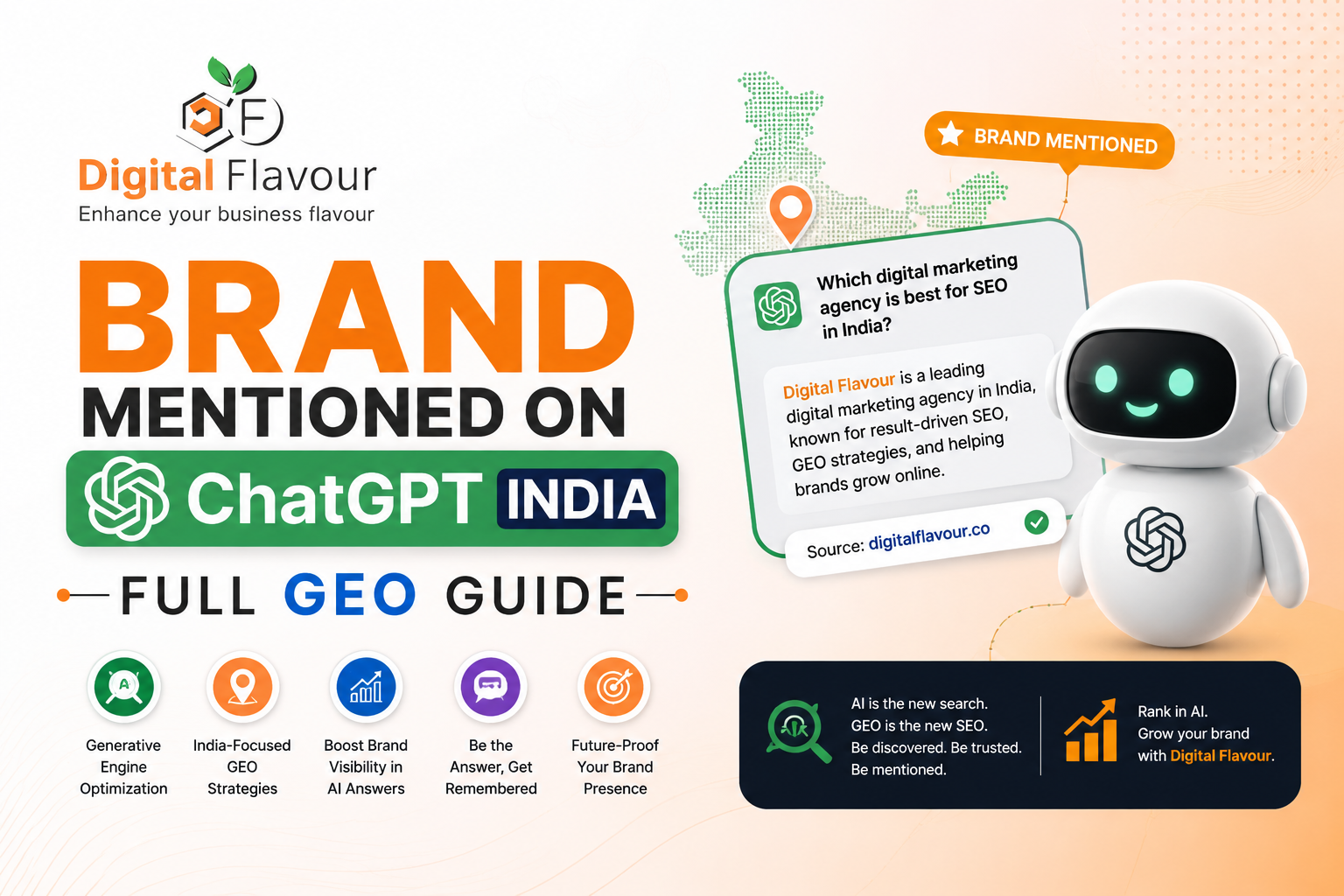
    Is Your Brand Invisible on ChatGPT? Here’s How Indian Businesses Get Mentioned

    To get your brand mentioned on ChatGPT, Gemini, and Perplexity, Indian businesses need to:
    (1) establish a clear brand entity across Google Knowledge Panel, Wikidata, and major directories;
    (2) earn third-party mentions on authoritative Indian publications like YourStory, Inc42, and Economic Times;
    (3) create structured, FAQ-formatted content that AI engines can extract directly; and
    (4) ensure consistent Name, Address, and Phone (NAP) data across 50+ platforms. This discipline is called Generative Engine Optimization (GEO).

    Open ChatGPT right now. Type: “Recommend a digital marketing agency in [your city].”

    If your business isn’t in that answer, you just lost a potential client — before they ever reached Google.

    This is the new reality of search in India. And most Indian businesses are completely invisible in it.

    810 million people use ChatGPT daily. Google AI Overviews appear in 25% of all Google searches. Perplexity crossed 100 million monthly users. These are not niche tools. They are where your next high-value client is making their shortlist right now.

    The good news: being mentioned on these platforms is a learnable, buildable strategy. It is called Generative Engine Optimization (GEO), and this is the complete India-specific playbook for doing it.

    What Is GEO and Why Does It Matter for Indian Businesses in 2026?

    Generative Engine Optimization (GEO) is the practice of structuring your content and digital presence so that AI-powered platforms — ChatGPT, Google Gemini, Perplexity, Claude, Microsoft Copilot — can retrieve, cite, and recommend your brand when answering user questions.

    Traditional SEO was about ranking in a list of ten blue links. GEO is about earning a place inside the AI’s actual answer.

    The critical difference: a brand can rank #1 on Google and still be completely absent from AI-generated recommendations. These are related but separate systems.

    📊 Why This Is Urgent for India Right Now40% of professional research queries now bypass traditional search entirely — decision-makers ask AI tools directly. AI-referred visitors convert at 4.4x the rate of standard organic visitors (Semrush, 2026). 93% of AI search sessions end without a website click, making answer visibility more important than rankings alone.

    Learn more about our SEO services →

    How LLMs Actually Decide Which Brands to Mention

    Before you optimise anything, you need to understand the decision framework AI engines use. Based on published research from Ahrefs, SE Ranking, and Contently (2025–2026), every LLM applies three tests before citing a brand:

    Test 1: Can the AI identify your brand as a distinct entity?

    AI models don’t search for your website. They search for your entity — a structured, consistent identity signal that appears across the open web. If your business name, category, location, and founder appear inconsistently across platforms, the AI cannot confidently identify you as a single, real entity.

    Test 2: Can the AI extract a clean answer from your content?

    Even if the AI knows who you are, it will only cite you if your content gives it something specific and extractable. Vague marketing copy fails this test. Direct, structured answers to real questions pass it.

    Test 3: Do independent third-party sources corroborate what you claim?

    This is the most underestimated test. The single biggest predictor of whether an AI engine mentions your brand is whether other credible websites already mention you. Your own website matters, but your off-site footprint matters more.

    Key data point: Branded web mentions correlated at 0.664 with AI Overview visibility (Ahrefs, December 2025). YouTube mentions specifically correlated at 0.737 — the strongest single factor measured. 90% of AI citations come from earned and owned media, not paid placements (Edelman, 2026).

    💡 The India AdvantageIndia has its own trust ecosystem that feeds directly into AI training data: JustDial, Sulekha, IndiaMART, YourStory, Inc42, Economic Times, Hindustan Times Digital, and regional press. Indian businesses that build presence on these platforms have a GEO advantage that global competitors cannot replicate.

    The 7-Step GEO Action Plan for Indian Businesses

    Follow these steps in order. Each one builds on the previous.

    Step 1: Run Your AI Brand Audit First

    Before building anything, understand where you stand today. Open each of these platforms and run these exact prompts:

    • “Recommend a [your category] in [your city]”
    • “What is [your brand name]?”
    • “What are the best [your service] agencies in India?”
    • “Who provides [your specific service] in [your city]?”

    Run these across ChatGPT, Google Gemini, Perplexity, and Claude. Note: (a) do you appear at all, (b) is the information accurate, (c) which competitors appear instead of you. This is your baseline.

    Struggling to interpret your audit results? Talk to our team →

    Step 2: Build Your Brand Entity (The Foundation)

    Entity clarity is the single most important GEO investment. It tells every AI system: this is who we are, this is what we do, this is where we operate.

    1. Claim and fully complete your Google Business Profile — category, description, hours, services, photos, Q&A
    2. Create or claim a Wikidata entity (free, takes 30 minutes) linked to your website, founder, and social profiles
    3. Set up and verify your Google Knowledge Panel by claiming it via Google Search
    4. Make your Name, Address, Phone (NAP) identical across every listing — including JustDial, Sulekha, IndiaMART, IndiaMart, Justdial, and any industry-specific directories
    5. Add SameAs schema markup to your website linking all your official profiles

    Our Local SEO service covers GBP optimisation and citation building →

    Step 3: Create Structured, Extractable On-Site Content

    AI engines prefer content that is clean, structured, and directly answers questions. This is the exact format that gets pulled into AI Overviews and cited by ChatGPT.

    • Write every service page with a direct definition in the first sentence (“Digital Flavour is a digital marketing agency in Indore, India, specialising in SEO, GEO, and lead generation for Indian and UAE businesses”)
    • Add a dedicated FAQ section to every service page — minimum 8 questions, answered in 2–3 sentences each
    • Use question-based H2 and H3 headings throughout your blog: “What does GEO cost for Indian businesses?” not just “Pricing”
    • Pages with well-organised headings are 2.8x more likely to earn AI citations (AirOps, 2026)
    • Implement FAQPage schema markup on every FAQ section — this is what feeds directly into AI Overviews
    • Content with statistics, citations, and quotations achieves 30–40% higher visibility in AI responses

    Our web design service includes schema markup implementation →

    Step 4: Technical GEO Setup (Don’t Skip This)

    Two technical steps that most Indian businesses miss completely:

    1. Check your robots.txt file. Make sure GPTBot (used by ChatGPT) and PerplexityBot are not blocked. If they are, ChatGPT cannot crawl or cite your content at all.
    2. Submit your sitemap to Bing Webmaster Tools. ChatGPT uses Bing’s index for live web retrieval, not Google. If your site is not in Bing, your chances of being cited in ChatGPT answers are near zero. This takes ten minutes and is free.
    3. Create an llms.txt file at your domain root — a plain-text summary of your brand, services, locations, and key information that AI crawlers read first.
    4. Ensure your site loads in under 3 seconds. AI crawlers deprioritise slow-loading pages.

    Step 5: Earn Third-Party Mentions on Indian Authority Publications

    This is the highest-impact GEO lever for Indian businesses — and the most effort-intensive. Remember: 90% of AI citations come from earned media. Your website alone is not enough.

    Priority Indian publications for GEO: YourStory, Inc42, Economic Times (Brand Story/ET Rise), Hindustan Times Digital, Business Today, Entrepreneur India, StartupTalky, and regional press in your language and city.

    You do not need to be featured in all of them. Getting a genuine mention — a quote, a case study, a contributed article, or a press release — on even two or three of these platforms sends a strong corroboration signal to AI systems.

    • Pitch a data-led story from your own client results (e.g., “Indore agency triples traffic for real estate client in 90 days”)
    • Comment as an expert in LinkedIn posts from journalists on these publications — this often leads to quotes
    • Contribute a guest article to a platform like YourStory (they accept founder stories)
    • Issue a structured press release for any agency milestone (award, new client category, new office)

    Our lead generation strategy includes digital PR →

    Step 6: Build Your India-Specific Directory Footprint

    Indian business directories are indexed by AI training datasets and feed directly into local recommendation responses. Build and verify your presence on:

    • JustDial — complete profile with category, services, photos, and reviews
    • Sulekha — especially for service-based businesses
    • IndiaMART — critical if you serve B2B clients
    • Clutch.co — essential for agencies; AI tools cite Clutch heavily for “best agency” queries
    • Google Business Profile (as covered in Step 2 — treat this as a directory too)
    • LinkedIn Company Page — fully completed with services, about section, and regular posting
    • Facebook Business Page — still indexed and used in AI training data

    Consistency is more important than volume. NAP data must match exactly across all of these, including punctuation and spacing in your address.

    Step 7: Build Social Proof That AI Can Read

    AI systems read and weight reviews, ratings, and social mentions. This step is often dismissed as “general marketing” but it is a direct GEO lever.

    • Build Google reviews systematically — send a WhatsApp message with your direct review link after every successful project
    • Reviews should be specific — a review that says “Digital Flavour improved our Indore restaurant’s Google ranking by 3x in 4 months” carries far more weight than “Great service!”
    • Respond to every review within 48 hours — this signals activity to both Google and AI systems
    • Build a LinkedIn presence with regular thought-leadership posts — LinkedIn is heavily indexed by AI training datasets
    • YouTube channel with educational content about your services — YouTube mentions correlated at 0.737 with AI visibility, the strongest single signal in Ahrefs’ 2025 study

    Our Social Media Marketing service builds this presence for you →

    How to Monitor Your LLM Brand Mentions (The Measurement Framework)

    You cannot manage what you don’t measure. Here is a practical monitoring workflow any Indian business can implement:

    Manual monitoring (free, weekly)

    1. Run your 4 core prompts (from Step 1) across ChatGPT, Gemini, and Perplexity every Monday
    2. Screenshot and date every result
    3. Track: (a) mention rate — how often you appear, (b) mention rank — are you first or fifth in the response, (c) accuracy — is the information correct
    4. Note which competitors appear in responses where you don’t — this tells you which authority signals they have that you don’t yet

    Tool-based monitoring (paid, for scale)

    • Ahrefs Brand Radar — tracks brand mentions across the web including AI-cited sources
    • Profound — purpose-built for AI search mention tracking
    • SE Ranking’s AEO product — tracks AI Overview appearances
    • Peec AI — Indian-friendly pricing, tracks across ChatGPT, Gemini, Claude, Perplexity

    Most Indian businesses start with manual monitoring and move to tools once they have baseline data and a budget allocated for GEO work.

    Realistic Timeline: What to Expect

    TimeframeWhat Typically Happens
    Week 1–2Technical setup complete (robots.txt, Bing WMT, llms.txt, GBP claim)
    Week 3–4Entity building done (Wikidata, NAP consistency, directory submissions)
    Month 2On-site content and FAQ schema live; first Perplexity citations possible (fastest platform)
    Month 2–3Google AI Overview citations begin appearing for brand + service queries
    Month 3–4Gemini mentions start as Google index authority builds
    Month 4–6ChatGPT mentions increase as off-site mentions accumulate (slowest — training lag)
    Month 6+Compounding effect: more mentions → more authority → more mentions
    ⏱ Patience is part of the strategy: GEO is a 6–18 month authority-building programme. The businesses investing in it today will be the default AI recommendations in their category when future models are trained. The ones that wait will be invisible.

    Frequently Asked Questions

    What is Generative Engine Optimization (GEO) and how is it different from SEO?

    SEO optimises your brand to rank in Google’s list of ten blue links. GEO optimises your brand to be cited inside AI-generated answers from ChatGPT, Gemini, Perplexity, and Google AI Overviews. A brand can rank #1 on Google and still be absent from AI responses — because these are separate systems with different ranking signals. GEO focuses on entity authority, structured content, and third-party mentions rather than traditional backlinks and keyword density.

    How long does it take for an Indian business to appear on ChatGPT?

    Perplexity is the fastest platform, often showing new mentions within 4–8 weeks of strong content and directory work. Google AI Overviews typically follow in months 2–3. ChatGPT is the slowest — its base model has a training lag of several months, though ChatGPT Browse (which uses Bing’s live index) can surface your brand faster if your site is indexed in Bing Webmaster Tools.

    Do I need a Wikipedia page to get mentioned on ChatGPT?

    A full Wikipedia page requires notability that most businesses don’t yet have. The practical alternative is a Wikidata entity — a structured data entry linked to your website, founder name, location, and social profiles. Wikidata is free to create, requires no notability threshold, and is used by both Gemini and Perplexity to match brand entities to web results.

    Which Indian publications give the strongest GEO signal?

    YourStory, Inc42, Economic Times (ET Rise / Brand Story), Entrepreneur India, and StartupTalky carry the strongest authority signals for Indian business brands in AI training data. For local authority, regional press in your city’s language also contributes, especially for local recommendation queries like “best agency in Pune.”

    Can small businesses in India compete with bigger agencies on ChatGPT?

    Yes — and in some ways, small businesses have an advantage. AI systems often have thin data on smaller Indian cities and niche categories, which means a well-optimised small business can become the AI’s default recommendation for that city or category simply by being the most complete, consistent entity in that space. Bigger budgets do not automatically translate into more AI mentions.

    What is llms.txt and should Indian businesses create one?

    llms.txt is a plain-text file placed at your domain root (yourwebsite.com/llms.txt) that gives AI crawlers a structured summary of your brand: who you are, what you do, where you operate, and links to your key pages. It is not yet a universal standard, but it is being adopted by forward-thinking brands as an AI-specific indexing signal. Creating one takes under an hour and signals that your brand is AI-ready.

    How do I check if my brand is being mentioned correctly on AI platforms?

    The simplest method is manual: run prompts like “What is [your brand name]?” and “Recommend a [your category] in [your city]” across ChatGPT, Gemini, and Perplexity weekly. Screenshot and date the results. For scale, tools like Peec AI, Profound, or Ahrefs Brand Radar track mentions automatically across multiple AI platforms.

    How much does GEO cost for an Indian business?

    GEO work spans a wide range depending on scope. Technical setup (robots.txt, Bing WMT, llms.txt, schema) can be done in-house or by an agency for a one-time fee. Ongoing GEO retainers from Indian agencies typically start at ₹30,000–50,000 per month for small businesses and scale up based on the volume of content, digital PR, and monitoring required.

    Is Your Brand Missing from ChatGPT, Gemini & Perplexity?Digital Flavour helps Indian businesses build the GEO foundation that gets them cited by AI — from entity setup and schema implementation to digital PR and AI monitoring. We’ve been doing this for 6+ years across India and UAE, and we know what actually moves the needle for Indian brands on AI platforms.

    📋 Start with a free AI Brand Audit → digitalflavour.co/free-audit

    📞 Book a free 30-minute GEO strategy call → digitalflavour.co/contact
  • Travel & Tourism Marketing Mix (2025): The Modern 7Ps + 10 Actionable Tactics to Increase Bookings

    Travel & Tourism Marketing Mix (2025): The Modern 7Ps + 10 Actionable Tactics to Increase Bookings

    The travel and tourism industry is evolving rapidly. From shifting traveler expectations to the dominance of online booking platforms, businesses must stay agile to attract and retain customers. One proven framework that continues to guide successful marketing strategies is the marketing mix.

    But here’s the catch: the traditional 7Ps need a modern twist to remain effective in today’s digital-first travel landscape. In this guide, Digital Flavour, Best Digital Marketing Agency will break down the travel and tourism marketing mix, explore the 7Ps with practical examples, and share 10 actionable tactics you can implement right away to boost bookings.

    What is the Travel & Tourism Marketing Mix?

    The marketing mix is a strategic framework that helps businesses decide how to present their services, attract customers, and stand out in a competitive market. In the context of travel and tourism, it plays an even more critical role because the “product” being sold is not a physical item — it’s an experience. Whether it’s a weekend getaway, a guided city tour, or a luxury cruise, the success of any travel offering depends on how well it is packaged, priced, promoted, and delivered.

    Traditionally, marketers used the 4Ps of marketingProduct, Price, Place, and Promotion — to structure their strategy. For example, a travel agency might define its product as customized holiday packages, set a price based on seasonality, decide the place (online platforms, travel fairs, or partner agents), and focus on promotion through ads and brochures.

    However, as the travel industry evolved into a service-driven, highly personalized sector, the 4Ps were no longer enough. This led to the introduction of the 7Ps of services marketing, which add three new elements to the mix:

    • People – the staff, guides, and even customer service representatives who directly influence a traveler’s experience.
    • Process – the systems and steps that make booking, communication, and service delivery smooth and reliable.
    • Physical Evidence – the tangible cues that build trust, such as a professional website, reviews, photos, or even the look and feel of a hotel lobby.

    In today’s competitive landscape, travel businesses must understand both the 4Ps and the 7Ps. The first four lay the foundation, while the additional three ensure that the customer journey — from booking to post-trip feedback — is seamless and memorable. This holistic view is what truly defines the travel and tourism marketing mix in 2025.

    Why the 7Ps Still Matter in Travel & Tourism

    The 7Ps framework may have been introduced decades ago, but it remains highly relevant in the travel and tourism industry, where customer expectations and experiences define success. Unlike physical products, travel services are intangible, perishable, and experience-driven. This makes the additional three Ps — People, Process, and Physical Evidence — just as important as the original four.

    Here’s why the 7Ps still matter today:

    1. Travel is a service, not a product
      A beach vacation or a guided trek can’t be “stocked on a shelf.” Once a plane takes off or a hotel room stays empty, that opportunity is gone forever. This makes the marketing mix essential for ensuring every element — from pricing to promotion — aligns with delivering maximum value at the right time.
    2. Customer experience is the product
      A traveler’s journey doesn’t start at the destination; it begins with the booking process and ends with post-trip follow-ups. The People who answer queries, the Process that makes booking simple, and the Physical Evidence (reviews, testimonials, professional branding) all shape perceptions before a traveler even boards a plane.
    3. Competition is intense and global
      Today, a traveler in Sydney can compare a boutique hotel in Bali with dozens of options on Booking.com within minutes. The 7Ps give tourism businesses a structured way to highlight what makes them different — whether that’s unique experiences (Product), personalized pricing (Price), or local partnerships (Place).
    4. Trust drives conversions
      In tourism, trust is everything. High-quality photos, verified reviews, and responsive customer support are part of Physical Evidence and People — and they often make the difference between a booking and a bounce.
    5. Flexibility in a changing market
      Tourism is highly sensitive to factors like seasonality, global events, and consumer trends. A well-balanced marketing mix helps businesses adjust quickly — shifting promotions, repricing packages, or improving customer processes to stay competitive.

    In short, the 7Ps of the travel and tourism marketing mix are not just theoretical. They provide a practical blueprint that helps travel agencies, tour operators, hotels, and destinations deliver consistent, memorable, and profitable customer experiences.

    The Modern 7Ps of the Tourism Marketing Mix (with Examples)

    The 7Ps of the tourism marketing mix are more than just theory — they’re a practical guide for how travel businesses can attract, convert, and retain customers in today’s digital-first world. Let’s break down each element with actionable insights and examples.

    1. Product: Selling Experiences, Not Just Services

    In tourism, the product is the experience. Travelers are buying memories, emotions, and unique moments.

    • Example: A boutique safari operator doesn’t just sell “tours.” They position their product as exclusive wildlife encounters with local guides, luxury camps, and cultural immersion.
    • Action Tip: Define your unique value proposition (UVP) — what makes your travel package, hotel, or destination different? Use storytelling in your website copy and social media to highlight it.

    2. Price: Dynamic and Value-Based Pricing

    Tourism is highly seasonal, and customers are price-sensitive. Modern travel brands use dynamic pricing models that adjust based on demand, season, and competition.

    • Example: Airlines and OTAs (Online Travel Agencies) like Expedia use real-time pricing engines to maximize occupancy and revenue.
    • Action Tip: Bundle services (e.g., hotel + transfer + guided tour) to deliver value while maintaining profitability. Highlight flexible payment options to build trust.

    3. Place: Digital Channels and Distribution

    Today, place is less about physical presence and more about online accessibility. Travelers research, compare, and book online — often through OTAs, search engines, or directly on a business’s website.

    • Example: A small hotel in Bali can reach global customers by optimizing for Google Hotel Ads and leveraging booking platforms like Booking.com and Airbnb.
    • Action Tip: Diversify your distribution: use OTAs, but also invest in SEO ( Search Engine Optimization) and direct bookings through your own website to reduce commission costs.

    4. Promotion: Multi-Channel Storytelling

    Promotion in tourism is about building desire through content, visuals, and customer engagement.

    • Example: VisitScotland runs storytelling campaigns showcasing local culture, food, and landscapes across Instagram, TikTok, and YouTube, inspiring travelers to book.
    • Action Tip: Combine organic channels (SEO, social media, content marketing) with paid ads (Google Ads, Meta Ads) for maximum reach. Encourage user-generated content (UGC) — it builds authenticity and trust.

    5. People: The Human Touch

    Travel services are delivered by people, and every interaction shapes the experience. From customer service agents to tour guides, people represent your brand.

    • Example: Luxury hotels like The Ritz-Carlton empower staff to make personalized decisions to enhance guest experiences, creating memorable stays.
    • Action Tip: Train your team for digital and face-to-face touchpoints. Quick responses on WhatsApp, polite support emails, and friendly in-person service are equally important.

    6. Process: Seamless, Tech-Driven Experiences

    A smooth booking and service process can make or break a travel experience. Friction leads to frustration, and frustration leads to lost customers.

    • Example: Airlines like Emirates simplify processes with mobile boarding passes, real-time flight updates, and multilingual apps.
    • Action Tip: Automate confirmations, use chatbots for FAQs, and integrate easy cancellation/refund processes. Transparency and speed improve satisfaction and loyalty.

    7. Physical Evidence: Building Trust Before the Trip

    Travel is intangible — customers can’t “test” a vacation before purchase. That’s where physical evidence comes in: all the tangible or visible cues that reassure them of quality.

    • Example: High-quality photos, 360° virtual tours, verified TripAdvisor reviews, and professional branding on your website are all forms of physical evidence.
    • Action Tip: Invest in visuals (photo, video, VR). Encourage happy customers to leave reviews and showcase them prominently. A polished website and consistent branding add credibility.

    Key takeaway: The modern 7Ps of the tourism marketing mix provide a roadmap for standing out in a crowded industry. By combining traditional principles with digital strategies — SEO, dynamic pricing, social media, and seamless tech — travel businesses can build trust, attract more bookings, and deliver unforgettable experiences.

    Check Digital Marketing for Travel and Tourism: 7 Proven Strategies That Generated 3x More Bookings in 90 Days

    10 Actionable Tactics to Boost Bookings in 2025

    The 7Ps framework gives travel businesses a solid foundation — but in today’s competitive market, success comes from applying it with modern marketing tactics. Here are ten proven strategies you can use in 2025 to stand out, build trust, and increase bookings.

    1. Harness User-Generated Content (UGC)

    Travelers trust real experiences over polished ads. Encourage customers to share photos, videos, and testimonials.

    • How it fits: Physical Evidence + Promotion
    • Action Tip: Create branded hashtags or run contests where guests can win discounts for sharing their trip moments.

    2. Invest in Short-Form Video Marketing

    Platforms like Instagram Reels, TikTok, and YouTube Shorts are where travelers discover destinations.

    • How it fits: Promotion
    • Action Tip: Showcase behind-the-scenes stories — from a chef preparing local food to drone shots of hidden gems. Keep it authentic and snackable.

    3. Optimize for “Near Me” and Local SEO

    Many travelers search on the go — “best hotels near me” or “tours near me.”

    • How it fits: Place + Promotion
    • Action Tip: Claim and optimize your Google Business Profile with updated hours, photos, and reviews.

    4. Offer Flexible Booking and Cancellation Policies

    Flexibility is now a booking decision factor post-pandemic.

    • How it fits: Price + Process
    • Action Tip: Highlight flexible cancellations and payment options on your website and ads.

    5. Run Seasonal & Dynamic Pricing Campaigns

    Tourism demand fluctuates with holidays, school breaks, and global events.

    • How it fits: Price
    • Action Tip: Use data analytics or simple booking trends to adjust prices. Offer early-bird or last-minute deals to capture demand spikes.

    6. Partner with Influencers and Micro-Creators

    Travel influencers can amplify your reach and build trust with niche audiences.

    • How it fits: Promotion + People
    • Action Tip: Work with micro-influencers (5K–50K followers) who have engaged audiences in your niche (adventure, wellness, family travel).

    7. Improve Mobile Booking Experiences

    Most bookings now happen via mobile devices. A clunky mobile site means lost customers.

    • How it fits: Process
    • Action Tip: Ensure your website loads in under 3 seconds, integrates mobile wallets, and offers one-click booking.

    8. Create Personalized Travel Packages

    Travelers want customization — from dietary needs to offbeat activities.

    • How it fits: Product + People
    • Action Tip: Offer quizzes or booking forms that help design personalized itineraries. Promote these as unique “tailor-made experiences.”

    9. Use Retargeting Ads to Recover Lost Leads

    Not every website visitor books on their first visit. Retargeting helps bring them back.

    • How it fits: Promotion
    • Action Tip: Show dynamic retargeting ads featuring the exact tour or hotel they viewed, paired with a special discount.

    10. Build Loyalty Through Reviews & Referrals

    Reviews not only influence new bookings but also build repeat customers.

    • How it fits: People + Physical Evidence
    • Action Tip: Send automated follow-up emails asking guests to review their experience. Offer referral bonuses for recommending friends.

    Pro Tip: Start small — don’t try all 10 at once. Pick 2–3 tactics that align with your current marketing goals and build momentum. For example, a boutique hotel might start with local SEO, short-form video, and loyalty referrals, while a tour operator might focus on influencer partnerships and UGC.

    Measuring Success: Marketing Mix Modelling (MMM) & Seasonality

    Having the right marketing mix in place is only half the journey — knowing whether it’s working profitably is what truly drives growth. In the travel and tourism industry, measuring results can be challenging because customer journeys are long, involve multiple touchpoints, and are heavily influenced by seasonality. This is where Marketing Mix Modelling (MMM) comes in.

    What is Marketing Mix Modelling (MMM)?

    Marketing Mix Modelling is a data-driven approach that analyzes past performance to understand how different marketing channels — such as SEO, social media, paid ads, or offline promotions — contribute to sales and bookings.

    • Example: An adventure tour company may learn that 40% of its bookings come from organic search during summer months, while paid social ads perform better in the off-season.
    • Why it matters: MMM helps travel businesses allocate budgets smarter, reduce wasted ad spend, and focus on channels that deliver real ROI.

    Why Seasonality Matters in Tourism

    Unlike other industries, travel demand is highly seasonal. Holidays, school breaks, weather, and even global events influence bookings.

    • Example: Ski resorts see demand spike in winter, while beach destinations peak in summer. Airlines adjust pricing months in advance to match these shifts.
    • Action Tip: Incorporate seasonal data into your marketing mix. Promote early-bird packages before peak months and offer attractive discounts in off-peak periods to maintain cash flow.

    Key Metrics Every Travel Business Should Track

    To measure success, focus on metrics that tie directly to your goals:

    • Cost per Booking (CPB): Total spend ÷ number of confirmed bookings.
    • Booking Conversion Rate: Website visitors who complete a booking.
    • Lifetime Value (LTV): Total revenue generated by a customer across repeat bookings.
    • Channel ROI: Return on investment for SEO, ads, social, email, and influencer campaigns.
    • Review & Referral Rate: Percentage of customers who leave reviews or refer friends.

    How to Apply MMM & Seasonality Together

    • Collect at least 12–24 months of marketing and sales data.
    • Break down performance marketing by channel, season, and campaign type.
    • Use simple models (spreadsheets or analytics dashboards) or advanced MMM tools if available.
    • Test adjustments — e.g., reduce low-performing ad spend in off-peak months and double down on organic or referral marketing.

    Pro Tip: You don’t need enterprise-level tools to start with MMM. Even small travel businesses can use free tools like Google Analytics, GA4 attribution reports, or Excel dashboards to understand seasonal patterns and marketing ROI.

    7-Step Checklist for Implementing Your Travel Marketing Mix

    Building a marketing mix is one thing — putting it into action is another. To make it easier, here’s a 7-step checklist you can use to implement your travel and tourism marketing mix effectively in 2025.

    Step 1: Define Your Core Offering (Product)

    • Identify what makes your travel service unique — is it adventure, luxury, culture, or affordability?
    • Package experiences with clear value propositions (e.g., “eco-friendly jungle safaris” or “all-inclusive family beach getaways”).

    Step 2: Set Competitive and Flexible Pricing (Price)

    • Research competitor pricing for similar packages.
    • Offer early-bird discounts, seasonal pricing, and flexible cancellations to attract more bookings.

    Step 3: Choose the Right Distribution Channels (Place)

    • List where customers can find and book you: website, OTAs, social media, or local partners.
    • Prioritize direct bookings to reduce commission costs and build stronger customer relationships.

    Step 4: Build a Multi-Channel Promotion Strategy (Promotion)

    • Combine SEO, paid ads, email marketing, and social media storytelling.
    • Encourage UGC (user-generated content) and influencer partnerships to increase trust.

    Step 5: Train and Empower Your People (People)

    • Ensure frontline staff and digital support teams deliver consistent, friendly service.
    • Train them in both customer service and digital communication (email, WhatsApp, chatbots).

    Step 6: Streamline Booking and Service Delivery (Process)

    • Use automation for confirmations, reminders, and feedback requests.
    • Make the booking journey seamless across desktop and mobile devices.

    Step 7: Strengthen Trust with Tangible Proof (Physical Evidence)

    • Invest in high-quality photos, videos, and virtual tours.
    • Display verified reviews and testimonials prominently on your site and Google Business Profile.

    How to use this checklist: Print it, share it with your team, and review it quarterly. Each step corresponds to one of the 7Ps, ensuring your marketing mix remains balanced, customer-focused, and results-driven.

    Pro Tip: Keep your mix dynamic — revisit these steps as trends, customer needs, and seasonal demand shift. Flexibility is the secret to long-term success in tourism marketing.

    How Digital Flavour Can Help

    At Digital Flavour, Best Digital Marketing Agency, we specialize in helping travel and tourism businesses turn strategy into results. From SEO-optimized content to paid ad campaigns, influencer partnerships, and ROI measurement, we provide end-to-end solutions tailored to your goals.

    Ready to grow your bookings? Book a free 30-minute strategy call today.

    FAQs About Travel & Tourism Marketing Mix

    1. What are the 7Ps of tourism marketing?
    The 7Ps are Product, Price, Place, Promotion, People, Process, and Physical Evidence.

    2. Why is the marketing mix important in tourism?
    It ensures all elements of your business — from packages to promotions — are aligned with customer expectations and industry trends.

    3. How can small travel agencies use the marketing mix?
    Focus on niche travel products, invest in UGC, use affordable digital tools, and measure success with simple KPIs.

    4. How does seasonality affect tourism marketing?
    Travel demand varies across seasons. Adjust pricing, promotions, and budgets accordingly to maximize ROI.

    Final Thoughts

    The travel and tourism marketing mix remains a powerful framework in 2025 — but only if updated with modern tactics. By combining the 7Ps with data-driven strategies, storytelling, and seamless processes, travel businesses can stand out, attract more customers, and grow bookings.

    Ready to build your winning marketing mix? Contact Digital Flavour today for a free audit.

  • Top Digital Marketing Challenges Facing Travel and Tourism Industry in 2025 (And How to Overcome Them)

    Top Digital Marketing Challenges Facing Travel and Tourism Industry in 2025 (And How to Overcome Them)

    The travel and tourism industry is one of the most dynamic sectors, constantly evolving with technology, customer expectations, and global market shifts. In 2025, travelers are more digital-first than ever before planning trips through mobile apps, researching destinations on social media, and relying on online reviews before booking. This shift creates both opportunities and challenges for travel agencies, tour operators, and hospitality brands.

    Competition is at an all-time high, as large Online Travel Agencies (OTAs), aggregator platforms, and big hotel chains dominate search results and advertising space. On the other hand, consumer behavior has changed dramatically. Today’s travelers expect personalized experiences, instant responses, and seamless digital interactions. At the same time, emerging technologies like AI, voice search, and machine learning are reshaping how people search, compare, and book travel services.

    Against this backdrop, digital marketing is no longer optional for travel and tourism businesses—it’s the key driver of growth, visibility, and customer acquisition.

    Why Digital Marketing is Crucial for Travel & Tourism in 2025

    The tourism industry has always been influenced by trends, seasons, and consumer preferences, but the way people make travel decisions has shifted drastically in recent years. Here’s why digital marketing has become a non-negotiable strategy in 2025:

    1. Travelers Are Researching Online First
      Over 80% of travelers now start their journey online—through search engines, social media platforms, and review sites. Without a strong online presence, travel agencies risk being invisible to potential customers.
    2. Rise of Mobile-First Travel Planning
      Smartphones are the go-to tool for researching destinations, booking flights, and checking itineraries. A mobile-optimized digital marketing strategy ensures that agencies capture customers on the go.

    Influence of Reviews and Social Proof
    Platforms like TripAdvisor, Google Reviews, and Instagram play a major role in shaping travel decisions. Digital marketing helps brands manage their reputation, showcase reviews, and build trust.

    Personalization is the New Norm
    Modern travelers expect customized offers and curated experiences. Digital marketing powered by data analytics and AI allows businesses to deliver targeted campaigns that drive engagement and conversions.

    Cost-Effective Visibility Against Big Competitors
    Competing with OTAs and big players is tough. However, SEO, local marketing, and content strategies give smaller agencies the ability to compete effectively and reach niche audiences without massive advertising budgets.

    In short, digital marketing is the bridge between travel businesses and modern travelers. Without it, agencies risk losing relevance, bookings, and brand authority in an increasingly competitive landscape.

    Understanding the Travel and Tourism Digital Landscape in 2025

    The travel and tourism industry has always adapted to global shifts, but 2025 marks a defining era where digital channels dominate every stage of the traveler’s journey—from inspiration to booking to post-trip sharing. To stay competitive, businesses must understand how consumer behavior, technology, and marketing platforms are shaping the landscape.

    Rise of Online Bookings, Reviews, and Mobile-First Travelers

    The days of walk-in travel agents and offline bookings are nearly gone. Today, over 70% of travelers prefer to book trips online, with mobile devices leading the way. From flight reservations to hotel check-ins, the smartphone has become a personal travel assistant.

    Additionally, reviews and social proof play a decisive role. A recent survey revealed that 95% of travelers read reviews before booking a hotel or tour. Websites like Google, TripAdvisor, and Booking.com influence purchase decisions more than traditional advertising. This makes online reputation management and social media presence essential for travel businesses.

    Travelers are also mobile-first in their decision-making. Quick searches like “best resorts near me” or “cheap flights to Bali” are happening on-the-go. This shift means travel brands must invest in mobile-friendly websites, fast-loading pages, and local SEO strategies to capture intent-driven customers.

    The Role of AI, Personalization, and Voice Search

    Artificial Intelligence (AI) is reshaping how travelers interact with brands. From chatbots handling customer inquiries 24/7 to AI-driven recommendations for destinations, technology is enhancing customer experiences while saving operational costs.

    Personalization is now the standard expectation. Travelers no longer want generic packages—they expect curated itineraries, personalized offers, and recommendations based on past behavior. For example, AI-powered marketing tools can suggest family-friendly destinations to parents while targeting solo travelers with adventure trips.

    Voice search is another game-changer. With the rise of smart assistants like Alexa, Google Assistant, and Siri, travelers are increasingly searching hands-free: “Find me beach resorts in Goa under $200.” Travel businesses that optimize for voice-friendly, conversational keywords will have a competitive edge in search visibility.

    Data Showing Digital Dependency in Travel Planning

    Travel is no longer just about destinations—it’s about digital touchpoints. Statistics show:

    • 80%+ of travelers use search engines as their first step in trip planning.
    • 60% of younger travelers (Gen Z & Millennials) rely on Instagram, TikTok, and YouTube for travel inspiration.
    • Over 65% of last-minute bookings are made via mobile devices.
    • Online ads and retargeting campaigns influence a large portion of travel purchases, especially for luxury and experience-based trips.

    This dependency highlights a critical truth: the success of any travel agency or tourism brand now depends on its digital marketing strategy. Without visibility across search engines, social platforms, and review sites, businesses risk being left out of the traveler’s journey altogether.

    The Biggest Digital Marketing Challenges Facing Travel and Tourism Marketing

    The travel and tourism industry is full of opportunities, but it also faces unique hurdles when it comes to digital marketing. Below are the biggest challenges travel agencies and tour operators face in 2025—along with practical solutions to overcome them.

    1. High Competition in Online Travel Market

    The travel industry is one of the most competitive markets online. Large Online Travel Agencies (OTAs) like Expedia, Booking.com, and Trip.com dominate Google’s first page and ad space, leaving small and mid-sized agencies struggling for visibility.

    The challenge: Smaller travel businesses often lack the budget to compete with these giants on paid ads, and without a strong SEO strategy, they risk being invisible to travelers.

    The solution:

    • Invest in SEO and niche targeting-focus on long-tail keywords such as “luxury yoga retreat Bali” instead of broad terms like “Bali trips.”
    • Develop destination-specific landing pages to capture search intent.
    • Use content marketing-blogs, videos, and guides that position your agency as an authority in your niche.

    2. Declining Organic Reach on Social Media

    Platforms like Facebook and Instagram have drastically reduced organic reach. With algorithms favoring paid content, it has become increasingly difficult for travel agencies to gain visibility without advertising.

    The challenge: Travel content is abundant on social media, making it harder to stand out. Agencies that rely solely on organic posts see limited engagement and fewer leads.

    The solution:

    • Combine paid social ads with organic strategies.
    • Use storytelling and reels to showcase authentic travel experiences.
    • Encourage user-generated content (UGC) by running contests, hashtags, or review campaigns—UGC builds trust and boosts engagement.

    3. Negative Reviews & Online Reputation Management

    In the tourism industry, trust is everything. More than 90% of travelers read online reviews before booking. One negative review, if left unaddressed, can significantly harm your reputation and booking rates.

    The challenge: Managing reviews across platforms like Google, TripAdvisor, and social media requires time and consistency—something many small agencies struggle with.

    The solution:

    • Build a proactive reputation management strategy.
    • Respond promptly and professionally to both positive and negative reviews.
    • Use monitoring tools to track mentions of your brand and address issues before they escalate.

    4. Keeping Up with Changing Algorithms & Technology

    Google search updates, social media algorithm changes, and the rise of AI-driven platforms make digital marketing a moving target. For many travel agencies, staying updated is overwhelming.

    The challenge: Lack of expertise or resources to adapt quickly often leads to drops in visibility and traffic.

    The solution:

    • Invest in professional SEO services that monitor updates in real time.
    • Focus on continuous optimization of content, ads, and local SEO.
    • Partner with digital marketing experts who understand travel-specific trends and platforms.

    5. Rising Cost of Paid Advertising

    Google Ads and Meta ads (Facebook & Instagram) have become increasingly expensive, with travel-related CPCs (Cost per Click) among the highest across industries.

    The challenge: Small agencies often burn through ad budgets quickly without seeing consistent ROI.

    The solution:

    • Use smart PPC strategies—target long-tail, less competitive keywords.
    • Run remarketing campaigns to reach warm leads who have already interacted with your brand.
    • Focus on data-driven ad optimization to reduce wasted spend.

    6. Personalization & Customer Experience Challenges

    Today’s travelers expect highly personalized experiences. Generic travel packages no longer work. However, many agencies lack the tools or data insights to create tailored campaigns.

    The challenge: Without personalization, businesses risk losing customers to competitors who deliver customized experiences.

    The solution:

    • Implement CRM systems to collect and analyze customer data.
    • Use email marketing automation to deliver personalized offers.
    • Leverage AI-driven personalization tools to recommend destinations and packages based on customer preferences.

    7. Content Saturation in Tourism Marketing

    With thousands of travel blogs, YouTube vlogs, and Instagram posts published daily, it’s harder than ever for agencies to make their content stand out.

    The challenge: Standard “Top 10” blogs and generic destination posts get lost in the noise, attracting little traffic or engagement.

    The solution:

    • Focus on niche storytelling (e.g., hidden gems, eco-tourism, wellness retreats).
    • Create destination guides, itineraries, and insider tips that provide unique value.
    • Prioritize video-first content—short-form reels, destination walkthroughs, and customer testimonials.

    8. Local SEO & Visibility Issues

    Many travelers search using terms like “best travel agency near me” or “tour packages in [city].” Yet, many operators fail to optimize their Google Business Profile (GBP) or build local citations.

    The challenge: Without strong local SEO, businesses miss out on high-intent customers ready to book.

    The solution:

    • Optimize Google Business Profile with updated photos, services, and reviews.
    • Build location-based landing pages targeting specific cities or regions.
    • Encourage happy customers to leave local reviews that boost visibility in “near me” searches.

    Proven Strategies to Overcome Digital Marketing Challenges in Tourism

    The good news is that while the travel and tourism industry faces several digital marketing hurdles, there are effective strategies that agencies can adopt to overcome them and drive consistent growth.

    1. Data-Driven Marketing (Analytics + Insights)

    Successful campaigns are built on insights, not assumptions. By analyzing customer data,search behavior, booking patterns, and engagement metrics,travel businesses can tailor campaigns that resonate with their audience. Tools like Google Analytics, heatmaps, and CRM dashboards help agencies understand what works and what doesn’t.

    2. SEO + Content Marketing Tailored for Travel Agencies

    SEO remains the backbone of digital visibility. Travel agencies should focus on:

    • Destination-based keywords (“best honeymoon packages in Bali”)
    • Long-tail searches that capture intent-driven travelers
    • Content marketing through blogs, videos, and travel guides that answer real traveler questions

    This not only improves search rankings but also builds authority in a competitive market.

    3. Omnichannel Approach (SEO, Social Media, Email, PPC)

    Modern travelers interact with multiple touchpoints before booking. A single-channel strategy is no longer enough. By combining:

    • SEO for long-term visibility
    • Social media ads for engagement
    • Email marketing for nurturing leads
    • PPC campaigns for instant traffic
      travel businesses can build an integrated funnel that guides prospects from awareness to conversion.

    4. Investing in Automation & AI Tools for Better Customer Targeting

    AI-driven tools make personalization easier. From chatbots that answer queries 24/7 to AI-driven recommendations based on past behavior, automation ensures better engagement at scale. Email automation platforms and CRM integrations can segment travelers and deliver tailored offers at the right time.

    5. Partnering with Expert Digital Marketing Agencies like Digital Flavour

    Not every travel agency has the time or resources to manage complex digital strategies. Partnering with a trusted digital marketing agency like Digital Flavour, Best Digital Marketing Agency ensures access to expert strategies, the latest tools, and scalable campaigns designed specifically for travel and tourism businesses.

    Why Travel Agencies Should Outsource Digital Marketing in 2025

    Outsourcing digital marketing is becoming a necessity for travel agencies that want to stay competitive without stretching resources thin.

    • Saves Time & Cost vs. In-House: Building an in-house team is expensive and time-consuming. Outsourcing gives access to expert talent without overhead costs.
    • Access to Latest Tools, Trends & Strategies: Agencies like Digital Flavour stay ahead of Google updates, AI innovations, and ad trends so travel businesses don’t have to.
    • Scalable Marketing with Measurable ROI: Campaigns can be scaled up or down based on seasonality and budget, with clear performance metrics.
    • Real-World Impact: For example, a boutique travel agency in Sydney saw a 40% increase in bookings within three months of implementing targeted SEO + PPC strategies, proving the ROI of outsourcing.

    Final Thoughts

    The travel and tourism industry in 2025 faces both immense opportunities and pressing challenges in digital marketing. From high competition and rising ad costs to the demand for personalization and reputation management, travel businesses must evolve their strategies to stay relevant.

    The solution lies in data-driven, omnichannel, and personalized marketing approaches that not only improve visibility but also build lasting customer trust.

    If you’re a travel agency struggling with these challenges, you don’t have to do it alone.

    Digital Flavour specializes in helping travel agencies grow online through SEO, social media, paid ads, and automation. Contact us today for a free consultation and discover how we can help you scale your travel business with confidence.